Tag: King Kong

  • LeRoy Holmes:  The Man Who Killed Kong

    LeRoy Holmes: The Man Who Killed Kong

    Anybody else remember LeRoy Holmes?

    Before the internet and when CDs were still in their comparative infancy, I was still snapping up whatever LPs I could find of classic film scores. The Charles Gerhardt series with the National Philharmonic Orchestra, of course, was the gold standard. I also collected all of Bernard Herrmann’s recordings of his own music. Beyond that, it was mostly whatever original soundtrack albums I could lay my hands on: “The Ten Commandments,” “Ben-Hur,” “The Alamo,” “The Thief of Bagdad” (a rare find from “Elmer Bernstein’s Film Music Collection”).

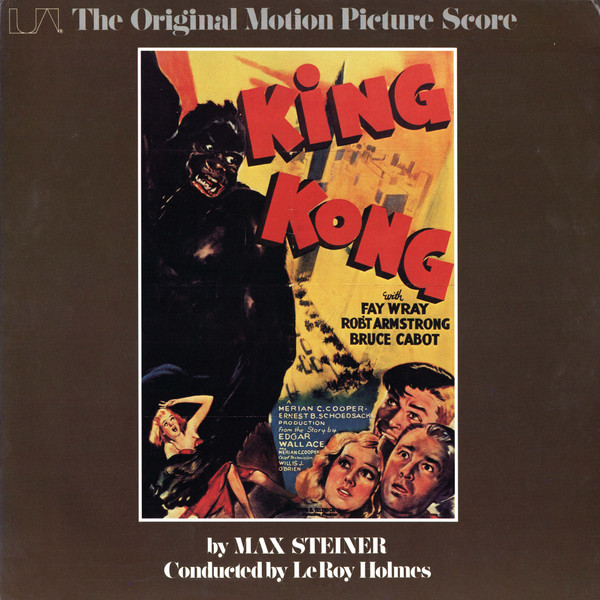
    During this period, while browsing the record bins in the back of The Book Trader in Philadelphia (at its old location at 5th & South), I stumbled across a series of recordings issued by United Artists featuring classic film scores with LeRoy Holmes conducting. It’s possible these were inspired by the unexpected success of the Gerhardt series.

    Sadly, they in no way match Gerhardt’s exuberance and vitality. In fact, the performances were downright depressing. Threadbare orchestras in boxy acoustics sounding like they were captured on the first run-through. The orchestra for “Kong” was so insufficient that the percussion in the opening credits put me in the mind of those Meco covers of “Star Wars” and other popular ‘70s scores, reimagined as disco hits. (Yes, this was a thing.)

    I don’t know what the deal was with the United Artist records. I do know that within a moment of the stylus touching the groove my heart sank. I had picked up several of these – I remember another one was Alfred Newman’s “The Prisoner of Zenda” – and they were all equally terrible. I hurried back to the store with them at my soonest possible convenience.

    When I described the problem, the clerk didn’t want to take them back, denying responsibility for the quality of the actual recordings. But my vehemence must have been such that he was persuaded to put one of them on in the store. Right away, his face screwed up as if he were sucking on lemons. “Yeah, I see what you mean,” he said. “I wouldn’t want them either.” He walked over to the cash box and refunded my money.

    These came bubbling back up into my consciousness like studiously repressed nightmares when discussing “Kong” recordings with a friend recently, who’d acquired the superior Fred Steiner recording (no relation to Max) on vinyl the last time we visited Princeton Record Exchange.

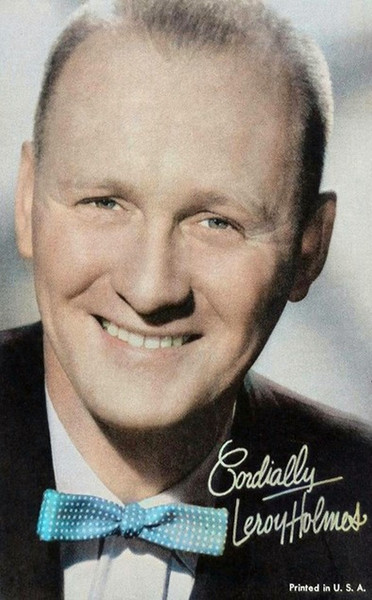
    Now, with the internet at my disposal, I was able to look into LeRoy Holmes. And what do you know, he was no hack. Yeah, from his album listings and unfortunate record covers, it looks like he did a lot of easy listening and middle-brow arrangements of movie themes. But he was a Juilliard graduate, who also studied privately with Ernst Toch.

    He learned his craft, then wrote, arranged, and/or conducted for Harry James, Judy Garland, Dinah Shore, and Nelson Eddy. For a time, he was house arranger and conductor at M-G-M. He composed and performed for Ernie Kovacs, for Kovacs’ own show and his appearances on “The Tonight Show.” He backed Connie Francis and Shirley Bassey. His recording of Dimitri Tiomkin’s theme for “The High and the Mighty” became a big hit. He also enjoyed success with his covers of Ennio Morricone spaghetti westerns. (Who didn’t?)

    Obviously, he had the chops. Holmes scored films and recorded for United Artists and Everest Records. Why these classic film score records are so, so bad is a mystery I don’t mind recalling for a Facebook post, but do not wish to dwell on.

    ——–


    Holmes’ hit record of “The High and the Mighty”

    https://www.youtube.com/watch?v=-zLcFc0IXUQ

    Monstrous “Kong”

    https://www.youtube.com/watch?v=e7RjCp2dmpU&t=1s

    Meco’s “Star Wars”

    https://www.youtube.com/watch?v=a3w6j-jOOXU

    Provocative LeRoy Holmes

    https://www.youtube.com/watch?v=bpwLXkFWJOs

  • Going Ape for Classic Movie Music

    Going Ape for Classic Movie Music

    With the publicity machine going full-throttle for the new “Planet of the Apes” movie, I thought we’d take the opportunity this week, on “Picture Perfect,” to look back to Jerry Goldsmith’s music for the original 1968 classic.

    Goldsmith incorporated all sorts of unusual effects into his groundbreaking score. He employed such instruments as tuned mixing bowls, a bass slide-whistle, and the cuika, a Brazilian wind instrument used to mimic the hooting of excited apes. He instructed his hornists to play without mouthpieces, and he manipulated percussion through the use of an Echoplex.

    Barbaric and unnerving, with little in the way of lyricism, I can’t imagine anything like it being used in a major Hollywood film today. Well, from my description, I guess I can, but Goldsmith was the real deal – a talented composer with real tools (not just a laptop) at his disposal.

    While my initial impulse had been to fill out the hour with music from some of the other films in the “Apes” franchise, after listening for a while, the grimness and brutality became a bit too unremitting, so instead we’ll swing with the gorilla theme.

    Among the other selections will be an extended passage from the Dian Fossey biopic, “Gorillas in the Mist,” which starred Sigourney Weaver and featured music by Maurice Jarre, of “Lawrence of Arabia” and “Doctor Zhivago” fame, though from his later, lamentable “electronic” period.

    We’ll also hear a bit from the “Mighty Joe Young” remake, since, at the time I recorded the show, I couldn’t get a hold of Roy Webb’s score for the original (since remedied). The music is pretty much standard James Horner (eg. “Titanic”), though he does incorporate a Swahili choir.

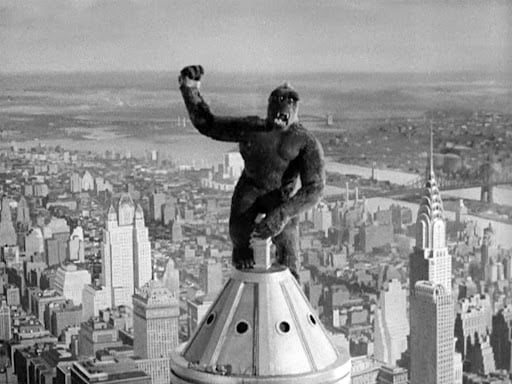
    Finally, we’ll sample from Max Steiner’s landmark score to the 800-pound gorilla of all monkey movies, 1933’s “King Kong.”

    I hope you’ll join me as we go ape this week, on “Picture Perfect,” music for the movies, now in syndication on KWAX, the radio station of the University of Oregon!


    Remember, KWAX is on the West Coast, so there’s a three-hour difference for those of you listening in the East. Here are the respective air-times for all three of my recorded shows (with East Coast conversions in parentheses):

    PICTURE PERFECT, the movie music show – Friday on KWAX at 5:00 PM PACIFIC TIME (8:00 PM EASTERN)

    SWEETNESS AND LIGHT, the light music program – ALL NEW! – Saturday on KWAX at 8:00 AM PACIFIC TIME (11:00 AM EASTERN)

    THE LOST CHORD, unusual and neglected rep – Saturday on KWAX at 4:00 PM PACIFIC TIME (7:00 PM EASTERN)

    Stream all three, at the times indicated, by following the link!

    https://kwax.uoregon.edu/


    “Take your stinkin’ paws off me…!” (with Goldsmith’s music, including cuika effects):

    https://www.youtube.com/watch?v=enRpeRUawNY

  • Lost Worlds Fantasy Film Scores on WWFM

    Lost Worlds Fantasy Film Scores on WWFM

    This week on “Picture Perfect,” prepare to get “lost.” We’ll have an hour of music from fantasy films set in lost worlds.

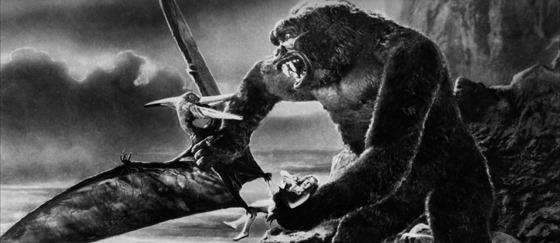
    In “King Kong” (1933), filmmaker and entrepreneur Carl Denham hires a ship to an uncharted island, known only from a secret map in his possession. There the crew discovers the titular gorilla and other outsized and should-be-extinct creatures. Kong is abducted from his natural habitat – and you know the rest. The composer, Max Steiner, pulls out all the stops. “Kong” was one of the first films to demonstrate how truly powerful an orchestral soundtrack could be.

    Then we travel to the earth’s core, courtesy of Jules Verne, and “Journey to the Center of the Earth” (1959). James Mason is the professor who leads the expedition. The film sports one of Bernard Herrmann’s most outlandish soundscapes, the orchestra consisting of winds, brass and percussion, but also cathedral organ, four electric organs, and an obsolete Renaissance instrument called the serpent. Watch out for that giant chameleon!

    “One Million Years B.C.” (1966) is a guilty pleasure if ever there was one. Produced by Hammer, the studio that gave us all those repugnant yet somehow delicious Peter Cushing-Christopher Lee horror team-ups, the film features special effects by the legendary Ray Harryhausen and an equally legendary fur bikini, worn by Raquel Welch. The music is by Mario Nascimbene, who wrote one of my favorite scores for Kirk Douglas, for “The Vikings.” We’ll be listening to the film’s climactic volcano sequence.

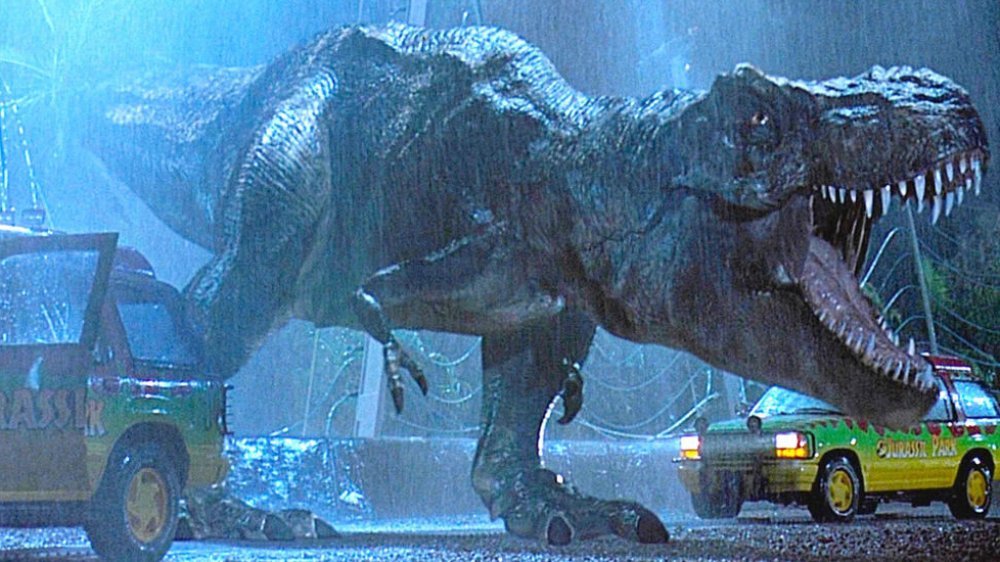
    As he did with the Indiana Jones films, director Steven Spielberg turned to B-movie source material for his visual inspiration for “Jurassic Park” (1993), based on the novel by Michael Crichton. The herky-jerky dinosaur effects of yore are replaced by state of the art computer-generated effects, in the story of a safari park on a remote island gone wrong.

    Sure, we’ve come a long way from Raquel Welch getting carried off by a pteranodon, but admit it, we all still want to see people fight dinosaurs. Instead of fudging history, now we can feel superior by fudging science. “Jurassic Park” plays on the most recent scientific thinking, with DNA extracted from mosquitoes trapped in amber, cloning, and the theory that dinosaurs were not lizards, after all, but rather birds. The music is by long-time Spielberg-collaborator, John Williams.

    I hope you’ll join me for music for these “Lands That Time Forgot,” this Saturday evening at 6:00 EDT, on WWFM – The Classical Network and wwm.org.

  • Lost Worlds Fantastic Film Scores on Picture Perfect

    Lost Worlds Fantastic Film Scores on Picture Perfect

    This week on “Picture Perfect,” prepare to get “lost!” It’s an hour of music from fantasy films set in lost worlds.

    In “King Kong” (1933), filmmaker and entrepreneur Carl Denham hires a ship to an uncharted island, known only from a secret map in his possession. There the crew discovers the titular gorilla and other outsized, should-be-extinct creatures. Kong is abducted from his natural habitat – and you know the rest. The composer, Max Steiner, pulls out all the stops. “Kong” was one of the first films to demonstrate how truly powerful an orchestral soundtrack could be.

    Then we travel to the earth’s core, courtesy of Jules Verne and “Journey to the Center of the Earth” (1959). James Mason is the professor who leads the expedition. The film sports one of Bernard Herrmann’s most outlandish soundscapes, the orchestra consisting of winds, brass and percussion, but also cathedral organ, four electric organs, and an obsolete Renaissance instrument called the serpent. Watch out for that giant chameleon!

    “One Million Years B.C.” (1966) is a guilty pleasure if ever there was one. Produced by Hammer, the studio that gave us all those repugnant yet somehow delicious Peter Cushing-Christopher Lee horror team-ups, the film features special effects by the legendary Ray Harryhausen and an equally legendary fur bikini, sported by Raquel Welch. The music is by Mario Nascimbene, who wrote one of my favorite scores for Kirk Douglas, for “The Vikings.” We’ll be listening to the film’s climactic volcano sequence.

    As he did with the Indiana Jones films, director Steven Spielberg turned to B-movie source material as his visual inspiration for “Jurassic Park” (1993), based on the novel by Michael Crichton. The herky-jerky dinosaur effects of yore are replaced by state-of-the-art computer-generated imagery, in this story of a remote island safari park gone wrong.

    Sure, we’ve come a long way from Raquel Welch being carried off by a Pteranodon, but admit it, we all still want to see people fight dinosaurs. Instead of fudging history, now we can feel superior by fudging science. “Jurassic Park” plays on modern scientific thinking, with DNA extracted from mosquitoes trapped in amber, cloning, and the theory that dinosaurs were not lizards, after all, but rather birds. The music is by long-time Spielberg collaborator, John Williams.

    If you happen to forget a compass, don’t panic! In the words of Ian Malcolm, life finds a way. Join me for “Lands That Time Forgot,” on “Picture Perfect,” now at its new time, this SATURDAY EVENING AT 6:00 EDT, on WWFM – The Classical Network and wwm.org.

  • Lost Worlds Epic Film Scores Picture Perfect

    Lost Worlds Epic Film Scores Picture Perfect

    This week on “Picture Perfect,” prepare to get “lost.” We’ll have an hour of music from fantasy films set in lost worlds.

    In “King Kong” (1933), filmmaker and entrepreneur Carl Denham hires a ship to an uncharted island, known only from a secret map in his possession. There the crew discovers the titular gorilla and other outsized and should-be-extinct creatures. Kong is abducted from his natural habitat – and you know the rest. The composer, Max Steiner, pulls out all the stops. “Kong” was one of the first films to demonstrate how truly powerful an orchestral soundtrack could be.

    Then we travel to the earth’s core, courtesy of Jules Verne, and “Journey to the Center of the Earth” (1959). James Mason is the professor who leads the expedition. The film sports one of Bernard Herrmann’s most outlandish soundscapes, the orchestra consisting of winds, brass and percussion, but also cathedral organ, four electric organs, and an obsolete Renaissance instrument called the serpent. Watch out for that giant chameleon!

    “One Million Years B.C.” (1966) is a guilty pleasure if ever there was one. Produced by Hammer, the studio that gave us all those repugnant yet somehow delicious Peter Cushing-Christopher Lee horror team-ups, the film features special effects by the legendary Ray Harryhausen and an equally legendary fur bikini, worn by Raquel Welch. The music is by Mario Nascimbene, who wrote one of my favorite scores for Kirk Douglas, for “The Vikings.” We’ll be listening to the film’s climactic volcano sequence.

    As he did with the Indiana Jones films, director Steven Spielberg turned to B-movie source material for his visual inspiration for “Jurassic Park” (1993), based on the novel by Michael Crichton. The herky-jerky dinosaur effects of yore are replaced by state of the art computer-generated effects, in the story of a safari park on a remote island gone wrong.

    Sure, we’ve come a long way from Raquel Welch getting carried off by a pteranodon, but admit it, we all still want to see people fight dinosaurs. Instead of fudging history, now we can feel superior by fudging science. “Jurassic Park” plays on the most recent scientific thinking, with DNA extracted from mosquitoes trapped in amber, cloning, and the theory that dinosaurs were not lizards, after all, but rather birds. The music is by long-time Spielberg-collaborator, John Williams.

    I hope you’ll join me for music for these “Lands That Time Forgot,” this Friday evening at 6:00 EDT, on WWFM – The Classical Network and wwm.org.


    Did anyone else see this story about the 25-foot statue of Jeff Goldblum erected in London this week to celebrate 25 years of “Jurassic Park?”

    https://www.usatoday.com/story/life/entertainthis/2018/07/18/25-foot-statue-jeff-goldblum-london-celebrates-jurassic-park/796609002/

Tag Cloud

Aaron Copland (92) Beethoven (95) Composer (114) Film Music (120) Film Score (143) Film Scores (255) Halloween (94) John Williams (185) KWAX (229) Leonard Bernstein (100) Marlboro Music Festival (125) Movie Music (135) Opera (198) Philadelphia Orchestra (88) Picture Perfect (174) Princeton Symphony Orchestra (106) Radio (87) Ralph Vaughan Williams (85) Ross Amico (244) Roy's Tie-Dye Sci-Fi Corner (290) The Classical Network (101) The Lost Chord (268) Vaughan Williams (103) WPRB (396) WWFM (881)

DON’T MISS A BEAT

Receive a weekly digest every Sunday at noon by signing up here


RECENT POSTS