Tag: King Kong

  • Giant Monster Movie Music King Kong Godzilla

    Giant Monster Movie Music King Kong Godzilla

    Super size me!

    With King Kong back in theaters, in “Kong: Skull Island,” we’re thinking big this week, on “Picture Perfect,” with outsized thrills from movies featuring gargantuan creatures.

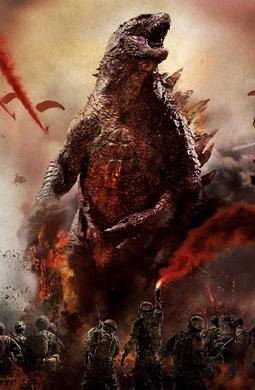
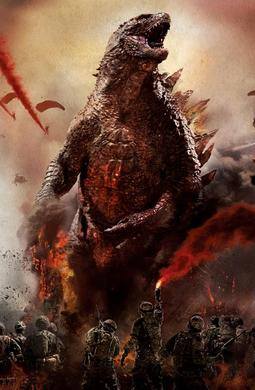
    We’ll begin with “Godzilla” (2014), the most recent incarnation of the pop-cultural icon, originally a metaphor for the destructive power of nuclear weapons, but now seemingly more of a jack-of-all-trades restorer of natural balance. Either way, it’s generally man’s overweening pride that brings on the destruction. The composer for this latest version was Alexandre Desplat.

    Then we’ll take a storm-swept hot air balloon to “Mysterious Island” (1961). Jules Verne’s novel becomes the framework for a series of battles between a band of castaways and giant creatures at an uncharted locale in the South Pacific. The great Ray Harryhausen provided the special effects – including giant bees, birds and crabs – and Bernard Herrmann underscored the outlandish situations to perfection.

    Henry Mancini gained world-fame for his breezy melodies for “Breakfast at Tiffany’s” and the “Pink Panther” films, but he got his start writing for B-movies of the 1950s. In “Tarantula” (1955), scientists conduct experiments on animals in order to develop a super food nutrient, as a preemptive strike against future overpopulation and world hunger. However, as the countryside becomes littered with cattle carcasses and pools of arachnid venom, clearly something has gone awry. Mancini collaborated on the score with 1950s science fiction maestro Herman Stein. Don’t go into it expecting “Moon River.”

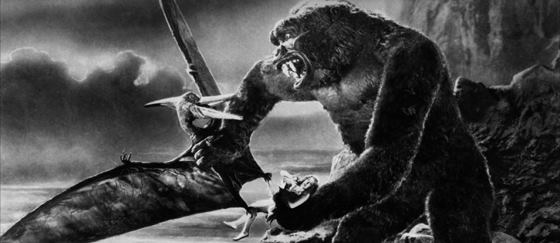
    Finally, we’ll hear selections from literally the 800-pound gorilla of giant monster movies, “King Kong” (1933). Oscar Levant memorably described “Kong” as “a symphony accompanied by a movie.” The music was certainly a great part of the film’s initial – and enduring – success.

    Max Steiner’s concept and execution of the music for “Kong” was really the first of their kind. Thanks to “Kong” and other early efforts by Franz Waxman and Erich Wolfgang Korngold, a prototype of the Hollywood sound was formed, and the spectacular images onscreen, especially those characteristic of the fantasy and adventure genres, were expected to be accompanied by equally lavish and outlandish orchestras.

    No doubt, Hollywood would have figured it out eventually, yet it’s very gratifying to say, if it weren’t for “Kong,” there would be no “Ben-Hur,” there would be no “Star Wars,” there would be no “The Lord of the Rings.” At any rate, “Kong” got there first.

    I hope you’ll join me for these outsized musical adventures this week, on “Picture Perfect,” this Friday evening at 6:00 EST, on WWFM – The Classical Network and wwfm.org.

  • Lost Worlds Fantasy Film Scores Radio Show

    Lost Worlds Fantasy Film Scores Radio Show

    This week on “Picture Perfect,” prepare to get “lost.” We’ll have an hour of music from fantasy films set in lost worlds.

    In “King Kong” (1933), filmmaker and entrepreneur Carl Denham hires a ship to an uncharted island, known only from a secret map in his possession. There the crew discovers the titular gorilla and other outsized and should-be-extinct creatures. Kong is abducted from his natural habitat – and you know the rest. The composer, Max Steiner, pulls out all the stops. “Kong” was one of the first films to demonstrate how truly powerful an orchestral soundtrack could be.

    Then we travel to the earth’s core, courtesy of Jules Verne, and “Journey to the Center of the Earth” (1959). James Mason is the professor who leads the expedition. The film sports one of Bernard Herrmann’s most outlandish soundscapes, the orchestra consisting of winds, brass and percussion, but also cathedral organ, four electric organs, and an obsolete Renaissance instrument called the serpent. Watch out for that giant chameleon!

    “One Million Years B.C.” (1966) is a guilty pleasure if ever there was one. Produced by Hammer, the studio that gave us all those repugnant yet somehow delicious Peter Cushing-Christopher Lee horror team-ups, the film features special effects by the legendary Ray Harryhausen and an equally legendary fur bikini, worn by Raquel Welch. The music is by Mario Nascimbene, who wrote one of my favorite scores for Kirk Douglas, for “The Vikings.” We’ll be listening to the film’s climactic volcano sequence.

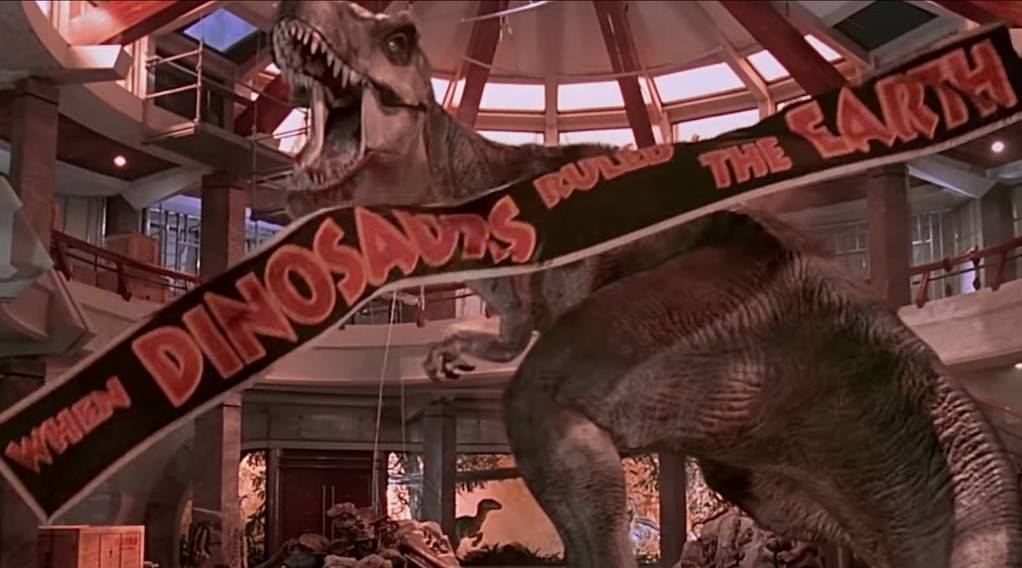
    As he did with the Indiana Jones films, director Steven Spielberg turned to B-movie source material for his visual inspiration for “Jurassic Park” (1993), based on the novel by Michael Crichton. The herky-jerky dinosaur effects of yore are replaced by state of the art computer-generated effects, in the story of a safari park on a remote island gone wrong.

    Sure, we’ve come a long way from Raquel Welch getting carried off by a pteranodon, but admit it, we all still want to see people fight dinosaurs. Instead of fudging history, now we can feel superior by fudging science. “Jurassic Park” plays on the most recent scientific thinking, with DNA extracted from mosquitoes trapped in amber, cloning, and the theory that dinosaurs were not lizards, after all, but rather birds. The music is by long-time Spielberg-collaborator, John Williams.

    I hope you’ll join me for music for these “Lands That Time Forgot,” this Friday evening at 6 EDT, with a repeat Saturday morning at 6; or that you’ll listen to it later as a webcast at wwfm.org.

  • Giant Movie Monsters Music from Godzilla to Kong

    Giant Movie Monsters Music from Godzilla to Kong

    Super size me!

    We’re thinking big this week, on “Picture Perfect,” with outsized thrills from movies featuring gargantuan creatures.

    We’ll begin with “Godzilla” (2014), the most recent incarnation of the pop-cultural icon, originally a metaphor for the destructive power of nuclear weapons, but now seemingly more of a jack-of-all-trades restorer of natural balance. Either way, it’s generally man’s overweening pride that brings on the destruction. The composer for this latest version was Alexandre Desplat.

    Then we’ll take a storm-swept hot air balloon to “Mysterious Island” (1961). Jules Verne’s novel becomes the framework for a series of battles between a band of castaways and giant creatures at an uncharted locale in the South Pacific. The great Ray Harryhausen provided the special effects – including giant bees, birds and crabs – and Bernard Herrmann underscored the outlandish situations to perfection.

    Henry Mancini gained world-fame for his breezy melodies for “Breakfast at Tiffany’s” and the “Pink Panther” films, but he got his start writing for B-movies of the 1950s. In “Tarantula” (1955), scientists conduct experiments on animals in order to develop a super food nutrient, as a preemptive strike against future overpopulation and world hunger. However, as the countryside becomes littered with cattle carcasses and pools of arachnid venom, clearly something has gone awry. Mancini collaborated on the score with 1950s science fiction maestro Herman Stein. Don’t go into it expecting “Moon River.”

    Finally, we’ll hear selections from literally the 800-pound gorilla of giant monster movies, “King Kong” (1933). Oscar Levant memorably described “Kong” as “a symphony accompanied by a movie.” The music was certainly a great part of the film’s initial – and enduring – success.

    Max Steiner’s concept and execution of the music for “Kong” was really the first of their kind. Thanks to “Kong” and other early efforts by Franz Waxman and Erich Wolfgang Korngold, a prototype of the Hollywood sound was formed, and the spectacular images onscreen, especially those characteristic of the fantasy and adventure genres, were expected to be accompanied by equally lavish and outlandish orchestras.

    No doubt, Hollywood would have figured it out eventually, yet it’s very gratifying to say, if it weren’t for “Kong,” there would be no “Ben-Hur,” there would be no “Star Wars,” there would be no “The Lord of the Rings.” At any rate, “Kong” got there first.

    I hope you’ll join me for these outsized musical adventures this week, on “Picture Perfect,” tonight at 6 ET, with a repeat tomorrow morning at 6; or that you’ll listen to it later as a webcast at wwfm.org.

  • Planet of the Apes Music Jerry Goldsmith

    Planet of the Apes Music Jerry Goldsmith

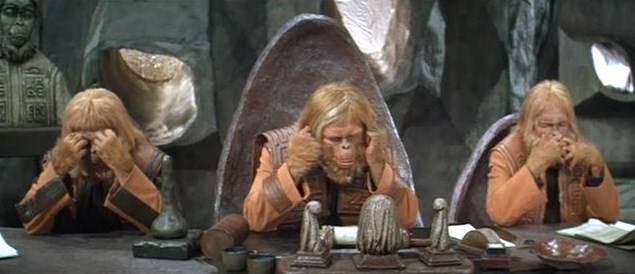
    With the publicity machine going full-throttle for the new “Planet of the Apes” movie, I thought we’d take the opportunity this week on “Picture Perfect” to look back to Jerry Goldsmith’s music for the original 1968 classic.

    Goldsmith incorporated all sorts of unusual effects into his groundbreaking score. He employed such instruments as tuned mixing bowls, a bass slide-whistle, and the cuika, a Brazilian wind instrument used to mimic the hooting of excited apes. He instructed his hornists to play without mouthpieces, and he manipulated percussion through the use of an Echoplex.

    Barbaric and unnerving, with little in the way of lyricism, I can’t imagine anything like it being used in a major Hollywood film today. Well, from my description, I guess I can, but Goldsmith was the real deal – a talented composer with real tools (not just a laptop) at his disposal.

    While my initial impulse had been to fill out the hour with music from some of the other films in the “Apes” franchise, after listening for a while, the grimness and brutality became a bit too unremitting, so instead we’ll swing with the gorilla theme.

    Among the other selections will be an extended passage from the Dian Fossey biopic, “Gorillas in the Mist,” which starred Sigourney Weaver and featured music by Maurice Jarre, of “Lawrence of Arabia” and “Doctor Zhivago” fame, though from his later, lamentable “electronic” period.

    We’ll also hear a bit from the “Mighty Joe Young” remake (since I couldn’t get a hold of Roy Webb’s score for the original). The music is pretty much standard James Horner (eg. “Titanic”), though he does incorporate a Swahili choir.

    Finally, we’ll sample from Max Steiner’s landmark score to the 800-pound gorilla of all monkey movies, 1933’s “King Kong.”

    I hope you’ll join me this week as we go ape, on “Picture Perfect,” music for the movies, tomorrow evening at 6 ET. Remember, you can always listen to the show later as a webcast at http://www.wwfm.org.

    “Take your stinkin’ paws off me…!” (with Goldsmith’s music, including cuika effects):

    https://www.youtube.com/watch?v=pBMvR_RnKu4

Tag Cloud

Aaron Copland (92) Beethoven (95) Composer (114) Film Music (120) Film Score (143) Film Scores (255) Halloween (94) John Williams (185) KWAX (229) Leonard Bernstein (100) Marlboro Music Festival (125) Movie Music (135) Opera (198) Philadelphia Orchestra (88) Picture Perfect (174) Princeton Symphony Orchestra (106) Radio (87) Ralph Vaughan Williams (85) Ross Amico (244) Roy's Tie-Dye Sci-Fi Corner (290) The Classical Network (101) The Lost Chord (268) Vaughan Williams (103) WPRB (396) WWFM (881)

DON’T MISS A BEAT

Receive a weekly digest every Sunday at noon by signing up here


RECENT POSTS