Tag: Kings Row

  • Ives Bellamann Kings Row A Lost Chord

    Ives Bellamann Kings Row A Lost Chord

    In putting together a special edition of “The Lost Chord” for the 150th anniversary of the birth of Charles Ives, I learn that the first performances of Ives’ “Concord Sonata,” following the work’s publication in 1920, were organized by Henry Bellamann.

    Bellamann, later chairman of the examination board at Juilliard (1924-26) and dean of the Curtis Institute of Music in Philadelphia (1931-32), wrote the bestselling novel “Kings Row.” The book was published in 1940 and adapted into a film by Warner Bros. in 1942.

    I’ve always loved “Kings Row,” the movie, even though it is rather bizarre and over-the-top. Okay, I admit it: I love it BECAUSE of those things. It’s actually a very grim story, anticipating the work of David Lynch, in some respects, as it gradually reveals the dark underbelly of life in a small Midwestern town. A sign on the outskirts advertises it as “a good town… a good clean town… a good town to live in… and a decent place to raise your children.” Of course it’s none of those things. But for as dark as the movie gets, it somehow never loses its sense of optimism. Bellamann’s book, on the other hand, is unrelentingly melancholy and bleak-as-hell. I have to say, it’s a massive downer. Even so, readers adored it. So much so, that Bellamann was spurred to write a sequel (which I have not read), “Parris Mitchell of Kings Row.”

    As you can imagine, the notoriety of “Kings Row” caused quite a stir in Bellamann’s hometown of Fulton, Missouri, and not necessarily because of its success. Rather, a few too many people and institutions recognized themselves in the extremely unflattering narrative. Allegedly the book was banned from the town library, and Bellamann was the target of at least one indignant editorial in the local newspaper.

    “Kings Row” is one of the most subversive films of Hollywood’s golden age. How it managed to get around the Hays Code is anybody’s guess, but I’m putting my money on the music by Erich Wolfgang Korngold, which breathes uplift and hope into what could have been two hours and seven minutes of sustained misery.

    Also, the ending was changed, such an obvious overcompensation, with the climax an almost ludicrous eruption of joy. It’s a neat trick, as somehow, in the film, not only is the wicked in human nature balanced by the good, but the whole is infused with an undercurrent of nostalgia for a passing world. It’s kind of like how people choose to remember “It’s a Wonderful Life,” even though you have to go through hell before you get to heaven.

    Amusingly, from the title, Korngold thought he was being assigned yet another historical adventure (he was Warners’ composer of choice for the Errol Flynn swashbucklers), which is why the theme is so wildly exuberant. By 1942, Korngold could do pomp and braggadocio in his sleep. When he learned of his misunderstanding, he just kept at it. And what a happy accident! The film is so much better – and so much more bearable – than it otherwise would have been. After all, how much madness, suicide, amputation, and incest can one take, especially in the 1940s? It really is quite the sleight of hand.

    FUN FACT: When John Williams came to write the main title for “Star Wars,” “Kings Row” was one of his principal inspirations.

    It was decades earlier that Bellamann reached out to Ives, in preparation for his lectures on the “Concord Sonata.” Bellamann toured the work across the American South, from New Orleans to Spartanburg, South Carolina, providing spoken introductions to each of the four movements, the music itself performed by pianist Lenore Purcell.

    Bellamann would go on to write important articles about Ives, based on his extensive correspondence with the composer. He was the first to report on the influence of Ives’ musically progressive father, George, who was as much ahead of his time as Charles would be, and the composer’s perceptions of his hidebound teacher, Horatio Parker. Bellamann also provided program notes for some early Ives’ performances.

    A graduate of Westminster College in Fulton (no relation to the Princeton institution), Bellamann also studied piano at the University of Denver. He then taught music at several girls’ schools in the South, while in the summers, he traveled to Europe to continue his studies with Charles-Marie Widor and Isador Philipp. Bellamann would hold several prominent administrative and teaching positions in the U.S. In addition to his work at Juilliard and Curtis, he was also a professor of music at Vassar College.

    Since I won’t be talking about him on my Ives show, I figured I’d mention him here. The “Concord Sonata” will be heard in a most unusual form on “Concord and Discord,” an all-new episode of “The Lost Chord,” this Saturday, the eve of Ives’ sesquicentenary, at 4:00 EDT/7:00 PDT, exclusively on KWAX, the radio station of the University of Oregon.

    Stream it wherever you are at the link:

    https://kwax.uoregon.edu/


    CLOCKWISE FROM LEFT: Ives; Bellamann; and 680 pages of pure misery

  • Small Town Secrets Dark Suburbia in Film

    Small Town Secrets Dark Suburbia in Film

    This week on “Picture Perfect,” our unifying theme is two-pronged, as we explore the dark underbelly of small-town life and the consequences of bucking conformity.

    The events of “Peyton Place” (1957) unfold in a picturesque New Hampshire town, in which all sorts of sordid goings-on roil beneath the surface. Grace Metalious’ runaway bestseller spawned a film, starring Lana Turner, and also a subsequent TV series, with Mia Farrow. Neither version is nearly as seedy as the original, which was about an idyllic New England community whose residents have more than their share of skeletons in the closet. The score includes one of Franz Waxman’s best-known themes.

    “Far From Heaven” (2002) is set in a Connecticut suburb during the 1950s. Therefore, it makes sense that the filmmakers deliberately attempted to conjure the vibe of a Douglas Sirk film. In common with Sirk melodramas like “All That Heaven Allows” and “Imitation of Life,” “Far From Heaven” deals with social issues, in this instance regarding race, class, gender roles and sexual orientation.

    The score was the last by the great Elmer Bernstein, who had actually been composing for film since the ‘50s. Over the course of his career, he was nominated for 14 Academy Awards. Despite his work on such classics as “The Ten Commandments,” “The Magnificent Seven” and “To Kill a Mockingbird,” his only win would be for “Thoroughly Modern Millie,” of all things, in 1967. He received his final nomination for his work on this film.

    “Edward Scissorhands” (1990) is Tim Burton’s satirical-yet-touching update of the “Frankenstein” tale, transported to a contemporary American suburb. An artificial man with unusual appendages gradually wins over his suspicious neighbors with his aptitude for hairstyling and lawn sculpture. However, things quickly go south. For the very differences for which Edward was briefly celebrated, he is now hunted by an angry mob.

    Burton presents a cookie-cutter suburbia, simultaneously tacky and anonymous. The houses are painted in faded pastels, and everyone follows the same routine. The score, by Danny Elfman, alternately antic and romantic, has proved to be one of his most memorable.

    Finally, we turn to “Kings Row” (1942), based on the novel by Henry Bellamann (one time dean of the Curtis Institute of Music!). The film is a spiritual forerunner, not only of “Peyton Place,” but also, to an extent, of David Lynch’s “Blue Velvet” and “Twin Peaks,” in the sense that it presents life in an idyllic small town that nonetheless casts some very long shadows.

    The film of “Kings Row” accomplishes a remarkable balancing act, in that it manages to maintain an air of hope and optimism, despite all the horrible things that happen to a number of the characters. In this sense, it pulls some of the punches thrown by the original book, in part as a concession to the Hays Code, which forced some of the rougher themes to be altered, dropped or implied. Bellamann’s novel is a much bleaker experience.

    The score was by Erich Wolfgang Korngold, at this point in his career associated with historical adventure films, as Errol Flynn’s regular composer. He wrote the brash theme music for “Kings Row” wholly in this vein, allegedly on an initial assumption drawn from the film’s title. Korngold’s music for this picture was also one of the primary inspirations for John Williams’ main title for “Star Wars.”

    Good fences make good neighbors. Join me for “Suburban and Small Town Blues” this week, on “Picture Perfect,” music for the movies, now in syndication on KWAX, the radio station of the University of Oregon!


    Clip and save the start times for all three of my recorded shows:

    PICTURE PERFECT, the movie music show – Friday at 8:00 PM EDT/5:00 PM PDT

    SWEETNESS AND LIGHT, the light music program – ALL NEW! – Saturday at 11:00 AM EDT/8:00 AM PDT

    THE LOST CHORD, unusual and neglected rep – Saturday at 7:00 PM EDT/4:00 PM PDT

    Stream them, wherever you are, at the link!

    https://kwax.uoregon.edu/

  • Korngold The Genius Behind John Williams’ Sound

    Korngold The Genius Behind John Williams’ Sound

    Before John Williams, there was Erich Wolfgang Korngold.

    Korngold’s music for “The Adventures of Robin Hood” (1938) was every bit as influential to me, in terms of introducing me to the wonders of orchestral music, as the score to “Star Wars.” Clearly, it also impacted John Williams, as the music for his biggest blockbusters adheres to the Korngold template of leitmotifs, lush orchestration, and swashbuckling action cues.

    Williams has cited Korngold’s main title music for “Kings Row,” in particular, as one of his inspirations for “Star Wars.” The bold, opulent, classic Hollywood imprint is obvious. Listeners coming cold to “Kings Row” detect the influence immediately. Which is interesting. It’s there in the orchestration, of course, and in the bold fanfares, but it isn’t so blatant as some of the other, more brazen allusions that occur throughout Williams’ score, which I’m sure I’m not alone in contending is a post-modern masterpiece. It’s only little minds that scream theft. Good artists copy; great artists steal! (I believe Stravinsky stole that from Picasso.)

    In case you are unfamiliar with his backstory, years before he came to Hollywood, Korngold was a child prodigy, the toast of Vienna. Gustav Mahler declared him a genius, and Richard Strauss claimed he was terrified by the amount of talent exhibited by one so young. His works were championed by the most esteemed musicians of the day. He was especially highly-regarded for his operas, with “Die tote Stadt” (“The Dead City”), given a double premiere in Hamburg and Cologne, the high-water mark of his success.

    Korngold first came to Hollywood to assist Viennese theatrical impresario Max Reinhardt in bringing “A Midsummer Night’s Dream” to the big screen for Warner Bros. This is the version with James Cagney, Olivia de Havilland, and Mickey Rooney (as Puck). So impressed was Warner with the score, freely adapted from the music of Mendelssohn, that they didn’t want to let this world-class composer go. He was a particularly nice fit for the pageantry and swagger of the Errol Flynn classics.

    Fortunately, Korngold was at work on “Robin Hood” when the Nazis marched into Austria. He and his family found refuge in the company of many other notable European exiles on the paradisal West Coast of the United States. But the luster soon dulled. Korngold vowed to compose no concert music while Hitler remained in power. After the war, he produced a Violin Concerto, which was savaged by one critic as “more corn than gold,” and a heart-breaking Symphony in F-sharp, which exudes longing for a lost world. Both assimilated themes from his film scores.

    He never lived to see his reputation rebound. However, since the 1970s, the popularity of his film music and critical esteem for his concert music have been on an upward trajectory.

    I’ve always loved “Kings Row,” even though the film is something of a curate’s egg. It’s actually a very grim story, anticipating the work of David Lynch, in some respects, as it gradually reveals the dark underbelly of small-town life in the Midwest. But it’s nowhere near as dark as the source material, a bleak-as-hell novel by Henry Bellamann.

    “Kings Row,” the book, is a massive downer. Somehow, it also became a runaway bestseller.

    Interestingly, Bellamann also had a musical background. Following his graduation from Westminster College (unrelated to the Princeton institution) in his hometown of Fulton, Missouri, he studied piano at the University of Denver. He went on to teach music at several girls’ schools in the South, while in the summers, he continued his studies in Europe with Charles-Marie Widor and Isador Philipp. Bellamann would hold several prominent administrative and teaching positions in the U.S., including director of the Juilliard Musical Foundation, dean of the Curtis Institute of Music, and professor of music at Vassar College.

    As you can imagine, the book caused quite a stir in Fulton, but not because of its success. Rather, a few too many people and institutions recognized themselves in the extremely unflattering narrative! Allegedly the book was banned from the town library, and Bellamann was the target of at least one indignant editorial in the local newspaper.

    “Kings Row” is one of the most subversive films of Hollywood’s golden age. How it managed to get around the Hays Code is anybody’s guess, but I’m putting my money on Korngold’s score, which breathes uplift and hope into what could have been an unrelentingly bleak story (as it is in the novel). Also, the ending was changed, such an obvious overcompensation, with the climax an almost ludicrous eruption of joy. It’s a neat trick, as somehow, in the film, not only is the wicked in human nature balanced by the good, but the whole is infused with an undercurrent of nostalgia for a passing world. It’s kind of like how people choose to remember “It’s a Wonderful Life,” even though you have to go through hell before you get to heaven.

    Amusingly, from the title, Korngold thought he was being assigned yet another historical adventure, which is why the theme is so wildly over the top. By 1942, Korngold could do pomp and braggadocio in his sleep. When he learned of his mistake, he just kept it. And what a happy accident! The film is so much better – and so much more bearable – than it would have been without it. After all, how much madness, suicide, amputation, and incest can one take, especially in the 1940s? It really is quite the sleight of hand. Now I want to watch it again!

    To this day, I waver as to whether Korngold or Williams is my favorite film composer. There are others I may revere more than either of them, but these two give me the most pleasure.

    May I obey all your commands with equal pleasure, Sire! Happy birthday, Erich Wolfgang Korngold!


    “Kings Row”

    John Williams talks Korngold with Leonard Slatkin

    Good nine-minute primer on E.W.K.

    Violin Concerto

    Music as good as spring itself: the Sinfonietta, composed at 15

    Marietta’s Lied from “Die tote Stadt”

    “The Sea Hawk”

    What say you to that, Baron of Loxley?

  • Small Town Secrets in Film Scores

    Small Town Secrets in Film Scores

    This week on “Picture Perfect,” at a time when political tensions run high, I have the bad fortune to have selected a rerun centering on films that explore the dark underbelly of small-town life and the consequences of bucking conformity. This is not a veiled dig at those who live in less-populous areas. I prefer to live there myself!

    Be that as it may, in the interest of balance (though again, wholly by coincidence), next week, the focus will shift to film noir in the gritty city. So no rioting, if you please!

    The events of “Peyton Place” (1957) unfold in a picturesque New Hampshire town, in which all sorts of sordid goings-on roil beneath the surface. Grace Metalious’ runaway bestseller spawned a film, starring Lana Turner, and also a subsequent TV series, with Mia Farrow. Neither version is nearly as seedy as the original, which was about an idyllic New England community whose residents have more than their share of skeletons in the closet. The score includes one of Franz Waxman’s best-known themes.

    “Far from Heaven” (2002) is set in a Connecticut suburb during the 1950s. Therefore, it makes sense that the filmmakers deliberately attempt to conjure the vibe of a Douglas Sirk film. In common with Sirk melodramas like “All That Heaven Allows” and “Imitation of Life,” “Far from Heaven” deals with social issues, in this instance regarding race, class, gender roles, and sexual orientation.

    The score was the last by the great Elmer Bernstein, who had actually been composing for film since the ‘50s. Over the course of his career, Bernstein was nominated for 14 Academy Awards. However, despite his work on such classics as “The Ten Commandments,” “The Magnificent Seven” and “To Kill a Mockingbird,” his only Oscar win came with, of all things, “Thoroughly Modern Millie,” in 1967. He received his final nomination for his work on this film.

    “Edward Scissorhands” (1990) is Tim Burton’s satirical-yet-touching update of the “Frankenstein” tale, transported to a contemporary American suburb. An artificial man with unusual appendages gradually wins over his suspicious neighbors with his aptitude for hairstyling and lawn sculpture. However, things quickly go south. For the very differences for which Edward was briefly celebrated, he is now hunted by an angry mob.

    Burton presents a cookie-cutter suburbia, simultaneously tacky and anonymous. The houses are painted in faded pastels, and everyone follows the same routine. The score, by Danny Elfman, alternately antic and romantic, has proved to be one of his most memorable.

    Finally, we turn to “Kings Row” (1942), based on the novel by Henry Bellamann. The film is a spiritual forerunner not only of “Peyton Place,” but also, to an extent, of David Lynch’s “Blue Velvet” and “Twin Peaks,” in the sense that it presents life in an idyllic small town that nonetheless casts some very long shadows.

    The film of “Kings Row” accomplishes a remarkable balancing act, in that it manages to maintain an air of hope and optimism, despite all the horrible things that happen to a number of the characters. To this end, it pulls some of the punches thrown by the original book, in part as a concession to the Hays Code, which forced some of the rougher themes to be altered, dropped, or implied. Bellamann’s novel is a much bleaker experience.

    The score is by Erich Wolfgang Korngold, at this point in his career associated with historical adventure films, as Errol Flynn’s regular composer. He wrote the brash theme music for “Kings Row” wholly in this vein, allegedly on an initial assumption drawn merely from the film’s title.

    Good fences make good neighbors. Join me for “Suburban and Small Town Blues” this week, on “Picture Perfect,” music for the movies, this Saturday evening at 6:00 EST, on WWFM – The Classical Network and wwfm.org.


    As of this writing, we are less than $2,000 away from the completion of our fall fundraiser! Your contribution in any amount will help us attain our $70,000 goal. We’ve come a long way, thanks to engaged listeners like you. It’s easy to make a donation. Simply follow the link below. Thank you for your support of classic film scores on YOUR classical music station, WWFM The Classical Network!

    https://wwwfm.secureallegiance.com/wwfm/WebModule/Donate.aspx?P=DEFAULT&PAGETYPE=PLG&CHECK=vOU2bz5JCWmgCDbf53nm9ezWDeZ%2beA1M

  • Time & Cinema Kings Row to The Leopard

    Time & Cinema Kings Row to The Leopard

    This week on “Picture Perfect,” with another year nearly burnt to nub, it’s an hour of cinematic reflections on time and impermanence.

    “Kings Row” (1942), based on the bestselling novel of Henry Bellamann (the one-time dean of the Curtis Institute of Music), takes place over a span of decades in a small Midwestern town. The community’s dark underbelly, gradually revealed, proves especially challenging to the story’s three protagonists, played by Robert Cummings, Ann Sheridan and Ronald Reagan.

    The deteriorating health of Cumming’s character’s grandmother (Maria Ouspenskaya, best known as Maleva, the gypsy fortune teller, in the 1943 version of “The Wolfman”) moves one of the film’s supporting characters to eulogize the passing of “… a whole way of life. A way of gentleness and honor and dignity. These things are going… and they may never come back to this world.” The story straddles the turn of the 20th century, even incorporating a New Year’s scene set in the year 1900.

    Erich Wolfgang Korngold composed the music. The opening fanfare, which we’ll hear from a rare 1961 recording, is said to have been one of the principal inspirations on John Williams in the writing of “Star Wars.”

    Director Orson Welles made his stunning Hollywood debut with back-to-back explorations of change and the passage of time: “Citizen Kane” (1941), about the rise and fall of a larger-than-life newspaper magnate – who, at his core, longs only for a simple pleasure of his childhood – and “The Magnificent Ambersons” (1942), after Booth Tarkington’s Pulitzer Prize-winning novel, documenting a prominent family’s declining fortunes over three generations. Both films sport scores by the ever-versatile Bernard Herrmann. We’ll hear some of the more upbeat selections assembled by the composer into a concert suite called “Welles Raises Kane.”

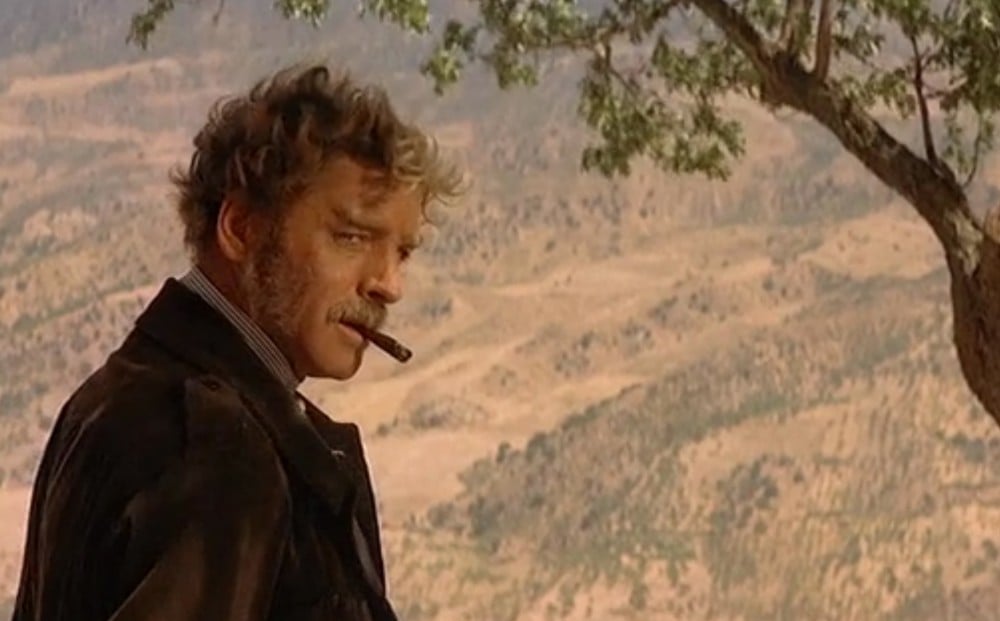
    “The Leopard” (1963) must be one of the most poignant meditations on mutability and time. One could argue whether or not director Luchino Visconti manages to capture the images of decay so pervasive in Giuseppe Tomasi di Lampedusa’s novel. What he does achieve is an achingly poetic study of the fall from prominence of an aristocratic Sicilian family, and the impact upon its patriarch (played by Burt Lancaster) during the time of Italian unification. Along the way, he also succeeds in staging one of the great set-pieces: an opulent ball that spans nearly a third of the film’s 187-minute running time. The operatically moving score is by Nino Rota.

    The hour will conclude with one final selection for the New Year, a lively overture to “The Four Poster” (1952). Rex Harrison and Lili Palmer appear in a series of vignettes – bedroom scenes – featuring a novelist husband and his wife. Collectively, they encapsulate the history of a marriage. The film became the basis for the musical “I Do! I Do!” The music is by Dimitri Tiomkin.

    Mark the sands of the hourglass and heed selections for the New Year. Nought may endure but Mutability, this Friday evening at 6:00 EST, on WWFM – The Classical Network and wwfm.org.

Tag Cloud

Aaron Copland (92) Beethoven (95) Composer (114) Film Music (120) Film Score (143) Film Scores (255) Halloween (94) John Williams (185) KWAX (229) Leonard Bernstein (100) Marlboro Music Festival (125) Movie Music (135) Opera (198) Philadelphia Orchestra (88) Picture Perfect (174) Princeton Symphony Orchestra (106) Radio (87) Ralph Vaughan Williams (85) Ross Amico (244) Roy's Tie-Dye Sci-Fi Corner (290) The Classical Network (101) The Lost Chord (268) Vaughan Williams (103) WPRB (396) WWFM (881)

DON’T MISS A BEAT

Receive a weekly digest every Sunday at noon by signing up here


RECENT POSTS