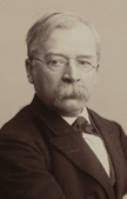
Today is the anniversary of the birth of Antonio Salieri (born in 1750), but since he’s used to being dissed anyway, I’ll write about Herman Berlinski.
Berlinski was born on this date in 1910, in Leipzig, the son of Polish Jews who had fled political instability, with growing discontent in Poland against Russian rule. His family retained its Polish nationality for fear of being declared stateless by the Germans, who were not generous with granting citizenship to outsiders. This at least allowed them to retain the rights of foreigners legally resident in the country.
Berlinski, the youngest of six children, was brought up in an Orthodox household. His father was a haberdasher, and the family spoke Yiddish. The boy showed an early aptitude for the piano and later the clarinet. A series of private teachers (beginning with his mother) led to his acceptance into the Leipzig Conservatory.
Berlinski would attend Friday evening concerts at the Thomaskirche, where Johann Sebastian Bach had acted as cantor and given the premiere of so many of his sacred works two centuries earlier. Overhearing Berlinksi rehearse the “Goldberg Variations,” the current cantor, Karl Straube, offered to give him organ lessons at the Institut der Evangelisch-Lutherischen Landeskirche Sachsen, but since Berlinski wasn’t Christian he was denied entrance to the program.
In 1933, the Nazis took control of Germany, and Berlinski decided to get out while the getting was good. First, he returned to Poland, but since he didn’t speak Polish, he felt himself at a disadvantage and the Jewish community in which he had settled was mired in misery. So he took off for Paris, where he studied with Nadia Boulanger and Alfred Cortot.
Ultimately, he became dissatisfied with Boulanger’s musical approach. He was much happier studying Jewish liturgical music at the Schola Cantorum. Through studies with Jean-Yves Daniel-Lesur, founder of the group La Jeune France, he met Olivier Messiaen, who encouraged him to explore his Jewish heritage in music, much the way he himself had decided to embrace Catholicism.
He became an important part of the city’s Yiddish theater community until the outbreak of World War II in 1939, when he enlisted in the Foreign Legion. He survived fighting at the Maginot Line, but when France fell to the Germans, he was declared undesirable and denied the right to work. Fortunately, he was able to get a visa, and he arrived in New York in 1941. There, he reunited with his father and other members of his family who were living in New Jersey.
Musically, an influential meeting with Moshe Rudinow, cantor of Temple Emanu-El, one of New York’s leading Reform synagogues, led to an invitation in 1944 to join the Jewish Music Forum, a body set up to promote all aspects of Jewish music, including the performance of new works. This brought him into contact with many key musicians, composers and musicologists.
In the meantime, he met up with Messiaen again at Tanglewood and continued his studies in composition with him. In 1954, he was hired as an organist at Emanu-El, where he composed much music for his instrument and chorus. He undertook post-graduate studies at the Jewish Theological Seminary of America. He also studied privately with Hugo Weisgall. Despite suffering a heart attack, Berlinski was able to complete his doctorate in 1960, becoming the first person ever to earn the highest degree in sacred music from the JTSA.
In 1963, Berlinski’s career brought him to Washington, DC, where he served as music director of the Reform Hebrew Congregation. This was a fertile period for the composer. He wrote much sacred music, including large scale vocal works and pieces for organ and voice or organ and other instruments. His abilities as an organist brought him back to Europe for recitals at Leipzig’s Thomaskirche and Notre Dame in Paris.
He retired from the Congregation in 1977, founding the Shir Chadash Chorale, which performed annually at the Kennedy Center and Washington Cathedral.
Berlinski died in 2001, at the age of 91. He lived long enough to work with the Milken Archive to have some of his works documented and released as part of the Milken Archive of American Jewish Music series, issued on the Naxos label. His music has broader appeal than its ties to the synagogue or the specificity of his Jewish heritage would suggest.
Here’s Berlinski at the recording sessions for “Avodat Shabbat,” with Gerard Schwarz conducting.
https://www.youtube.com/watch?v=m2kQVp61CHQ
Also, Berlinski’s “Symphonic Visions”:
Mov’t I: https://www.youtube.com/watch?v=PvNfrF6DqGw
Mov’t II: https://www.youtube.com/watch?v=u6d3HIYu8S0
Mov’t III: https://www.youtube.com/watch?v=inw6pmQ5KrE
Happy birthday, Herman Berlinski!