Tag: Leon Fleisher

  • Mozart’s Jupiter Symphony: Marlboro Festival

    Mozart’s Jupiter Symphony: Marlboro Festival

    With the new year bearing down upon us, I can think of nothing more appropriate – indeed more necessary – than the energetic striving and eternal optimism of the finale of Mozart’s last symphony, the Symphony No. 41, subtitled the “Jupiter.”

    Incredibly, Mozart composed the “Jupiter” along with the Symphonies Nos. 39 and 40 in a burst of sustained inspiration over the summer of 1788. Though he had nothing to do with the work’s lofty moniker, it is the composer’s longest symphony, and quite possibly his greatest.

    Mozart’s magnum opus will be the main attraction on this week’s “Music from Marlboro.” The Marlboro Music Festival, of course, is renowned primarily as a retreat for some of the world’s most revered artists and promising young talent, who come together each summer to explore works from the vast chamber music repertoire. Every once in a while, though, many of the musicians assemble to perform an enduring orchestral masterpiece.

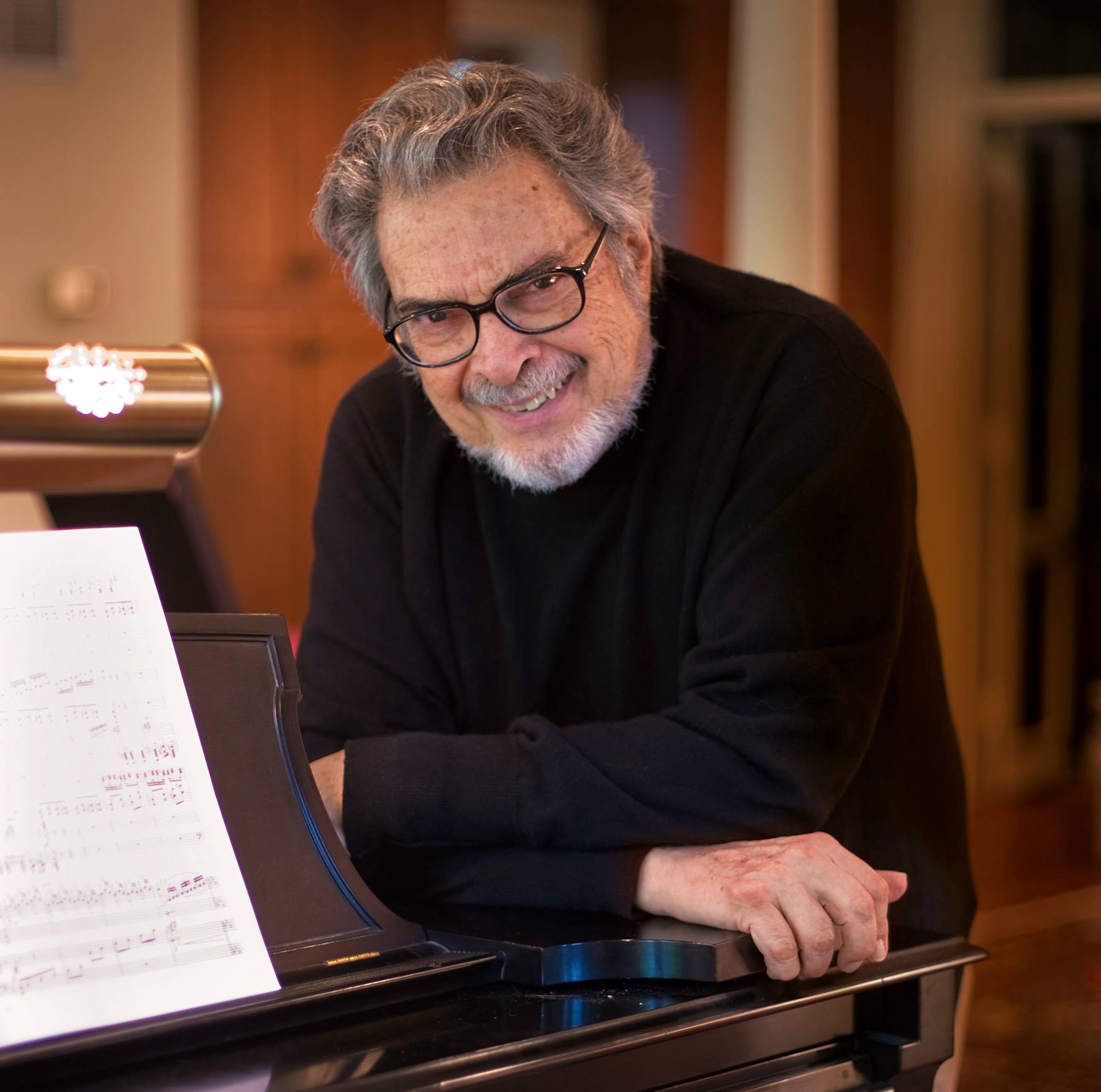
    Leon Fleisher, himself a pianist and beloved teacher, was forced to diversify with the onset of focal dystonia, a chronic neurological condition that impaired the mobility of his right hand. He continues to achieve much – even to the point of reclaiming in recent years some of his former, two-handed piano repertoire. He will take up the baton, at the age of 87, to lead Mozart’s “Jupiter” in an inspirational performance from the 2015 Marlboro Music Festival.

    The program will open with several part-songs, composed around 1801, by Mozart’s friend and sometimes mentor Franz Joseph Haydn.

    “Alles hat seine Zeit” (Everything has its time) sets a text by Johann Arnold Ebert:

    Live, love, drink, clamor,
    Circle with me,
    Enthuse with me when I enthuse,
    I am wise with you.

    Haydn’s setting of “Die Harmonie in der Ehe” (Harmony in Marriage), on a text of Johann Nikolaus Götz, includes an ironic discord on the word “harmony,” perhaps reflective of his own problematic union:

    Oh, wondrous harmony, what he likes, she likes too,
    He likes to drink, she too, he likes cards, she too,
    He likes to fill his purse and to act like a great man. This is also her custom.
    Oh, wondrous harmony.

    Finally, “Abendlied zu Gott” (Evening Song to God), sets a text by Christian Fürchtegott Gellert:

    Lord, You who have given me life
    Up until this very day,
    Child-like, I pray to You.
    I am much too unworthy of the faithfulness that I sing of,
    And that You grant me today.

    The performances, from the 1976 Marlboro Music Festival, will feature soprano Claudia Visca, mezzo-soprano Constance Fee, tenor Michael Sylvester, bass John Paul White, and pianist Luis Batlle.

    Haydn and Mozart give us the strength to endure on this week’s “Music from Marlboro,” this Wednesday evening at 6:00 EST, on WWFM – The Classical Network and wwfm.org.

    Marlboro School of Music and Festival: Official Page
  • Wittgenstein’s Left Hand Piano Legacy

    Wittgenstein’s Left Hand Piano Legacy

    Some of us may puzzle over the Zen riddle about the sound of one hand clapping, but, thanks in large part to Paul Wittgenstein, we all have a pretty good idea of the sound of one hand playing.

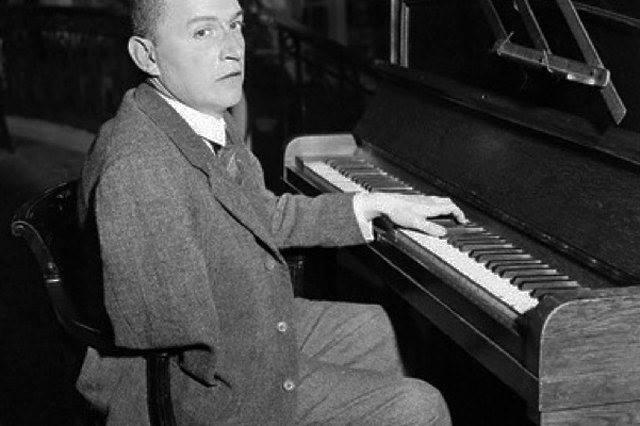
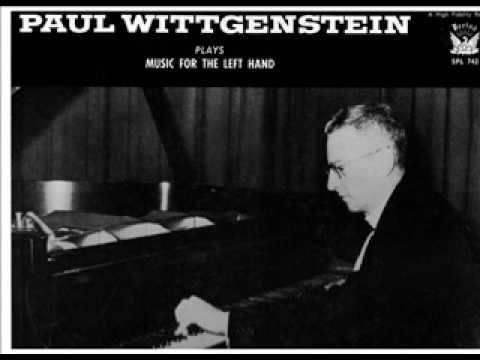
    I hope you’ll join me this morning on WPRB, as we observe the anniversary of the birth of Wittgenstein (1887-1961), a pianist from a immensely wealthy and rather eccentric Viennese family, who famously who lost his right arm in the First World War. Through hard work and the power of sheer will, he managed to return to the concert stage, using his fortune to commission many of the great composers of his time to write new works for the left hand alone.

    Among the composers to take up the challenge were Sergei Bortkiewicz, Benjamin Britten, Erich Wolfgang Korngold, Sergei Prokofiev, Franz Schmidt, Richard Strauss, and of course Maurice Ravel. We’ll hear Wittgenstein himself grapple with Ravel’s masterpiece in a 1937 concert recording.

    We’ll also enjoy a work composed in 1923 by Paul Hindemith that remained unheard for 80 years, until its rediscovery in a Pennsylvania farmhouse in 2002, following the death of Wittgenstein’s widow. Wittgenstein retained exclusive performance rights to many of his commissions, and if he didn’t somehow connect with a work, it simply went unheard. Such was the case with Hindemith’s “Klaviermusik mit Orchester” and also Sergei Prokofiev’s Piano Concerto No. 4.

    In the case of the latter, composed in 1931, Wittgenstein was eventually convinced by Siegfried Rapp, another pianist who had lost his arm in the war, to allow him to give it its premiere in Berlin in 1956. The U.S. premiere was given by Rudolf Serkin, with Eugene Ormandy and the Philadelphia Orchestra, in 1958. We’ll hear those same forces perform it this morning. Rapp will perform Bohuslav Martinu’s “Concertino for Piano (Left-Hand) and Orchestra.”

    Leon Fleisher, who grappled with focal dystonia for 40 years, was the pianist who gave the Hindemith its belated premiere in 2004, with the Berlin Philharmonic conducted by Sir Simon Rattle. We’ll hear Fleisher, now a vibrant 87 years-old, perform it – and great deal else – this morning.

    Get ready to rub shoulders with a lot of southpaws this week. Tune in from 6 to 11 ET to WPRB 103.3 FM or online at wprb.com. It will be wholly intentional, for a change, when nothing goes “right,” on Classic Ross Amico.

  • Paul Wittgenstein Left-Hand Legacy on WPRB

    Paul Wittgenstein Left-Hand Legacy on WPRB

    An accurate assessment of the contributions of Paul Wittgenstein (1887-1961) is bound to come across as a left-handed compliment. Only, as applied to Wittgenstein, the concept is perhaps not entirely negative.

    Tomorrow is the birthday anniversary of this remarkable Austrian pianist, who lost his right arm during the First World War. Rather than let it hamper his career, he went on to commission some of the great composers of his day to write new works for the left hand alone. The most famous of these is the “Concerto for the Left Hand” by Maurice Ravel.

    Tomorrow morning on WPRB, we’ll have an opportunity to listen to a number of these, including works by Sergei Bortkiewicz, Benjamin Britten, Erich Wolfgang Korngold, Sergei Prokofiev, Franz Schmidt, and Richard Strauss. We’ll also hear the world premiere recording, made by Leon Fleisher – another famous pianist who’s had right hand issues – of “Klaviermusik mit Orchester” by Paul Hindemith, a piece rediscovered in a Pennsylvania farmhouse, following the death of Wittgenstein’s widow, only in 2002.

    Wittgenstein had his limitations. He had very conservative tastes in music and rejected some of the works he commissioned, like the Prokofiev and the Hindemith, which he deemed too modern. Since he owned the exclusive performance rights, this often led to the works going unheard for decades. Also, the recordings we have of him performing the Ravel concerto will undoubtedly raise a few eyebrows with the pianist’s “improvements” to what is already a perfect work, likely the best of its kind.

    But he had an iron will to flourish, where many would have lapsed into despair, and the good sense to use the Wittgenstein fortune to enrich the repertoire in general and the left hand literature in particular.

    As time allows, we’ll also hear works championed by Siegfried Rapp and Otakar Hollman, two other pianists maimed in the war, as well as pieces written for Fleisher and Gary Graffman, modern day keyboard artists who’ve grappled with focal dystonia, and a few unrelated left-hand contributions by earlier composers such as Johannes Brahms, Camille Saint-Saëns and Alexander Scriabin.

    I hope you’ll me tomorrow morning from 6 to 11 ET, at WPRB 103.3 FM or online at wprb.com. We lend a hand to Paul Wittgenstein on Classic Ross Amico.

  • Leon Fleisher A Legend’s Journey

    Leon Fleisher A Legend’s Journey

    At 86, Leon Fleisher is a living legend. A former child prodigy, his is a direct line to Beethoven. He studied with Artur Schnabel, who studied with Theodor Leschetizky, who studied with Carl Czerny, who studied with the master himself.

    When he performed with the New York Philharmonic under Pierre Monteux at the age of 16, Monteux called him “the pianistic find of the century.” Fleisher landed a recording contract with Columbia Records and began laying down benchmark recordings of Beethoven, Brahms, Schumann, Grieg and Rachmaninoff with George Szell and the Cleveland Orchestra.

    Then everything changed.

    Fleisher was diagnosed with focal dystonia in 1964. He gradually lost control of his right hand, throwing his career as a concert pianist into jeopardy. His struggle with the affliction led to a period of soul-searching, and it forced him to diversify. He realized, as Schnabel had espoused, that music came first, the piano second.

    Fleisher began channeling his energy into teaching and conducting. He has been a venerable presence at the Peabody Conservatory of Music in Baltimore, the Royal Conservatory of Music in Toronto, and the Curtis Institute of Music in Philadelphia.

    Fortunately, the left-hand piano repertoire is extensive, and Fleisher himself has added considerably to it, through commissioned works from contemporary composers or gifts from friends. His new album, “All the Things You Are,” issued by Bridge Records, documents some of these, alongside his performance of Brahms’ towering arrangement of the Bach Chaconne.

    The record has become a surprise hit. This week, according to Nielsen Soundscan data, the album ranked second, in terms of overall sales of classical records, in the United States. Billboard ranked it at number 11. The New Yorker’s Alex Ross lauded it as “one of [Fleisher’s] finest hours on record.”

    This Sunday night on “The Lost Chord,” I am honored to have Leon Fleisher as my guest. He will join me to talk a little bit about the album and share some of his reflections on music.

    Fleisher is an extraordinary individual. Not only has he fought hard to regain control of his right hand – and done so, thanks to experimental treatments with, of all things, Botox – he is quite possibly the most gracious and generous interview subject I’ve ever encountered. It pains me to have had to edit the conversation. But perhaps there will be a follow-up show, in which I’ll air his thoughts on Paul Wittgenstein, Franz Schmidt, Paul Hindemith, Federico Mompou and Erich Wolfgang Korngold.

    In the meantime, I hope you’ll join me for “In Good Hands,” this Sunday night at 10 ET, with a repeat Friday morning at 3. Remember, you can enjoy episodes of “The Lost Chord” later as a webcast, at http://www.wwfm.org.

Tag Cloud

Aaron Copland (92) Beethoven (95) Composer (114) Film Music (119) Film Score (143) Film Scores (255) Halloween (94) John Williams (185) KWAX (229) Leonard Bernstein (99) Marlboro Music Festival (125) Movie Music (134) Opera (198) Philadelphia Orchestra (86) Picture Perfect (174) Princeton Symphony Orchestra (106) Radio (87) Ralph Vaughan Williams (85) Ross Amico (244) Roy's Tie-Dye Sci-Fi Corner (290) The Classical Network (101) The Lost Chord (268) Vaughan Williams (102) WPRB (396) WWFM (881)

DON’T MISS A BEAT

Receive a weekly digest every Sunday at noon by signing up here


RECENT POSTS