Tag: Leon Fleisher

  • Give a Hand for Gary Graffman

    Give a Hand for Gary Graffman

    Piano legend Gary Graffman has died.

    Graffman had a powerful start as part of Columbia Records’ stable of American pianists that also included Leon Fleisher and Eugene Istomin, and he made some fantastic recordings with George Szell and Leonard Bernstein, until, like Fleisher, a hand injury drove him into semi-retirement as a performer.

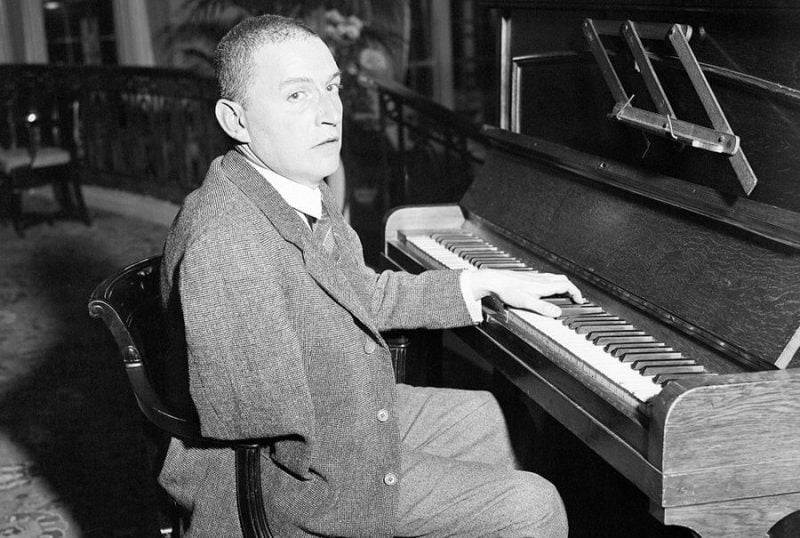
    Graffman was instrumental in resurrecting works in the left-handed repertoire, a number of them commissioned by pianist Paul Wittgenstein, who lost his right arm during the First World War. In particular, Graffman was a champion of the works composed for Wittgenstein by Erich Wolfgang Korngold, and I was fortunate (and thrilled) to be able to hear him play these pieces in Philadelphia at a time when they were not widely available on recordings. It’s so easy now to take for granted how spoiled for choice we are in this day of exhaustive recordings and internet access to them. In particular, I got to know Korngold’s Suite for Two Violins, Cello and Piano Left-Hand from Graffman’s concert performances (although it was Fleisher who made the definitive recording of the piece).

    I also attended the world premiere of Ned Rorem’s Piano Concerto for the Left Hand (his fourth piano concerto) at Philadelphia’s Academy of Music, which was recorded live and released on New World Records. Rorem always was a miniaturist at heart, or that is my impression, so even when working in larger forms, as here, it was not unusual for him to construct them out of smaller individual components. The concerto consists of eight brief movements, as opposed to three epic statements in the grand German tradition. The outer movements employ kind of a twelve-tone “scat” – the way it’s handled, it’s not going to leap out and clap you on the ears as “twelve tone music” – but at its core, the concerto shares a French sensibility that might appeal to anyone who enjoys the music of Francis Poulenc. It’s an attractive piece, and I’ve played it on the radio many times.

    It’s one of several works for left hand composed specifically for Graffman. In 1996, William Bolcom wrote a concerto, “Gaea,” for Graffman and Fleisher to perform together. In 2001, Graffman gave the premiere of “Seven Last Words,” by Curtis alum Daron Hagen.

    Graffman’s recording of “Rhapsody in Blue” has enjoyed an especially lucrative existence, thanks to its use in Woody Allen’s “Manhattan.” It’s turned up in numerous film and television productions ever since.

    Graffman found a second career as an influential teacher and administrator at the Curtis Institute of Music, where he joined the faculty in 1980 and became its director in 1986. In 1995, he also became Curtis’ president. He served in all three capacities – teacher, director, and president – for the next 21 years. I never lived more than a few blocks from Curtis, and I was a frequent concertgoer (also, my girlfriend at the time worked there), so of course I saw him all the time. What I didn’t see was his behind-the-scenes instruction of super-pianists like Lang Lang and Yuja Wang, who went on to stunning careers. Graffman’s own teachers included Isabelle Vengerova, Rudolf Serkin, and, informally, Valdimir Horowitz.

    Graffman’s wife, Naomi, predeceased him in 2019. Their marriage spanned some 67 years. Although I did not know them personally, beyond the exchange of a sentence or two at a reception, they seemed like a lovely couple.

    Graffman’s death unexpectedly conjures another era for me. Suddenly, I feel very far away from my 20s.

    Gary Graffman died yesterday at the age of 97. R.I.P.

    ———

    Graffman performing the rarely-heard Prokofiev Piano Concerto No. 4 – another Wittgenstein commission, but never played by him.

    ———

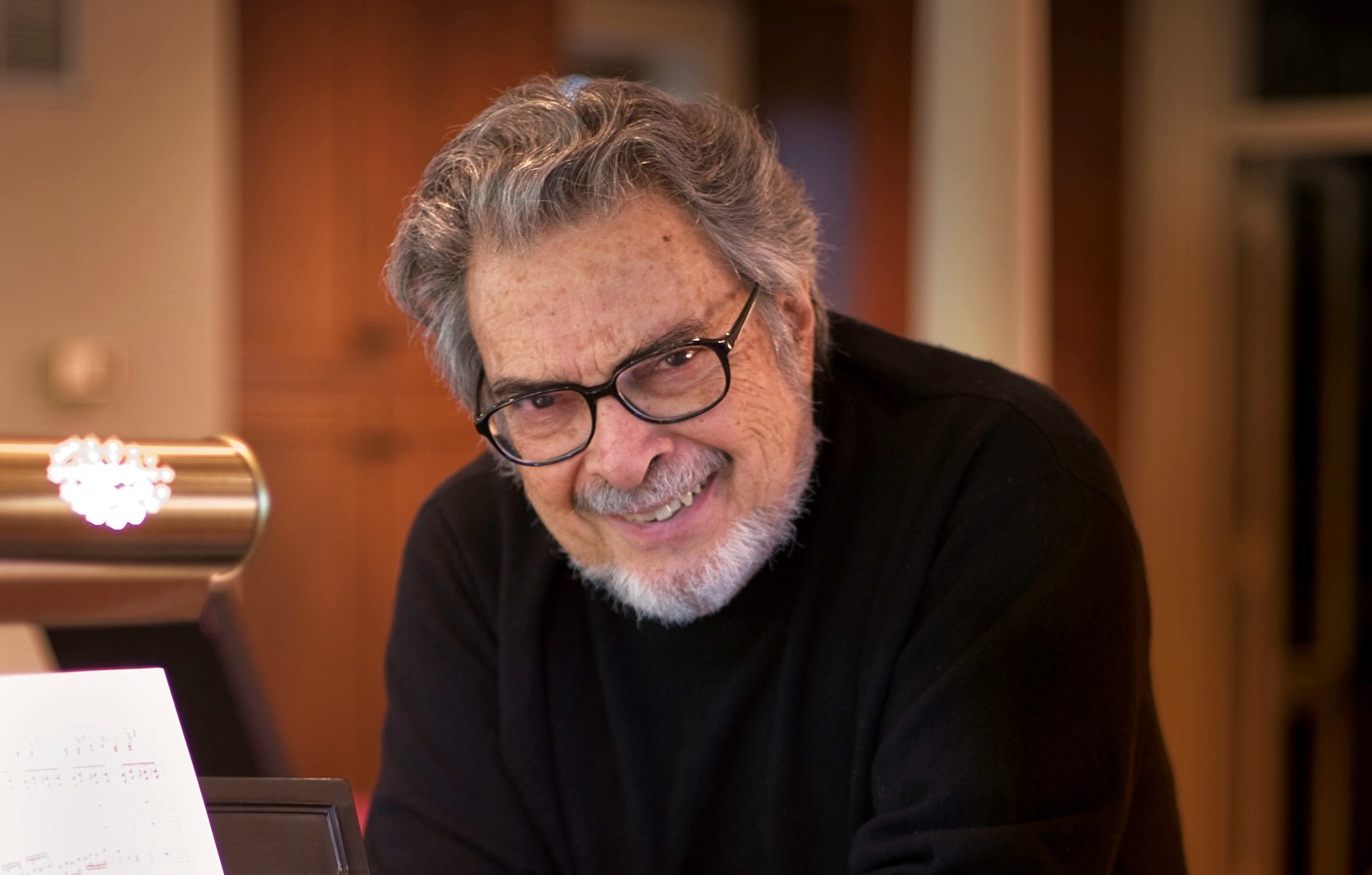
    PHOTO: André Previn, Ned Rorem, and Gary Graffman rehearse Rorem’s Piano Concerto for Left Hand and Orchestra

  • Paul Wittgenstein’s Left-Hand Legacy

    Paul Wittgenstein’s Left-Hand Legacy

    Concert pianist Paul Wittgenstein lost his right arm during the First World War. Rather than abandon his career, he commissioned works for the left hand from some of the great composers of his day, including Benjamin Britten, Sergei Prokofiev, Richard Strauss, and of course Maurice Ravel.

    This week on “The Lost Chord,” we’ll highlight two of Wittgenstein’s lesser-known commissions.

    In 1922, Wittgenstein approached Paul Hindemith – at 27, a rising star of German modernism, indeed the radical avant-garde – to produce his “Klaviermusik mit Orchester.”

    Wittgenstein’s reaction to the piece is unknown, although we can easily surmise. He never played the work in public. Furthermore, since he had secured exclusive performance rights, he wouldn’t allow anyone else to play it, either.

    Following the pianist’s death in 1961, his widow relocated to a farmhouse in Bucks County, Pennsylvania, where for decades she kept all of her husband’s belongings in a single room. When the estate was finally catalogued in 2002, a copy of the Hindemith concerto was discovered among Wittgenstein’s effects, along with other scores, correspondence, and items of interest, including locks of both Beethoven’s and Brahms’ hair.

    It was Leon Fleisher who gave the belated premiere of the concerto, some 80 years after it was written, with the Berlin Philharmonic, conducted by Sir Simon Rattle. I was present at the U.S. East Coast premiere, with Fleisher and the Curtis Symphony Orchestra, conducted by Christoph Eschenbach. Listen carefully to see if you can hear me applauding, in a recording made at Philadelphia’s Verizon Hall, at the Kimmel Center for the Performing Arts, on April 27, 2008.

    As a rule, Wittgenstein gravitated toward composers of a more Romantic bent. Erich Wolfgang Korngold was one of music’s most astounding prodigies, a Viennese wunderkind and celebrated opera composer, who later achieved world fame in Hollywood. There, he produced over a dozen classic scores, for films like “Captain Blood,” “The Adventures of Robin Hood,” and “The Sea Hawk.”

    His greatest operatic success was “Die tote Stadt,” given its debut in 1920. Korngold was 23 years-old. In 1922, he became the first composer to be approached by Wittgenstein for a left-hand piano concerto. (It was the same year, by the way, that Wittgenstein enlisted Hindemith.) The result was the Piano Concerto in C-sharp. On today’s program, Marc-André Hamelin will be the soloist, an outstanding virtuoso figuratively playing with one hand tied behind his back.

    Interestingly, Wittgenstein much preferred this piece to Ravel’s Concerto for the Left Hand. It was the Ravel, commissioned in 1929, that would secure his place in music history, but he must have felt Korngold’s Romanticism and sense of struggle played more to his strengths. For whatever reason, Korngold became a Wittgenstein favorite. In the few minutes remaining at the end of the hour, Leon Fleisher will return to the keyboard for a performance of the “Lied,” the ardent slow movement of Korngold’s Suite for Two Violins, Cello and Piano Left-Hand.

    I hope you’ll join me for “What’s Left?” – rarely-heard commissions by Paul Wittgenstein – on “The Lost Chord,” now in syndication on KWAX, the radio station of the University of Oregon!


    Remember, KWAX is on the West Coast, so there’s a three-hour difference for those of you listening in the East. Here are the respective air-times for all three of my recorded shows (with East Coast conversions in parentheses):

    PICTURE PERFECT, the movie music show – Friday on KWAX at 5:00 PM PACIFIC TIME (8:00 PM EST)

    SWEETNESS AND LIGHT, the light music program – ALL NEW! – Saturday on KWAX at 8:00 AM PACIFIC TIME (11:00 AM EST)

    THE LOST CHORD, unusual and neglected rep – Saturday on KWAX at 4:00 PM PACIFIC TIME (7:00 PM EST)

    Stream all three, at the times indicated, by following the link!

    https://kwax.uoregon.edu/

  • Wittgenstein Hindemith A Hidden Concerto

    Wittgenstein Hindemith A Hidden Concerto

    Concert pianist Paul Wittgenstein lost his right arm during World War I. Rather than abandon his career, he began commissioning keyboard works for the left hand from some of the day’s leading composers – including Maurice Ravel, whose Concerto for the Left Hand became the most successful of its kind in the repertoire.

    In 1922, Wittgenstein approached Paul Hindemith, at 27, a rising star of German modernism – indeed of the radical avant-garde – to produce his “Klaviermusik mit Orchester.”

    Wittgenstein’s reaction to the piece is unknown, although we can easily surmise. He wasn’t even satisfied with the Ravel, gravitating instead toward the more Romantic – I hesitate to say heart-on-the-sleeve – temperaments of Franz Schmidt and Erich Wolfgang Korngold. Wittgenstein never played the Hindemith in public. Furthermore, since he had secured exclusive performance rights, he wouldn’t allow anyone else to play it, either.

    Following the pianist’s death in 1961, Wittgenstein’s widow relocated to a farmhouse in Pennsylvania, where for decades she kept all of her husband’s belongings in a single room. When the estate was finally catalogued in 2002, a copy of the Hindemith concerto was discovered among Wittgenstein’s effects, along with other scores, correspondence, and items of interest, including locks of both Beethoven’s and Brahms’ hair.

    It was Leon Fleisher who gave the belated premiere of the concerto, some 80 years after it was written, with the Berlin Philharmonic, conducted by Sir Simon Rattle. Somebody posted the audio on YouTube.

    The U.S. premiere also featured Fleisher, with the San Francisco Symphony, conducted by Herbert Blomstedt. What do you know, that’s been posted too.

    I was present at the U.S. East Coast premiere, with Fleisher and the Curtis Symphony Orchestra, conducted by Christoph Eschenbach. If you listen carefully to the recording, made at Philadelphia’s Verizon Hall, at the Kimmel Center for the Performing Arts, on April 27, 2008, and issued on the Ondine label, you might even be able to hear me applaud. It’s posted here as a YouTube playlist, over multiple videos.

    Wittgenstein may not have thought much of Hindemith, but Glenn Gould clearly adored him. Here Gould elaborates on the nature of the fugue, illustrating his points with a selection from Hindemith’s Piano Sonata No. 3.

    Gould at the keyboard for Hindemith’s Trumpet Sonata

    And for his “Marienleben”

    Get all keyed-up for Paul Hindemith on his birthday!


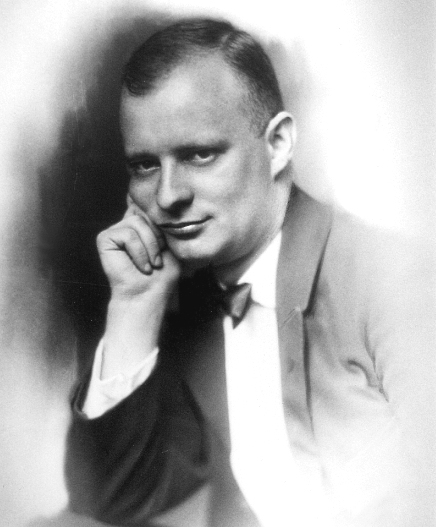
    PHOTOS (from left): Hindemith in 1923; Wittgenstein; Gould; Fleisher with yours truly

  • Wittgenstein’s Lost Chord Left-Hand Legacy

    Wittgenstein’s Lost Chord Left-Hand Legacy

    Concert pianist Paul Wittgenstein lost his right arm during the First World War. Rather than abandon his career, he commissioned works for the left hand from some of the great composers of his day, including Benjamin Britten, Sergei Prokofiev, Richard Strauss, and of course Maurice Ravel.

    This Sunday night on “The Lost Chord,” we’ll highlight two of Wittgenstein’s lesser-known commissions.

    In 1922, Wittgenstein approached Paul Hindemith – at 27, a rising star of German modernism, indeed the radical avant-garde – to produce his “Klaviermusik mit Orchester.”

    Wittgenstein’s reaction to the piece is unknown, although we can easily surmise. He never played the work in public. Furthermore, since he had secured exclusive performance rights, he wouldn’t allow anyone else to play it, either.

    Following the pianist’s death in 1961, his widow relocated to a farmhouse in Bucks County, Pennsylvania, where for decades she kept all of her husband’s belongings in a single room. When the estate was finally catalogued in 2002, a copy of the Hindemith concerto was discovered among Wittgenstein’s effects, along with other scores, correspondence, and items of interest, including locks of both Beethoven’s and Brahms’ hair.

    It was Leon Fleisher who gave the belated premiere of the concerto, some 80 years after it was written, with the Berlin Philharmonic, conducted by Sir Simon Rattle. I was present at the U.S. East Coast premiere, with Fleisher and the Curtis Symphony Orchestra, conducted by Christoph Eschenbach. Listen carefully to see if you can hear me applauding, in a recording made at Philadelphia’s Verizon Hall, at the Kimmel Center for the Performing Arts, on April 27, 2008.

    As a rule, Wittgenstein gravitated toward composers of a more Romantic bent. Erich Wolfgang Korngold was one of music’s most astounding prodigies, a Viennese wunderkind and celebrated opera composer, who later achieved world fame in Hollywood. There, he produced over a dozen classic scores, for films like “Captain Blood,” “The Adventures of Robin Hood,” and “The Sea Hawk.”

    His greatest operatic success was “Die tote Stadt,” given its debut in 1920. Korngold was 23 years-old. In 1922, he became the first composer approached by Wittgenstein for a left-hand piano concerto. (It was the same year, by the way, that Wittgenstein enlisted Hindemith.) The result was the Piano Concerto in C-sharp. Tonight, Marc-André Hamelin will be the soloist, an outstanding virtuoso figuratively playing with one hand tied behind his back.

    Interestingly, Wittgenstein much preferred this piece to Ravel’s Concerto for the Left Hand. It was the Ravel, commissioned in 1929, that would secure his place in music history, but he must have felt Korngold’s Romanticism and sense of struggle played more to his strengths. For whatever reason, Korngold became a Wittgenstein favorite. In the few minutes remaining at the end of the hour, Leon Fleisher will return to the keyboard for a performance of the “Lied,” the ardent slow movement of Korngold’s Suite for Two Violins, Cello and Piano Left-Hand.

    I hope you’ll join me for “What’s Left?” – rarely-heard commissions by Paul Wittgenstein – on “The Lost Chord,” this Sunday night at 10:00 EST, on WWFM – The Classical Network and wwfm.org.

  • Leon Fleisher: A Legend Remembered

    Leon Fleisher: A Legend Remembered

    The word legend gets bandied a lot at times like these, but rarely has it been so completely deserved. Leon Fleisher has died at 92. He leaves us not only as one of the greatest pianists of his time, but also as one of the greatest all-around artists. The man exuded music, and he did so with genuine humility and unusual generosity.

    Fleisher’s career as an interpreter of the standard, two-handed repertoire may have been cut short by focal dystonia at the age of 37 – by the mid-1960s, it had caused two of his fingers on his right hand to curl into his palm – but already he had distinguished himself as a lion of the keyboard. His prowess as a young man is preserved in benchmark recordings of works by Brahms, Beethoven, Rachmaninoff, and others.

    But even with his dexterity diminished, Fleisher’s intelligence remained unimpaired. His recordings of music for the left hand alone, again, are some of the finest in existence. By the late ‘60s, he also turned to conducting – he became associate conductor of the Baltimore Symphony Orchestra and music director in Annapolis – but it was his generous spirit as a teacher that perhaps best reflected the man. Fleisher taught at the Peabody Institute since 1959. He also had ties to the Curtis Institute, the Royal Conservatory of Music in Toronto, and the Tanglewood Music Center, and he oversaw countless master classes.

    He himself had been a pupil of Artur Schnabel, who had been a student of Theodor Leschetizky, who in turn had studied with Carl Czerny, who had learned directly from Beethoven. And Fleisher gave as good as he got. His benign influence sent off tendrils that now circle the globe. In his life’s work, Fleisher realized Schnabel’s maxim, that music came first, piano second.

    As a performer, whenever Fleisher came near a piano in the middle of his career, it was to champion music for the left hand. Fortunately, the repertoire is substantial, and Fleisher added to it, as composers flocked to write new pieces for him.

    Then, three decades after he was forced to give it up, suddenly he resumed performance of the two-handed repertoire, to an extent, thanks to Botox injections. He went on to record several more acclaimed albums, of both left-hand and two-handed works, later in life.

    I had the privilege to hear him perform several times, including at the East Coast premiere of Paul Hindemith’s “Piano Music with Orchestra” at Philadelphia’s Kimmel Center for the Performing Arts. The work was written for Paul Wittgenstein, of Ravel concerto fame, who had lost his right arm during the First World War. Wittgenstein, who had somewhat conservative tastes, never played Hindemith’s concerto publicly, but it remained in his possession and was rediscovered, among his widow’s belongings, in a Pennsylvania farm house only in 2002! Fleisher gave the world premiere of the work, with the Berlin Philharmonic, in 2004.

    Our delayed face-to-face meeting occurred several years after we had chatted by telephone. An earlier attempt had been thwarted by illness, but we finally got to shake hands and say hello following a recital at the Kimmel’s Perleman Theater. For a figure of his stature, you couldn’t have found a humbler, nicer man. At the time of our earlier interview, in 1987, when I called at the appointed hour, Fleisher – the legend – was only just driving home from work at Peabody, and he couldn’t have been more apologetic. The man who had studied with Schnabel, who at 16 was proclaimed by Pierre Monteux “the pianistic find of the century,” the artist who fearlessly collaborated with George Szell in some of the most revered music in the entire repertoire, was sorry to be late for our interview. Clearly, he was a person who put on no airs.

    But judge for yourself. Here’s the raw audio of that interview, which came to pass about a half hour later. The occasion was the release of his new album of left-hand piano works, “All the Things You Are,” on the Bridge Records, Inc., that remains one of the finest of his later years. Keep in mind that the conversation would be edited into sequence for use, with musical interludes, on my Sunday night program, “The Lost Chord.”

    Needless to say, I am very sorry to be cut off by COVID-19 from access to WWFM – The Classical Network’s production studios, or I would re-edit this material for a posthumous tribute.

    Leon Fleisher was one of the most genuine people I ever met, totally without pretense – a great artist, yes, but also a gracious and lovely man.


    Fleisher plays Beethoven with Szell and the Cleveland Orchestra:

    Erich Wolfgang Korngold, “Suite for 2 Violins, Cello, and Piano Left-Hand;” the fourth movement “Lied,” about 25 minutes in, must be one of the loveliest things I’ve ever heard:

    The West Coast premiere of Hindemith’s “Klaviermusik mit Orchester” (for piano left-hand):

    Brahms’ left-hand arrangement of the Bach “Chaconne”:


    PHOTOS (counterclockwise from top): Leon Fleisher; with Artur Schnabel; with George Szell; and with Classic Ross Amico

Tag Cloud

Aaron Copland (92) Beethoven (95) Composer (114) Film Music (119) Film Score (143) Film Scores (255) Halloween (94) John Williams (185) KWAX (229) Leonard Bernstein (99) Marlboro Music Festival (125) Movie Music (134) Opera (198) Philadelphia Orchestra (86) Picture Perfect (174) Princeton Symphony Orchestra (106) Radio (87) Ralph Vaughan Williams (85) Ross Amico (244) Roy's Tie-Dye Sci-Fi Corner (290) The Classical Network (101) The Lost Chord (268) Vaughan Williams (102) WPRB (396) WWFM (881)

DON’T MISS A BEAT

Receive a weekly digest every Sunday at noon by signing up here


RECENT POSTS