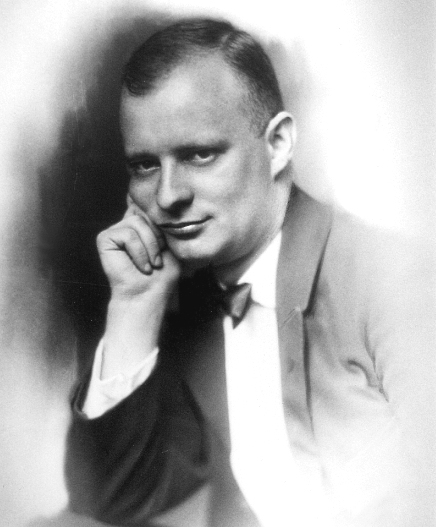
Concert pianist Paul Wittgenstein lost his right arm during World War I. Rather than abandon his career, he began commissioning keyboard works for the left hand from some of the day’s leading composers – including Maurice Ravel, whose Concerto for the Left Hand became the most successful of its kind in the repertoire.
In 1922, Wittgenstein approached Paul Hindemith, at 27, a rising star of German modernism – indeed of the radical avant-garde – to produce his “Klaviermusik mit Orchester.”
Wittgenstein’s reaction to the piece is unknown, although we can easily surmise. He wasn’t even satisfied with the Ravel, gravitating instead toward the more Romantic – I hesitate to say heart-on-the-sleeve – temperaments of Franz Schmidt and Erich Wolfgang Korngold. Wittgenstein never played the Hindemith in public. Furthermore, since he had secured exclusive performance rights, he wouldn’t allow anyone else to play it, either.
Following the pianist’s death in 1961, Wittgenstein’s widow relocated to a farmhouse in Pennsylvania, where for decades she kept all of her husband’s belongings in a single room. When the estate was finally catalogued in 2002, a copy of the Hindemith concerto was discovered among Wittgenstein’s effects, along with other scores, correspondence, and items of interest, including locks of both Beethoven’s and Brahms’ hair.
It was Leon Fleisher who gave the belated premiere of the concerto, some 80 years after it was written, with the Berlin Philharmonic, conducted by Sir Simon Rattle. Somebody posted the audio on YouTube.
The U.S. premiere also featured Fleisher, with the San Francisco Symphony, conducted by Herbert Blomstedt. What do you know, that’s been posted too.
I was present at the U.S. East Coast premiere, with Fleisher and the Curtis Symphony Orchestra, conducted by Christoph Eschenbach. If you listen carefully to the recording, made at Philadelphia’s Verizon Hall, at the Kimmel Center for the Performing Arts, on April 27, 2008, and issued on the Ondine label, you might even be able to hear me applaud. It’s posted here as a YouTube playlist, over multiple videos.
Wittgenstein may not have thought much of Hindemith, but Glenn Gould clearly adored him. Here Gould elaborates on the nature of the fugue, illustrating his points with a selection from Hindemith’s Piano Sonata No. 3.
Gould at the keyboard for Hindemith’s Trumpet Sonata
And for his “Marienleben”
Get all keyed-up for Paul Hindemith on his birthday!
PHOTOS (from left): Hindemith in 1923; Wittgenstein; Gould; Fleisher with yours truly
Leave a Reply