Tag: Paul Wittgenstein

  • Paul Wittgenstein’s Left-Hand Legacy

    Paul Wittgenstein’s Left-Hand Legacy

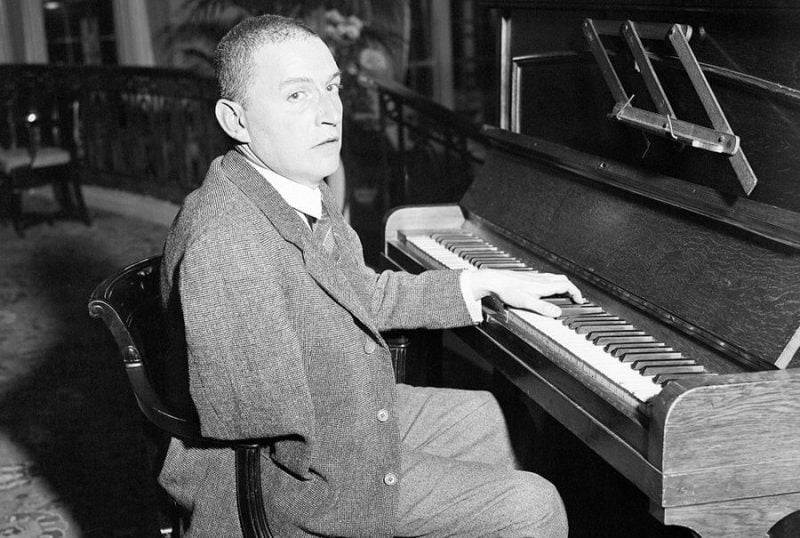
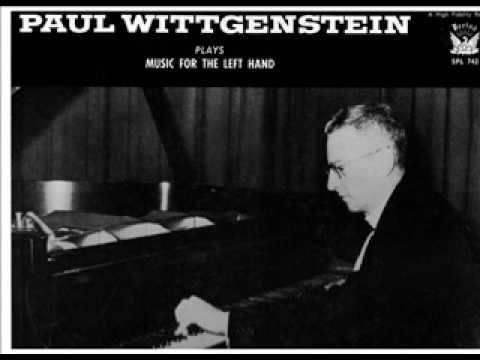
    Concert pianist Paul Wittgenstein lost his right arm during the First World War. Rather than abandon his career, he commissioned works for the left hand from some of the great composers of his day, including Benjamin Britten, Sergei Prokofiev, Richard Strauss, and of course Maurice Ravel.

    This week on “The Lost Chord,” we’ll highlight two of Wittgenstein’s lesser-known commissions.

    In 1922, Wittgenstein approached Paul Hindemith – at 27, a rising star of German modernism, indeed the radical avant-garde – to produce his “Klaviermusik mit Orchester.”

    Wittgenstein’s reaction to the piece is unknown, although we can easily surmise. He never played the work in public. Furthermore, since he had secured exclusive performance rights, he wouldn’t allow anyone else to play it, either.

    Following the pianist’s death in 1961, his widow relocated to a farmhouse in Bucks County, Pennsylvania, where for decades she kept all of her husband’s belongings in a single room. When the estate was finally catalogued in 2002, a copy of the Hindemith concerto was discovered among Wittgenstein’s effects, along with other scores, correspondence, and items of interest, including locks of both Beethoven’s and Brahms’ hair.

    It was Leon Fleisher who gave the belated premiere of the concerto, some 80 years after it was written, with the Berlin Philharmonic, conducted by Sir Simon Rattle. I was present at the U.S. East Coast premiere, with Fleisher and the Curtis Symphony Orchestra, conducted by Christoph Eschenbach. Listen carefully to see if you can hear me applauding, in a recording made at Philadelphia’s Verizon Hall, at the Kimmel Center for the Performing Arts, on April 27, 2008.

    As a rule, Wittgenstein gravitated toward composers of a more Romantic bent. Erich Wolfgang Korngold was one of music’s most astounding prodigies, a Viennese wunderkind and celebrated opera composer, who later achieved world fame in Hollywood. There, he produced over a dozen classic scores, for films like “Captain Blood,” “The Adventures of Robin Hood,” and “The Sea Hawk.”

    His greatest operatic success was “Die tote Stadt,” given its debut in 1920. Korngold was 23 years-old. In 1922, he became the first composer to be approached by Wittgenstein for a left-hand piano concerto. (It was the same year, by the way, that Wittgenstein enlisted Hindemith.) The result was the Piano Concerto in C-sharp. On today’s program, Marc-André Hamelin will be the soloist, an outstanding virtuoso figuratively playing with one hand tied behind his back.

    Interestingly, Wittgenstein much preferred this piece to Ravel’s Concerto for the Left Hand. It was the Ravel, commissioned in 1929, that would secure his place in music history, but he must have felt Korngold’s Romanticism and sense of struggle played more to his strengths. For whatever reason, Korngold became a Wittgenstein favorite. In the few minutes remaining at the end of the hour, Leon Fleisher will return to the keyboard for a performance of the “Lied,” the ardent slow movement of Korngold’s Suite for Two Violins, Cello and Piano Left-Hand.

    I hope you’ll join me for “What’s Left?” – rarely-heard commissions by Paul Wittgenstein – on “The Lost Chord,” now in syndication on KWAX, the radio station of the University of Oregon!


    Remember, KWAX is on the West Coast, so there’s a three-hour difference for those of you listening in the East. Here are the respective air-times for all three of my recorded shows (with East Coast conversions in parentheses):

    PICTURE PERFECT, the movie music show – Friday on KWAX at 5:00 PM PACIFIC TIME (8:00 PM EST)

    SWEETNESS AND LIGHT, the light music program – ALL NEW! – Saturday on KWAX at 8:00 AM PACIFIC TIME (11:00 AM EST)

    THE LOST CHORD, unusual and neglected rep – Saturday on KWAX at 4:00 PM PACIFIC TIME (7:00 PM EST)

    Stream all three, at the times indicated, by following the link!
    https://kwax.uoregon.edu/

  • Wittgenstein Hindemith A Hidden Concerto

    Wittgenstein Hindemith A Hidden Concerto

    Concert pianist Paul Wittgenstein lost his right arm during World War I. Rather than abandon his career, he began commissioning keyboard works for the left hand from some of the day’s leading composers – including Maurice Ravel, whose Concerto for the Left Hand became the most successful of its kind in the repertoire.

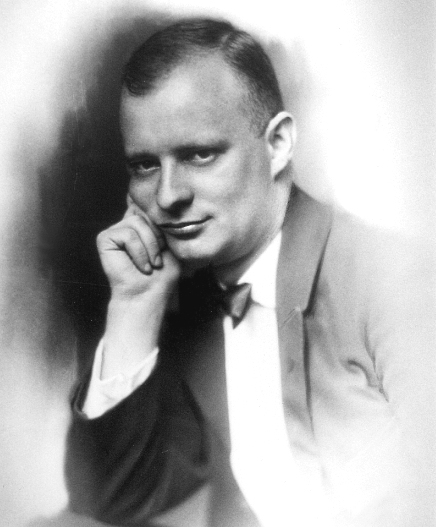
    In 1922, Wittgenstein approached Paul Hindemith, at 27, a rising star of German modernism – indeed of the radical avant-garde – to produce his “Klaviermusik mit Orchester.”

    Wittgenstein’s reaction to the piece is unknown, although we can easily surmise. He wasn’t even satisfied with the Ravel, gravitating instead toward the more Romantic – I hesitate to say heart-on-the-sleeve – temperaments of Franz Schmidt and Erich Wolfgang Korngold. Wittgenstein never played the Hindemith in public. Furthermore, since he had secured exclusive performance rights, he wouldn’t allow anyone else to play it, either.

    Following the pianist’s death in 1961, Wittgenstein’s widow relocated to a farmhouse in Pennsylvania, where for decades she kept all of her husband’s belongings in a single room. When the estate was finally catalogued in 2002, a copy of the Hindemith concerto was discovered among Wittgenstein’s effects, along with other scores, correspondence, and items of interest, including locks of both Beethoven’s and Brahms’ hair.

    It was Leon Fleisher who gave the belated premiere of the concerto, some 80 years after it was written, with the Berlin Philharmonic, conducted by Sir Simon Rattle. Somebody posted the audio on YouTube.

    The U.S. premiere also featured Fleisher, with the San Francisco Symphony, conducted by Herbert Blomstedt. What do you know, that’s been posted too.

    I was present at the U.S. East Coast premiere, with Fleisher and the Curtis Symphony Orchestra, conducted by Christoph Eschenbach. If you listen carefully to the recording, made at Philadelphia’s Verizon Hall, at the Kimmel Center for the Performing Arts, on April 27, 2008, and issued on the Ondine label, you might even be able to hear me applaud. It’s posted here as a YouTube playlist, over multiple videos.

    Wittgenstein may not have thought much of Hindemith, but Glenn Gould clearly adored him. Here Gould elaborates on the nature of the fugue, illustrating his points with a selection from Hindemith’s Piano Sonata No. 3.

    Gould at the keyboard for Hindemith’s Trumpet Sonata

    And for his “Marienleben”

    Get all keyed-up for Paul Hindemith on his birthday!


    PHOTOS (from left): Hindemith in 1923; Wittgenstein; Gould; Fleisher with yours truly

  • Wittgenstein’s Lost Chord Left-Hand Legacy

    Wittgenstein’s Lost Chord Left-Hand Legacy

    Concert pianist Paul Wittgenstein lost his right arm during the First World War. Rather than abandon his career, he commissioned works for the left hand from some of the great composers of his day, including Benjamin Britten, Sergei Prokofiev, Richard Strauss, and of course Maurice Ravel.

    This Sunday night on “The Lost Chord,” we’ll highlight two of Wittgenstein’s lesser-known commissions.

    In 1922, Wittgenstein approached Paul Hindemith – at 27, a rising star of German modernism, indeed the radical avant-garde – to produce his “Klaviermusik mit Orchester.”

    Wittgenstein’s reaction to the piece is unknown, although we can easily surmise. He never played the work in public. Furthermore, since he had secured exclusive performance rights, he wouldn’t allow anyone else to play it, either.

    Following the pianist’s death in 1961, his widow relocated to a farmhouse in Bucks County, Pennsylvania, where for decades she kept all of her husband’s belongings in a single room. When the estate was finally catalogued in 2002, a copy of the Hindemith concerto was discovered among Wittgenstein’s effects, along with other scores, correspondence, and items of interest, including locks of both Beethoven’s and Brahms’ hair.

    It was Leon Fleisher who gave the belated premiere of the concerto, some 80 years after it was written, with the Berlin Philharmonic, conducted by Sir Simon Rattle. I was present at the U.S. East Coast premiere, with Fleisher and the Curtis Symphony Orchestra, conducted by Christoph Eschenbach. Listen carefully to see if you can hear me applauding, in a recording made at Philadelphia’s Verizon Hall, at the Kimmel Center for the Performing Arts, on April 27, 2008.

    As a rule, Wittgenstein gravitated toward composers of a more Romantic bent. Erich Wolfgang Korngold was one of music’s most astounding prodigies, a Viennese wunderkind and celebrated opera composer, who later achieved world fame in Hollywood. There, he produced over a dozen classic scores, for films like “Captain Blood,” “The Adventures of Robin Hood,” and “The Sea Hawk.”

    His greatest operatic success was “Die tote Stadt,” given its debut in 1920. Korngold was 23 years-old. In 1922, he became the first composer approached by Wittgenstein for a left-hand piano concerto. (It was the same year, by the way, that Wittgenstein enlisted Hindemith.) The result was the Piano Concerto in C-sharp. Tonight, Marc-André Hamelin will be the soloist, an outstanding virtuoso figuratively playing with one hand tied behind his back.

    Interestingly, Wittgenstein much preferred this piece to Ravel’s Concerto for the Left Hand. It was the Ravel, commissioned in 1929, that would secure his place in music history, but he must have felt Korngold’s Romanticism and sense of struggle played more to his strengths. For whatever reason, Korngold became a Wittgenstein favorite. In the few minutes remaining at the end of the hour, Leon Fleisher will return to the keyboard for a performance of the “Lied,” the ardent slow movement of Korngold’s Suite for Two Violins, Cello and Piano Left-Hand.

    I hope you’ll join me for “What’s Left?” – rarely-heard commissions by Paul Wittgenstein – on “The Lost Chord,” this Sunday night at 10:00 EST, on WWFM – The Classical Network and wwfm.org.

  • Wittgenstein’s Left Hand Piano Legacy

    Wittgenstein’s Left Hand Piano Legacy

    Some of us may puzzle over the Zen riddle about the sound of one hand clapping, but, thanks in large part to Paul Wittgenstein, we all have a pretty good idea of the sound of one hand playing.

    I hope you’ll join me this morning on WPRB, as we observe the anniversary of the birth of Wittgenstein (1887-1961), a pianist from a immensely wealthy and rather eccentric Viennese family, who famously who lost his right arm in the First World War. Through hard work and the power of sheer will, he managed to return to the concert stage, using his fortune to commission many of the great composers of his time to write new works for the left hand alone.

    Among the composers to take up the challenge were Sergei Bortkiewicz, Benjamin Britten, Erich Wolfgang Korngold, Sergei Prokofiev, Franz Schmidt, Richard Strauss, and of course Maurice Ravel. We’ll hear Wittgenstein himself grapple with Ravel’s masterpiece in a 1937 concert recording.

    We’ll also enjoy a work composed in 1923 by Paul Hindemith that remained unheard for 80 years, until its rediscovery in a Pennsylvania farmhouse in 2002, following the death of Wittgenstein’s widow. Wittgenstein retained exclusive performance rights to many of his commissions, and if he didn’t somehow connect with a work, it simply went unheard. Such was the case with Hindemith’s “Klaviermusik mit Orchester” and also Sergei Prokofiev’s Piano Concerto No. 4.

    In the case of the latter, composed in 1931, Wittgenstein was eventually convinced by Siegfried Rapp, another pianist who had lost his arm in the war, to allow him to give it its premiere in Berlin in 1956. The U.S. premiere was given by Rudolf Serkin, with Eugene Ormandy and the Philadelphia Orchestra, in 1958. We’ll hear those same forces perform it this morning. Rapp will perform Bohuslav Martinu’s “Concertino for Piano (Left-Hand) and Orchestra.”

    Leon Fleisher, who grappled with focal dystonia for 40 years, was the pianist who gave the Hindemith its belated premiere in 2004, with the Berlin Philharmonic conducted by Sir Simon Rattle. We’ll hear Fleisher, now a vibrant 87 years-old, perform it – and great deal else – this morning.

    Get ready to rub shoulders with a lot of southpaws this week. Tune in from 6 to 11 ET to WPRB 103.3 FM or online at wprb.com. It will be wholly intentional, for a change, when nothing goes “right,” on Classic Ross Amico.

  • Left-Handed Piano Music From WPRB

    Left-Handed Piano Music From WPRB

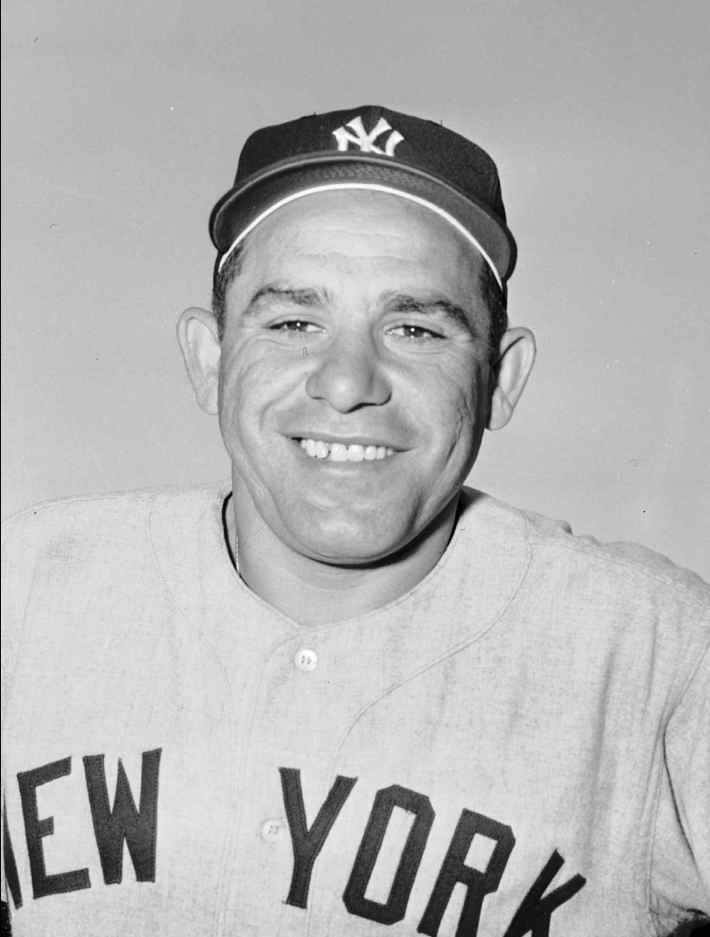
    “I’d give my right arm to be ambidextrous” – one of the many quotes attributed to the late Yogi Berra, master of the malaprop, emperor of the oxymoron, and crown prince of the paradox.

    Tune in this morning to enjoy left-handed rarities composed for Paul Wittgenstein, the remarkable Austrian pianist who lost his right arm in the First World War. Yet to come: music by Erich Wolfgang Korngold, Sergei Bortkiewicz, and a work by Paul Hindemith that was locked away in a trunk, unheard, for 80 years.

    We’ll also hear Siegfried Rapp, another pianist who was maimed during the war, performing music of Bohuslav Martinu, originally written for Otakar Hollmann, who was shot in the right hand, and a concerto by Ned Rorem composed for Gary Graffman, whose two-handed career was curtailed by focal dystonia.

    These pianists who met with misfortune brought us lots of glorious music, commissioned from some of the great composers of their day. It’s all piano music for the left hand until 11 ET on WPRB 103.3 FM and online at wprb.com.

Tag Cloud

Aaron Copland (92) Beethoven (95) Composer (114) Film Music (119) Film Score (143) Film Scores (255) Halloween (94) John Williams (185) KWAX (229) Leonard Bernstein (99) Marlboro Music Festival (125) Movie Music (134) Opera (198) Philadelphia Orchestra (86) Picture Perfect (174) Princeton Symphony Orchestra (106) Radio (87) Ralph Vaughan Williams (85) Ross Amico (244) Roy's Tie-Dye Sci-Fi Corner (290) The Classical Network (101) The Lost Chord (268) Vaughan Williams (102) WPRB (396) WWFM (881)

DON’T MISS A BEAT

Receive a weekly digest every Sunday at noon by signing up here


RECENT POSTS