Tag: Glenn Gould

  • Glenn Gould & The Organist: A Bach Story

    Glenn Gould & The Organist: A Bach Story

    For some reason, everyone seems to think August is a great time to get married. So, alas and alack, it is with much disappointment that I am unable to attend the second weekend of the Bard Music Festival, devoted to “Berlioz and His World.” However, I still have some memories and assessments to share from last weekend. Tomorrow I hope to write-up my impressions of last Sunday’s performance of Pauline Viardot’s fairy tale opera “Le dernier sorcier” (“The Last Sorcerer”).

    In the meantime, here’s a follow-up to my post about Bill Osborne. Bill, you’ll recall, is my most recent Bard acquaintance, a retired organist who studied at Fontainebleau with the venerable pedagogue Nadia Boulanger. For over 40 years, he served as Distinguished Professor of Fine Arts at Denison University. Do yourself a service, if you haven’t read it, and check out my previous post about him, which is chock full of amusing anecdotes! You’ll find it at one of the links below.

    Somehow, in writing about Boulanger and Bernstein and Osborne’s adventures in Princeton, I failed to share his Glenn Gould story. Bill was rehearsing an organ recital for the University of Michigan’s Ann Arbor May Festival, when he was asked if it would be all right if the now-legendary pianist might have access to the auditorium, as Gould wanted to prepare for his appearance with Eugene Ormandy and the Philadelphia Orchestra. (I learn through a search of May Festival records that the concert took place on May 4, 1958.) Anyway, even though Bill had the auditorium reserved for the afternoon, naturally he said yes. It may have been spring, but Gould, one of classical music’s great eccentrics, showed up at the appointed time, bundled, characteristically, in heavy winter clothing.

    The work he was scheduled to perform was Beethoven’s Piano Concerto No. 4, but when he sat down at the keyboard, it was not Beethoven he rehearsed, but rather, from first note to last, Bach’s “Goldberg Variations.” It’s probably not necessary for me to mention that the recording Gould made of the variations only a few years before, in 1955, remains one of the all-time classics of the gramophone. With Gould’s permission, Bill sat there all by himself, out in the house, and enjoyed a command performance.

    Afterward, Gould expressed interest in the venue’s organ and asked if he could try the instrument. Again, Bill said yes (naturally), and Gould sat there in his street shoes and pulled some stops and made a terrific noise. A few years later, he would record Bach’s “The Art of Fugue” on the organ in 1962.

    Just after Gould’s Beethoven performance with the Philadelphia Orchestra, the pianist again encountered Bill, as he walked off stage, and what was the first thing he said? He wanted to know how Bill’s recital went. Bill told me he was incredibly touched by that.

    Anyway, that’s the Glenn Gould story. I hope you enjoyed it as much as I did.

    The Bard Music Festival continues through tomorrow at Bard College in Annandale-on-Hudson, NY. Tonight’s concert, featuring Louise Farrenc’s Symphony No. 3 and Joachim Raff’s Symphony 10 “Autumn” (with Berlioz’s “Les francs-juges” Overture the “William Tell” Overture” by the composer’s bête noire, Gioachino Rossini), is available for livestream. You’ll find a complete schedule at https://fishercenter.bard.edu/whats-on/programs/bard-music-festival/

    Fisher Center at Bard


    My previous Bill Osborne post

    https://www.facebook.com/photo/?fbid=1360873204831739&set=a.883855802533484

    History of the Philadelphia Orchestra at the May Festival

    https://alumni.umich.edu/michigan-alum/history-lessons-ums-philorch/

    Programs for the 1957 May Festival. I couldn’t locate 1958. Osborne is credited as pianist with the University Choral Union and bassoonist with the Musical Society Orchestra, conducted by Thor Johnson, then music director of the Cincinnati Symphony.

    https://aadl.org/sites/default/files/docfiles/programs_19570501b.pdf

    Glenn Gould plays the “Goldberg Variations” in 1955


    PHOTOS: With Bill Osborne at Bard (top); Glenn Gould at the May Festival in 1958

  • Stokowski: Genius or Madman?

    Stokowski: Genius or Madman?

    It takes a thief to catch a thief, and it takes a madman to interview Leopold Stokowski. Here is Leopold, the craziest dinner guest since Andre Gregory in “My Dinner with Andre,” being interviewed by the pianist-eccentric Glenn Gould. Gould was famously summed-up by conductor George Szell as “That nut’s a genius!” Stokowski himself was always an artist who thrived at the intersection of genius and charlatan. That said, even at his whackiest, Stokowski reminds us that a broken clock is still right twice a day. When he’s at his best, I don’t care if we’re talking about clocks or sausage, the rest is merely casing.

    Beethoven is not really the first composer I think of when I think about Stokowski. Stokey was often most in his element when sculpting music with more overtly coloristic effects. But here he and Gould collaborate on Beethoven’s “Emperor” Concerto in 1966. Unsurprisingly, for those familiar with the concerto, it’s an ear-opener, with Stokey doing his best to will the orchestra to grandeur, while Gould plays whatever the hell he feels like.

    Video of 85 year-old Stokowski rehearsing Beethoven’s “Leonore Overture No. 3”

    From the same sessions, rehearsing Barber’s “Adagio for Strings”

    Some of my favorite Stokowski footage is in the movie “Carnegie Hall” (1947), in which he conducts a movement from Tchaikovsky’s 5th Symphony. Just when you think his hair can’t get any bigger, he overachieves. The director, Edgar G. Ulmer, cut his teeth in German Expressionist cinema, and it shows. In America, he directed “The Black Cat,” with Boris Karloff and Bela Lugosi, and the film noir “Detour.”

    The wild hair, the dove-like hands, the faux middle-European accent (he was the son of an English-born cabinet-maker of Polish heritage), Stokowski knew how to work a crowd. He also knew his way around a score. Despite his protestations in the Beethoven rehearsal footage at the link above, Stokey was not averse to looking past whatever could be gleaned of a composer’s intentions, if it meant realizing his own glorious visions.

    He could be controversial, to be sure, and he was not difficult to parody. But he was also magnetic and, at his best, a true magician. In common with Oscar Wilde, Stokey knew there is only one thing in life worse than being talked about, and that is not being talked about.

    Happy birthday, Leopold Stokowski!


    Shaking hands with Mickey Mouse in “Fantasia” (1940)

    Parodied in “Long-Haired Hair” (1949)

    Introduced by Burns & Allen in “The Big Broadcast of 1937”

    Introduced in a snood around the 3:30 mark in “Hollywood Steps Out” (1941)

    With Deanna Durbin in “One Hundred Men and a Girl” (1937)

    With Marian Anderson and Princeton’s Westminster Choir

    Conducting Debussy at 90

  • Wittgenstein Hindemith A Hidden Concerto

    Wittgenstein Hindemith A Hidden Concerto

    Concert pianist Paul Wittgenstein lost his right arm during World War I. Rather than abandon his career, he began commissioning keyboard works for the left hand from some of the day’s leading composers – including Maurice Ravel, whose Concerto for the Left Hand became the most successful of its kind in the repertoire.

    In 1922, Wittgenstein approached Paul Hindemith, at 27, a rising star of German modernism – indeed of the radical avant-garde – to produce his “Klaviermusik mit Orchester.”

    Wittgenstein’s reaction to the piece is unknown, although we can easily surmise. He wasn’t even satisfied with the Ravel, gravitating instead toward the more Romantic – I hesitate to say heart-on-the-sleeve – temperaments of Franz Schmidt and Erich Wolfgang Korngold. Wittgenstein never played the Hindemith in public. Furthermore, since he had secured exclusive performance rights, he wouldn’t allow anyone else to play it, either.

    Following the pianist’s death in 1961, Wittgenstein’s widow relocated to a farmhouse in Pennsylvania, where for decades she kept all of her husband’s belongings in a single room. When the estate was finally catalogued in 2002, a copy of the Hindemith concerto was discovered among Wittgenstein’s effects, along with other scores, correspondence, and items of interest, including locks of both Beethoven’s and Brahms’ hair.

    It was Leon Fleisher who gave the belated premiere of the concerto, some 80 years after it was written, with the Berlin Philharmonic, conducted by Sir Simon Rattle. Somebody posted the audio on YouTube.

    The U.S. premiere also featured Fleisher, with the San Francisco Symphony, conducted by Herbert Blomstedt. What do you know, that’s been posted too.

    I was present at the U.S. East Coast premiere, with Fleisher and the Curtis Symphony Orchestra, conducted by Christoph Eschenbach. If you listen carefully to the recording, made at Philadelphia’s Verizon Hall, at the Kimmel Center for the Performing Arts, on April 27, 2008, and issued on the Ondine label, you might even be able to hear me applaud. It’s posted here as a YouTube playlist, over multiple videos.

    Wittgenstein may not have thought much of Hindemith, but Glenn Gould clearly adored him. Here Gould elaborates on the nature of the fugue, illustrating his points with a selection from Hindemith’s Piano Sonata No. 3.

    Gould at the keyboard for Hindemith’s Trumpet Sonata

    And for his “Marienleben”

    Get all keyed-up for Paul Hindemith on his birthday!


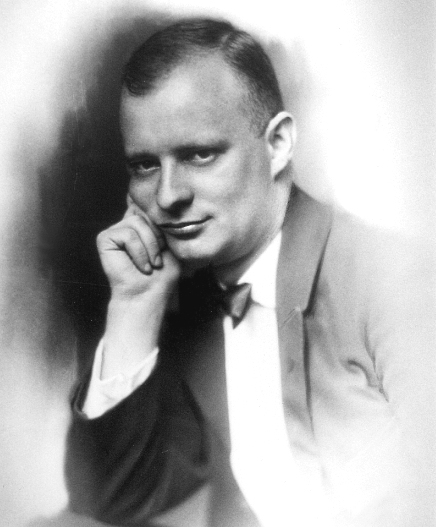
    PHOTOS (from left): Hindemith in 1923; Wittgenstein; Gould; Fleisher with yours truly

  • Classical Music Birthday Bash on WWFM

    Classical Music Birthday Bash on WWFM

    It is quite the day for birthdays! Jean-Philippe Rameau. Dmitri Shostakovich. Glenn Gould. Sir Colin Davis. And those are just the top of the pile. I’ve been wrapping gifts all day. Drop by for some ice cream and cake, metaphorically speaking, from 4 to 7 p.m. EDT, on WWFM – The Classical Network and wwfm.org.


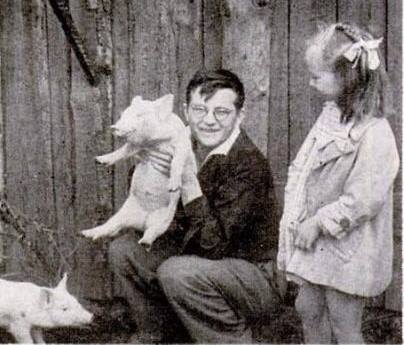
    PHOTO: Shostakovich pigs out on his birthday

  • Barbra Streisand’s Classical Experiment

    Barbra Streisand’s Classical Experiment

    My mom was a big Barbra Streisand fan. I remember this album, which even then seemed to come out of left field. (It was recorded in 1973, but not release until 1976.) But beauty is beauty. “Classical Barbra” received mixed reviews, with some hailing it as “rare and risky” and others deriding it as “hideous camp.” It did receive stamps of approval from Leonard Bernstein and Glenn Gould.

    I’m not surprised that Streisand would be attracted to this music and want to share it with her fans. Even if it were the worst-selling Streisand album of all time (I don’t know; it achieved Gold Record status), it probably reached more listeners than the best-selling Debussy album. Good on her. Not everything is idiomatic, but this chanson is seductive enough.

    https://www.youtube.com/watch?v=4Rnjl-s8dPs

    Streisand is 75 today. Happy birthday.

Tag Cloud

Aaron Copland (92) Beethoven (95) Composer (114) Film Music (123) Film Score (143) Film Scores (255) Halloween (94) John Williams (187) KWAX (229) Leonard Bernstein (100) Marlboro Music Festival (125) Movie Music (138) Opera (199) Philadelphia Orchestra (89) Picture Perfect (174) Princeton Symphony Orchestra (106) Radio (87) Ralph Vaughan Williams (85) Ross Amico (244) Roy's Tie-Dye Sci-Fi Corner (290) The Classical Network (101) The Lost Chord (268) Vaughan Williams (103) WPRB (396) WWFM (881)

DON’T MISS A BEAT

Receive a weekly digest every Sunday at noon by signing up here


RECENT POSTS