When I started my book business in Philadelphia in the mid-1990s, it was the pioneer days of AbeBooks – an online service (ABE an acronym for Advanced Book Exchange) that allowed independent dealers to hawk their more esoteric wares to a worldwide audience. In 2008, ABE was swallowed by the great Satan, Amazon.com (earlier, there were seller agreements with all the major platforms), but by then I was closing up shop anyway and eager to move on to other things. For those 13 years, I was a house divided against myself, as I had been hired as a classical music radio host right after I had negotiated my lease on my first storefront!
As you can imagine, I had built quite the music inventory. I was located about block from the Curtis Institute, people wandered in after Philadelphia Orchestra matinees, and thanks to ABE, I developed a decent international clientele. But when you’re a bookdealer, if you want to be successful, you really have to draw the line between being a seller and being a collector, and I couldn’t always do that. Furthermore, I was maddeningly inconsistent. So I would sell off books inscribed by Louis Armstrong, Fred Astaire, and John Philip Sousa, but I would turn around and skim off for myself a letter scrawled by Jean Sibelius. (I’m not crazy!)
My greatest regret was the time I sold one of the original, privately-printed pamphlets of “The Greatest Gift” by Philip Van Doren Stern, which he sent out to friends as a Christmas card and later became the basis for the perennial favorite “It’s a Wonderful Life.” There were only 200 of them in existence. It’s a piece of memorabilia that’s only going to go up in value, and I sold it to some pig lawyer for cash on the barrel. He was a regular customer, a real arrogant son-of-a-bitch. He held a lit cigar between his fingers as he counted out the bills. I wish it had gone to anyone except him. But I had to keep the doors open.
Seller or collector… grrrrrrrr.
Further blurring the line between the sides of the register occurred because I often viewed transactions from the point-of-view of a customer. It was a great weakness of mine, because I knew as a booklover how excited I’d get when I discovered a real book bargain. So I underpriced many of my items, understanding the thrill, even when I could have squeezed more money out of a lot of them. Another upside, of course, was that I was able to turn over my inventory fairly quickly.
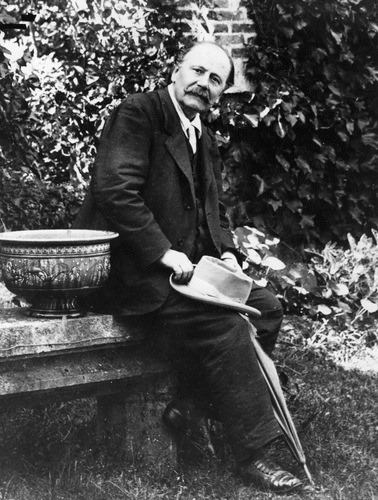
There wasn’t always a lot, if anything, online in those days to guide one, so a dealer had to rely on his knowledge and intuition, not only to stock and price books, but to come up with attractive and witty descriptions of their contents for the ABE catalogue. Naturally, I couldn’t read everything. But on this birthday anniversary of the composer Jules Massenet, I am reminded of his memoir, “My Recollections,” that, in leafing through, struck me as especially witty and eccentric, as it concludes with a chapter describing his own death and departure from this world. It was so bizarre that it popped into my head yesterday, as I was glancing at today’s music birthdays.
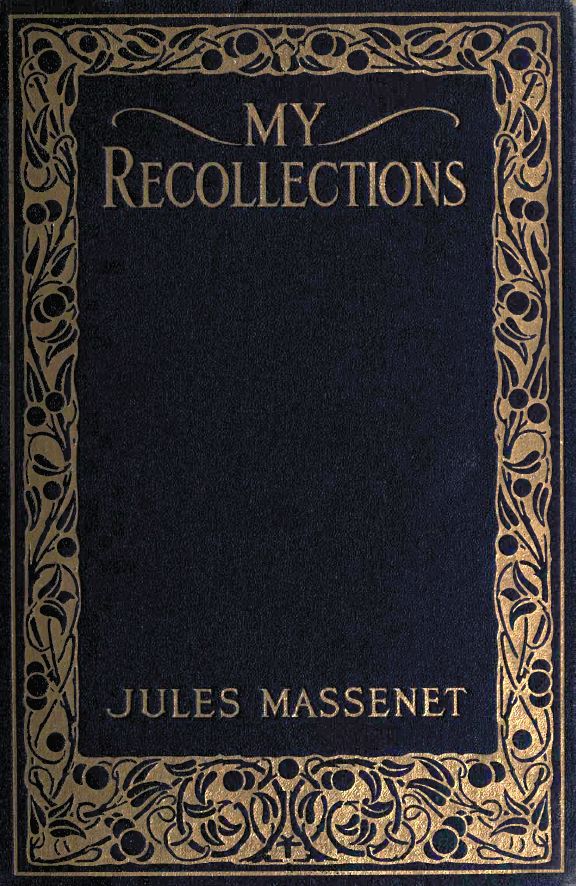
While my own description seems to have been lost to time (I thought I might have been able to find a sales invoice in the far reaches of my email account), I have managed to locate the actual text, reproduced by Project Gutenberg. As proof that people never change, when Massenet’s memoir was first published in installments in the newspaper L’Écho de Paris, some readers pointed out that the story was incomplete and asked him why he hadn’t included a chapter about his death (!). Massenet, as an intelligent person, laughed this off, but after he turned 70, contemplations of his own mortality were inevitable. It was then that he decided to add an appendix, “Pensées posthumes,” a translation of which follows.
CHAPTER XXIX
THOUGHTS AFTER DEATH
I have departed from this planet and I have left behind my poor earthly ones with their occupations which are as many as they are useless; at last I am living in the scintillating splendor of the stars, each of which used to seem to me as large as millions of suns. Of old I was never able to get such lighting for my scenery on the great stage at the Opéra where the backdrops were too often in darkness. Henceforth there will be no letters to answer; I have bade farewell to first performances and the literary and other discussions which come from them.
Here there are no newspapers, no dinners, no sleepless nights. Ah! if I could but counsel my friends to join me here, I would not hesitate to call them to me. But would they come?
Before I came to this distant place where I now sojourn, I wrote out my last wishes (an unhappy husband would have taken advantage of the occasion to write with joy, “my first wishes”).
I had indicated that above all I wanted to be buried at Égreville, near the family abode in which I had lived so long. Oh, the good cemetery in the open fields, silent as befits those who live there!
I asked that they should refrain from hanging black draperies on my door, ornaments worn threadbare by use. I expressed the wish that a suitable carriage should take me from Paris, the journey, with my consent, to begin at eight in the morning.
An evening paper (perhaps two) felt it to be its duty to inform its readers of my decease. A few friends – I still had some the day before – came and asked my concierge if the news were true, and he replied, “Alas, Monsieur went without leaving his address.” And his reply was true for he did not know where that obliging carriage was taking me.
At lunch acquaintances honored me among themselves with their condolences, and during the day here and there in the theaters they spoke of the adventure,
“Now that he is dead, they’ll play him less, won’t they?”
“Do you know he left still another work?”
“Ah, believe me, I loved him well! I have always had such great success in his works.”
A woman’s lovely voice said that.
They wept at my publishers, for there they loved me dearly.
At home, Rue de Vaugirard, my wife, daughter, grandchildren and great-grandchildren gathered and almost found consolation in their sobs.
The family was to reach Égreville the same evening, the night before my burial.
And my soul (the soul survives the body) listened to all these sounds from the city left behind. As the carriage took me farther and farther away, the talking and the noises grew fainter and fainter, and I knew, for I had my vault built long ago, that the heavy stone once sealed would be a few hours later the portal of oblivion.
THE END
You can find the complete text of “My Recollections” here:
https://www.gutenberg.org/files/36728/36728-h/36728-h.htm
Happy birthday, Jules Massenet, wherever you are!
Leave a Reply