Tag: Leos Janacek

  • Janáček: Late Bloomer, Ageless Master

    Janáček: Late Bloomer, Ageless Master

    Some people are just late bloomers.

    Take the Czech master, Leoš Janáček. Janáček started out as a fairly unremarkable, albeit wholly capable composer, essentially following in the footsteps of his pioneering countrymen Bedřich Smetana and Antonin Dvořák. But then two things happened: (1) he discovered a way to distill his folkloric interests into a uniquely personal, modern idiom; and (2) he fell in love.

    Yet another overnight success decades in the making, Janáček began churning out masterpiece after masterpiece at an age when most respectable folk were teetering into retirement. His prolific Indian summer is attributable, in part, to his sublimated passion for Kamila Stösslová. Stösslová was a married woman some 38 years the composer’s junior.

    On the next “Music from Marlboro,” we’ll hear a string quartet written under the influence of his muse.

    The composer’s ardent feelings for Stösslová could be said to color both of his surviving quartets. At the time he undertook the first of these, Janáček was 69. (He composed the second, in the year of his death, at the age of 74.) The String Quartet No. 1 was written at white heat in October of 1923. Janáček revised it the following month.

    Subtitled “Kreutzer Sonata,” the work was inspired by Leo Tolstoy’s novella – which in turn takes its name from Beethoven’s famous violin sonata, dedicated to Rodolphe Kreutzer. Tolstoy’s story is a study in ungoverned passions – a triangle (real or imagined) between the first-person narrator, his wife (a pianist), and her perceived lover, a violinist, with whom she plays Beethoven’s sonata. The husband returns from a trip, finds the two dining together, and stabs his wife in a fit of jealous rage.

    Janáček made no attempt to follow a detailed program in the writing of his quartet. Instead, the music is reflective of the characters’ emotional and psychological states. In particular, he sympathizes with the wife.

    The music is heightened by certain “special effects” – harmonics, ostinatos, trills, pizzicatos, and muted passages, with the musicians employing a technique known as “sul ponticello,” playing on the bridges of their instruments, to achieve a kind of eerie quality. In the third movement, there is a veiled allusion to the slow movement of Beethoven’s sonata.

    We’ll hear it performed at the 2009 Marlboro Music Festival, by violinists Tien-Hsin Cindy Wu and Arnold Steinhardt, violist Yura Lee, and cellist Susan Babini.

    Then Antonin Dvořák demonstrates how it used to be done, with his String Sextet in A major, Op. 48. Dvorak’s sextet was composed largely in May of 1878, making it contemporaneous with his first set of “Slavonic Dances.” In fact, the work’s two inner movements bear overtly Czech nationalist titles: Dumka and Furiant.

    In music, dumka (literally, “thought”) signifies a kind of melancholy introspection. A furiant is a rapid and fiery Czech dance.

    The sextet holds an important place in Dvořák’s development. Thanks to a government subsidy, Dvořák was able to concentrate solely on composition, and he was determined to confirm his worth.

    The work was performed at the 2017 Marlboro Music Festival, by violinists Stephen Tavani and Scott St. John, violists Rosalind Ventris and Rebecca Albers, and cellists Alice Yoo and Judith Serkin.

    Happy birthday, Leoš Janáček. We’ll be picking up the Czech this week, on the next “Music from Marlboro,” this Wednesday evening at 6:00 EDT, on WWFM – The Classical Network and wwfm.org.

    Marlboro School of Music and Festival: Official Page


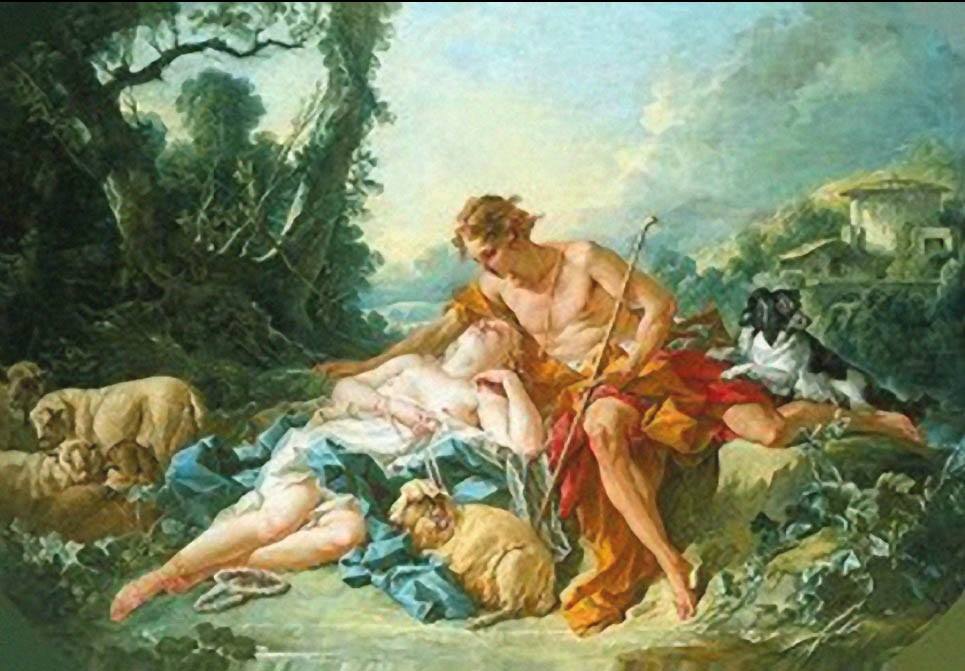
    “Kreutzer Sonata,” René François Xavier Prinet (1901)
  • Unrequited Love at Marlboro Music Festival

    Unrequited Love at Marlboro Music Festival

    Few torments are as unshakeable as that of unrequited love. Yet sublimated passion has led to more than its share of artistic masterpieces. For this Valentine’s Day, we’ll enjoy the fruits of others’ longing, on this week’s “Music for Marlboro.”

    It’s been speculated that Johannes Brahms’ “Liebeslieder Waltzes” was the product of his frustrated affection for Clara Schumann, the wife of composer Robert Schumann. The dance-like settings for four voices and piano (four hands) are based on love songs from Georg Friedrich Daumer’s collection “Polydora.”

    We’ll hear a performance from the 1971 Marlboro Music Festival, featuring soprano Kathryn Bouleyn, mezzo-soprano Mary Burgess, tenor Seth McCoy, and baritone John Magnuson, with Rudolf Serkin and Luis Batlle at the keyboard.

    The remarkably prolific Indian summer of Czech master Leoš Janáček can attributed in part to the sublimated passion he felt for Kamila Stösslová, a married woman some 38 years his junior. Janacek’s String Quartet No. 2, composed in 1928, when the composer was about 74 years-old, was inspired by their long and intimate – though unconsummated – relationship, detailed in their more than 700 letters. The work has been described as a “manifesto on love.”

    We’ll hear Janáček’s “Intimate Letters,” performed at the 2002 Marlboro Festival by violinists Nicholas Kendall and Hiroko Yajima, violist Richard O’Neill, and cellist Alexis Pia Gerlach.

    Great composers’ romantic frustrations are our gain this week, on “Music from Marlboro,” this Wednesday evening at 6:00 EST, on WWFM – The Classical Network and wwfm.org.

    Marlboro School of Music and Festival: Official Page


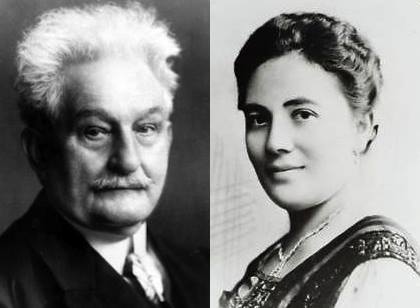
    Top (left to right): Janáček and his muse; bottom: Brahms, not yet “free but happy”

  • Spring Music on WWFM

    Spring Music on WWFM

    After a cold and tempestuous weekend, we teeter on the brink of full-on summer temperatures. Join me, then, on this rare spring afternoon for pastoral music by Lars-Erik Larsson, love madrigals by Claudio Monteverdi, some adorable musical menageries courtesy of John Lanchbery and Leos Janacek, and a nod to “The Bohemian Girl” by Michael Balfe. The music will be as good as spring itself, from 4 to 7 p.m. EDT, on WWFM – The Classical Network and wwfm.org.

  • Czech Composers Love and Masterpieces

    Czech Composers Love and Masterpieces

    Anyone at all acquainted with the life story of Leoš Janáček knows about his relationship with Kamila Stasslova. Stasslova was the married woman, 38 years Janáček’s junior, who was the recipient of his “intimate letters” (hence, the subtitle of his autobiographical String Quartet No. 2). Though the relationship was chaste one, she instilled in the composer an ardor which propelled him into the creation of a series of masterworks that spanned his final decade. This is the music which essentially made Janáček’s reputation.

    This Sunday night on “The Lost Chord,” we’ll have two more examples of Czech extramarital love that resulted in flowering creativity. Vitězslava Kaprálová undoubtedly would be much better known had she not died of tuberculosis at the age of 25. The brilliant Kaprálová seemed poised to become the best-known woman composer and conductor in Europe. Her teachers included Vitězslav Novák, Václav Talich, Charles Munch, Nadia Boulanger and Bohuslav Martinů.

    Her relationship with Martinů deepened into one of romantic love, which fueled some of the older composer’s most powerful works, as he grappled with his emotional turmoil, caught as he was between his wife and an irresistible attraction to his star pupil.

    Kaprálová reciprocated, producing a number of pieces under Martinů’s influence, generally submitting them for his approval. One such work was the “Partita for Piano and String Orchestra,” composed in 1938 and 1939. Martinů is said to have made a substantial contribution to its final version.

    The idea for this particular thesis came from a consideration of Zdeněk Fibich, the unsung Czech master who was roughly nine years younger than Dvořák. Fibich led something of a turbulent emotional life. When his first wife was about to give birth to twins, one of her sisters came to help out with the delivery. The sister and one of the newborns fell ill and died. They were followed within two years by the other child and Fibich’s wife.

    Fibich promptly married another of his wife’s sisters, only to abandon her and the son she bore him, in favor of one of his pupils, Anežka Schulzová. He documented the affair, musically, in his collection of piano pieces, “Moods, Impressions and Reminiscences,” composed between 1892 and 1899. He referenced material therein in a number of works written during the last decade of his life.

    One of these was the Symphony No. 2, which incorporates the musical reminiscence about the day he declared his love to Schulzová. This occurs in the second movement of the symphony, with another full-blown statement in the finale.

    Join me for this hour of unbalanced Czechs – “Bohemian Lifestyle: Illicit Love in Czech Music” – this Sunday night at 10 EDT on WWFM – The Classical Network; or listen to it later as a webcast, at wwfm.org.


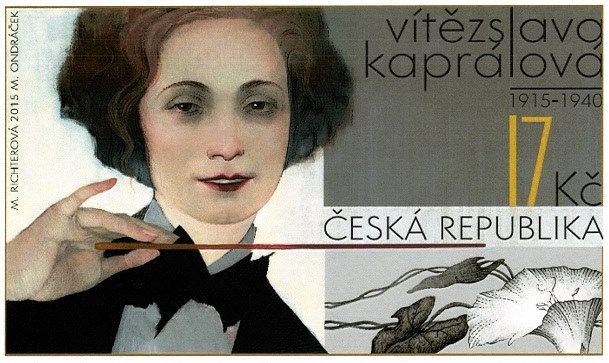
    PHOTOS: The woman who stole Martinů’s heart gets her own postage stamp (top); and Zedněk Fibich, lady killer

  • Czech Composers’ Forbidden Love Affairs

    Czech Composers’ Forbidden Love Affairs

    Anyone at all acquainted with the life story of Leoš Janáček knows about his relationship with Kamila Stasslova. Stasslova was the married woman, 38 years Janáček’s junior, who was the recipient of his “intimate letters” (hence, the subtitle of his autobiographical String Quartet No. 2). Though the relationship was chaste one, she instilled in the composer an ardor which propelled him into the creation of a series of masterworks that spanned his final decade. This is the music which essentially made Janáček’s reputation as a composer for the ages.

    This Sunday night on “The Lost Chord,” we’ll have two more examples of Czech extramarital love that resulted in flowering creativity. Vitězslava Kaprálová undoubtedly would be much better known had she not died of tuberculosis at the age of 25. The brilliant Kaprálová seemed poised to become the best-known woman composer and conductor in Europe. Her teachers included Vitězslav Novák, Václav Talich, Charles Munch, Nadia Boulanger and Bohuslav Martinů.

    Her relationship with Martinů deepened into one of romantic love, which fueled some of the older composer’s most powerful works, as he grappled with his emotional turmoil, caught as he was between his wife and an irresistible attraction to his star pupil.

    Kaprálová reciprocated, producing a number of pieces under Martinů’s influence, generally submitting them for his approval. One such work was the “Partita for Piano and String Orchestra,” composed in 1938 and 1939. Martinů is said to have made a substantial contribution to its final version.

    The idea for this particular thesis came from a consideration of Zdeněk Fibich, the unsung Czech master who was roughly nine years younger than Dvořák. Fibich led something of a turbulent emotional life. When his first wife was about to give birth to twins, one of her sisters came to help out with the delivery. The sister and one of the newborns fell ill and died. They were followed within two years by the other child and Fibich’s wife.

    Fibich promptly married another of his wife’s sisters, only to abandon her and the son she bore him, in favor of one of his pupils, Anežka Schulzová. He documented the affair, musically, in his collection of piano pieces, “Moods, Impressions and Reminiscences,” composed between 1892 and 1899. He referenced material therein in a number of works written during the last decade of his life.

    One of these was the Symphony No. 2, which incorporates the musical reminiscence about the day he declared his love to Schulzová. This occurs in the second movement of the symphony, with another full-blown statement in the finale.

    I hope you’ll join me for “Bohemian Lifestyle: Illicit Love in Czech Music,” this Sunday night at 10 ET. “The Lost Chord” repeats Friday morning at 3, or you can listen to it later as a webcast, at http://www.wwfm.org.

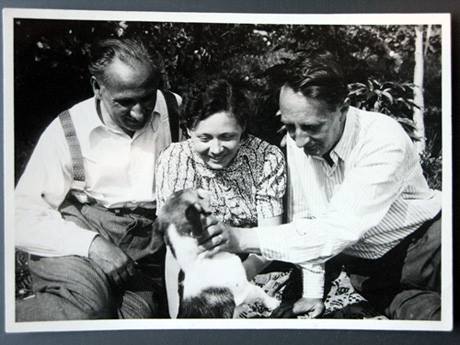
    PHOTO: (left to right) Václav Kaprál, Vítězslava Kaprálová аnd Bohuslav Martinů, with friend

Tag Cloud

Aaron Copland (92) Beethoven (95) Composer (114) Film Music (120) Film Score (143) Film Scores (255) Halloween (94) John Williams (185) KWAX (229) Leonard Bernstein (100) Marlboro Music Festival (125) Movie Music (135) Opera (198) Philadelphia Orchestra (88) Picture Perfect (174) Princeton Symphony Orchestra (106) Radio (87) Ralph Vaughan Williams (85) Ross Amico (244) Roy's Tie-Dye Sci-Fi Corner (290) The Classical Network (101) The Lost Chord (268) Vaughan Williams (103) WPRB (396) WWFM (881)

DON’T MISS A BEAT

Receive a weekly digest every Sunday at noon by signing up here


RECENT POSTS