Tag: Lili Boulanger

  • Lili Boulanger’s “Soleils de Septembre”

    Lili Boulanger’s “Soleils de Septembre”

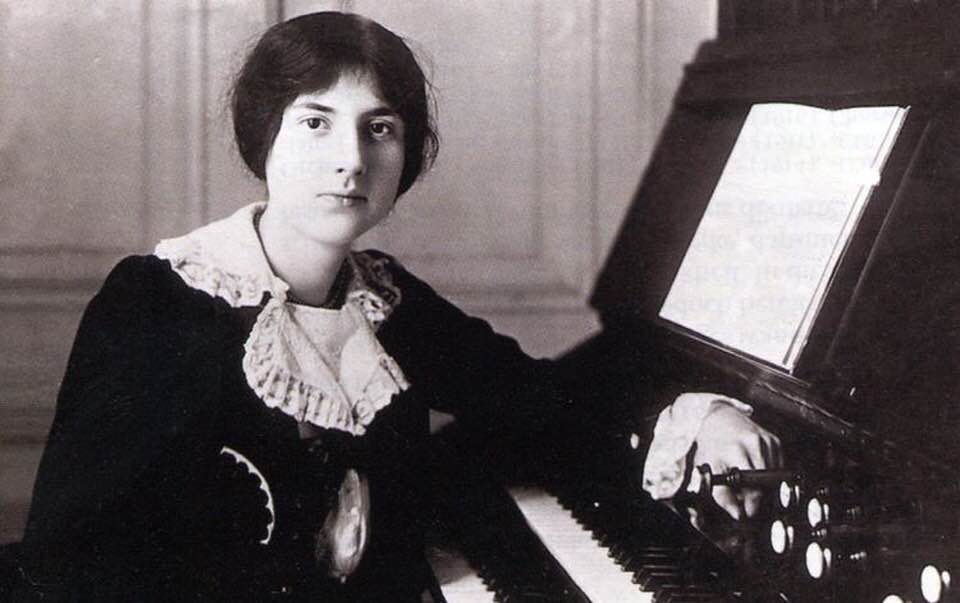
    In observing Lili Boulanger’s birthday anniversary on August 21st, I came across this piece I’d never heard before, and I decided to squirrel it away for September. This is Boulanger’s lovely setting of “Soleils de Septembre” (“The Suns of September”), from 1912. She would have been in her late teens. The poem, by Auguste Lacaussade (1815-1897), inspires a melancholy meditation on the change of seasons and the passage of time; but Boulanger’s setting concludes with a sense of optimism, a series of trills, suggestive of birds and sunshine, “the intoxication of song,” and “the happiness of loving.” The piece takes on an added degree of poignancy, when we reflect that the composer would die young, in 1918, at the age of 24.

    You’ll find the song at the link, with an English translation of the text below.

    Under these warm rays of suns of September
    The sky is soft, but pale, and the earth turns yellow.
    In the forests the leaf has the color of amber;
    The bird no longer sings on the edge of its nest.

    From the roof of the plowmen have fled the swallows;
    The sickle has passed on the golden ear of corn;
    No one hears in the air shivers of wings:
    The blackbird whistles alone in the depths of the troubled woods.

    The mousse is perfume-free, the herbs without softness;
    The rush on the ponds looks anxious;
    The sun, which turns pale, a warm sadness
    Fills in the distance the plain and the mountains and the heavens.

    The days are abbreviated; the water running in the valley
    No longer the joyous noises that delighted the air:
    It seems like the earth, and chilly and veiled,
    In his first chills he feels winter.

    O changing seasons! O inexorable laws!
    What mourning nature, alas! will cover himself!
    Suns of happy months, irreparable spring,
    Farewell! Streams and flowers will shut up and die.

    But console yourself, earth! O Nature! O Cybele!
    Winter is a sleep and is not the death:
    The springs will come back to make you green and beautiful;
    Man ages and dies, you do not grow old!

    You will return to the streams, dumb by the cold,
    Under the leafy arches their singing murmurs;
    To birds you will make their nests in the greenery;
    To the lilacs of the valley you will return its scents.

    Ah! captive germs when you break the chains,
    When, from the sap to flow, spilling the liquor,
    You will make the roses and the oaks bloom again,
    O Nature! with them make my heart bloom again!

    Return to my breast dried up poetics sap,
    Pour into me the heat of which the soul feeds,
    Bring the sheaves of my dreams to my forehead,
    Covers my bare boughs from the flowers of my mind.

    Without the intoxication of songs, my high and dear drunkenness,
    Without the happiness of loving, what do the days matter to me?
    O suns! O spring! I do not want youth
    What to always sing, only to love always!

  • Nadia Boulanger: Celebrating the Legendary Teacher

    Nadia Boulanger: Celebrating the Legendary Teacher

    Nadia Boulanger, the grande dame of 20th century music, was born on this date in 1887.

    Widely considered to have been the greatest musical pedagogue who ever lived, she was especially instrumental to the development of American composition. Hopefuls flocked to the American Conservatory at Fontainebleau, France, where she accepted applicants from all backgrounds. Her only stipulation was that they be determined to learn. It was Virgil Thomson who quipped, “She was a one-woman graduate school, so powerful and permeating that legend credits every United States town with two things: a five and dime and a Boulanger pupil.” The five and dimes may have faded, but not so the legacy of the “Boulangerie.”

    Beneath those grey hairs and pince-nez lurked an iron will that brooked no nonsense, yet Boulanger was surprisingly accepting, astonishingly objective, and generally dead-on in her assessments.

    Her students included everyone from Dinu Lipatti to Igor Markevitch, from Aaron Copland to Elliott Carter, from Astor Piazzolla to Philip Glass, from Michel Legrand to Quincy Jones, from Leonard Bernstein (unofficially) to “What Makes It Great?” radio host Rob Kapilow.

    Here’s what a few of those who benefited from her tutelage have to say about their experiences with her.

    Quincy Jones

    Harold Shapero

    Elliot Carter

    Elliot Carter and Ned Rorem

    Fascinating documentary, including first-hand accounts, historical footage, and terrific insights. Leonard Bernstein is interviewed in French, beginning around the 7-minute mark:

    There’s a live recording of Mme Boulanger conducting the Requiem of her teacher, Gabriel Fauré, from 1968 that’s circulated on various labels, with the BBC Chorus and BBC Symphony Orchestra. However, this performance too, with the Choral Art Society and the New York Philharmonic, is quite lovely, captured in Carnegie Hall in 1962.

    Nadia’s early ambition was to become a composer herself. However, she soon acknowledged that her sister, Lili, was the true talent in this regard and devoted her life to teaching. Sadly, Lili died of Crohn’s Disease at the age of only 24.

    Here’s Nadia’s own “Fantaisie variée” for piano and orchestra from 1912, written when she was 25.

    And an earlier work, “Cantique” from 1909

    Boulanger died in 1979 at the age of 92.

    Joyeux anniversaire… et merci!

  • Lili Boulanger Prix de Rome Prodigy

    Lili Boulanger Prix de Rome Prodigy

    Lili Boulanger (1893-1918), the younger sister of the renowned pedagogue Nadia – who taught Aaron Copland, Elliot Carter, Astor Piazzolla, Philip Glass, Michel Legrand, Quincy Jones, and just about everyone else – was one of the great hopes of French music, the first woman to win the Prix de Rome composition prize. She won the prize in 1913, at the age of 19, for her cantata “Faust et Hélène.” It was actually Lili’s second attempt. The year before, she collapsed during her performance.

    Lili suffered from chronic ill health, having contracted bronchial pneumonia at the age of 2. Her compromised immune system left her vulnerable to Crohn’s disease, which ended her life in 1918 at the age of 24. (Nadia’s life was as long as her sister’s was brief. She died in 1979 at the age of 92.)

    Nadia too had had ambitions to compose. She herself attempted to attain the Prix de Rome (as their father had done in 1835), but was repeatedly frustrated. She got as far as second place in 1908. It became evident that her sister was the real deal in that regard, so Nadia pursued organ and, of course, pedagogy.

    Both sisters were greatly influenced by Gabriel Fauré, who was director of the Paris Conservatory – Lili, a musical prodigy, had been accompanying her sister to the conservatory from before the age of 5 – and of course Debussy’s impact in those days was inescapable. Like Debussy, Lili gravitated toward a kind of indirection in her music, more characteristic of Symbolism than the evocative sorts of atmospheres often attempted by the Impressionists (a classification, by the way, Debussy disliked).

    Lili was greatly affected by the death of her father in 1900, and many of her works are marked by grief and loss. Ernest fathered his children quite late in life. He was 72 when Nadia was born, and 77 at the time of Lili’s birth. The girls’ mother was 41 years his junior. Despite the inherent melancholy that pervades much of her music, Lili displayed a colorful mastery of harmony and orchestration.

    Often she was perceived as destined for greatness. Her music has actually been programmed fairly frequently for a woman composer of her era. But now with greater sensitivity to male dominance in the world’s concert halls, we are starting to hear even more Lili Boulanger. It’s just a pity she didn’t leave us more.

    Happy birthday, Lili Boulanger.


    Deux morceaux for violin and piano: Nocturne and Cortège

    “Faust et Hélène”

    “D’un soir triste” (“Of a Sad Evening”)

    “D’un matin de printemps” (“Of a Spring Morning”)

    “Vieille prière bouddhique” (“Old Buddhist Prayer”)

  • Nadia & Lili Boulanger: Musical Sisters

    Nadia & Lili Boulanger: Musical Sisters

    Merveilleuse was the “Boulangerie” that produced sisters Nadia and Lili.

    Their mother, Raissa Myshetskaya (Mischetzky), was a Russian princess, who married Ernest Boulanger, a teacher and prize-winning composer at the Paris Conservatory. His associates included Charles Gounod, Jules Massenet, and Camille Saint-Saëns. Their grandfather, who had also taught there, was a notable cellist. Their grandmother sang at the Théâtre de l’Opéra-Comique. Suffice it to say, from their earliest years, the girls were exposed to the finest musical minds of Paris.

    On Nadia Boulanger’s birthday, much respect to these marvelous musical sisters.

    Nadia (1887-1979) became what has been described as the most influential teacher since Socrates. Her students included everyone from Dinu Lipatti to Igor Markevitch, from Aaron Copland to Elliott Carter, from Astor Piazzolla to Philip Glass, from Michel Legrand to Quincy Jones, from Leonard Bernstein to “What Makes It Great?” radio host Rob Kapilow.

    Her influence on American music, in particular, has been incalculable. Hopefuls flocked to her American Conservatory at Fontainebleau, where she accepted applicants from all backgrounds, provided they were determined to learn. It was Virgil Thomson who quipped, “She was a one-woman graduate school, so powerful and permeating that legend credits every United States town with two things: a five and dime and a Boulanger pupil.” The five and dimes may have faded, but not so the legacy of the “Boulangerie.”

    Beneath those grey hairs and pince-nez lurked an iron will that brooked no nonsense, yet Boulanger was surprisingly accepting, astonishingly objective, and generally dead-on in her assessments.

    Nadia’s younger sister, Lili (1893-1918), was one of the great hopes of French music, the first woman to win the Prix de Rome composition prize. She won the prize in 1913, at the age of 19, for her cantata “Faust et Hélène.” It was actually Lili’s second attempt. The year before, she collapsed during her performance.

    Unfortunately, Lili suffered from chronic ill health, contracting bronchial pneumonia at the age of 2. Her compromised immune system left her vulnerable to Crohn’s disease, which ended her life in 1918 at the age of 24.

    Nadia too had had ambitions to compose. She attempted to win the Prix de Rome (as their father had done in 1835), but was repeatedly frustrated. She got as far as second place in 1908. It became evident that her sister was the real talent in that regard, so Nadia pursued organ and, of course, pedagogy.

    Both sisters were greatly influenced by Gabriel Fauré, who was director of the Paris Conservatory – Lili, a musical prodigy, had been accompanying her sister to the conservatory from before the age of 5 – and of course Debussy’s impact in those days was inescapable. Like Debussy, Lili gravitated toward a kind of indirection in her music, more characteristic of Symbolism than the evocative sorts of atmospheres often attempted by the Impressionists (a classification, by the way, Debussy disliked).

    Lili was greatly affected by the death of her father in 1900, and many of her works are marked by grief and loss. Ernest fathered his children quite late in life. He was 72 when Nadia was born, and 77 at the time of Lili’s birth. The girls’ mother was 41 years his junior. Despite the inherent melancholy that pervades much of her music, Lili displayed a colorful mastery of harmony and orchestration.

    Often she was perceived as destined for greatness. Her music has actually been programmed fairly frequently for a woman composer of her era. But now with greater sensitivity to male dominance in the world’s concert halls, we are bound to hear even more Lili Boulanger. It’s just a pity she didn’t leave us more.

    Nadia’s life was as long as her sister’s was brief. She died in 1979 at the age of 92.


    Fascinating documentary about Nadia Boulanger, including first-hand accounts, historical footage, and terrific insights. Leonard Bernstein is interviewed in French, beginning around the 7-minute mark:

    Nadia conducts Fauré’s Requiem

    Nadia’s own “Fantaisie variée” for piano and orchestra

    Lili Boulanger’s “Faust et Hélène”

    “D’un soir triste” (“Of a Sad Evening”)

    “Vieille prière bouddhique” (“Old Buddhist Prayer”)


    BREAK BREAD WITH THE BOULANGERS ON NADIA’S BIRTHDAY: Nadia, left, with Lili in 1913. The bread was baked fresh this morning.

Tag Cloud

Aaron Copland (92) Beethoven (94) Composer (114) Film Music (116) Film Score (143) Film Scores (255) Halloween (94) John Williams (185) KWAX (228) Leonard Bernstein (99) Marlboro Music Festival (125) Movie Music (131) Opera (197) Philadelphia Orchestra (86) Picture Perfect (174) Princeton Symphony Orchestra (106) Radio (86) Ralph Vaughan Williams (85) Ross Amico (244) Roy's Tie-Dye Sci-Fi Corner (290) The Classical Network (101) The Lost Chord (268) Vaughan Williams (99) WPRB (396) WWFM (881)

DON’T MISS A BEAT

Receive a weekly digest every Sunday at noon by signing up here


RECENT POSTS