Tag: Lord Berners

  • Ballets Russes: English Music for the Stage

    Ballets Russes: English Music for the Stage

    We don’t know for sure when he was born (he was baptized on April 26, 1564), but April 23 is the day the world has chosen to celebrate Shakespeare.

    Rather than pummel you with more music inspired by the Bard, I thought I would take a circuitous approach, this Sunday night on “The Lost Chord,” and present Constant Lambert’s 1924-25 ballet, “Romeo and Juliet.” Do not go into it expecting the star-cross’d lovers of Shakespeare’s immortal tragedy. Lambert’s version takes a look at a ballet company. In the process of preparing an adaptation of the play, the two leads fall in love. They flee a rehearsal, and are glimpsed eloping in an aeroplane!

    Lambert was only 20 years-old when he wrote the music, which is cheeky and burlesque, evocative of commedia dell’arte and perhaps influenced by contemporaneous displays of joie de vivre by composers of the Parisian collective, Les Six.

    “Romeo and Juliet” was one of only two ballets commissioned from English composers by Serge Diaghilev for his Ballets Russes. The other was “The Triumph of Neptune,” written in 1926 by Gerald Hugh Tirwhitt-Wilson, 14th Baron Berners.

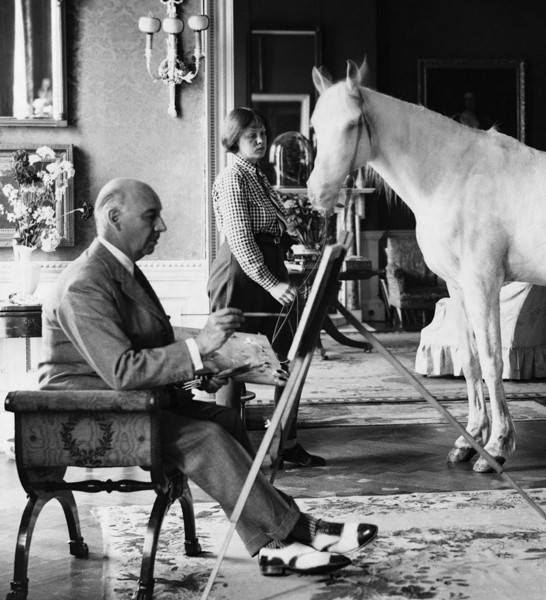
    Berners was an exemplar of a certain tradition of English eccentricity, in which a lord might invite a giraffe to an outdoor tea party or a horse would be given license to roam the indoors to mingle with his guests. His garden was full of paper flowers, his dogs wore pearl necklaces, and he built a hundred foot folly tower, allegedly just to annoy the neighbors.

    Berners was gifted in so many areas – as a composer, of course, but also as a writer (his stories and autobiographical musings have been brought back into print) and a painter (he loved to include mustaches in his portraits, whether the sitter had one or not). He liked ballet best of all, since it allowed him to write the scenarios and design the backdrops, in addition to composing the music.

    “The Triumph of Neptune” is Berners’ best-known piece. In this instance, it was Sacheverell Sitwell who devised the scenario, which sprang from their mutual enchantment with 19th century theatrical prints. An English sailor is shipwrecked en route to Fairyland. He is saved by Britannia, who dances a hornpipe. He returns home in spirit form, to find his wife carrying on with a well-dressed villain. But all ends happily, as he is turned into a prince and marries Neptune’s daughter.

    The choreography was by George Balanchine, and the work became a great favorite of Sir Thomas Beecham.

    I hope you’ll join me for “England à la Russe” – music written by English composers for the Ballets Russes – this Sunday night at 10:00 EDT, on WWFM – The Classical Network and at wwfm.org.


    PHOTOS: Berners paints a horse; Lambert pushes a car

  • Diaghilev’s Lost English Ballets

    Diaghilev’s Lost English Ballets

    Serge Diaghilev, impresario of the Ballets Russes, commissioned some of the most enduring ballet scores of the 20th century, from composers such as Claude Debussy (“Jeux”), Maurice Ravel (“Daphnis and Chloe”), Manuel de Falla (“The Three-Cornered Hat”) and especially Igor Stravinsky (“The Firebird,” “Petrushka” and “The Rite of Spring”).

    Less well known is the fact that he approached two Englishmen to write music for his famed and influential company.

    This Sunday night on “The Lost Chord,” we’ll be listening to works by Constant Lambert and Lord Berners – both figures so diverse in their interests, and possessing such outsized personalities, that it isn’t really possible to do either justice in the time allotted.

    Lambert was a brilliant polymath. In addition to his considerable talents as a composer, he was a conductor, arranger, and writer, as well as the lover of Margot Fonteyn. Alas, alcoholism and workaholism conspired with undiagnosed diabetes to hasten his demise at the age of 45.

    His ballet, “Romeo and Juliet,” presented as a play-within-a-play, turns Shakespeare’s tragedy of star-crossed lovers on its head, with the leads falling hard in a backstage romance with happier results. Lambert would go on to greater things, but the ballet is undeniably an impressive piece of work for a 20 year-old.

    Similarly, Lord Berners’ interests lay all over the place, but his was a much more relaxed character. Unfailingly productive as a composer, a painter and a writer, he never lost sight of the fact that his life would be his magnum opus. And Berners lived well.

    Furthermore, his fortune ensured that he would never be taken to task for any of his whimsical behavior. This included having a 140-foot folly tower constructed on his estate (partly to annoy the neighbors) and inviting a horse to his indoor tea parties.

    Berners wrote novels, painted portraits (always certain to include a moustache, whether the sitter had one or not), and composed a respectable amount of music, especially for the ballet.

    For the Ballets Russes, he wrote “The Triumph of Neptune,” which became a great favorite of Sir Thomas Beecham. Sacheverell Sitwell provided the scenario, which concerns a sailor who is shipwrecked en route to Fairyland, and George Balanchine supplied the choreography.

    I hope you’ll join me for “England à la Russe,” tonight at 10 ET, with a repeat Wednesday evening at 6, or that you’ll listen to it later as a webcast at http://www.wwfm.org.

    PHOTO: Berners, no doubt contemplating the placement of a moustache

  • Water Spirits in Music Rusalka Week Special

    Water Spirits in Music Rusalka Week Special

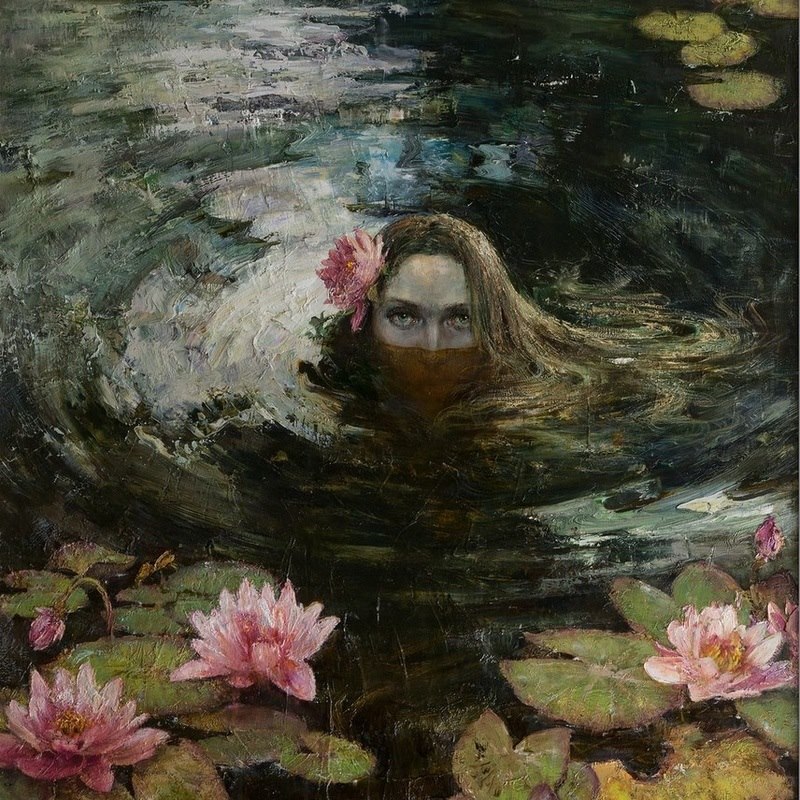
    There have been innumerable pieces of music written about water spirits – sirens, naiads, lorelei, undines, mermaids and melusinas. This Sunday night on “The Lost Chord,” we’ll sample just a couple of these for Rusalka Week.

    In Slavic mythology, a rusalka is a spirit that dwells at the bottom of a river or lake. She lures unsuspecting men with her song, invariably resulting in a watery doom. Rusalki are never more dangerous than in early June, when the spirits roam free.

    Rusalka Week plays a role in Rimsky-Korsakov’s opera, “May Night,” drawn from Gogol’s collection, “Evenings on a Farm Near Dikanka.” Alexander Dargomizhsky’s opera, “Rusalka,” is based on a dramatic poem by Pushkin. And the best known of the bunch, Dvorak’s “Rusalka,” was inspired by Czech fairy tales of Karel Jaromir Erben and Bozena Nemcova.

    Of course, we won’t be listening to any of these. (We’ve treated Rimsky and Dargomizhsky in the past.) Instead, we’ll have a flute sonata from 1882, by Carl Reinecke, which bears the subtitle “Undine,” an allusion to a novella by Friedrich de la Motte Fouqué, which was very popular among the Romantics. Fouqué’s Undine tells the tale of a water spirit who marries a knight in order to gain a soul.

    Then we’ll hear the complete ballet, “Les Sirènes,” from 1946, by Lord Berners. Berners, notorious for his sense of the absurd (a horse was a regular guest at his indoor tea parties) was a talented composer, writer and painter. “Les Sirènes,” on a scenario devised by Frederick Ashton, features mermaids combing their hair and singing on rocks at a seaside resort, where sirens of another sort behave coquettishly on shore.

    That’s “Come on in, the Water’s Fine.” PLEASE NOTE: Due to the egregious length of the Sunday opera (Wagner’s “Parsifal,” beginning at 3 p.m. ET), “The Lost Chord” will begin one hour later than usual, at 11. The repeat will air Thursday at the same time.

    You don’t want to be out walking during Rusalka Week anyway, so why don’t you stay indoors and enjoy the show? Or listen to it later as a webcast at http://www.wwfm.org.

Tag Cloud

Aaron Copland (92) Beethoven (95) Composer (114) Film Music (123) Film Score (143) Film Scores (255) Halloween (94) John Williams (187) KWAX (229) Leonard Bernstein (101) Marlboro Music Festival (125) Movie Music (138) Opera (202) Philadelphia Orchestra (89) Picture Perfect (174) Princeton Symphony Orchestra (106) Radio (87) Ralph Vaughan Williams (85) Ross Amico (244) Roy's Tie-Dye Sci-Fi Corner (290) The Classical Network (101) The Lost Chord (268) Vaughan Williams (103) WPRB (396) WWFM (881)

DON’T MISS A BEAT

Receive a weekly digest every Sunday at noon by signing up here


RECENT POSTS