Serge Diaghilev, impresario of the Ballets Russes, commissioned some of the most enduring ballet scores of the 20th century, from such composers as Claude Debussy (“Jeux”), Maurice Ravel (“Daphnis and Chloe”), Manuel de Falla (“The Three-Cornered Hat”), and Igor Stravinsky (“The Firebird,” “Petrushka” and “The Rite of Spring”).
Less well known is the fact that two Englishmen were also approached.
This week on “The Lost Chord,” we’ll listen to works by Constant Lambert and Lord Berners – both men so diverse in their interests, and possessing such outsized personalities, it isn’t really possible to do justice to either in the time allotted.
Lambert was a brilliant polymath. In addition to his considerable talents as a composer, he was a conductor, arranger, and writer, as well as the lover of Margot Fonteyn. Alas, alcoholism and workaholism conspired with undiagnosed diabetes to hasten his demise at the age of 45.
His ballet, “Romeo and Juliet,” presented as a play-within-a-play, turns Shakespeare’s tragedy of star-crossed lovers on its head, with the leads falling hard in a backstage romance with happier results. Lambert would go on to greater things, but the ballet is undeniably an impressive piece of work for a 20 year-old.
Similarly, Lord Berners’ interests lie all over the place, but his was a much more relaxed character. Unfailingly productive as a composer, a painter, and a writer, nonetheless he never lost sight of the fact that life would be his magnum opus. And Berners lived well.
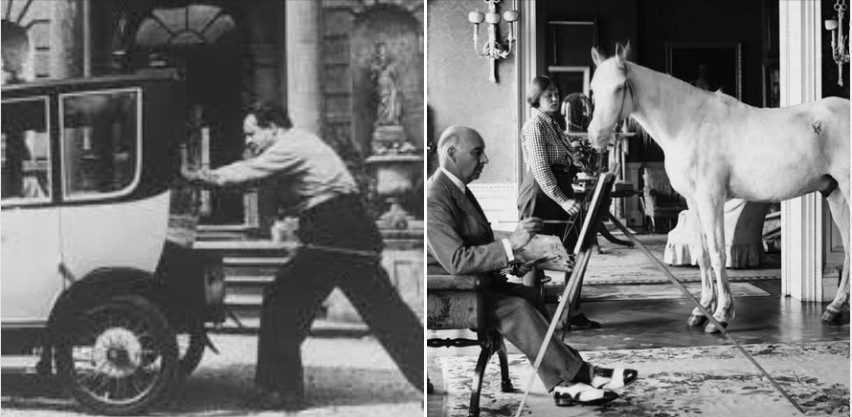
Furthermore, his fortune ensured that he would never be taken to task for any of his whimsical behavior. This included having a 140-foot folly tower constructed on his estate (partly to annoy the neighbors) and keeping a horse and a giraffe to invite to his indoor and outdoor tea parties.
Berners wrote novels, painted portraits (always sure to include a moustache, whether the sitter had one or not), and composed a respectable amount of music, especially for the ballet.
For the Ballets Russes, he wrote “The Triumph of Neptune,” which became a great favorite of Sir Thomas Beecham. Sacheverell Sitwell provided the scenario, which concerns a sailor who is shipwrecked en route to Fairyland, and George Balanchine supplied the choreography.
That’s a heady mix of hornpipes and pas de deux. I hope you’ll join me for “England à la Russe,” on “The Lost Chord,” now in syndication on KWAX Classical Oregon!
——-
Clip and save the start times for all three of my recorded shows:
PICTURE PERFECT, the movie music show – Friday at 8:00 PM EDT/5:00 PM PDT
SWEETNESS AND LIGHT, the light music program – Saturday at 11:00 AM EDT/8:00 AM PDT
THE LOST CHORD, unusual and neglected rep – Saturday at 7:00 PM EDT/4:00 PM PDT
Stream them, wherever you are, at the link!
https://kwax.uoregon.edu
——-
PHOTOS: Berners, no doubt contemplating the placement of a moustache (right); and Lambert pushing Berners car
Tag: Lord Berners
-
“England à la Russe” on “The Lost Chord”
-

Musical Confections for Valentine’s Day on “Sweetness and Light”
This morning on KWAX, it’s flowers and chocolate for breakfast. I’ll do my best to indulge your sweet tooth and lend a serotonin boost with a special Valentine’s Day sampler.
Luxuriate with an assortment of decadent Fritz Kreisler violin bonbons, a suite from Lord Berners’ ballet “Cupid and Psyche,” Victor Herbert’s orchestration of Franz Liszt’s “Liebestraum,” Henry Mancini’s arrangement of Nino Rota’s “Love Theme from Romeo and Juliet,” and some romantic reveries by Gilbert & Sillivan, Charles Ancliffe, and Leonard Bernstein.
Better limber up those lips. It will be an hour of musical confections for Valentine’s Day on “Sweetness and Light,” this Saturday morning at 11:00 EST/8:00 PST. Hear it exclusively on KWAX Classical Oregon!
Stream it, wherever you are, at the link:
https://kwax.uoregon.edu/ -
Ballets Russes’ Lost English Composers
Serge Diaghilev, impresario of the Ballets Russes, commissioned some of the most enduring ballet scores of the 20th century, from such composers as Claude Debussy (“Jeux”), Maurice Ravel (“Daphnis and Chloe”), Manuel de Falla (“The Three-Cornered Hat”), and Igor Stravinsky (“The Firebird,” “Petrushka” and “The Rite of Spring”).
Less well known is the fact that two Englishmen were also approached.
This week on “The Lost Chord,” we’ll listen to works by Constant Lambert and Lord Berners – both men so diverse in their interests, and possessing such outsized personalities, it isn’t really possible to do justice to either in the time allotted.
Lambert was a brilliant polymath. In addition to his considerable talents as a composer, he was a conductor, arranger, and writer, as well as the lover of Margot Fonteyn. Alas, alcoholism and workaholism conspired with undiagnosed diabetes to hasten his demise at the age of 45.
His ballet, “Romeo and Juliet,” presented as a play-within-a-play, turns Shakespeare’s tragedy of star-crossed lovers on its head, with the leads falling hard in a backstage romance with happier results. Lambert would go on to greater things, but the ballet is undeniably an impressive piece of work for a 20 year-old.
Similarly, Lord Berners’ interests lie all over the place, but his was a much more relaxed character. Unfailingly productive as a composer, a painter, and a writer, nonetheless he never lost sight of the fact that life would be his magnum opus. And Berners lived well.Furthermore, his fortune ensured that he would never be taken to task for any of his whimsical behavior. This included having a 140-foot folly tower constructed on his estate (partly to annoy the neighbors) and keeping a horse and a giraffe to invite to his indoor and outdoor tea parties.
Berners wrote novels, painted portraits (always sure to include a moustache, whether the sitter had one or not), and composed a respectable amount of music, especially for the ballet.
For the Ballets Russes, he wrote “The Triumph of Neptune,” which became a great favorite of Sir Thomas Beecham. Sacheverell Sitwell provided the scenario, which concerns a sailor who is shipwrecked en route to Fairyland, and George Balanchine supplied the choreography.
That’s a heady mix of hornpipes and pas de deux. I hope you’ll join me for “England à la Russe,” on “The Lost Chord,” now in syndication on KWAX, the radio station of the University of Oregon!
Clip and save the start times for all three of my recorded shows:
PICTURE PERFECT, the movie music show – Friday at 8:00 PM EDT/5:00 PM PDT
SWEETNESS AND LIGHT, the light music program – ALL NEW! – Saturday at 11:00 AM EDT/8:00 AM PDT
THE LOST CHORD, unusual and neglected rep – Saturday at 7:00 PM EDT/4:00 PM PDT
Stream them, wherever you are, at the link!
PHOTOS: Berners, no doubt contemplating the placement of a moustache (right); and Lambert pushing Berners car
-
Valentine’s Day Music KWAX Sweetness and Light
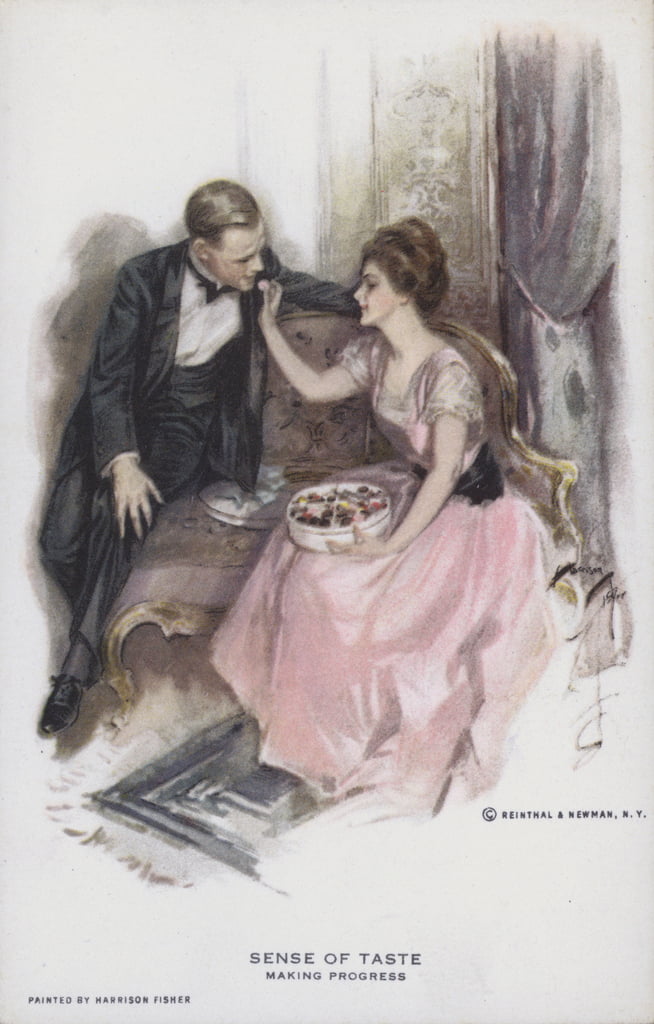
This morning on KWAX, it’s flowers and chocolate for breakfast. I’ll do my best to indulge your sweet tooth and lend a serotonin boost with a special Valentine’s Day sampler.
Luxuriate with an assortment of decadent Fritz Kreisler violin bonbons, a suite from Lord Berners’ ballet “Cupid and Psyche,” Victor Herbert’s orchestration of Franz Liszt’s “Liebestraum,” Henry Mancini’s arrangement of Nino Rota’s “Love Theme from Romeo and Juliet,” and some romantic reveries by Gilbert & Sillivan, Charles Ancliffe, and Leonard Bernstein.
Better limber up those lips. It will be an hour of musical confections for Valentine’s Day on “Sweetness and Light,” this Saturday morning at 11:00 EST/8:00 PST. Hear it exclusively on KWAX, the radio station of the University of Oregon!
You can stream it, wherever you are, at the link:
-
Rusalka Week Water Spirits on “The Lost Chord”
What precautions have you taken against Rusalka Week? None, you say? (Crosses self)
There are innumerable pieces of music written about water spirits – sirens, naiads, lorelei, undines, mermaids, and melusinas. This Sunday night on “The Lost Chord,” we’ll sample just a couple of these for Rusalka Week. Rusalka Week begins on Pentecost, 50 days after Easter (i.e. today).
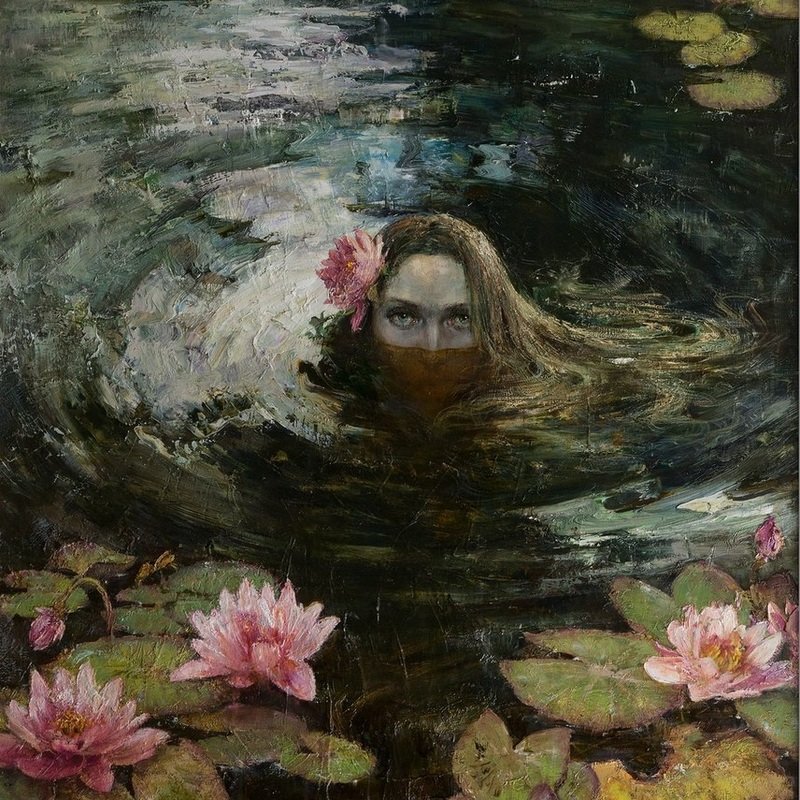
In Slavic mythology, a rusalka is a spirit that dwells at the bottom of a river or a lake. She lures unsuspecting men with her song, invariably resulting in a watery doom. Rusalki are never more dangerous than in early June, when the spirits roam free. Those who die in the week leading up to Pentecost are especially prone to becoming rusalki.
Rusalka Week plays a role in Rimsky-Korsakov’s opera, “May Night,” drawn from Nikolai Gogol’s collection, “Evenings on a Farm Near Dikanka.” Alexander Dargomizhsky’s opera, “Rusalka,” is based on a dramatic poem by Pushkin. And the best known of the bunch, Dvorak’s “Rusalka,” was inspired by Czech fairy tales of Karel Jaromir Erben and Bozena Nemcova.
But we won’t be listening to any of these. (We’ve treated Rimsky and Dargomizhsky in the past.) Instead, we’ll have a flute sonata from 1882 by Carl Reinecke that bears the subtitle “Undine,” an allusion to a novella by Friedrich de la Motte Fouqué, very popular among the Romantics. Fouqué’s “Undine” tells the tale of a water spirit who marries a knight in order to gain a soul.
Then we’ll hear the complete ballet, “Les Sirènes,” from 1946, by Lord Berners. Berners, notorious for his sense of the absurd (a horse was a regular guest at his indoor tea parties) was a talented composer, writer, and painter. “Les Sirènes,” after a scenario by Frederick Ashton, features mermaids combing their hair and singing on rocks at a seaside resort, while on shore, sirens of another sort behave coquettishly.
I hope you’ll join me – you shouldn’t be out wandering during Rusalka Week anyway – for “Come on in, the Water’s Fine,” this Sunday night at 10:00 EDT, on WWFM – The Classical Network and wwfm.org.
IMAGE: “Rusalka” by Anna Vinogradova
Tag Cloud
Aaron Copland (94) Beethoven (95) Composer (114) Film Music (149) Film Score (143) Film Scores (255) Halloween (97) John Williams (197) KWAX (232) Leonard Bernstein (105) Marlboro Music Festival (125) Movie Music (164) Mozart (91) Opera (215) Philadelphia Orchestra (90) Picture Perfect (174) Princeton Symphony Orchestra (110) Radio (90) Ross Amico (244) Roy's Tie-Dye Sci-Fi Corner (290) The Classical Network (101) The Lost Chord (269) Vaughan Williams (107) WPRB (397) WWFM (881)