I’m sorry, I’ve been so busy lately, and if I don’t get started on these posts first thing in the morning, it’s very hard for me to write anything of consequence that reads well. Generally speaking, the earlier I write, the better. Best is when it’s so early, I can’t even think. Just sit down with a cup of coffee and let those fingers go.
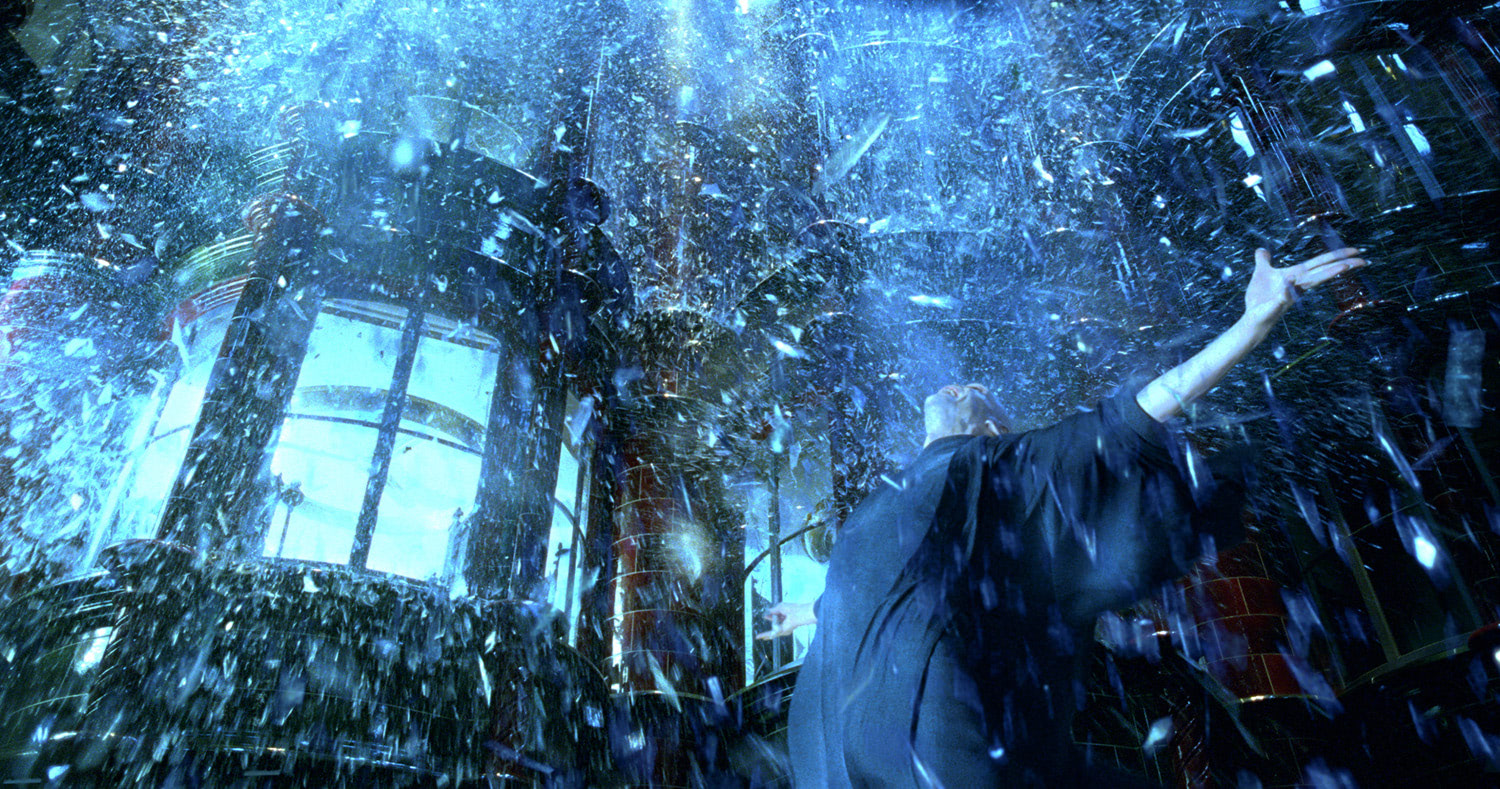
But life is such that I can’t always do that. Which is why, for Gustav Mahler’s birthday, here I am at 11:00 a.m., sharing a video of Yoda, Gandalf, and Voldemort conducting the “Resurrection” Symphony. Hey, don’t let it be said that I don’t do my part to popularize the classics.
And it’s not like it’s that farfetched. Dismiss the concept, if you’d like, as puerile nonsense, but it would take wizards of this magnitude to translate the work’s emotional grandeur into images worthy of its transcendent power, even if the music itself is more seismic, uplifting, and transformative than anything that could possibly be expressed on a motion picture screen.
Let me know which of the three you think has the best technique, if you’re so inclined, and happy birthday, Gustav Mahler.
Tag: Lord of the Rings
-
“Fantastic” Conductors Tackle Mahler’s “Resurrection”
-
Fantasy Quests on “Picture Perfect”
This week on “Picture Perfect,” we’re on a quest for fantasy.
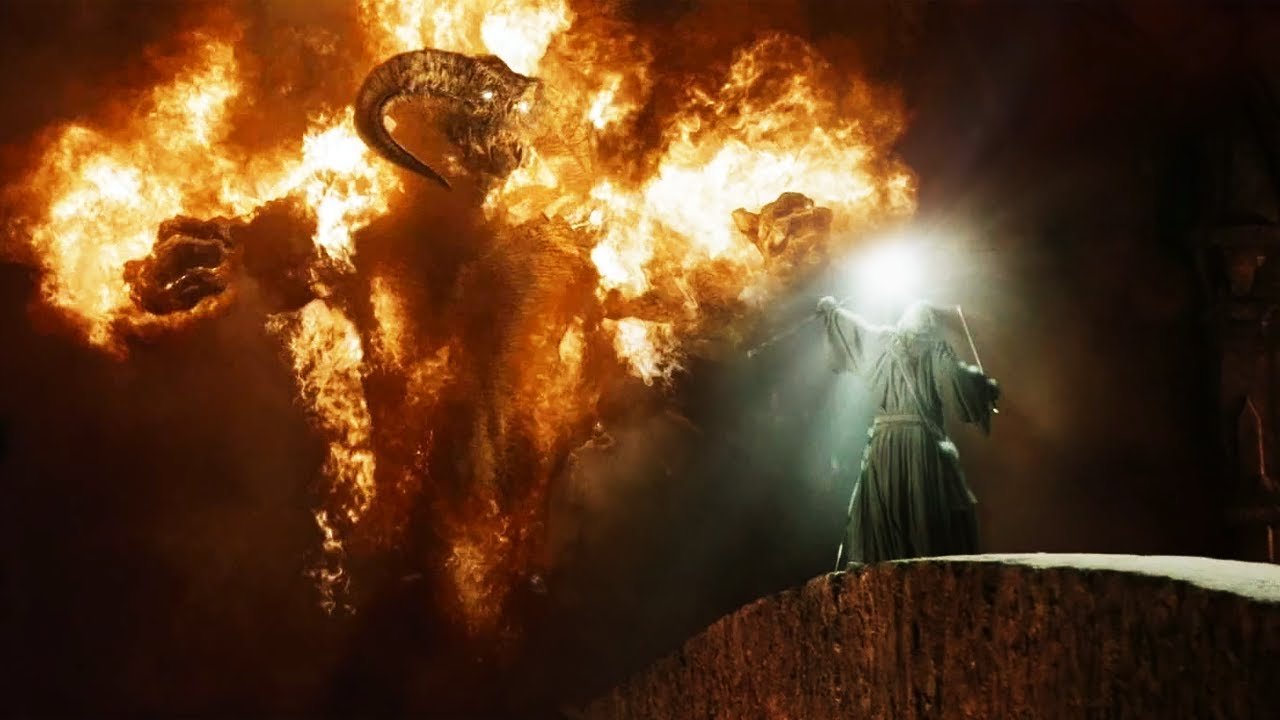
For decades, “The Lord of the Rings” had been a kind of Holy Grail for genre fans, and anticipation ran high in regard to when exactly there would be a decent live action adaptation of J.R.R. Tolkien’s magnum opus. Alas, either filmmakers couldn’t acquire the rights, or they were hampered by technological limitations. Though the realization of Tolkien’s richly-imagined world of hobbits, orcs, and balrogs eluded many, fantasy films of a derivative nature were thick on the ground. Some were good, some not so good. But many of them had outstanding scores.
“The Dark Crystal” (1982), though produced by Jim Henson and company, was a long way from Big Bird and Ernie & Burt, with some pretty dark scenes. The score by Trevor Jones is first rate, given the full romantic treatment and recorded by the London Symphony Orchestra, augmented by Fairlight and Synclavier synthesizers, as well as the occasional period instrument.
“Willow” (1988) allegedly grew out of George Lucas’ desire to film “The Hobbit.” Rather than fork over a sizeable portion of his earnings to the Tolkien estate, he opted instead to take the “Star Wars” approach of synthesizing archetypal images, from the Old Testament through Ray Harryhausen films, to create his own original story. Except the influences weren’t so cleverly assimilated this time. Composer James Horner followed suit, with a score rich in allusions to Schumann, Wagner, Grieg, Tchaikovsky, Rachmaninoff, and especially Prokofiev.
The first feature-length adaptation of “The Lord of the Rings” (1978) was literally rendered in animation. The film manages to cover only the first book-and-a-half of the trilogy, and the last half hour or so is probably incomprehensible to anyone who hasn’t read it. It had been director Ralph Bakshi’s plan to divide the trilogy into two parts – already a concession to the studio – but the first film’s modest performance meant there was no funding for a second.
Two-time Academy Award winner Leonard Rosenman was engaged to write the score. Rosenman composed the music for the James Dean classics “East of Eden” and “Rebel Without a Cause.” Bakshi had originally wanted to use Led Zepplin songs. He later expressed his dislike for Rosenman’s score, which he found to be too conventional – somewhat ironic in that Rosenman, a pupil of Arnold Schoenberg, Roger Sessions, and Luigi Dallapiccola, was known for writing some of the most challenging scores in film history, including the uncompromising music for “Fantastic Voyage.”
It would be over two decades before another feature film based upon Tolkien’s source material was mounted. Peter Jackson’s “The Fellowship of the Ring” (2001) is brimful of state-of-the-art special effects, so much so that a great many important details from Tolkien’s novel are lost in the shuffle. Still, Jackson’s trilogy went on to garner 30 Academy Award nominations, of which it won 17. Howard Shore’s music was recognized with Oscars for the first and third installments. The third, “The Return of the King,” inexplicably went on to become one of the most decorated films of all time.
Prophecies must be fulfilled, order restored, and the land made whole! We’re on a quest for fantasy music, on “Picture Perfect,” music for the movies, now in syndication on KWAX Classical Oregon!
——–
Clip and save the start times for all three of my recorded shows:
PICTURE PERFECT, the movie music show – Friday at 8:00 PM EDT/5:00 PM PDT
SWEETNESS AND LIGHT, the light music program – Saturday at 11:00 AM EDT/8:00 AM PDT
THE LOST CHORD, unusual and neglected rep – Saturday at 7:00 PM EDT/4:00 PM PDT
Stream them, wherever you are, at the link!
https://kwax.uoregon.edu -
Wizard Music From Lord of the Rings & Harry Potter
This week on “Picture Perfect,” you’ll be spellbound (I hope) by an hour of musical selections from movies about wizards and sorcerers.
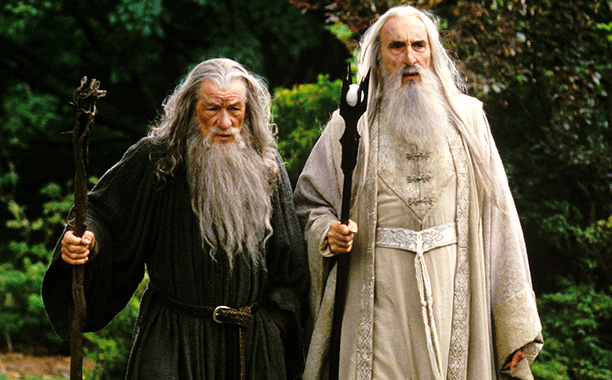
Gandalf and Saruman duke it out in Peter Jackson’s frenetic, yet somehow ponderous adaptations of J.R.R. Tolkien’s “The Lord of the Rings,” films so bloated and poorly paced that anyone who did not read the books probably wondered what all the fuss was about. Its abundant defects didn’t keep the screen trilogy from making over a billion dollars and garnering 30 Academy Award nominations. Three of those were bestowed upon composer Howard Shore. We’ll be sampling from his music to “The Fellowship of the Ring” (2001).
Made for a fraction of the budget, much less self-serious, and arguably way more fun is “The Sword and the Sorcerer” (1982), which holds no pretense to be anything beyond what it is: a schlocky B-movie sword and sandal swashbuckler. However, the composer, David Whitaker, aspired for something greater. Against tremendous time pressures, he turned in a marvelous score, which sounds like Erich Wolfgang Korngold on a shoestring. If this film had been made by George Lucas, Whitaker would be world famous.
After creating one of his greatest scores for Stanley Kubrick’s “Spartacus,” Alex North had his music for Kubrick’s “2001: A Space Odyssey” rejected – and not in a nice way. (North didn’t find out about it until the lights went down at the film’s premiere.) Fortunately, the composer was able to salvage the best material for “Dragonslayer” (1981). The plot, about a bumbling sorcerer’s apprentice who faces a seemingly impossible challenge, is serviceable at best, but the dragon may yet be the most amazing committed to film. Also, the score is terrific.
Finally, John Williams kicked off another billion dollar franchise with “Harry Potter and the Sorcerer’s Stone” (2001), which in England was released (as was the book) as “Harry Potter and the Philosopher’s Stone.” Who ever heard of a sorcerer’s stone? I guess the publishers were nervous that Americans would be put off by any association with philosophy.
Prepare to be charmed! It’s music for wizards and sorcerers this week, on “Picture Perfect,” music for the movies, now in syndication on KWAX, the radio station of the University of Oregon!
Clip and save the start times for all three of my recorded shows:
PICTURE PERFECT, the movie music show – Friday at 8:00 PM EDT/5:00 PM PDT
SWEETNESS AND LIGHT, the light music program – ALL NEW! – Saturday at 11:00 AM EDT/8:00 AM PDT
THE LOST CHORD, unusual and neglected rep – Saturday at 7:00 PM EDT/4:00 PM PDT
Stream them, wherever you are, at the link!
PHOTO: Saruman vexes Gandalf with the exquisite whiteness of his beard
-

LOTR Opera: A Worthy Musical Champion?
Has “The Lord of the Rings” at last found a worthy musical champion? Many composers have perished on the slopes of Mount Doom in their quest to bring Tolkien’s magnum opus to the stage, but at last it appears the Tolkien Estate has given its benediction to Paul Corfield Godfrey to write a “Lord of the Rings” opera. Not just any opera, mind you, but, as one would hope, a multi-evening event, in the manner of Wagner’s “Ring Cycle” (which Tolkien disliked, by the way, for what he perceived as Wagner’s cavalier treatment of the legendary and mythological source material). Godfrey’s LOTR will consist of 17 hours of music, to be presented over six nights.
Does he have the chops? He is a lifelong fan, who appears to have been crafting Tolkien settings for decades. He lacks for neither energy nor ambition. Who writes that much music about “The Silmarillion?” At least he seems to be able to do atmosphere and, judging from the samples of his work posted online, it doesn’t sound like the characterless noodling with no big moments that makes so much contemporary opera seem so colorless.
At any rate, with the amount of passion this guy has for the material, it’s got to be more than just a “Rings of Power” cash grab. Right? RIGHT???
Among Godfrey’s teachers were Alan Bush, a reputable English composer, and David Wynne, less well-known, but his Symphony No. 3 was conducted by Bryden Thomson and the audio is posted on YouTube.
I imagine the musical language for a LOTR opera can’t help but be old-fashioned, but if anyone were going to do it, I would hope that would be the case. It needs to be big and tonal, with plenty of heaven-storming and heldentenors.
The recordings will appear – on 15 CDs! – in 2025. The project enlists the talents of Volante Opera Productions, with singers drawn largely from the Welsh National Opera. Godfrey’s LOTR will be followed in 2026 by an opera inspired by “The Hobbit.” Both have been in the making for over 50 years.
From the samples of his work posted online, I think this guy understands “The Lord of the Rings” better than Peter Jackson. Then, the bar has been set very low. May the stars shine upon his face!
Samples from “The Silmarillion”
More about the composer
https://britishmusiccollection.org.uk/node/68299
Volante Opera Productions
-

Harry Potter Lord of the Rings Music
Lumos Solem!
This Sunday night on “The Lost Chord,” it’s an hour of musical enchantments inspired by “Harry Potter” and “The Lord of the Rings.”
Herbert Chappell composed the occasional concert work (including an impressive guitar concerto for Eduardo Fernandez), in between writing television scores and producing documentaries for the BBC. Unquestionably, his greatest coup was in cutting a deal on behalf of Decca Records for his telecast of “The Three Tenors.” No one, not even the tenors themselves, anticipated its staggering success.
According to Chappell, his concert overture “Boy Wizard,” an impression of Harry Potter, is meant to conjure “an academy of wizardry and witchcraft, owls that deliver letters, cats that act as lie-detectors, unicorns with silvery blood, and a helter-skelter death-defying game of aerial acrobatics, where one whizzes around the sky on turbo-charged broomsticks.” The work appeared in 2001, the same year as the first of the “Harry Potter” film adaptations.
In 1995, American composer Craig Russell was reading “The Hobbit” and “The Lord of the Rings” aloud to his family, when he became “an unexpected party” to a commission for string orchestra. Russell responded with a seven-movement suite. In 1997, he added two more movements and expanded the orchestration to create “Middle Earth.”
We’ll hear “Frodo Leaves the Shire,” “Gimli, the Dwarf,” “Galadriel and Her Elvin Mirror,” “Gollum,” “Gandalf: The White Rider,” “Shelob’s Lair,” “Orcs and Ring Wraiths,” “Strider and the Crowning of Aragorn,” and “Frodo and Company Return.”
Aulis Sallinen is one of the most respected of contemporary Finnish composers. In 1996, he completed his Symphony No. 7, on a commission from the Gothenburg Symphony Orchestra, which he gave the subtitle “The Dreams of Gandalf.” Its origins were in a projected ballet inspired by “The Lord of the Rings.” However, the composer hastened to add that the symphony doesn’t actually depict any of the events in the story, but rather its atmosphere and its poetry.
To round out the hour, we’ll have a few minutes to enjoy selections from a fondly-remembered song cycle on Tolkien texts, “The Road Goes Ever On,” by Donald Swann (of Flanders and Swann fame).
I hope you’ll join me for this program of music inspired by pop-cultural and quasi-literary wizards. The effect is guaranteed to be pure magic, on “Spellbound,” this Sunday night at 10:00 EDT, on WWFM – The Classical Network and wwfm.org.
In addition to the considerable achievements noted above, Herbert Chappell also wrote “The Gonk,” employed so memorably in George A. Romero’s “Dawn of the Dead.” Get your hit of whimsical zombie music while awaiting tonight’s broadcast by following the link below.
Tag Cloud
Aaron Copland (93) Beethoven (95) Composer (114) Film Music (144) Film Score (143) Film Scores (255) Halloween (94) John Williams (195) KWAX (229) Leonard Bernstein (104) Marlboro Music Festival (125) Movie Music (159) Mozart (90) Opera (212) Philadelphia Orchestra (89) Picture Perfect (174) Princeton Symphony Orchestra (109) Radio (88) Ross Amico (244) Roy's Tie-Dye Sci-Fi Corner (290) The Classical Network (101) The Lost Chord (269) Vaughan Williams (105) WPRB (397) WWFM (881)