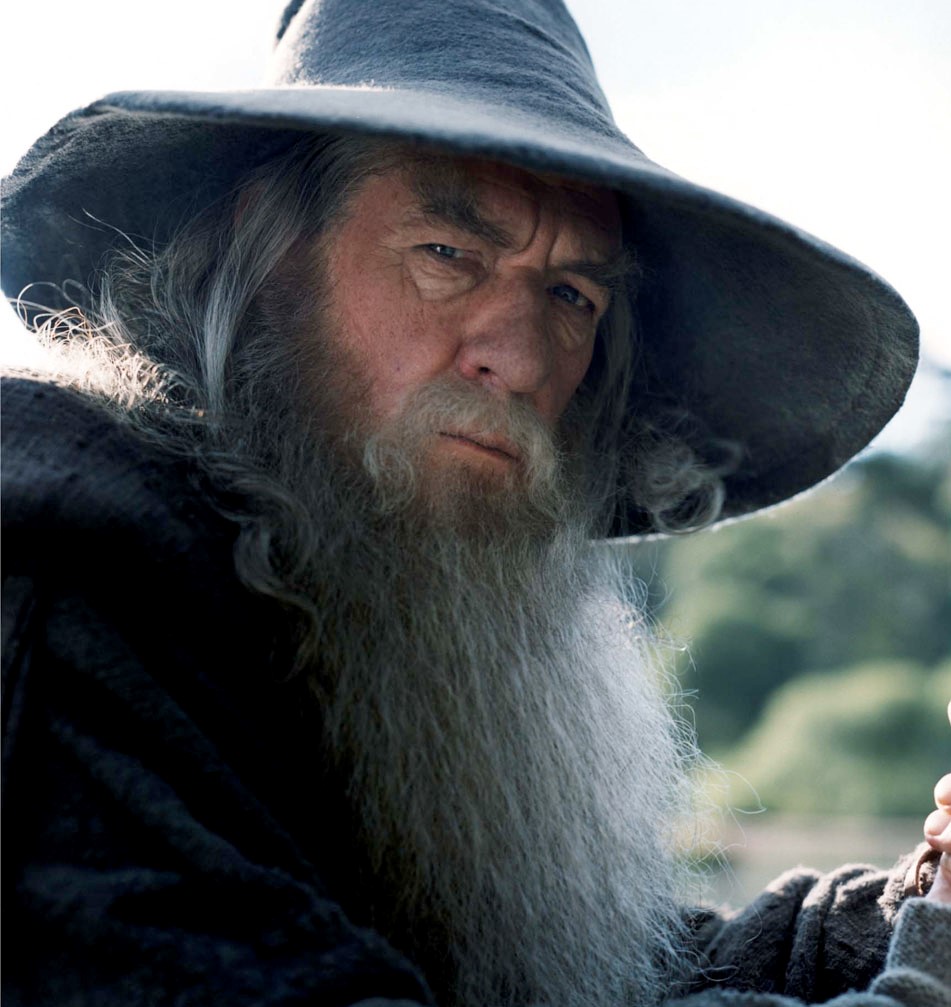
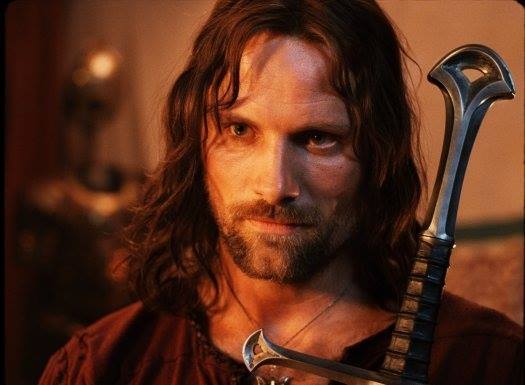
Tag: Lord of the Rings

  • Christopher Lee A Midsummer Centennial

    Christopher Lee A Midsummer Centennial

    On St. John’s Eve, as Mercury joins Venus, Mars, Jupiter, and Saturn to form a five-planet alignment, and the near-full moon obscures the peak of the Boötid meteor shower, Lord Summerisle requests your presence at the Wicker Man!

    Take the night to cavort with Faust on the Brocken, share a few laughs with the demon Chernobog as he emerges from the Bald Mountain – but then rest up, as tomorrow, Midsummer, we celebrate the 100th anniversary of the birth of Christopher Lee (born May 27, 1922).

    On the next “Roy’s Tie Dye Sci Fi Corner,” Roy and I will discuss Lee’s life and storied career, which leaves a legacy of hundreds of films and television shows (“…and not all of them begin at 3 AM on Channel 9,” as he once quipped when hosting “Saturday Night Live” in 1978 – at which point he had only made 130 movies).

    On his mother’s side, as a Carandini, Lee belonged to one of the oldest families in Europe. His lineage could be traced to the first century AD, and he claimed descent from Charlemagne. The Carandinis were granted the right to bear the coat of arms of the Holy Roman Empire by Emperor Frederick Barbarossa. When his mother remarried, he became the half-cousin of Ian Fleming. At school, he knew ghost story writer M.R. James and composer John Addison. He once encountered his idol, actor Conrad Veidt, on a golf course. Jussi Björling was so enamored with his rich, bass-baritone voice that he offered to take him on as a pupil. He served in the Royal Air Force as an intelligence officer during World War II. And this was all before Lee became famous.

    The connections and coincidences keep piling up in a long and fortunate life. Lee died in 2015 at the age of 93. He remained a familiar face into the 21st century, thanks to his collaborations with Tim Burton and Martin Scorsese, and his roles as Count Dooku in the “Star Wars” prequels and Saruman the White in Peter Jackson’s “The Lord of the Rings.” In his final decade, he lent his voice to video games and, believe it or not, recorded two heavy metal albums. His autobiography, “Lord of Misrule” (formerly “Tall, Dark and Gruesome”) is required reading.

    Join us during a Midsummer syzygy for a panegyric to Christopher Lee, on the next “Roy’s Tie-Dye Sci-Fi Corner.” The comments section will be festooned with garlic, for a salute to this most prolific of cinematic Draculas. It will be a Midsummer night’s nightmare when we livestream on Facebook, this Friday evening at 7:30 EDT!
    https://www.facebook.com/roystiedyescificorner

  • Fantasy Film Scores Beyond The Lord of the Rings

    Fantasy Film Scores Beyond The Lord of the Rings

    You know life has worn you down when all your wildest fantasies now involve the temperature staying under 70 degrees.

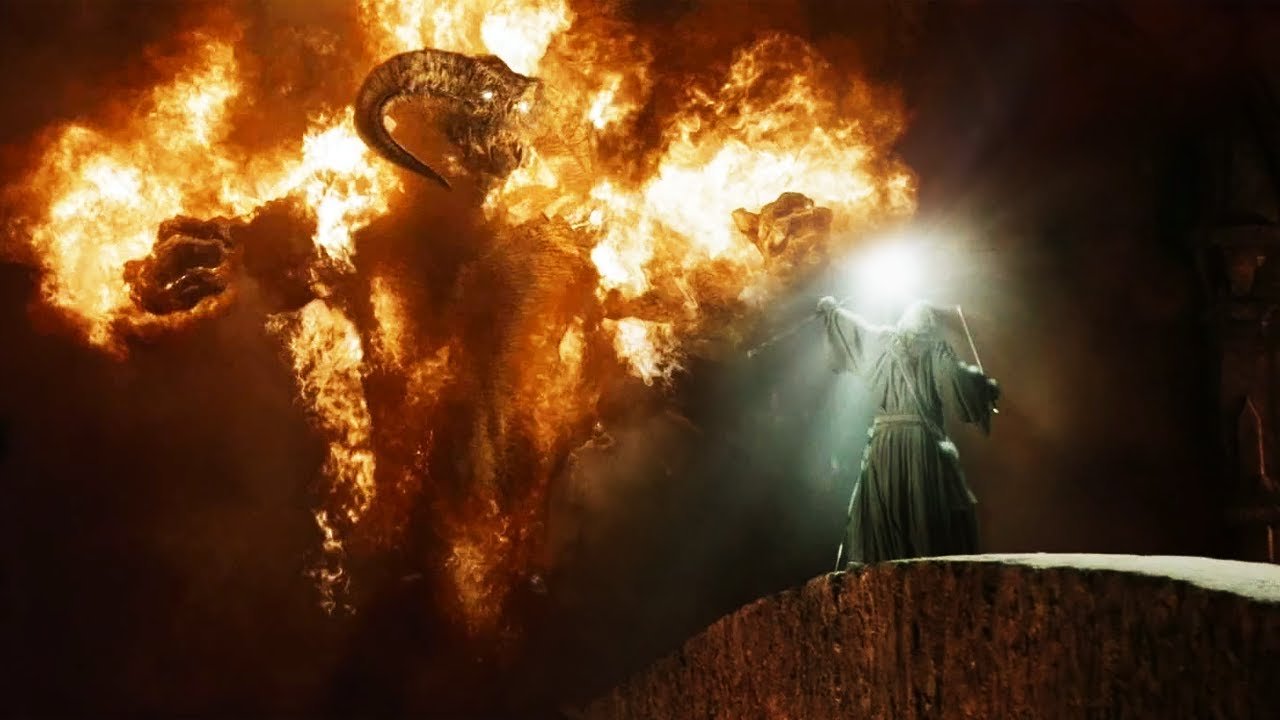
    This week on “Picture Perfect,” it will be like sweltering under a Balrog in Moria, as we listen to music from movies constructed around fantasy quests.

    For decades, “The Lord of the Rings” had been a kind of Holy Grail for genre fans, and anticipation ran high in regard to when exactly there would be a decent live action adaptation of J.R.R. Tolkien’s magnum opus. Alas, either filmmakers couldn’t acquire the rights, or they were hampered by technological limitations. Though the realization of Tolkien’s richly-imagined world of hobbits, orcs and balrogs eluded many, fantasy films of a derivative nature were thick on the ground. Some were good, some not so good. But many of them had outstanding scores.

    “The Dark Crystal” (1982), though produced by Jim Henson and company, was a long way from Big Bird and Ernie & Burt, with some pretty dark scenes. The score by Trevor Jones is first rate, given the full romantic treatment and recorded by the London Symphony Orchestra, augmented by Fairlight and Synclavier synthesizers, as well as the occasional period instrument.

    “Willow” (1988) allegedly grew out of George Lucas’ desire to film “The Hobbit.” Rather than fork over a sizeable portion of his earnings to the Tolkien estate, he opted instead to take the “Star Wars” approach of synthesizing archetypal images, from the Old Testament through Ray Harryhausen films, to create his own original story. Except the influences weren’t so cleverly assimilated this time. Composer James Horner followed suit, with a score rich in allusions to Schumann, Wagner, Grieg, Tchaikovsky, Rachmaninoff, and especially Prokofiev.

    The first feature-length adaptation of “The Lord of the Rings” (1978) was literally rendered in animation. The film manages to cover only the first book-and-a-half of the trilogy, and the last half hour or so is probably incomprehensible to anyone who hasn’t read it. It had been director Ralph Bakshi’s plan to divide the trilogy into two parts – already a concession to the studio – but the first film’s modest performance meant there was no funding for a second.

    Two-time Academy Award winner Leonard Rosenman was engaged to write the score. Rosenman composed the music for the James Dean classics “East of Eden” and “Rebel Without a Cause.” Bakshi had originally wanted to use Led Zepplin songs. He later expressed his dislike for Rosenman’s score, which he found to be too conventional – somewhat ironic in that Rosenman, a pupil of Arnold Schoenberg, Roger Sessions, and Luigi Dallapiccola, was known for writing some of the most challenging scores in film history, including the uncompromising music for “Fantastic Voyage.”

    It would be over two decades before another feature film based upon Tolkien’s source material was mounted. Peter Jackson’s “The Fellowship of the Ring” (2001) is brimful of state-of-the-art special effects, so much so that a great many important details from Tolkien’s novel are lost in the shuffle. Still, Jackson’s trilogy went on to garner 30 Academy Award nominations, of which it won 17. Howard Shore’s music was recognized with Oscars for the first and third installments. The third, “The Return of the King,” inexplicably went on to become one of the most decorated films of all time.

    Prophecies must be fulfilled, order restored, and the land made whole! We’re on a quest for fantasy music, on “Picture Perfect,” music for the movies, this Saturday evening at 6:00 EDT, on WWFM – The Classical Network and wwfm.org.


    PHOTO: “You shall not pass… 70 degrees!”

  • Ian Holm Remembered A Marvelous Actor

    Ian Holm Remembered A Marvelous Actor

    So sorry to learn of the death of Ian Holm, a marvelous actor, who enlivened any movie he was in, whether it be “Alien,” “Chariots of Fire,” “Greystoke,” or “Henry V.” Some may recognize him from his work in Peter Jackson’s bloated “The Lord of the Rings” trilogy.

    Apparently, Holm suffered from crippling stage fright. Hard to believe, for an artist of his stature, but even Olivier claimed to struggle against it. The theater’s loss was the movies’ gain.

    Thank you, Sir Ian, and rest your soul.

    https://variety.com/2020/film/global/ian-holm-dead-bilbo-baggins-lord-of-the-rings-1234642549/


    PHOTOS (counterclockwise from top): Holm as Phillippe d’Arnot, teaching Tarzan to shave in “Greystoke” (1984), as Bilbo Baggins, with his Ring of Power in “The Lord of the Rings: The Fellowship of the Ring” (2001), as Napoleon Bonaparte in “Time Bandits” (1981), and as the “goddamned robot” Ash in “Alien” (1979)

  • Wizards Sci-Fi Movies This Friday

    Wizards Sci-Fi Movies This Friday

    Start your weekend with an irascible, grey-bearded necromancer and a half-mad seeker of arcane knowledge.

    That’s right, it’s me. I’ll also be talking about Gandalf the Grey and Dr. Hans Reinhardt, Disney’s Captain Nemo in space.

    Join me for a Friday double-header:

    At 6:00 EDT, it’s “Picture Perfect,” music for the movies, featuring superior scores from films about wizards and sorcerers – including “The Lord of the Rings: The Fellowship of the Ring” (Howard Shore), “The Sword and the Sorcerer” (David Whitaker), “Dragonslayer” (Alex North), and “Harry Potter and the Sorcerer’s Stone” (John Williams) – on WWFM – The Classical Network and wwfm.org.

    Then at 7:00 EDT, I’ll be donning Reinhardt scarlet, as Roy Bjellquist and I delve into “The Black Hole” (1979), on the Facebook live-stream series “Roy’s Tie-Dye Sci-Fi Corner.” You’ll find more information on that, when you follow the link.

    https://www.facebook.com/events/649274212291005/

    It’s a journey that begins where everything ends. Except minutiae.

    Open up a cold one, and tag along.

  • Fantasy Film Scores Lord of the Rings & More

    Fantasy Film Scores Lord of the Rings & More

    ‘Ey! Ring of Power? Balrogs? Fuggedaboutit! I know a guy…

    17 years before “Green Book,” Viggo Mortensen played another public relations specialist with an aversion to bath water in “The Fellowship of the Ring.”

    This week on “Picture Perfect,” we’ll hear music from the first of Peter Jackson’s “The Lord of the Rings” adaptations as part of an hour of music from movies built around fantasy quests.

    For decades, “The Lord of the Rings” had been a kind of Holy Grail for genre fans, and anticipation ran high in regard to when exactly there would be a decent live action adaptation of J.R.R. Tolkien’s magnum opus. Alas, either filmmakers couldn’t acquire the rights, or they were hampered by technological limitations. Though the realization of Tolkien’s richly-imagined world of hobbits, orcs and balrogs eluded many, fantasy films of a derivative nature were thick on the ground. Some were good, some not so good. But many of them had outstanding scores.

    “The Dark Crystal” (1982), though produced by Jim Henson and company, was a long way from Big Bird and Ernie & Burt, with some pretty dark scenes. The score by Trevor Jones is first rate, given the full romantic treatment and recorded by the London Symphony Orchestra, augmented by Fairlight and Synclavier synthesizers, as well as the occasional period instrument.

    “Willow” (1988) allegedly grew out of George Lucas’ desire to film “The Hobbit.” Rather than fork over a sizeable portion of his earnings to the Tolkien estate, he opted instead to take the “Star Wars” approach of synthesizing archetypal images, from the Old Testament through Ray Harryhausen films, to create his own original story. Except the influences weren’t so cleverly assimilated this time. Composer James Horner followed suit, with a score rich in allusions to Schumann, Wagner, Grieg, Tchaikovsky, Rachmaninoff and especially Prokofiev.

    The first feature-length adaptation of “The Lord of the Rings” (1978) was literally rendered in animation. The film manages only to cover the first book-and-a-half of the trilogy, and the last half hour or so is probably incomprehensible to anyone who hasn’t read it. It had been director Ralph Bakshi’s plan to divide the trilogy into two parts – already a concession to the studio – but the first film’s modest performance meant there was no funding for a second.

    Two-time Academy Award winner Leonard Rosenman was engaged to write the score. Rosenman was responsible for composing the music for the James Dean classics “East of Eden” and “Rebel Without a Cause.” Bakshi had originally wanted to use Led Zepplin songs. He later expressed his dislike for Rosenman’s score, which he found to be too conventional – somewhat ironic in that Rosenman, a pupil of Arnold Schoenberg, Roger Sessions and Luigi Dallapiccola, was known for writing some of the most challenging scores in film history, including the uncompromising music for “Fantastic Voyage.”

    It would be over two decades before another feature film based upon Tolkien’s source material was mounted. Peter Jackson’s “The Fellowship of the Ring” (2001) is brimful of state-of-the-art special effects, so much so that a great many important details from Tolkien’s novel are lost in the shuffle. Still, Jacksons’ trilogy went on to garner 30 Academy Award nominations, of which it won 17. Howard Shore’s music was recognized with Oscars for the first and third installments. The third, “The Return of the King,” inexplicably went on to become one of the most decorated films of all time.

    Prophecies must be fulfilled, order restored, and the land made whole! We’re on a quest for fantasy music, on “Picture Perfect” – music for the movies – this Friday evening at 6:00 EDT, on WWFM – The Classical Network and wwfm.org.

Tag Cloud

Aaron Copland (93) Beethoven (95) Composer (114) Film Music (136) Film Score (143) Film Scores (255) Halloween (94) John Williams (195) KWAX (229) Leonard Bernstein (103) Marlboro Music Festival (125) Movie Music (151) Mozart (88) Opera (208) Philadelphia Orchestra (89) Picture Perfect (174) Princeton Symphony Orchestra (108) Radio (88) Ross Amico (244) Roy's Tie-Dye Sci-Fi Corner (290) The Classical Network (101) The Lost Chord (268) Vaughan Williams (103) WPRB (396) WWFM (881)

DON’T MISS A BEAT

Receive a weekly digest every Sunday at noon by signing up here


RECENT POSTS