Tag: Louis Gesensway

  • Ormandy’s All-American Philadelphia Sound

    Ormandy’s All-American Philadelphia Sound

    This week on “The Lost Chord,” it’s one more trip to the well, with well-played works of American composers rendered by Eugene Ormandy and the Philadelphia Orchestra.

    Slake your thirst with selections from “Five Songs of William Blake” by Virgil Thomson (born on this date in 1896), the Symphony No. 7 by Roy Harris, and “Four Squares of Philadelphia” by Louis Gesensway.

    Gesensway was born in Latvia in 1906. A violin prodigy, he was one of the founders of the Toronto Symphony Orchestra. He came to Philadelphia at the age of 19, where he played under both Stokowski and Ormandy.

    In his mid-20s, he took a leave of absence to study composition with Zoltán Kodály. “Four Squares of Philadelphia” was described by the composer as a “symphonic poem for large orchestra, narrator and street criers.”

    The piece opens with a recitation of William Penn’s prayer, then continues with musical evocations of Washington Square (in early morning, during Colonial times, with street criers hawking their wares), Rittenhouse Square (on a bright and cheerful afternoon), Logan Square (with its fountains at dusk), and Franklin Square (at night, evocative of noisy bridge traffic, a side excursion into Chinatown, and musical interjections from the honky tonk joints located around the square in the 1950s).

    Be there or be square. Eugene Ormandy serves up the last of the Thanksgiving leftovers. I hope you’ll join me for “All-American Ormandy III,” now in syndication on KWAX, the radio station of the University of Oregon!


    Remember, KWAX is on the West Coast, so there’s a three-hour difference for the Trenton-Princeton area. Here are the respective air-times of my recorded shows (with East Coast conversions in parentheses):

    PICTURE PERFECT, the movie music show – Friday on KWAX at 5:00 PACIFIC TIME (8:00 PM EST)

    THE LOST CHORD, unusual and neglected rep – Saturday on KWAX at 4:00 PACIFIC TIME (7:00 PM EST)

    Stream them here!

    https://kwax.uoregon.edu/


    PLEASE NOTE: This show was recorded in 2015 and employs material reissued on compact disc for the first time on the Albany and Bay Cities labels. All three of these performances have since been remastered (including the wholly restored “Five Blake Songs”), as part of Sony Classical’s 120-CD box set of Ormandy’s Philadelphia mono recordings, “Eugene Ormandy: The Columbia Legacy,” in 2021.

    The first installment of Ormandy’s stereo recordings were released earlier this month in an 88-CD box, also from Sony, “Eugene Ormandy/The Philadelphia Orchestra: The Columbia Stereo Collection,” on November 17.

    Both Sony sets sound fantastic (with the caveat that the first is in mono). Both are highly recommended.


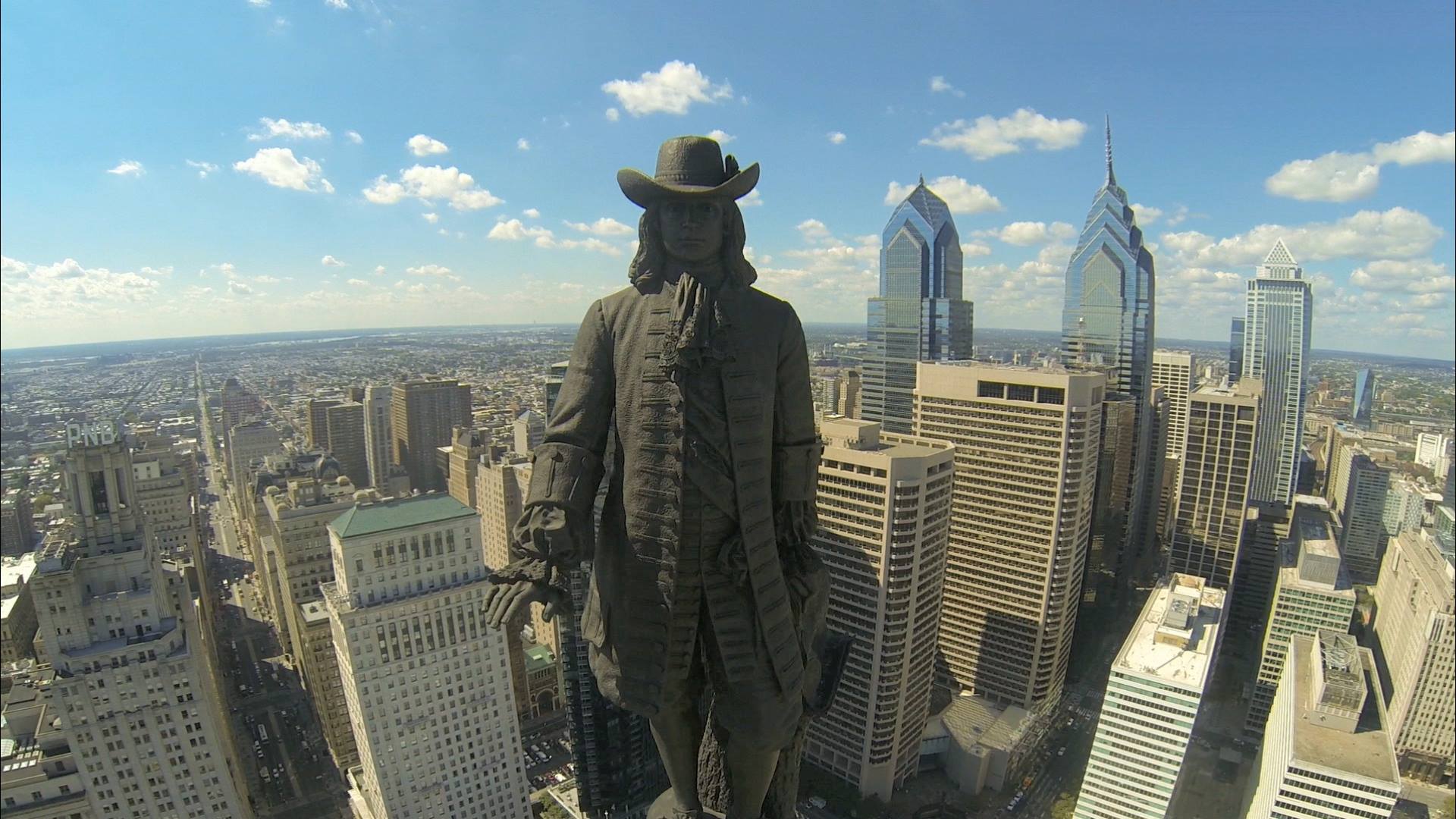
    PHOTO: Statue of Penn, high atop the city he founded
  • William Penn: Music From Philadelphia

    William Penn: Music From Philadelphia

    This Sunday night on Then we’ll turn to “The Lost Chord,” round out your Thanksgiving weekend with two works inspired by William Penn.

    An early hero of American liberty, Penn founded Philadelphia (the “City of Brotherly Love”), named the state of Pennsylvania in honor of his father, and signed a landmark treaty with the Lenape. He was enshrined in music by at least two Philadelphia composers.

    We’ll hear a selection from the opera “William Penn,” by Romeo Cascarino. Cascarino, born in South Philadelphia in 1922, was largely self-taught as a composer. His fascination with Penn took root at an early age, when he was moved by a plaque posted on City Hall of “Penn’s Prayer for Philadelphia.” He first set the Prayer to music as a choral work in 1950, and later set the Treaty, as well.

    These led naturally to the conception of an opera on a grand scale, for which Cascarino asked poet Peg Gwynn to craft a libretto, based on Penn’s life and writings. He spent the next quarter century crafting his magnum opus, even as he composed other works and continued to teach harmony and composition at Philadelphia’s now-defunct Combs College of Music.

    The opera was heard twice in concert, performed by the Orchestra Society of Philadelphia at Drexel University, in 1975 and 1977. Tom DiNardo, critic for the Philadelphia Bulletin, recognized the exceptional quality of the music, and surprised the composer by arranging for a couple of staged performances at the Academy of Music in 1982.

    The chorus is especially prominent, but arguably the most powerful moments are the intimate glimpses of Penn with his family. These were the days of immense and hazardous ocean voyages, remember, and when a man went to sea, there was no telling when – or even if – he’d be reunited with his loved ones. This knowledge lends an added poignancy to our experience of Penn the man.

    Tonight, Metropolitan Opera singer John Cheek assumes the title role, and Penn’s wife, Gulielma, is portrayed by Dolores Ferraro, then married to the composer.

    The second half of the program will be devoted to “Four Squares of Philadelphia,” by Louis Gesensway. Gesensway was born in Latvia in 1906. A violin prodigy, he was one of the founders of the Toronto Symphony. He arrived in Philadelphia, at the age of 19, where he played in the Philadelphia Orchestra under both Stokowski and Ormandy.

    In his mid-20s, he took a leave of absence to study composition with Zoltán Kodály. “Four Squares” was described by the composer as a “symphonic poem for large orchestra, narrator and street criers.”

    The piece opens with Penn’s prayer for the city and celebrates the distinctive characteristics of each of the public spaces he planned: “Washington Square” in early morning during Colonial times, with street criers hawking their wares; “Rittenhouse Square” on a bright and cheerful afternoon; “Logan Square” with its fountains at dusk; and “Franklin Square” at night, evocative of noisy bridge traffic, with a side excursion into Chinatown and musical interjections from the honky-tonk joints located around the square in the 1950s.

    We’ll hear it performed by Gesensway’s colleagues of the Philadelphia Orchestra, with Eugene Ormandy conducting.

    Penn’s influence is not stationary. As the days grow shorter and the nights colder, warm yourself with a nice steaming bowl of “Quaker Notes,” this Sunday night at 10:00 EST, on WWFM – The Classical Network and wwfm.org.

  • Ormandy’s All-American Philadelphia Orchestra

    Ormandy’s All-American Philadelphia Orchestra

    This Sunday night on “The Lost Chord,” it’s one more trip to the well, with well-played works of American composers rendered by Eugene Ormandy and the Philadelphia Orchestra.

    Slake your thirst with selections from “Five Songs of William Blake” by Virgil Thomson, the Symphony No. 7 by Roy Harris, and “Four Squares of Philadelphia” by Louis Gesensway.

    Gesensway was born in Latvia in 1906. A violin prodigy, he was one of the founders of the Toronto Symphony Orchestra. He came to Philadelphia at the age of 19, where he played under both Stokowski and Ormandy.

    In his mid-20s, he took a leave of absence to study composition with Zoltán Kodály. “Four Squares of Philadelphia” was described by the composer as a “symphonic poem for large orchestra, narrator and street criers.”

    The piece opens with a recitation of William Penn’s prayer, then continues with musical evocations of Washington Square (in early morning, during Colonial times, with street criers hawking their wares), Rittenhouse Square (on a bright and cheerful afternoon), Logan Square (with its fountains at dusk), and Franklin Square (at night, evocative of noisy bridge traffic, a side excursion into Chinatown, and musical interjections from the honky tonk joints located around the square in the 1950s).

    Be there or be square. Eugene Ormandy serves up the last of the Thanksgiving leftovers. I hope you’ll join me for “All-American Ormandy III,” this Sunday night at 10:00 EST, on WWFM – The Classical Network and wwfm.org.


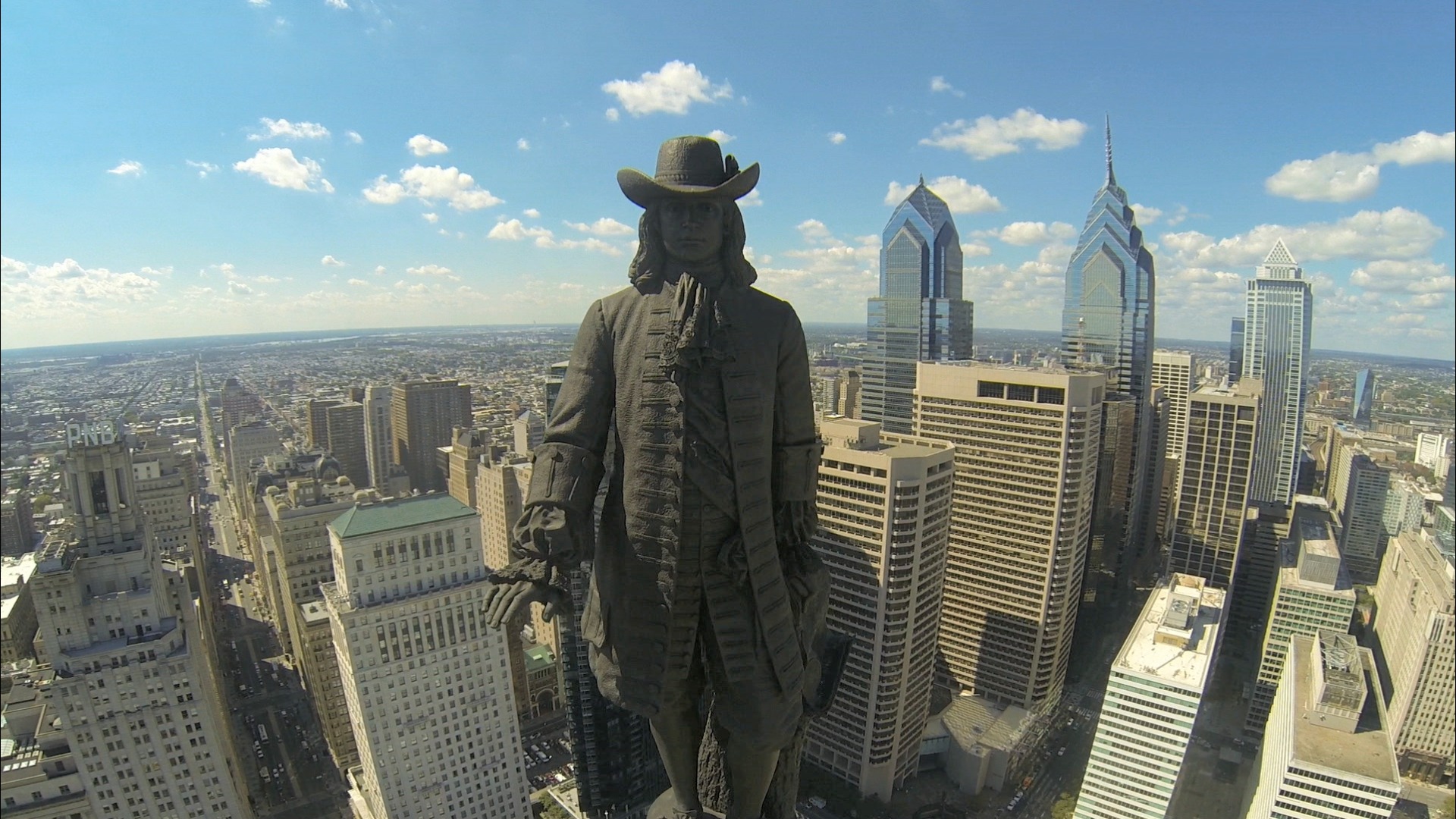
    PHOTO: Statue of Penn, high atop the city he founded
  • Thanksgiving Travel With Philadelphia Music

    Thanksgiving Travel With Philadelphia Music

    Get ready to creep over the river and through the woods – with millions of other folks attempting to do exactly the same thing. I’ll be there to keep you company this afternoon, as you tap the breaks, with a basket full of Thanksgiving goodies.

    We’ll anticipate the holiday with an abundance of American music, with the aim of keeping everyone in a positive frame of mind. Just keep repeating to yourself, what would William Penn do?

    That must have been what Louis Gesensway did when he came to write “Four Squares of Philadelphia.”

    Gesensway was born in Latvia in 1906. A violin prodigy, he was one of the founders of the Toronto Symphony Orchestra. He came to Philadelphia at the age of 19, where he played in the orchestra under Leopold Stokowski and Eugene Ormandy.

    In his mid-20s, he took a leave of absence to study composition with Zoltán Kodály. “Four Squares of Philadelphia” was described by the composer as a “symphonic poem for large orchestra, narrator and street criers.”

    The piece opens with a recitation of Penn’s prayer, then continues with musical evocations of Washington Square (captured in early morning, during Colonial times, with street criers hawking their wares), Rittenhouse Square (on a bright and cheerful afternoon), Logan Square (with its fountains at dusk), and Franklin Square (at night, reflective of noisy bridge traffic, with a side excursion into Chinatown, and interjections from the honky tonk joints that used to be located about the square in the 1950s).

    No telling what Penn would have thought of the honky tonk joints, but all in all, he was a pretty fair-minded guy. Also, he knew to be thankful. It took him 60 days to reach his destination, traveling from a cell in London to his “greene country towne” in America. Think of that as you gaze through the windshield at countless taillights stretching to the horizon.

    “Four Squares of Philadelphia” will be among our featured works this afternoon. We’ve much to be thankful for, from 4 to 7:00 EST, on WWFM – The Classical Network and at wwfm.org.


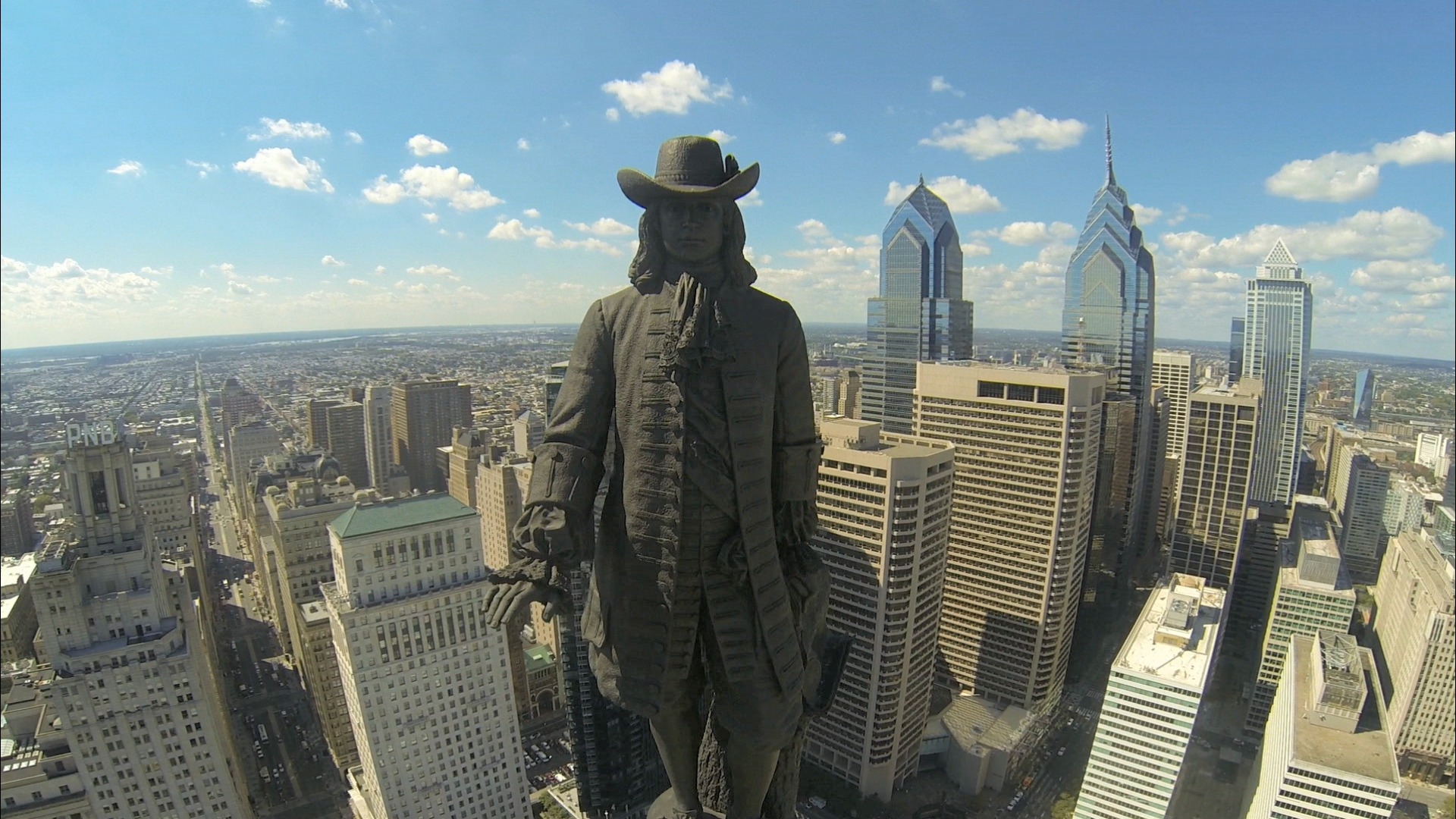
    PHOTO: Statue of Penn high atop the city he founded

  • Ormandy’s Lost American Music Rediscovered

    Ormandy’s Lost American Music Rediscovered

    I hope you’ll join me tonight on “The Lost Chord,” as we round out our trilogy of programs featuring rarely-heard recordings of American music by Eugene Ormandy and the Philadelphia Orchestra.

    We’ll hear two songs (originally from a collection of five), after texts of William Blake, by Virgil Thomson; Roy Harris’ underrated Symphony No. 7, in a powerhouse performance; and Louis Gesensway’s “Four Squares of Philadelphia.”

    Gesensway was born in Latvia in 1906. A violin prodigy, he was one of the founders of the Toronto Symphony Orchestra. He came to Philadelphia at the age of 19, where he played in the orchestra under Stokowski and Ormandy.

    In his mid-20s, he took a leave of absence to study composition with Zoltán Kodály. “Four Squares of Philadelphia” was described by the composer as a “symphonic poem for large orchestra, narrator and street criers.”

    The piece opens with a recitation of William Penn’s prayer, then continues with musical evocations of Washington Square (captured in early morning, during Colonial times, with street criers hawking their wares), Rittenhouse Square (on a bright and cheerful afternoon), Logan Square (with its fountains at dusk), and Franklin Square (at night, reflective of noisy bridge traffic, with a side excursion into Chinatown, and interjections from the honky tonk joints located around the square in the 1950s).

    I hope you’ll join me for one more trip to the well, with “All-American Ormandy III,” tonight at 10 ET, or that you’ll listen to it (while you’re sitting in traffic, no doubt) when the show repeats Thanksgiving eve at 6. If your family is stressing you out, you can always catch it later as a webcast at wwfm.org.


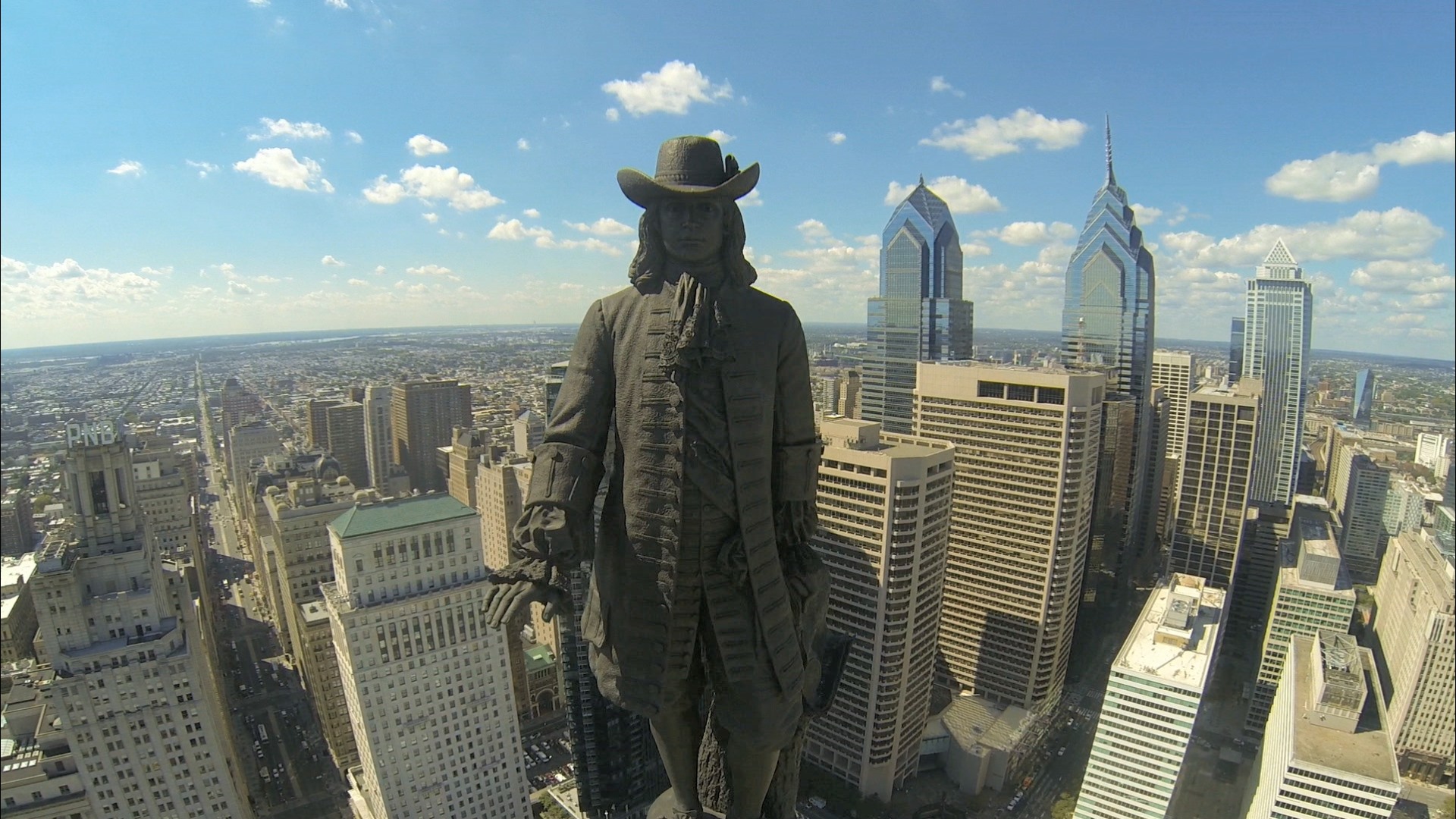
    PHOTO: Statue of Penn high atop the city he founded

Tag Cloud

Aaron Copland (92) Beethoven (95) Composer (114) Film Music (119) Film Score (143) Film Scores (255) Halloween (94) John Williams (185) KWAX (229) Leonard Bernstein (99) Marlboro Music Festival (125) Movie Music (134) Opera (198) Philadelphia Orchestra (86) Picture Perfect (174) Princeton Symphony Orchestra (106) Radio (87) Ralph Vaughan Williams (85) Ross Amico (244) Roy's Tie-Dye Sci-Fi Corner (290) The Classical Network (101) The Lost Chord (268) Vaughan Williams (102) WPRB (396) WWFM (881)

DON’T MISS A BEAT

Receive a weekly digest every Sunday at noon by signing up here


RECENT POSTS