Tag: Malcolm Arnold

  • Arnold’s Tormented Halloween: Tam O’Shanter

    Arnold’s Tormented Halloween: Tam O’Shanter

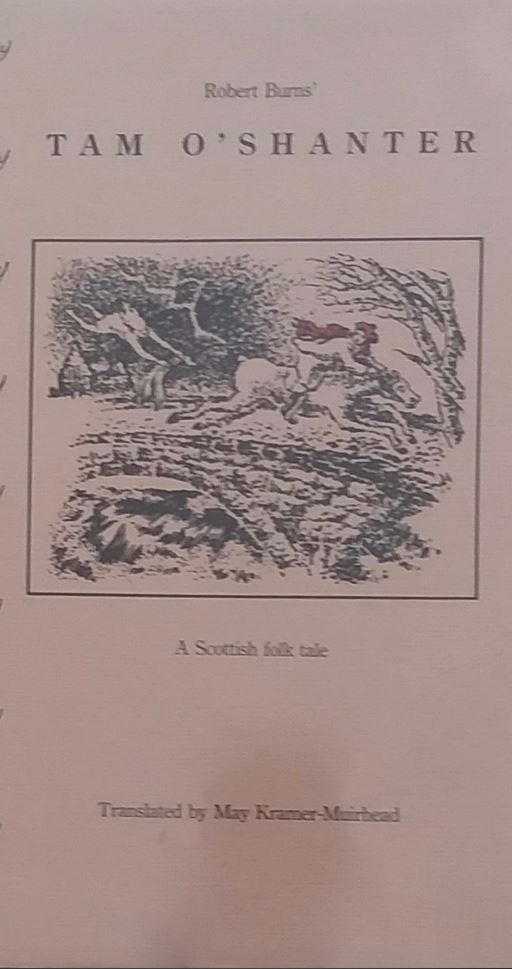
    At my bedside this year, as part of my Halloween reading,* is this edition from 1984 of Robert Burns’ “Tam O’Shanter.” It’s a bidialectal edition, the poem given in English translation (by May Kramer-Miurhead), followed by the original, in Burns’ Lowland Scots. I’ve always found Chris Riker’s illustrations amusing. Nothing menacing about them (in keeping with Burns’ tongue-in-cheek tone). In any case, how could I not love that bagpipe-playing devil?

    Burns writes of Tam:

    “…[T]hou was a skellum,
    A blethering, blustering, drunken blellum;
    That frae November till October,
    Ae market-dae thou was na sober.”

    The tone of disapprobation could just as well have applied to composer Sir Malcolm Arnold. Both men were, more or less, fond of the bottle and also driven by demons.

    Arnold was born on this date in 1921. He was hired as a trumpeter with the London Philharmonic Orchestra and promoted to principal in 1943.

    During World War II, he registered as a conscientious objector. However, following the death of his brother, a pilot in the RAF, he had a change of heart. At least for a time. Though he never saw action beyond service in a military band, he quite literally shot himself in the foot in order to be able to get back to civilian life.

    In 1948, he retired from orchestral playing to devote himself exclusively to composition. He had an attractive melodic gift, to be sure, which served him well in the writing of light music and film scores. He won an Academy Award in 1957 for his work on “The Bridge on the River Kwai.”

    However, Arnold also had his dark side, as can be detected in passages of his symphonies. He was frequently cantankerous, often inebriated, and also highly promiscuous. He tried to kill himself at least twice. He was treated for depression and alcoholism, overcoming both, but then in the early 1980s he was given only a year to live. He actually survived another 22, during which he completed his Symphony No. 9, among other works.

    Arnold died in 2006, one month shy of his 85th birthday. He was a brilliant composer of great facility. After Malcolm Williamson was appointed Master of the Queen’s Music in 1975, Sir William Walton remarked that they had given the job to the “wrong Malcolm.” For a man with so many personal demons, he wrote reams of positively delightful music.

    A good example, and one of my favorite Halloween pieces, is the descriptive overture “Tam O’Shanter” (1955), in which Burns’ antihero tarries at a pub, in defiance of his wife, then staggers out into the night. Under ominous skies, he detects the sound of bagpipes emanating from the ruins of an old church. Pressing his face to a chink he espies “Auld Nick,” the Devil himself, “in shape o’ beast,” presiding over a coven of high-stepping witches and warlocks.

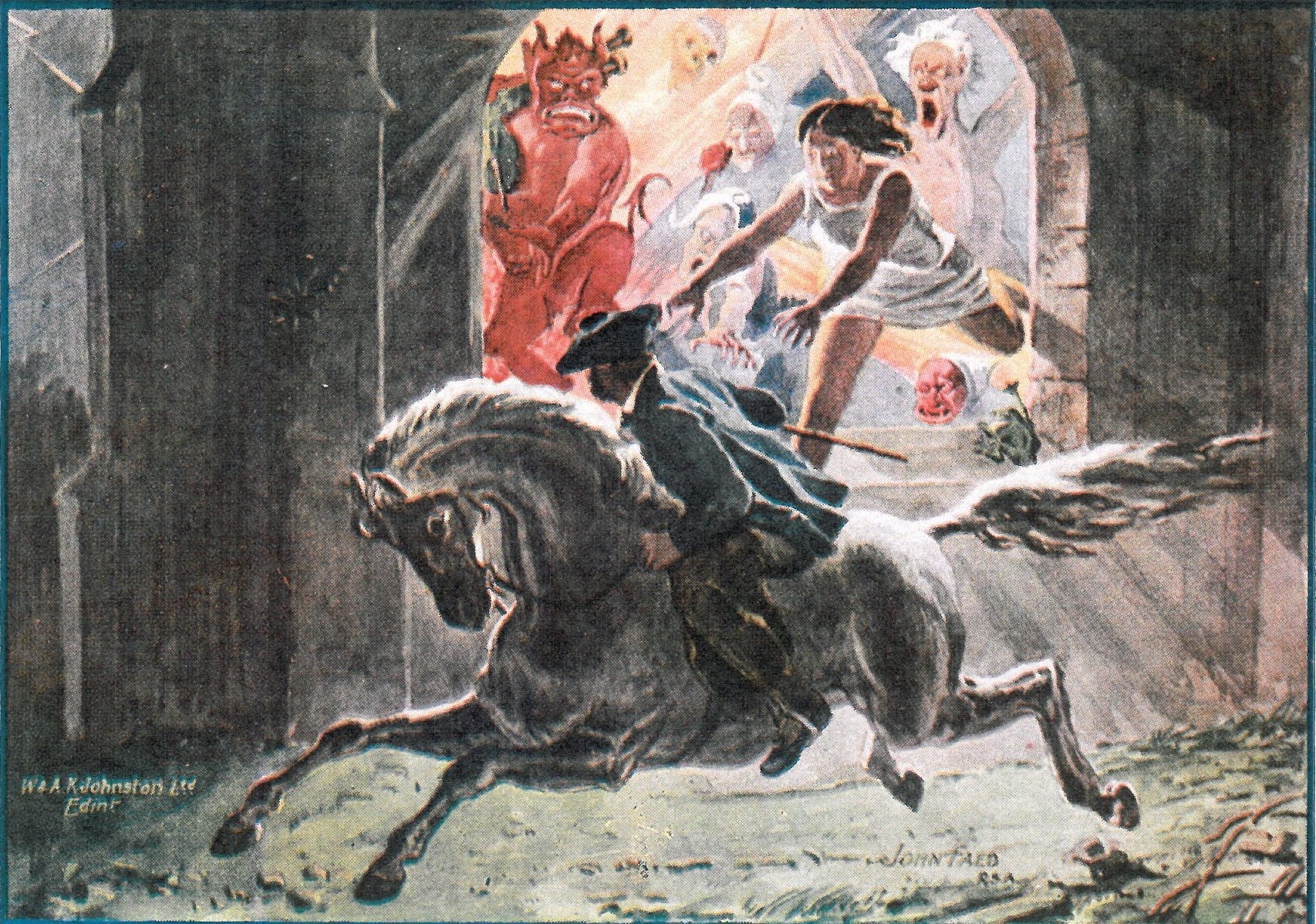
    When an unusually comely witch catches Tam’s eye, he, in his drunkenness, roars, “Weel done, Cutty-sark!” (in reference to her short skirt). This brings the forces of darkness down upon him, and there is a hell-for-leather sprint by horseback for a nearby river, since spirits are said not be able to cross running water.

    If you’re interested in the rest, you can read for yourself here:

    http://loki.stockton.edu/~kinsellt/litresources/ayr/tam.html

    Then listen to Arnold’s musical response:

    And for a bonus, enjoy his “Four Scottish Dances” (1957):

    Happy birthday, Sir Malcolm Arnold, you tormented genius.


    • More about this year’s Halloween reads in a future post
  • Malcolm Arnold Tormented Genius

    Malcolm Arnold Tormented Genius

    “…[T]hou was a skellum,/A blethering, blustering, drunken blellum;/That frae November till October,/Ae market-dae thou was na sober.”

    Rabbie Burns wrote those lines about Tam O’Shanter. But they just as well could have applied to Sir Malcolm Arnold. Both men were, more or less, fond of the bottle, and both were driven by demons.

    Arnold, born 100 years ago today, began his professional career as a trumpeter with the London Philharmonic Orchestra. He was appointed its principal in 1943.

    During World War II, he registered as a conscientious objector. However, following the death of his brother, a pilot in the RAF, he was moved to enlist. At least for a time. While he never saw actual combat, serving instead in a military band, he quite literally shot himself in the foot so that he could return to civilian life.

    In 1948, he retired from orchestral playing to devote himself exclusively to composition. He possessed a rare melodic gift, which served him well in his light music and film scores. He won an Academy Award in 1957 for his work on “The Bridge on the River Kwai.”

    However, Arnold also had his dark side, as can be detected in certain passages of his symphonies. He was frequently cantankerous, often inebriated, and also highly promiscuous. He attempted suicide at least twice. He was treated for depression and alcoholism, rising above both, but in the early 1980s was given only a year to live. He actually lasted another 22, during which he completed his Symphony No. 9, among other works.

    Arnold died in 2006, one month shy of his 85th birthday. He was a brilliant composer, of great facility. When Malcolm Williamson was named Master of the Queen’s Music in 1975, Sir William Walton quipped that they had given the job to the wrong Malcolm. For a man with so many personal demons, Arnold wrote reams of perfectly delightful music.

    A good example, and one of my favorite Halloween pieces, is the programmatic overture “Tam O’Shanter” (1955). On market day, Burns’ antihero tarries at a pub, in defiance of his wife, then staggers out into the night. Under ominous skies, he detects the sound of bagpipes emanating from the ruins of an old church. Pressing his face to a chink in the mortar he espies “Auld Nick,” the Devil himself, “in shape o’ beast,” presiding over a coven of high-stepping witches and warlocks. When a particularly comely witch catches Tam’s eye, in his drunkenness, he roars, “Weel done, Cutty-sark!” (a reference to her short skirt). This brings the forces of darkness down up him, and there is a hell-for-leather sprint by horseback for a nearby river, since spirits are said not be able to cross running water.

    If you’re interested in the rest, you can read it for yourself here:

    http://loki.stockton.edu/~kinsellt/litresources/ayr/tam.html

    Then listen to Arnold’s musical response:

    Also, “Four Scottish Dances” (1957):

    From the film “The Belles of St. Trinian’s” (1954), in concert:

    On a more serious note, the Symphony No. 4 (1960), a plea for tolerance following the Notting Hill race riots of 1958:

    The Guitar Concerto (1959), played by Julian Bream:

    “Three Sea Shanties” (1943) for wind quintet:

    An interview by Bruce Duffie:

    http://www.bruceduffie.com/arnold2.html

    Happy centenary, Sir Malcolm Arnold, you tormented genius!


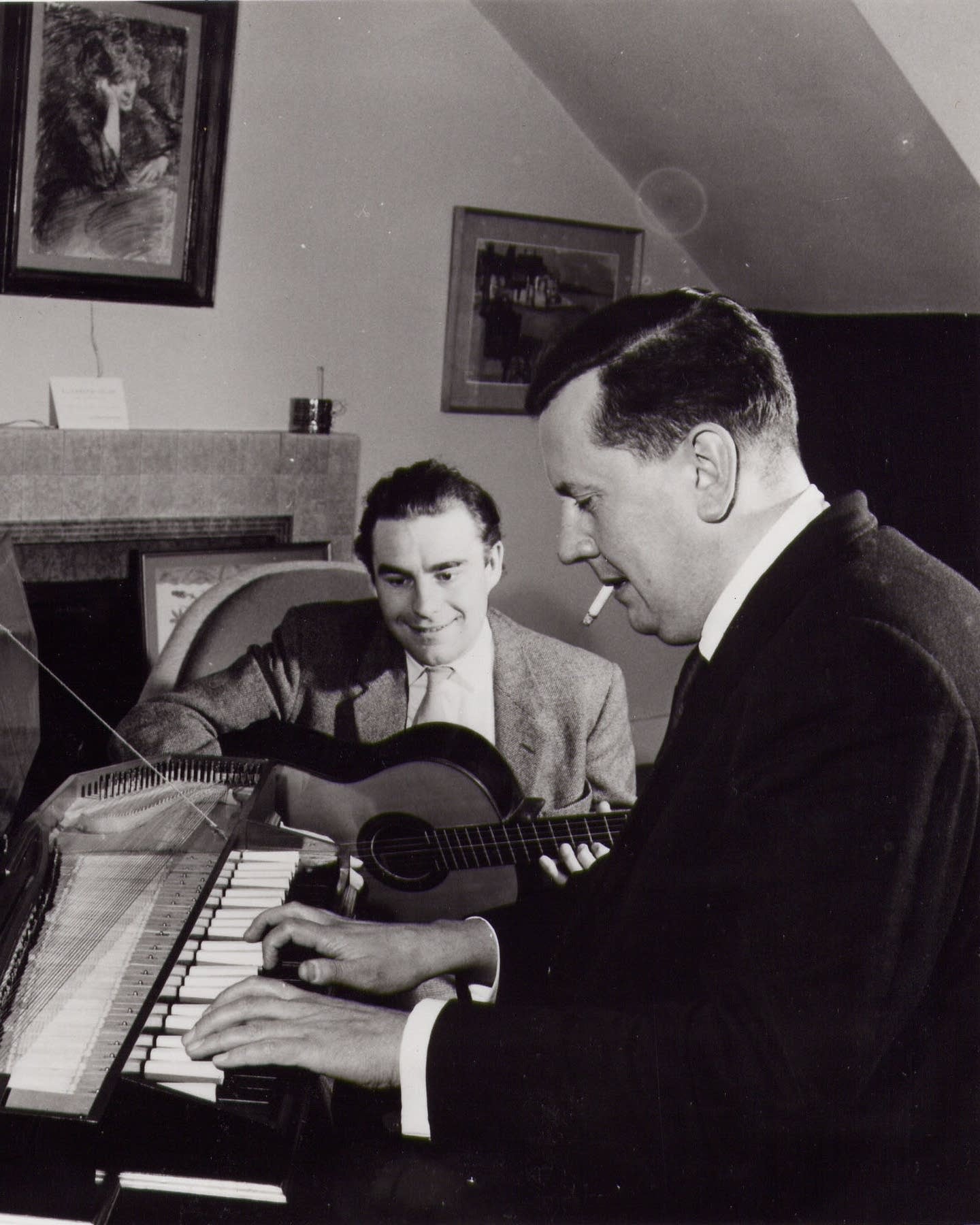
    PHOTO: Malcolm Arnold and Julian Bream

  • Sir Malcolm Arnold: Genius & Demons

    Sir Malcolm Arnold: Genius & Demons

    “…[T]hou was a skellum,
    A blethering, blustering, drunken blellum;
    That frae November till October,
    Ae market-dae thou was na sober.”

    Rabbie Burns wrote those lines of Tam O’Shanter. But they could just as well have applied to Sir Malcolm Arnold. Both men were, more or less, fond of the bottle and also driven by demons.

    Arnold was born on this date in 1921. He started out as a trumpeter with the London Philharmonic Orchestra. He became its principal in 1943.

    During World War II, Arnold registered as a conscientious objector. However, following the death of his brother, a pilot in the RAF, he decided to enlist. At least for a time. Though he never saw action beyond a military band, he quite literally shot himself in the foot in order to get back to civilian life.

    In 1948, he retired from orchestral playing to devote himself exclusively to composition. He had an attractive melodic gift, which served him well in the writing of light music and film scores. He won an Academy Award in 1957 for his work on “The Bridge on the River Kwai.”

    However, Arnold also had his dark side, as can be detected in passages of his symphonies. He was frequently cantankerous, often inebriated, and also highly promiscuous. He tried to kill himself at least twice. He was treated for depression and alcoholism, overcoming both, but then in the early 1980s he was given only a year to live. In the event, he actually lasted another 22, during which he completed his Symphony No. 9, among other works.

    Arnold died in 2006, one month shy of his 85th birthday. He was a brilliant composer, of great facility. After Malcolm Williamson was named Master of the Queen’s Music in 1975, Sir William Walton remarked that they had given the job to the “wrong Malcolm.” For a man with so many personal demons, he wrote reams of perfectly delightful music.

    A good example, and one of my favorite Halloween pieces, is the descriptive overture “Tam O’Shanter” (1955), in which Burns’ antihero tarries at a pub, in defiance of his wife, then staggers out into the night. Under ominous skies, he detects the sound of bagpipes emanating from the ruins of an old church. Pressing his face to chink he espies “Auld Nick,” the Devil himself, “in shape o’ beast,” presiding over a coven of high-stepping witches and warlocks. When a particularly comely witch catches Tam’s eye, he, in his drunkenness, roars, “Weel done, Cutty-sark!” (in reference to her short skirt). This brings the forces of darkness down up him, and there is a hell-for-leather sprint by horseback for a nearby river, since spirits are said not be able to cross running water.

    If you’re interested in the rest, you can read for yourself here:
    http://loki.stockton.edu/~kinsellt/litresources/ayr/tam.html

    Then listen to Arnold’s musical response:

    And for a bonus, enjoy his “Four Scottish Dances” (1957):

    Happy birthday, Sir Malcolm Arnold, you tormented genius.


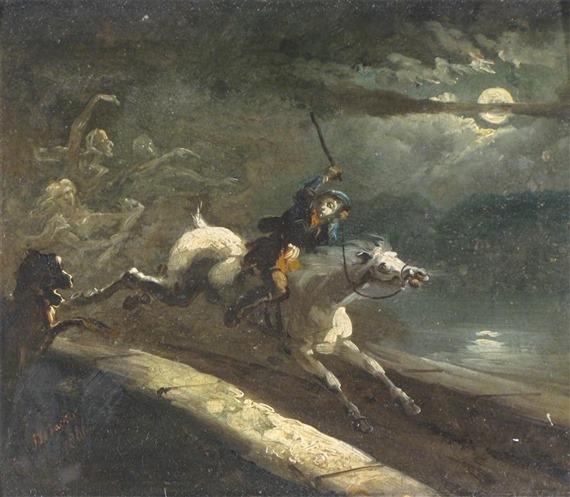
    “Tam O’Shanter Fleeing the Witches” (1866), by John Joseph Barker

  • Tam O’Shanter Overture Halloween Burns Poem

    Tam O’Shanter Overture Halloween Burns Poem

    31 DAYS OF HALLOWEEN (DAY 9)

    Sir Malcolm Arnold’s “Tam O’Shanter Overture”

    With Robert Burns’ poem:

    http://www.robertburns.org.uk/Assets/Poems_Songs/tamoshanter.htm

  • Sir Malcolm Arnold: A Genius of Light and Darkness

    Sir Malcolm Arnold: A Genius of Light and Darkness

    Funny, I was just thinking of Sir Malcolm Arnold yesterday, when his “Four Scottish Dances” came to me in the shower (a dangerous place to reel). Arnold was born on this date in 1921.

    He began his career as a trumpeter with the London Philharmonic Orchestra, becoming principal in 1943.

    At the outbreak of World War II, Arnold registered as a conscientious objector. However, after the death of his brother, a pilot in the RAF, he was moved to enlist. He never saw action beyond a military band, and eventually he quite literally shot himself in the foot in order to get back to civilian life.

    In 1948, he left behind orchestral playing to become a full-time composer. He had an attractive melodic gift, which served him well in the writing of light music and film scores. (He won an Academy Award in 1957 for his work on “The Bridge on the River Kwai.”)

    However, he also had his dark side, as passages of his symphonies can attest. He was frequently cantankerous, inebriated and highly promiscuous. He tried to kill himself twice. He was treated for depression and alcoholism, overcoming both, but in the early 1980s he was given a year to live. He actually wound up living another 22 years, during which he completed his Symphony No. 9, among other works.

    He died in 2006, one month shy of his 85th birthday. He was a brilliant composer of great facility. (When Malcolm Williamson was named Master of the Queen’s Music, Sir William Walton remarked that the “wrong Malcolm” had been given the job.) For a man with so many personal demons, he wrote reams of perfectly delightful music.

    Happy birthday, Sir Malcolm Arnold.

    Just in time for Hallowe’en, here’s his “Tam O’Shanter Overture,” after Robert Burns:

    And his “Four Scottish Dances”:

    Burns’ annotated text here:

    http://loki.stockton.edu/~kinsellt/litresources/ayr/tam.html

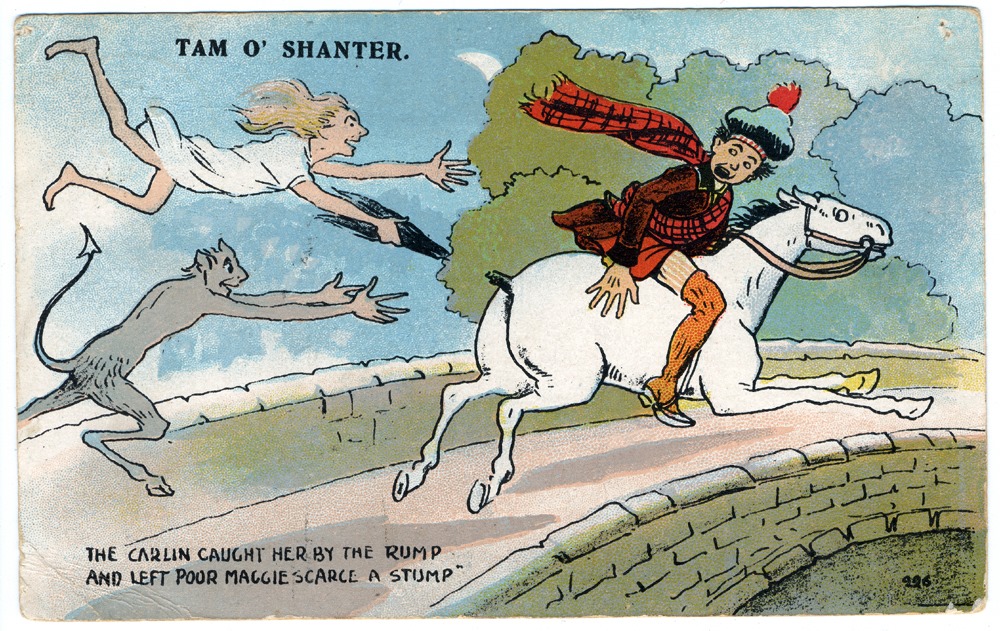
    PHOTO: “Weel done, Cutty-sark!”

Tag Cloud

Aaron Copland (92) Beethoven (94) Composer (114) Film Music (117) Film Score (143) Film Scores (255) Halloween (94) John Williams (185) KWAX (228) Leonard Bernstein (99) Marlboro Music Festival (125) Movie Music (132) Opera (197) Philadelphia Orchestra (86) Picture Perfect (174) Princeton Symphony Orchestra (106) Radio (86) Ralph Vaughan Williams (85) Ross Amico (244) Roy's Tie-Dye Sci-Fi Corner (290) The Classical Network (101) The Lost Chord (268) Vaughan Williams (101) WPRB (396) WWFM (881)

DON’T MISS A BEAT

Receive a weekly digest every Sunday at noon by signing up here


RECENT POSTS