Yom HaShoah…
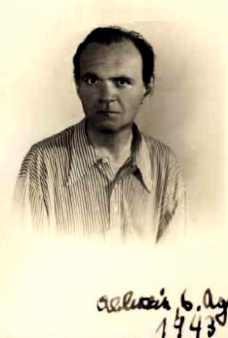
Marcel Tyberg was a forgotten casualty of the Holocaust. A devout Catholic, Tyberg was targeted because one of his grandmother’s great-grandfathers was Jewish (comprising a mere 1/16th of his genetic make-up). The fact was made known only when his mother registered with the German authorities then occupying their hometown, Abbazia, in what was then northern Italy (now Opatija, Croatia).
It’s unclear whether Tyberg himself had any prior knowledge of his great-great grandfather’s ethnicity, but four generations’ remove was not enough to pacify the Nazis. Tyberg was transported to Auschwitz, where his death was recorded on New Year’s Eve, 1944.
Tyberg’s music alone should not have attracted unfavorable notice from the authorities. There is nothing in his compositional output that might have frightened the Führer. Quite apart from the modernism being explored by many of the composers interned in the “artists’ camp” of Terezin – the kind of music the Nazis branded “degenerate” – Tyberg’s symphonies are very much in the Austro-German romantic tradition.
With the likelihood of arrest looming, Tyberg entrusted his manuscripts to his friend, Milan Mihich, an Italian doctor and music-lover. Mihich in turn passed them on to his son. In 2005, Dr. Enrico Mihich, then a specialist at the Roswell Park Cancer Institute in Buffalo, NY, brought the scores to the attention of JoAnn Falletta, music director of the Buffalo Philharmonic Orchestra.
Falletta, in her examination of the manuscripts, discerned what she thought to be real musical worth and gave the first performance of Tyberg’s Symphony No. 3 in 2008. She has since also performed and recorded the Second Symphony – unheard since Rafael Kubelik conducted it back in the 1930s.
Tyberg’s Third Symphony should appeal especially to admirers of Bruckner and Mahler; yet it stands alone as a work of outstanding beauty and, somehow, especially when colored by a knowledge of its history, an expression of hope.