Tag: Marian Anderson

  • Marian Anderson’s Easter Triumph Florence Price’s Legacy

    Marian Anderson’s Easter Triumph Florence Price’s Legacy

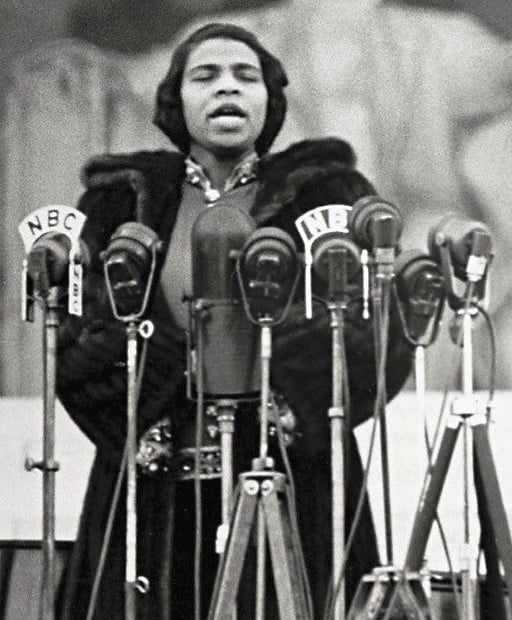
    On Easter Sunday, on this date in 1939, in the ultimate demonstration of turning lemons into lemonade, Marian Anderson, barred from performing at Constitution Hall by the Daughters of the American Revolution, because of her race, sang instead from the steps of the Lincoln Memorial, to a diverse crowd of 75,000 people on the mall and a national radio audience estimated in the millions.

    The program concluded with the spiritual “My Soul is Anchored in the Lord,” in an arrangement by Florence Price (1887-1953). By coincidence, today also happens to be Price’s birthday. Price, born in Little Rock, Arkansas, became the first African-American woman to be recognized as a symphonic composer, when her Symphony in E minor was performed by the Chicago Symphony in 1933. Needless to say, in an era when White American males struggled to find acceptance on Eurocentric classical music programs, Price, as a Black American woman, faced even greater challenges.

    The playing field has shifted in recent years, and interest in Price’s music has been on the rise. It’s hard to believe, for a composer of her accomplishments, that dozens of her manuscripts were rescued from her dilapidated summer home, on the outskirts of St. Anne, Illinois, only as recently as 2009.

    It’s an exciting time to be alive. Who knows what other musical riches are out there, undervalued in their time, awaiting rediscovery?

    Anderson sings “My Soul’s Been Anchored in the Lord”

    Price’s Symphony No. 1 in E minor

    Lincoln Memorial Concert

  • Einstein Anderson Friendship Defied Racism

    Einstein Anderson Friendship Defied Racism

    Anyone remember the time Marian Anderson spent the night with Albert Einstein?

    If that sounds sordid, it absolutely is, but unfortunately in all the wrong ways.

    Anderson, the contralto whose voice no less than Arturo Toscanini gushed was of a kind that comes once in a hundred years, was notoriously barred from performing at Constitution Hall in Washington, D.C., by the Daughters of the American Revolution because of the color of her skin. In the ultimate example of turning lemons into lemonade, Anderson sang instead from the steps of the Lincoln Memorial – to 750,000 people on the mall and a national radio audience estimated in the millions. That was on April 9, 1939, which, as it turned out, was Easter Sunday.

    Two years earlier, after a performance at Princeton’s McCarter Theatre – a performance that drew a packed house and elicited glowing reviews – Anderson had been denied accommodations at the Nassau Inn.

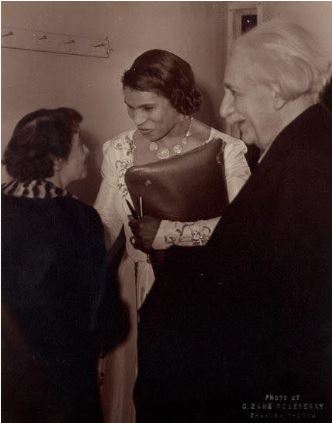
    Fortunately, Einstein happened to be in the audience. Learning of Anderson’s dilemma, he extended the invitation for her to stay with him in his home at 112 Mercer Street.

    Anderson recollected, “I remember thanking him from the bottom of my heart and he seemed just sort of to brush it aside…. Dr. Einstein greeted one warmly and said, ‘We are very happy that you can come and welcome into our home.’”

    For the next 18 years – through 1955, the same year she made her belated debut at New York’s Metropolitan Opera and the last year of Einstein’s life – Anderson made it a point to stay with Einstein whenever she was in Princeton.

    In 1946, Einstein received an honorary degree from Lincoln University. In his acceptance speech, he stated, “There is a separation of colored people from white people in the United States. That separation is not a disease of colored people. It is a disease of white people. I do not intend to be quiet about it.”

    Einstein himself was no stranger to racism. It was antisemitism that drove him to renounce his German citizenship, at a time it was still within his power to do so. The Nazis barred Jews from holding official positions, including professorships, they repeatedly raided his home, they sold his belongings, they burned his books and – though it seems superfluous under the circumstances – one German magazine put a $5000 bounty on his head. “Jewish intellectualism is dead,” proclaimed Goebbels.

    Hitler’s loss was our gain. Though there were Jewish quotas in place at universities even here in the United States, including at Princeton University (unofficially, but understood), Einstein accepted a position at the newly-formed Institute for Advanced Study – which in its early days, kept offices on Princeton’s campus while its own facilities were under construction. Einstein would become an American citizen in 1940.

    Einstein embraced America’s system of meritocracy. He extolled the “right of individuals to say and think what they pleased,” without social barriers, a right he found conducive to creativity and innovation. At the same time, he condemned America’s racism, which he found to be the country’s “worst disease… handed down from one generation to the next.”

    Einstein joined the Princeton chapter of the NAACP. When he put himself forward as a character witness for civil rights activist W.E.B. Du Bois at a trial in 1951, the judge dropped the case.

    In 1959, Anderson herself received an honorary degree from Princeton University. Although by then Einstein had passed, again she stayed at his home.

    There are a lot of reasons to share this story, but I do so today in conjunction with Pi Day (3.14), always a big deal in Princeton. Find yourself a seat at an integrated lunch counter and order yourself a celebratory slice in honor of this extraordinary friendship.
  • Marian Anderson Florence Price Triumph

    Marian Anderson Florence Price Triumph

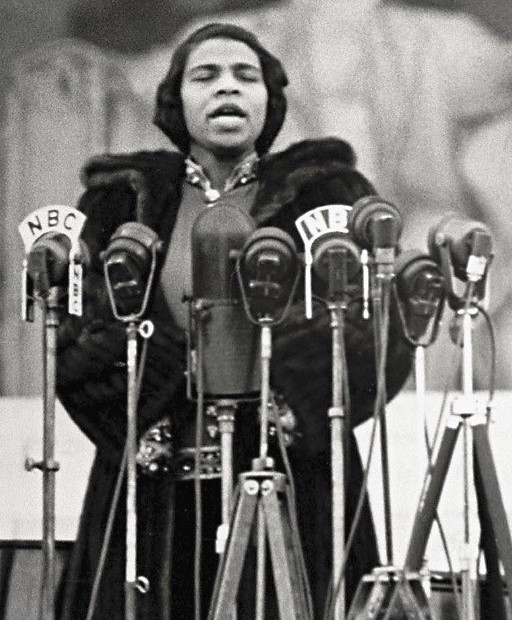
    On this date in 1939 – Easter Sunday, as it turns out – in a supreme demonstration of turning lemons into lemonade, Marian Anderson, barred from performing at Constitution Hall by the Daughters of the American Revolution, on account of her race, sang instead from the steps of the Lincoln Memorial, to a diverse crowd of 750,000 people on the mall and a national radio audience estimated in the millions.

    The program concluded with the spiritual “My Soul is Anchored in the Lord,” in an arrangement by Florence Price (1887-1953). By coincidence, today also happens to be Price’s birthday. Price, born in Little Rock, Arkansas, became the first African-American woman to be recognized as a symphonic composer, when her Symphony in E minor was performed by the Chicago Symphony in 1933. Needless to say, in an era when White American males struggled to find acceptance on Eurocentric classical music programs, Price, as a Black American woman, faced even greater challenges

    The playing field has shifted in recent years, and interest in Price’s music has been on the rise. It’s hard to believe, for a composer of her accomplishments, that dozens of her manuscripts were rescued from her dilapidated summer home, on the outskirts of St. Anne, Illinois, only as recently as 2009.

    It’s an exciting time to be alive. Who knows what other musical riches are out there, undervalued in their time, awaiting rediscovery?

    Anderson sings “My Soul’s Been Anchored in the Lord”

    Price’s Symphony No. 1 in E minor

  • Marian Anderson Birthday Celebration

    Marian Anderson Birthday Celebration

    Arturo Toscanini lauded hers as “a voice that comes once in a hundred years.”

    Join me as we celebrate the Lady from Philadelphia, Marian Anderson, on her birthday, with a 1939 recording of Brahms’ “Alto Rhapsody,” featuring the Philadelphia Orchestra conducted by Eugene Ormandy.

    1939 was the same year, you’ll recall, as her ultimate demonstration of turning lemons into lemonade: when Anderson was barred from performing at Constitution Hall by the Daughters of the American Revolution, on account of her race, she sang instead from the steps of the Lincoln Memorial – to 750,000 people on the mall and a national radio audience estimated in the millions.

    Anderson’s Brahms performance will be just one of the highlights of a birthday-heavy afternoon, which will also include music and/or performances by Louis Coerne, Mirella Freni, Viktor Kalabis, Gidon Kremer, Morten Lauridsen, Lotte Lehmann, Sir Hubert Parry, and Wilhelm Peterson-Berger.

    Your presence will be your present, from 4 to 6 p.m. EST. Then stick around for a party favor in the form of Max Reger and Mendelssohn, on “Music from Marlboro,” following at 6, on WWFM – The Classical Network and wwfm.org.

  • Lincoln’s Birthday Celebrated with Music

    Lincoln’s Birthday Celebrated with Music

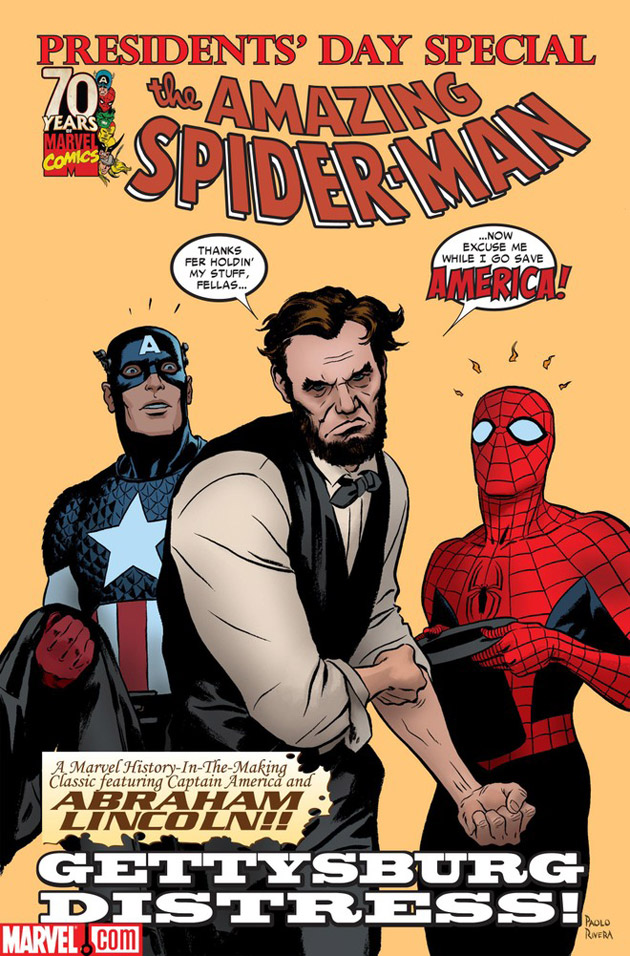
    Happy birthday, Abraham Lincoln! We’re honoring you right now, with Aaron Copland’s “Lincoln Portrait” (with Marian Anderson narrating and the composer conducting the Philadelphia Orchestra) and Roy Harris’ Symphony No. 6 “Gettysburg.” These musical celebrations top an afternoon of Lincoln tributes. It’s all Abe until 4 p.m. EST, on WWFM – The Classical Network and wwfm.org.

Tag Cloud

Aaron Copland (93) Beethoven (95) Composer (114) Film Music (126) Film Score (143) Film Scores (255) Halloween (94) John Williams (189) KWAX (229) Leonard Bernstein (101) Marlboro Music Festival (125) Movie Music (141) Mozart (87) Opera (203) Philadelphia Orchestra (89) Picture Perfect (174) Princeton Symphony Orchestra (107) Radio (87) Ross Amico (244) Roy's Tie-Dye Sci-Fi Corner (290) The Classical Network (101) The Lost Chord (268) Vaughan Williams (103) WPRB (396) WWFM (881)

DON’T MISS A BEAT

Receive a weekly digest every Sunday at noon by signing up here


RECENT POSTS