Okay, so the Philadelphia Orchestra is going to be at McCarter Theatre in Princeton on Saturday night at 8:00. Denis Kozhukhin will be the soloist for Rachmaninoff’s Piano Concerto No. 3, and Stéphane Denève, the orchestra’s principal guest conductor (whose contract has just been extended through the 2019-20 season), will conduct. I know. They don’t need my help. The concert is an automatic sell-out, or should be.
Instead, allow me to direct your attention to The Dryden Ensemble, which will administer “Le Médicin & La Musique,” a program that’s good for what ails you, in two concerts, on Saturday at 7:30 p.m. at Trinity Episcopal Church, Solebury, PA, and Sunday at 3 p.m. at Miller Chapel on the campus of Princeton Theological Seminary.
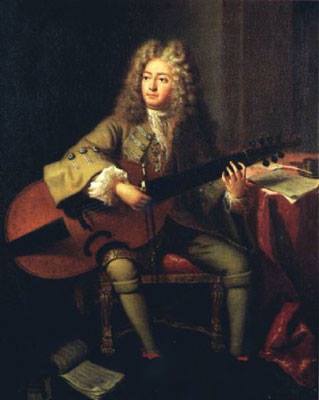
Central to the program of medical curiosities will be a musical response by Marin Marais to his own gallbladder surgery, “Le tableau de l’opération de la taille” (“A Description of the Removal of a Stone”), rendered on bass viol and continuo.
Marais’ surgery was successful, if painful, in an era before modern anesthesia. “They held you down,” says Dryden’s artistic director Jane McKinley. “They also didn’t use alcohol, because they were afraid that it would affect the blood. Because of the particular nature of the surgery, I’m not posting a picture in the program!”
Not so fortunate was Jean-Baptiste Lully, the most powerful musician at the court of Louis XIV. “Lully had his own issues,” McKinley says. “He was performing his ‘Te Deum’ to celebrate the success of surgery that was performed on Louis XIV and inadvertently hit his foot with the pointed end of the staff that he was conducting with.” It was Lully’s custom to strike the floor with a heavy staff in order to keep time for larger ensembles.
“So that got infected and turned to gangrene, and he refused to have his toe amputated. Then it spread to his leg. He refused to have his leg amputated, because he wanted to be able to be able conduct his own compositions and to dance – he was a very fine dancer – and he died a little over two months later.”
The ensemble will perform a piece written in Lully’s memory, “Le tombeau de Monsieur Lully,” by Jean-Féry Rebel. “A tombeau is almost like a funerary tribute to a mentor or composer or writer, and this one is particularly effective,” McKinley says.
Also on the program will be two works for solo harpsichord, “La convalescente” (“The Convalescent”) by Francois Couperin and ‘L’affligée” (“The Afflicted One”) by his cousin, Armand-Louis Couperin.
Actor Paul Hecht will provide readings from French medical writings of the 17th and 18th century.
I prescribe reading more about it in my article in today’s Trenton Times.
http://www.nj.com/times-entertainment/index.ssf/2017/02/classical_music_dryden_ensembl.html
Marin Marais’ rolling stone collects no moss in two concerts to be performed by the Dryden Ensemble this weekend