Tag: Maurice Jarre

  • Armchair Travel: Music from Movies About England Abroad

    Armchair Travel: Music from Movies About England Abroad

    It would appear we’re not going anywhere anytime soon, but thankfully there are plenty of movies and music to engage the imagination.

    This week on “Picture Perfect,” pack your valise for selections from movies about the English abroad, including “Enchanted April” (Richard Rodney Bennett), “A Passage to India” (Maurice Jarre), “The Best Exotic Marigold Hotel” (Thomas Newman), and “Around the World in 80 Days” (Victor Young).

    Bennett, quite the accomplished concert composer (and occasional torch song singer), supplies a sensitive score for the 1991 Merchant/Ivory adaptation of Elizabeth von Arnim’s novel about four English ladies who spend an idyllic month at an Italian villa.

    Jarre received his third Academy Award for his music to David Lean’s final film, a 1984 adaptation of E.M. Forster’s novel of repression and racial tension in colonial India.

    Newman incorporates traditional Indian elements into his score for “The Best Exotic Marigold Hotel,” the 2012 surprise hit about English pensioners reinventing themselves in their retirement abroad.

    And Young won his only Oscar (alas, posthumously bestowed) for “Around the World in 80 Days,” the star-studded, light-as-a-feather, though admittedly charming megawinner at the 1956 Academy Awards. It takes longer to watch the movie than it does to read Jules Verne’s novel – though it does provide a rare opportunity to see Ronald Colman in color.

    Get ready to do some armchair traveling this week, on Picture Perfect,” music for the movies, this Friday evening at 6:00 EDT, on WWFM – The Classical Network and wwfm.org.
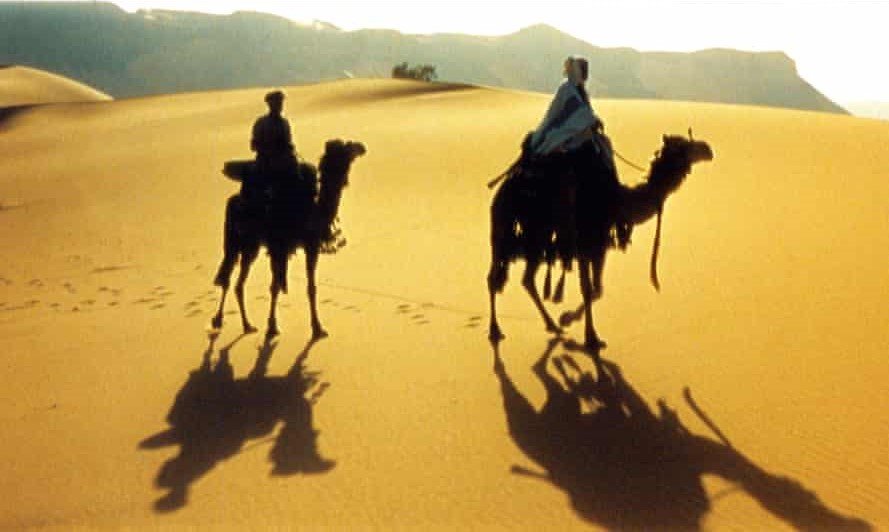

    PHOTO: There’s no balloon in Verne’s original, but as long as there’s champagne, who cares?

  • Escape Abroad with Movie Music on WWFM

    Escape Abroad with Movie Music on WWFM

    All aboard!

    “Picture Perfect” follows the English abroad this week, with music from “Enchanted April” (Richard Rodney Bennett), “A Passage to India” (Maurice Jarre), “The Best Exotic Marigold Hotel” (Thomas Newman) and “Around the World in 80 Days” (Victor Young).

    Bennett, quite the accomplished concert composer (and occasional torch song singer), provides a sensitive score for the 1991 Merchant/Ivory adaptation of Elizabeth von Arnim’s novel about four English ladies who spend an idyllic month at an Italian villa.

    Jarre received his third Academy Award for his music to David Lean’s final film, the 1984 adaptation of E.M. Forster’s novel of repression and racial tension in colonial India.

    Newman incorporates traditional Indian elements into his score for “The Best Exotic Marigold Hotel,” the 2012 surprise hit about English pensioners reinventing themselves in their retirement abroad.

    Young won his only Oscar (alas, posthumously bestowed) for “Around the World in 80 Days,” the star-studded, light-as-a-feather, though admittedly charming megawinner at the 1956 Academy Awards. It takes longer to watch the movie than it does to read Jules Verne’s novel – though it does provide a rare opportunity to see Ronald Colman in color.

    The weekend’s coming, so pack your valise and join me for “Picture Perfect,” this Friday evening at 6:00 EDT, on WWFM – The Classical Network and wwfm.org.

  • Oscars La La Land & Film Composers Concert

    Oscars La La Land & Film Composers Concert

    They don’t make ‘em like they used to. That statement could just as easily apply to the Academy Awards ceremonies as to the films they celebrate.

    Certainly, they don’t write film scores like they used to, which is what makes the unabashedly retro romanticism of “La La Land” so refreshing. Best wishes to Princeton High School alumnus, director Damian Chazelle, and his Harvard roommate, composer Justin Hurwitz.

    If you are immune to “La La Land” fever, you might consider tuning in tonight to “The Lost Chord” for an alternative to the Oscars, as I’ll present concert music by three composers generally associated with film.

    Maurice Jarre was the recipient of three Academy Awards, for his work on the David Lean epics “Lawrence of Arabia,” “Doctor Zhivago,” and “A Passage to India.” Big orchestral gestures don’t tell the whole story, however, and late in his career, Jarre turned increasingly to electronic music and electronic-acoustic blends.

    It was not an entirely new wrinkle in his development. He had met Maurice Martenot in the 1940s, and immediately recognized the potential of his invention, the ondes Martenot, an electronic instrument sounding somewhat like the theremin but offering more precision due to the addition of a keyboard. Jarre was in his mid-20s when he composed “Three Dances for Ondes Martenot and Percussion.”

    Composer Thomas Newman has never won a competitive Oscar, despite his having been nominated 14 times. (He’s up for his music for “Passengers” tonight, but against “La La Land,” he doesn’t have a prayer.) He’s still one nomination short of the record-holder, poor Alex North, composer of “A Streetcar Named Desire,” “Spartacus,” and “Who’s Afraid of Virginia Woolf,” who was finally recognized with an honorary Oscar in 1986. Tonight, we’ll feature North’s rarely-heard “Holiday Set,” from an old Spa Records 33 ½ LP.

    Finally, Miklós Rózsa was the recipient of three Academy Awards, most notably for his music for the 1959 version of “Ben-Hur.” Rozsa’s colorful and energetic “Three Hungarian Sketches,” composed in 1938, draws on musical inflections of his homeland.

    If you just can’t bear the Oscars, I hope you’ll join me for another installment of “Typecast” (we’ve visited this topic before), film composers in the concert hall, this Sunday night at 10:00 EST, on WWFM – The Classical Network and at wwfm.org.

  • Trains in Movies Music from Hitchcock and More

    Trains in Movies Music from Hitchcock and More

    Traditionally, trains have been very good for drama. They are symbols of departures and arrivals. They are conveyors of prisoners and vehicles of escape. They are objects of romance and objects to “hobo around” on. They are the harbingers of civilization, and they are transports be robbed. You can fight on top of them. You can make out with Eva Marie Saint, or you can protect Marie Windsor so that she can testify against the mob. You can shuffle off to Buffalo.

    For decades, trains have provided good escapist fun at the movies. This week on “Picture Perfect,” we’ve got an hour of music from four memorable films in which trains play an important role.

    In “Strangers on a Train” (1951), arguably Alfred Hitchcock’s most underrated film of the 1950s, Farley Granger plays a tennis pro who unwittingly becomes involved in a double-murder plot through a chance encounter on a passenger train with a psychopath named Bruno (probably Robert Walker’s finest performance). The music is by Dimitri Tiomkin, who scored four films for Hitch – including “Shadow of a Doubt,” “I Confess,” and “Dial M for Murder.”

    Burt Lancaster stars in a film titled, simply, “The Train” (1964), as a reluctant railroad inspector who is persuaded to join the French Underground’s efforts to delay the transport of masterpieces looted from the museums of Paris by the Nazis, since Allied liberation of France is imminent. Paul Scofield plays the art-loving German officer determined to move the art at all costs. Real trains were destroyed in the making of the film, real dynamite was used, and Lancaster, as was often the case, did all his own stunts. The score is by Maurice Jarre.

    “Murder on the Orient Express” (1974) is based on one of the best-known Agatha Christie vehicles conceived for her recurring character, the celebrated detective Hercule Poirot. Albert Finney plays Poirot most memorably in this, the first and best of the all-star Christie thrillers, set on a long-distance passenger train connecting Paris to Istanbul. He’s joined by Lauren Bacall, Martin Balsam, Ingrid Bergman, Sean Connery, John Gielgud, Anthony Perkins, Richard Widmark, and Michael York. The unforgettable score is by Richard Rodney Bennett.

    Finally, we turn to the lighthearted caper film “The Great Train Robbery” (1979), starring Sean Connery, Donald Sutherland, and Leslie-Anne Down. Michael Crichton wrote the screenplay, after his own novel, which in turn was based on an actual historical incident – an 1855 heist, in which an unbelievable amount of gold disappeared from a moving train. Crichton also directed the film. The music is by Jerry Goldsmith.

    We’ll be taking the train today, on “Picture Perfect,” this Friday evening at 6:00 EST, on WWFM – The Classical Network.


    Since today happens to be Jerry Goldsmith’s birthday, join me a little early, as I’ll be cueing up a medley of some of his greatest film themes, to help get you in the mood, starting around 5:30.

  • Teacher Movies and Classical Music WWFM

    Teacher Movies and Classical Music WWFM

    “Picture Perfect” gets pedantic. In just a few minutes, I’ll weigh in on the relative merits of four movies about teachers. Oh yeah, and we’ll hear some music, too, by Richard Addinsell, Maurice Jarre, Dmitri Shostakovich, and Michael Kamen. Class begins at 6:00 EDT, on WWFM – The Classical Network and at wwfm.org

Tag Cloud

Aaron Copland (92) Beethoven (95) Composer (114) Film Music (120) Film Score (143) Film Scores (255) Halloween (94) John Williams (185) KWAX (229) Leonard Bernstein (100) Marlboro Music Festival (125) Movie Music (135) Opera (198) Philadelphia Orchestra (88) Picture Perfect (174) Princeton Symphony Orchestra (106) Radio (87) Ralph Vaughan Williams (85) Ross Amico (244) Roy's Tie-Dye Sci-Fi Corner (290) The Classical Network (101) The Lost Chord (268) Vaughan Williams (103) WPRB (396) WWFM (881)

DON’T MISS A BEAT

Receive a weekly digest every Sunday at noon by signing up here


RECENT POSTS