Tag: Maurice Jarre

  • Trains in Movies Music from Hitchcock and More

    Trains in Movies Music from Hitchcock and More

    Traditionally, trains have been very good for drama. They are symbols of departures and arrivals. They are conveyors of prisoners and vehicles of escape. They are objects of romance and objects to “hobo around” on. They are the harbingers of civilization, and they are transports be robbed. You can fight on top of them. You can make out with Eva Marie Saint, or you can protect Marie Windsor so that she can testify against the mob. You can shuffle off to Buffalo.

    For decades, trains have provided good escapist fun at the movies. This week on “Picture Perfect,” we’ve got an hour of music from four memorable films in which trains play an important role.

    In “Strangers on a Train” (1951), arguably Alfred Hitchcock’s most underrated film of the 1950s, Farley Granger plays a tennis pro who unwittingly becomes involved in a double-murder plot through a chance encounter on a passenger train with a psychopath named Bruno (probably Robert Walker’s finest performance). The music is by Dimitri Tiomkin, who scored four films for Hitch – including “Shadow of a Doubt,” “I Confess,” and “Dial M for Murder.”

    Burt Lancaster stars in a film titled, simply, “The Train” (1964), as a reluctant railroad inspector who is persuaded to join the French Underground’s efforts to delay the transport of masterpieces looted from the museums of Paris by the Nazis, since Allied liberation of France is imminent. Paul Scofield plays the art-loving German officer determined to move the art at all costs. Real trains were destroyed in the making of the film, real dynamite was used, and Lancaster, as was often the case, did all his own stunts. The score is by Maurice Jarre.

    “Murder on the Orient Express” (1974) is based on one of the best-known Agatha Christie vehicles conceived for her recurring character, the celebrated detective Hercule Poirot. Albert Finney plays Poirot most memorably in this, the first and best of the all-star Christie thrillers, set on a long-distance passenger train connecting Paris to Istanbul. He’s joined by Lauren Bacall, Martin Balsam, Ingrid Bergman, Sean Connery, John Gielgud, Anthony Perkins, Richard Widmark, and Michael York. The unforgettable score is by Richard Rodney Bennett.

    Finally, we turn to the lighthearted caper film “The Great Train Robbery” (1979), starring Sean Connery, Donald Sutherland, and Leslie-Anne Down. Michael Crichton wrote the screenplay, after his own novel, which in turn was based on an actual historical incident – an 1855 heist, in which an unbelievable amount of gold disappeared from a moving train. Crichton also directed the film. The music is by Jerry Goldsmith.

    We’ll be taking the train today, on “Picture Perfect,” this Friday evening at 6:00 EST, on WWFM – The Classical Network.


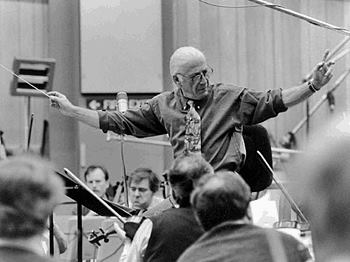
    Since today happens to be Jerry Goldsmith’s birthday, join me a little early, as I’ll be cueing up a medley of some of his greatest film themes, to help get you in the mood, starting around 5:30.
  • Teacher Movies and Classical Music WWFM

    Teacher Movies and Classical Music WWFM

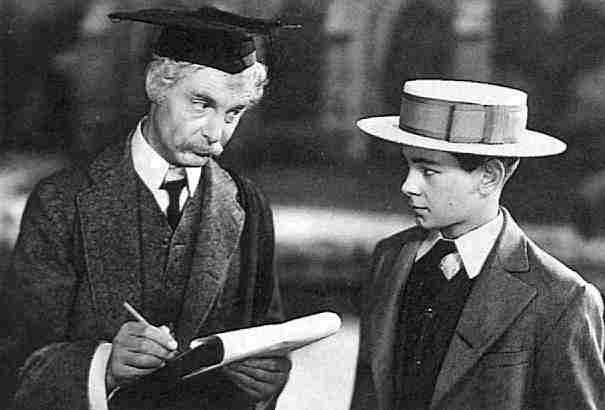
    “Picture Perfect” gets pedantic. In just a few minutes, I’ll weigh in on the relative merits of four movies about teachers. Oh yeah, and we’ll hear some music, too, by Richard Addinsell, Maurice Jarre, Dmitri Shostakovich, and Michael Kamen. Class begins at 6:00 EDT, on WWFM – The Classical Network and at wwfm.org

  • Planet of the Apes Music Jerry Goldsmith

    Planet of the Apes Music Jerry Goldsmith

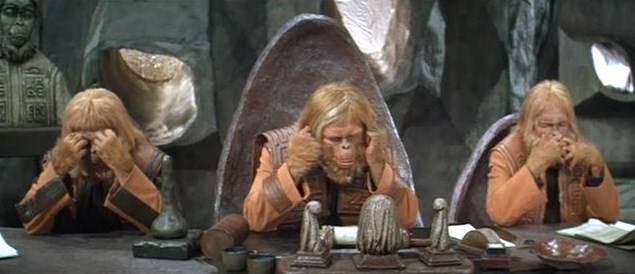
    With the publicity machine going full-throttle for the new “Planet of the Apes” movie, I thought we’d take the opportunity this week on “Picture Perfect” to look back to Jerry Goldsmith’s music for the original 1968 classic.

    Goldsmith incorporated all sorts of unusual effects into his groundbreaking score. He employed such instruments as tuned mixing bowls, a bass slide-whistle, and the cuika, a Brazilian wind instrument used to mimic the hooting of excited apes. He instructed his hornists to play without mouthpieces, and he manipulated percussion through the use of an Echoplex.

    Barbaric and unnerving, with little in the way of lyricism, I can’t imagine anything like it being used in a major Hollywood film today. Well, from my description, I guess I can, but Goldsmith was the real deal – a talented composer with real tools (not just a laptop) at his disposal.

    While my initial impulse had been to fill out the hour with music from some of the other films in the “Apes” franchise, after listening for a while, the grimness and brutality became a bit too unremitting, so instead we’ll swing with the gorilla theme.

    Among the other selections will be an extended passage from the Dian Fossey biopic, “Gorillas in the Mist,” which starred Sigourney Weaver and featured music by Maurice Jarre, of “Lawrence of Arabia” and “Doctor Zhivago” fame, though from his later, lamentable “electronic” period.

    We’ll also hear a bit from the “Mighty Joe Young” remake (since I couldn’t get a hold of Roy Webb’s score for the original). The music is pretty much standard James Horner (eg. “Titanic”), though he does incorporate a Swahili choir.

    Finally, we’ll sample from Max Steiner’s landmark score to the 800-pound gorilla of all monkey movies, 1933’s “King Kong.”

    I hope you’ll join me this week as we go ape, on “Picture Perfect,” music for the movies, tomorrow evening at 6 ET. Remember, you can always listen to the show later as a webcast at http://www.wwfm.org.

    “Take your stinkin’ paws off me…!” (with Goldsmith’s music, including cuika effects):

    https://www.youtube.com/watch?v=pBMvR_RnKu4

  • English Abroad Film Scores WWFM

    English Abroad Film Scores WWFM

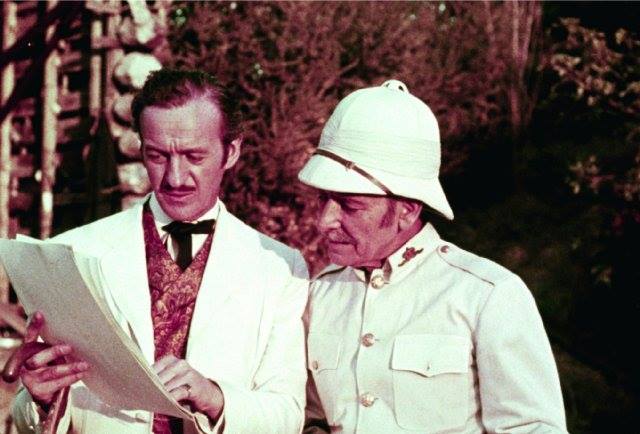
    “Picture Perfect” follows the English abroad this week, with music from “Enchanted April” (Richard Rodney Bennett), “A Passage to India” (Maurice Jarre), “The Best Exotic Marigold Hotel” (Thomas Newman) and “Around the World in 80 Days” (Victor Young).

    Bennett, quite the accomplished concert composer (and occasional singer of torch songs), provides a sensitive score for the 1991 Merchant/Ivory adaptation of Elizabeth von Arnim’s novel about four English ladies who spend an idyllic month at an Italian villa.

    Jarre received his third Academy Award for his music to David Lean’s final film, the 1984 adaptation of E.M. Forster’s novel of repression and racial tension in colonial India.

    Newman incorporates traditional Indian elements into his score for “The Best Exotic Marigold Hotel,” the 2012 surprise hit about English pensioners reinventing themselves in their retirement abroad.

    Young won his only Oscar (alas, bestowed posthumously) for “Around the World in 80 Days,” the star-studded, light-as-a-feather, though admittedly charming megawinner at the 1956 Academy Awards. It takes longer to watch the movie than it does to read Verne’s novel – though it does provide a rare opportunity to see Ronald Colman in color.

    The weekend’s coming, so pack your valise and head on over to http://www.wwfm.org, Friday at 6 p.m. ET.

    And don’t forget, past and recent installments of “Picture Perfect” and “The Lost Chord” are archived for your enjoyment at the WWFM website. Click on “webcasts” and then select the show.

Tag Cloud

Aaron Copland (93) Beethoven (95) Composer (114) Film Music (127) Film Score (143) Film Scores (255) Halloween (94) John Williams (190) KWAX (229) Leonard Bernstein (102) Marlboro Music Festival (125) Movie Music (142) Mozart (87) Opera (205) Philadelphia Orchestra (89) Picture Perfect (174) Princeton Symphony Orchestra (107) Radio (88) Ross Amico (244) Roy's Tie-Dye Sci-Fi Corner (290) The Classical Network (101) The Lost Chord (268) Vaughan Williams (103) WPRB (396) WWFM (881)

DON’T MISS A BEAT

Receive a weekly digest every Sunday at noon by signing up here


RECENT POSTS