Tag: Maurice Ravel

  • Vaughan Williams’ Wasps Premiere: Unassuming Start

    Vaughan Williams’ Wasps Premiere: Unassuming Start

    How unassuming was the premiere of Ralph Vaughan Williams’ incidental music for “The Wasps?”

    Aristophanes’ comedy, a stinging commentary on the Athenian judicial system, was produced as the Cambridge Greek Play at Trinity College in 1909. The play itself was performed in Greek, with translations sold to the audience. As you can see, when you click through the gallery of photos at the link at the bottom of this post, the composer’s credit is buried midway down the third page of the printed program (as “R. Vaughan Williams”). The music is offered for sale, “price three shillings.”

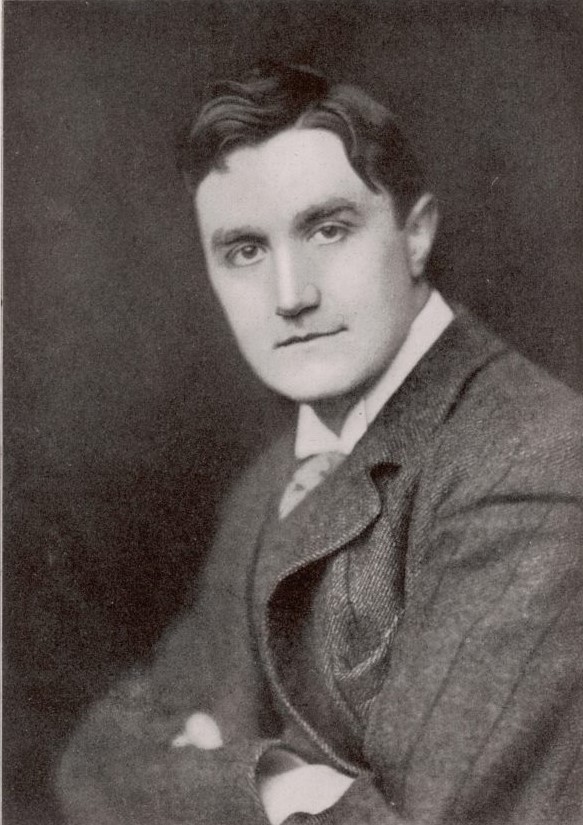
    The year before, Vaughan Williams spent three months in Paris studying with Maurice Ravel, who was at first reluctant to take him on as a pupil. But RVW wouldn’t take no for an answer. Despite his earthy disposition (his response to Ravel’s assignment to write a minuet in the manner of Mozart was met with an unprintable response), Vaughan Williams quickly earned his teacher’s admiration and soon his friendship. Ravel later remarked that Vaughan Williams was “the only one of my pupils who does not write my music.” RVW, already in his mid-30s and three years older than his teacher, learned his lessons well (at least the ones he considered valid), assimilated what he found useful, and applied it to the achievement of his own objectives.

    Ravel’s influence is most evident in the transitional moments of “The Wasps Overture” and in its dreamy central section. The opening, of course, is a musical joke, self-evident from the onomatopoeic buzzing around the orchestra, but the middle introduces one of those immediately endearing, big-hearted English melodies. The jolly, rollicking theme in the outer portions of the overture sounds equally homegrown.

    Vaughan Williams’ complete incidental music runs to approximately 1 hour and 45 minutes. It was recorded for the first time, with English narration, in 2006. The overture has been a concert favorite since its introduction. Vaughan Williams himself recorded the jauntiest version on record, back in 1925, at a manic 7 minutes and 25 seconds. An average performance of the work is more in the ballpark of 9-10 minutes.

    You’d think that more American orchestras would have taken it up as a guaranteed crowd-pleaser to open concerts during this RVW sesquicentennial year. But U.S. music directors and administrators – “The Lark Ascending” and the “Fantasia on a Theme by Thomas Tallis” aside – remain largely immune to the charms and allure, and certainly the versatility, of Ralph Vaughan Williams. For the composer’s enthusiasts, it’s a good year to live in the U.K.


    “Gentlemen who are willing to be tried for the chorus are requested to state whether their voices are tenor or bass.” Stills from the 1909 Cambridge production.

    https://www.cambridgegreekplay.com/plays/1909/wasps

    The overture opens this 26-minute concert suite, which also includes the equally charming “March Past of the Kitchen Utensils” (at the 13-minute mark).

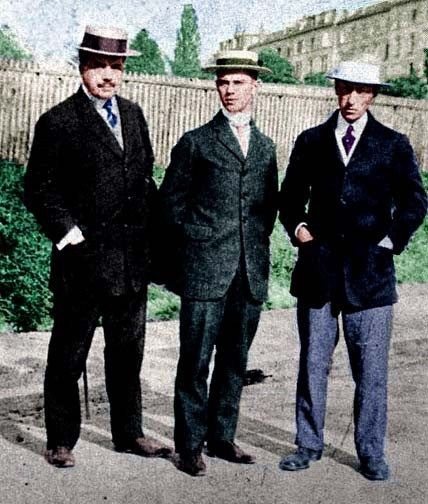
    Vaughan Williams and Ravel
    https://www.theguardian.com/music/tomserviceblog/2014/feb/28/ravel-vaughan-williams-friendship-radio3-ravel-day

  • Ravel’s Cats A Purrfect Love Story

    Ravel’s Cats A Purrfect Love Story

    How much did Maurice Ravel love cats? Quite a lot, actually.

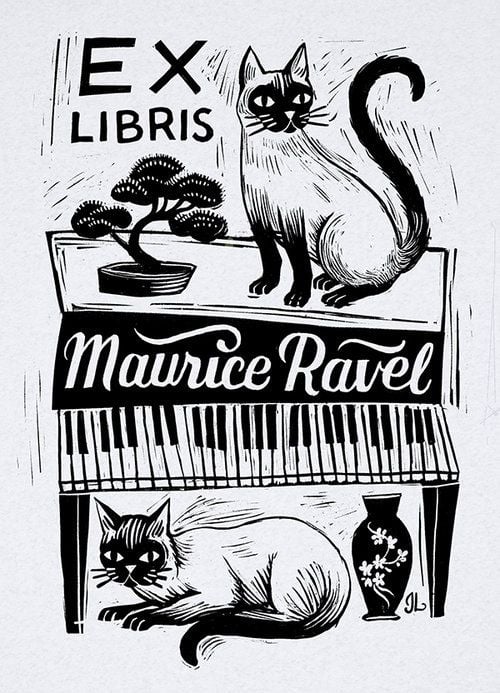
    He had a particular fondness for Siamese cats. In 1921, he moved to a modest villa outside Paris, which he shared with a feline family. It’s unclear how many cats there were, exactly. Sources vary as to whether there were two, three, or six. One was named Mouni and another Jazz. At some point, there was a litter of kittens. Suffice it to say, there were a number of them, and Ravel adored them. They were with him when he worked. He played with them even as he wrote letters to his friends, documenting their antics. He mused on their intelligence and devotion, likening it to the “Basque temperament.” He even claimed to be able to speak to them in their own language.

    Among the works he composed there was his one-act opera “L’enfant et les sortilèges.” (“The Child and the Enchantments”). The opera relates the transformation of a naughty, rampaging child – who terrorizes animals and wreaks destruction upon numerous household items, until they all rise up against him – into a more mature, compassionate human being, signified by his redemptive ministrations to an injured squirrel.

    Here’s the barely safe-for-work “Cat Duet”

    The entire opera was later choreographed as a ballet by Jiří Kylián. It’s much worth watching. If you want to get right to the singing cats, they’re at the 31-minute mark, but they are present, if silent, from the start.

    Ravel was born in the Basque town of Ciboure on this date in 1875. He had difficulty finding intimacy with humans, claiming the only love affair he ever had was with music, but the companionship of cats he deemed purrfect.

  • Ravel’s Triumph Over Adversity

    Ravel’s Triumph Over Adversity

    That which does not kill us makes us stronger. Or, as the French would have it, “Qui vivra verra.” He who lives shall see.

    It’s healthy to be challenged sometimes, even if you’re a master like Maurice Ravel. This Sunday night on “The Lost Chord,” for Ravel’s birthday, we’ll enjoy two of the composer’s harder-won works.

    Beethoven once remarked, in regard to his string trios, that writing for three instruments is more difficult than writing for four, as in a string quartet. How much more difficult still it must have been for Ravel to compose his Sonata for Violin and Cello.

    In 1920, Henri Prunière, editor of “La Revue musicale,” commissioned a number of prominent musicians to contribute works to the memory of Claude Debussy. Ravel’s participation amounted to a single movement for violin and cello. Later, during the summer of 1921, while on vacation in the Basque region (Ravel was of Basque descent), he decided to expand the piece into four movements. The portion dedicated to Debussy now serves as the work’s opener.

    Ravel became totally immersed in the project, but the going was not at all easy. At one point, he complained, “This rascal of a duo makes me extremely ill.” By January of 1922, he was still grappling with the scherzo, which he finally tossed out and replaced, completing the work the following month.

    In the end, he understood the significance of the piece in relation to his artistic development. Working from a limited palette of two stringed instruments had required him to focus on the essentials. Gone was the cushion of harmonic luxuriousness. The interplay of melody, rhythm, and counterpoint were of even greater importance.

    These restrictions caused him to explore a leaner, more Classical sound, but the intensity of completing the assignment did not come without cost. So drained was he by the austere exercise that he produced only one other, minor work over the next two years.

    As a younger composer, at the turn of the century, Ravel was eager to win the Prix de Rome. The prize, awarded to worthy young artists in several disciplines, would mean a year of subsidized study at Rome’s Villa Medici. It would also entitle Ravel to a five-year pension. Applicants were required to submit a fugue, as proof of their compositional skill, and then those candidates selected by the Paris Conservatory were requested to write a dramatic cantata on a text chosen by the judges.

    Ravel was 26 when he came to compete for the prize, already with a number of impressive works in his portfolio, including the sublime “Pavane for a Dead Princess.” Even so, powerful factions at the conservatory were aligned against him. Three times he submitted music to the panel of judges, and three times he was denied. In exasperation, he decided to take off for year to regroup, but when he returned for a final attempt, he was informed he was now too old, despite the fact that he was still well shy of the cut-off age of 30.

    The music Ravel composed for these applications is now almost totally forgotten. We’ll hear the last of these cantatas, “Alyssa,” written in 1903, based on an Irish legend, replete with sprites and fairies.

    Conservatory politics may have robbed him of a chance to study in Rome, but Ravel would have the last laugh. His opponents couldn’t keep him from becoming one of France’s most beloved composers. I hope you’ll join me for “All’s Ravel That Ends Well,” this Sunday night at 10:00 EST, on WWFM – The Classical Network and wwfm.org.

  • Diaghilev’s Ballets Russes 12 Tapping Tunes

    Diaghilev’s Ballets Russes 12 Tapping Tunes

    Today is the birthday of ballet impresario Sergei Diaghilev. Get your toes tapping with 12 works written or adapted for the Ballets Russes. You know you need the exercise.


    MAURICE RAVEL, “DAPHNIS ET CHLOE”
    Shepherds, pirates, and Pan!

    NIKOLAI TCHEREPNIN, “NARCISSE ET ECHO”
    Tcherepnin was actually Diaghilev’s first choice to compose “The Firebird.”

    https://www.youtube.com/watch?v=h5DwOXhO7YM

    IGOR STRAVINSKY, “PULCINELLA”
    Diaghilev produced Stravinsky’s three breakthrough ballets, “The Firebird,” “Petrouchka,” and “The Rite of Spring,” but this one is the most unremittingly joyous.

    RICHARD STRAUSS, “JOSEPHSLEGENDE”
    Poor Richard Strauss never got paid for his opulent biblical ballet on account of WWI.

    MANUEL DE FALLA, “THE THREE-CORNERED HAT”
    Ballet meets flamenco.

    PETER ILYCH TCHAIKOVSKY, “AURORA’S WEDDING”
    Stokowski conducting, at the age of 95!

    LORD BERNERS, “THE TRIUMPH OF NEPTUNE”
    Sailor Tom Tug’s adventures in Fairy Land (alas, these excerpts comprise but a third of the ballet).

    CONSTANT LAMBERT, “ROMEO AND JULIET”
    Not really an adaptation of Shakespeare’s tragedy, but a backstage romantic comedy. Just a clip, with set and costume designs by Max Ernst and Joan Miro.

    OTTORINO RESPIGHI, “LA BOUTIQUE FANTASQUE”
    “The Fantastic Toybox,” after melodies of Rossini.

    SERGEI PROKOFIEV, “THE PRODIGAL SON”
    Bad boys get the best music.

    https://www.youtube.com/watch?v=eNC-Bz19Mcs

    ERIK SATIE, “PARADE”
    Selections, choreography by Massine and designs by Picasso.

    FRANCIS POULENC, “LES BICHES”
    Before you get any smart ideas, the title means “The Does,” slang for coquettish young women. With Nijinska’s choreography. (BONUSES: Diaghilev’s “Prelude to the Afternoon of a Faun” and “Scheherazade”).

    https://www.youtube.com/watch?v=W5_iYhXAFa4


    PHOTO: Diaghilev, Vaslav Nijinsky, and Igor Stravinsky

  • Ravel Daylight Saving Time Impact

    Ravel Daylight Saving Time Impact

    To coincide with Maurice Ravel’s birthday, a reminder to turn your clocks ahead tonight.

    Spring forward, and lose an hour. Then brace yourself, as tomorrow, all across the country, bleary-eyed folks destroy things or injure themselves because of disrupted sleep cycles. The risk of stroke spikes the day after a time change, and productivity plummets on Monday due to worker fatigue.

    But it’s all worth it, I suppose, so that we can have a little extra light at the end of the day, should someone decide they need a walk in the evening.

Tag Cloud

Aaron Copland (92) Beethoven (95) Composer (114) Film Music (120) Film Score (143) Film Scores (255) Halloween (94) John Williams (185) KWAX (229) Leonard Bernstein (100) Marlboro Music Festival (125) Movie Music (135) Opera (198) Philadelphia Orchestra (88) Picture Perfect (174) Princeton Symphony Orchestra (106) Radio (87) Ralph Vaughan Williams (85) Ross Amico (244) Roy's Tie-Dye Sci-Fi Corner (290) The Classical Network (101) The Lost Chord (268) Vaughan Williams (103) WPRB (396) WWFM (881)

DON’T MISS A BEAT

Receive a weekly digest every Sunday at noon by signing up here


RECENT POSTS