Tag: Mefistofele

  • Walpurgis Night Music and Mayhem on the Brocken

    Walpurgis Night Music and Mayhem on the Brocken

    Get ready to rock the Brocken! It’s April 30th – Walpurgis Night.

    Walpurgis Night, the eve of the feast day of Saint Walpurga, is a time when evil spirits are believed to roam the earth. Tradition holds that a witches’ sabbath and orgy of the damned are held atop the Brocken, the highest peak of the Harz Mountains in Central Germany. It’s the last blast of diablerie before May Day. In Goethe’s “Faust,” Mephistopheles guides his imperiled charge into a swirling cauldron of witches and demons so as to complete his moral degradation.

    Of course, “Faust” has inspired innumerable pieces of music – operas, symphonies, cantatas, piano works, and songs. Here, Samuel Ramey sings “Ecco il mondo” from the Walpurgis Night scene (Act II, Scene 2) of Arrigo Boito’s “Mefistofele.” Sadly, the clip doesn’t run to the end of the act.

    However, if your curiosity is piqued, the complete performance, in this amusing Robert Carson production, is posted here.

    Another Goethe poem provides the basis for Felix Mendelssohn’s cantata “Die erste Walpurigisnacht” (“The First Walpurgis Night”), about a band of prankish Druids playing mind games with some superstitious Christians.

    Johannes Brahms wrote a song, “Walpurgisnacht,” on a text of Alexis Willibald (nom de plum of Wilhelm Häring), about a mother freaking out her daughter, telling her a thunderstorm is actually the sound of witches celebrating on the Brocken. As if that isn’t enough, she adds that she herself is a witch! Ha ha! So German.

    Walpurgis Night is an occasion for leaping over bonfires, vandalizing neighbors’ property, and rioting, all in the name of welcoming spring. It is not to be confused with St. John’s Eve (June 23), the night the demon Chernobog emerges from the Bald Mountain. More on that later, I’m sure.

    I’m hoping I still fit into my goat-leggings. Have fun, but remember… keep Walpurga in Walpurgis Night!


    “The Goat of Mendes! The Devil himself.”

  • Walpurgis Night Witches Music and Lore

    Walpurgis Night Witches Music and Lore

    When the sun sets this evening, we will be in the grip of Walpurgisnacht.

    Walpurgis Night, the eve of the feast day of Saint Walpurga, is a time when evil spirits are believed to roam the earth.

    Tradition holds that a witches’ sabbath and orgy of the damned are held atop the Brocken, the highest peak of the Harz Mountains in Central Germany. It’s the last blast of diablerie before May Day. In Goethe’s “Faust,” Mephistopheles guides his imperiled charge into a swirling cauldron of witches and demons so as to complete his moral degradation.

    Of course, “Faust” has inspired innumerable pieces of music – operas, symphonies, cantatas, piano works, and songs. Here, Samuel Ramey sings “Ecco il mondo” from the Walpurgis Night scene (Act II, Scene 2) of Arrigo Boito’s “Mefistofele.” Sadly, the clip doesn’t run to the end of the act.

    Another Goethe poem provides the basis for Felix Mendelssohn’s cantata “Die erste Walpurigisnacht” (“The First Walpurgis Night”), about a band of prankish Druids playing mind games with some superstitious Christians.

    Johannes Brahms wrote a song, “Walpurgisnacht,” on a text of Alexis Willibald (nom de plum of Wilhelm Häring), about a mother freaking out her daughter, telling her a thunderstorm is actually the sound of witches celebrating on the Brocken. As if that isn’t enough, she adds that she herself is a witch! Ha ha! So German.

    Walpurgis Night is an occasion for leaping over bonfires, vandalizing neighbors’ property, and rioting, all in the name of welcoming spring. It is not to be confused with St. John’s Eve (June 23), the night the demon Chernobog emerges from the Bald Mountain. More on that later, I’m sure.

    When this Brocken’s a-rockin’, don’t come a-knockin’! Cavort responsibly, everybody, and don’t forget to keep Walpurga in Walpurgisnacht!


    “The Goat of Mendes. The Devil himself!”

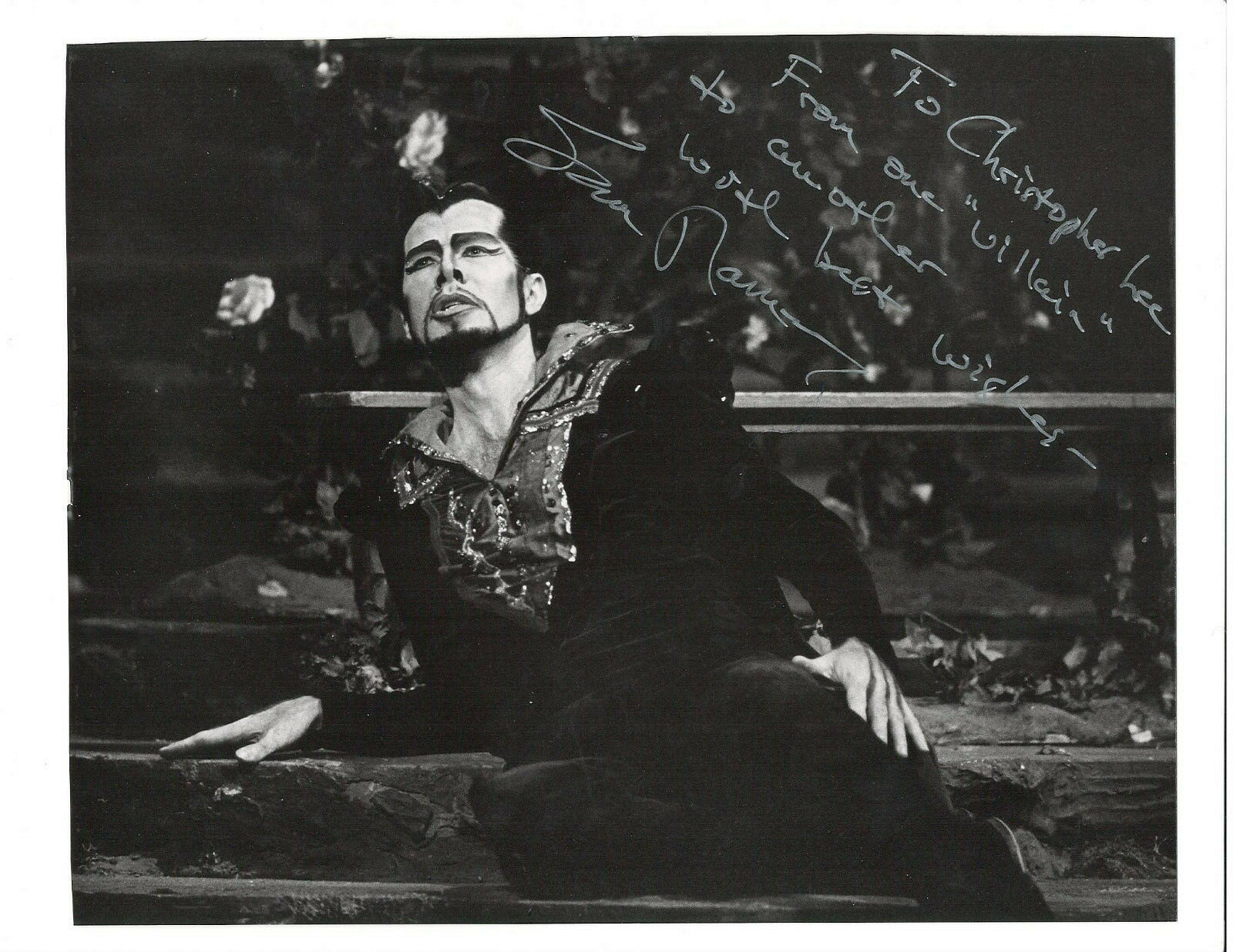
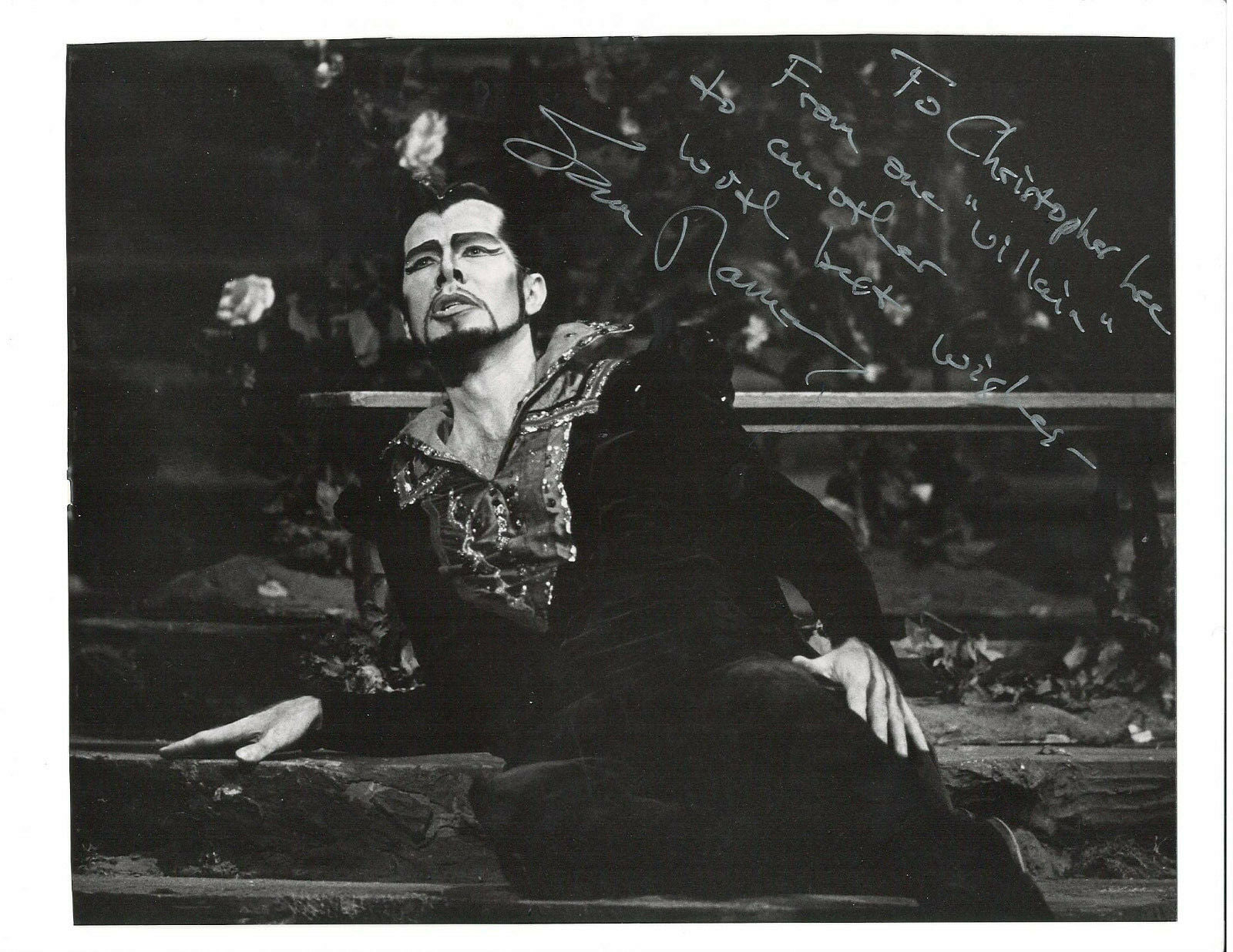
    See comments section for one of my treasured possessions: photo inscribed to Christopher Lee by Samuel Ramey!


    Luis Ricardo Falero, “Departure of the Witches” (a.k.a. “Witches Going to their Sabbath”), 1878

  • Samuel Ramey Turns 81: Remembering Opera’s Devil

    Samuel Ramey Turns 81: Remembering Opera’s Devil

    Bass-baritone Samuel Ramey is 81 today. I try not to let a birthday pass without giving the Devil his due.

    Also, now I can show off this nifty collectible from my cabinet of curiosities: a photo inscribed by Ramey to actor Christopher Lee.

    Lee, who possessed quite the resonant bass-baritone himself, harbored a latent desire to become a professional opera singer. As a young man, he was overheard singing in a tavern in Stockholm and praised by none other than Jussi Björling, who offered to undertake his training. But it was at a time in Lee’s life before he could afford to live in Sweden.

    Of course, both men – Ramey and Lee – were renowned for playing heavies.

    Here’s Ramey as Verdi’s “Attila.” Listen to that audience, at around 3:20 and again at 7:04. The adoration is such that he finally launches into an encore.

    Of course, his signature role will always be Boito’s Mefistofele.

    Act I, “Son lo spirito che nega” (“I am the spirt that denies”)

    Act II, “Ecco il mondo”(“Behold the world”)

    Singing Cimarosa with Thomas Hampson

    Ramey as Don Giovanni at the Met

    And as “L” Toreador on “Sesame Street”

    Happy birthday, Red Daddy!*


    *Coined by Ramey’s son, not me:

    https://www.npr.org/2009/05/14/103854868/samuel-ramey-bad-guy-bass-of-opera

  • Boito’s Devilish “Mefistofele”

    Boito’s Devilish “Mefistofele”

    Richard Strauss’ final opera, “Capriccio,” is an extended, if lighthearted debate on the relative merits of words and music. But for Arrigo Boito, the two never really came into conflict.

    As one of the great librettists, Boito provided the texts for Verdi’s late masterpieces, “Otello” and “Falstaff.” He also worked up a revision of “Simon Boccanegra” and – under the anagram Tobia Gorrio – provided the libretto for Ponchielli’s “La Gioconda.” That should be enough to guarantee his place in music history, right?

    But Boito himself was also a composer of merit, if not a prolific one. Although he destroyed his first opera, “Ero e Leandro,” and his last, “Nerone,” was left incomplete at the time of his death (to be finished by Arturo Toscanini and Vincenzo Tommasini), he totally nailed it with “Mefistofele.”

    There may be those who look down their noses at Boito’s take on Goethe’s “Faust,” yet the work stubbornly clings to the outskirts of the standard repertoire. Audiences love it. For me it is much more entertaining than anything in Verdi (I know, them’s fightin’ words), and I personally find the melodic invention much richer than that in the more popular version by master melodist Charles Gounod.

    Sure, as narrative it’s a little clunky – it’s as if Boito presents the story as a series of tableaux that are just kind of stitched together – and the most hair-raising set piece, the prologue in Heaven, comes right at the beginning. How could it not be all downhill from there? But the composer has the good sense to bring it all back at the end.

    What the opera really demands is a strong personality at its core, someone who, through his magnetic stage presence and sheer force of will, can tow the circus parade of wonders, wagon after wagon, before our astonished eyes and ears.

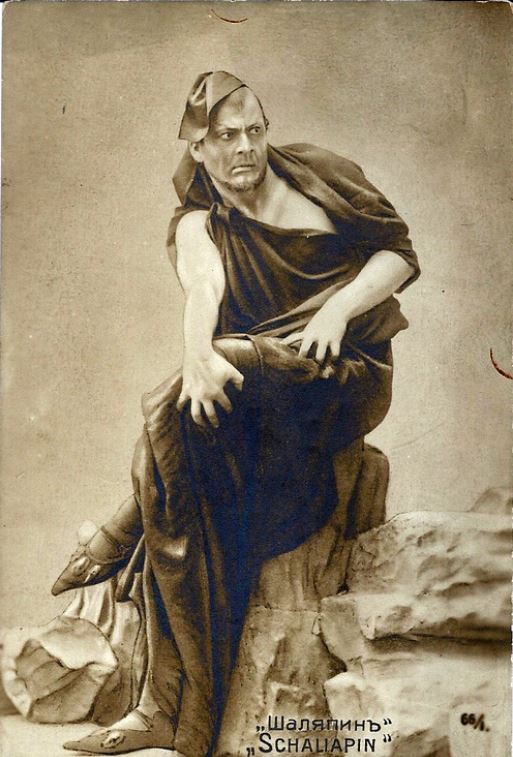
    Feodor Chaliapin, by all accounts, was just such a force. He gained wide notoriety in the title role, for his earthy interpretation and his insistence on playing it half-naked.

    In the recent past, Samuel Ramey owned the piece. He too preferred to show a fair amount of skin (though less than Chaliapin) – but really, couldn’t that be said for just about any of Ramey’s roles?

    Here’s the stunning – and cheeky – Robert Carson production first presented by San Francisco Opera in 1989, which I belatedly caught up with in New York, unfortunately after Ramey retired. The first 26 minutes will knock your socks off.

    Chaliapin in 1927

    https://www.youtube.com/watch?v=uVfjMHOeOVA

    Happy birthday, Arrigo Boito (1842-1918). Whether in words or in music, you gave the devil his due!


    DEVILED HAMS: Feodor Chaliapin (left) and Samuel Ramey

  • Samuel Ramey Turns 80 Opera’s Greatest Devil

    Samuel Ramey Turns 80 Opera’s Greatest Devil

    For decades, he reigned in Hell as opera’s greatest Mefistofele. I’ll be damned if Samuel Ramey isn’t 80 years-old today. Give the devil his due.

    Gaze with envy into my cabinet of curiosities as I share this one-of-a-kind collectible: a photo inscribed by Ramey to actor Christopher Lee. Lee, who possessed quite the resonant bass-baritone himself, harbored a latent desire to become a professional opera singer. As a young man, he was overheard singing in a tavern in Stockholm and praised by none other than Jussi Björling, who offered to undertake his training. But it was at a time in Lee’s life before he could afford to live in Sweden.

    Of course, both men – Ramey and Lee – were renowned for playing heavies.

    Here’s Ramey as Verdi’s “Attila.” Listen to that audience, at around 3:20 and again at 7:04. The adoration is such that he finally launches into an encore.

    Of course, his signature role will always be Boito’s Mefistofele.

    Act I, “Son lo spirito che nega” (“I am the spirt that denies”)

    Act II, “Ecco il mondo”(“Behold the world”)

    A concert performance of the Prologue

    https://www.youtube.com/watch?v=h7l4msqaqos

    Singing Cimarosa with Thomas Hampson

    Ramey as Don Giovanni at the Met

    And as “L” Toreador on “Sesame Street”

    “L” is for my love for Samuel Ramey. Happy birthday to this four-score Mephisto!

Tag Cloud

Aaron Copland (92) Beethoven (95) Composer (114) Film Music (120) Film Score (143) Film Scores (255) Halloween (94) John Williams (185) KWAX (229) Leonard Bernstein (100) Marlboro Music Festival (125) Movie Music (135) Opera (198) Philadelphia Orchestra (88) Picture Perfect (174) Princeton Symphony Orchestra (106) Radio (87) Ralph Vaughan Williams (85) Ross Amico (244) Roy's Tie-Dye Sci-Fi Corner (290) The Classical Network (101) The Lost Chord (268) Vaughan Williams (103) WPRB (396) WWFM (881)

DON’T MISS A BEAT

Receive a weekly digest every Sunday at noon by signing up here


RECENT POSTS