Tag: Meredith Willson

  • Broadway Musicals Celebrate July 4th

    Broadway Musicals Celebrate July 4th

    With the Fourth of July still six days away, I was trying to come up with a way to honor some aspect of the country’s rich musical heritage – it is, after all, the last weekend before the holiday – but I didn’t want to start clobbering everybody with Sousa marches just yet.

    I found my solution on Broadway: both of my specialty shows today are connected in some way or another to classic American musical theater.

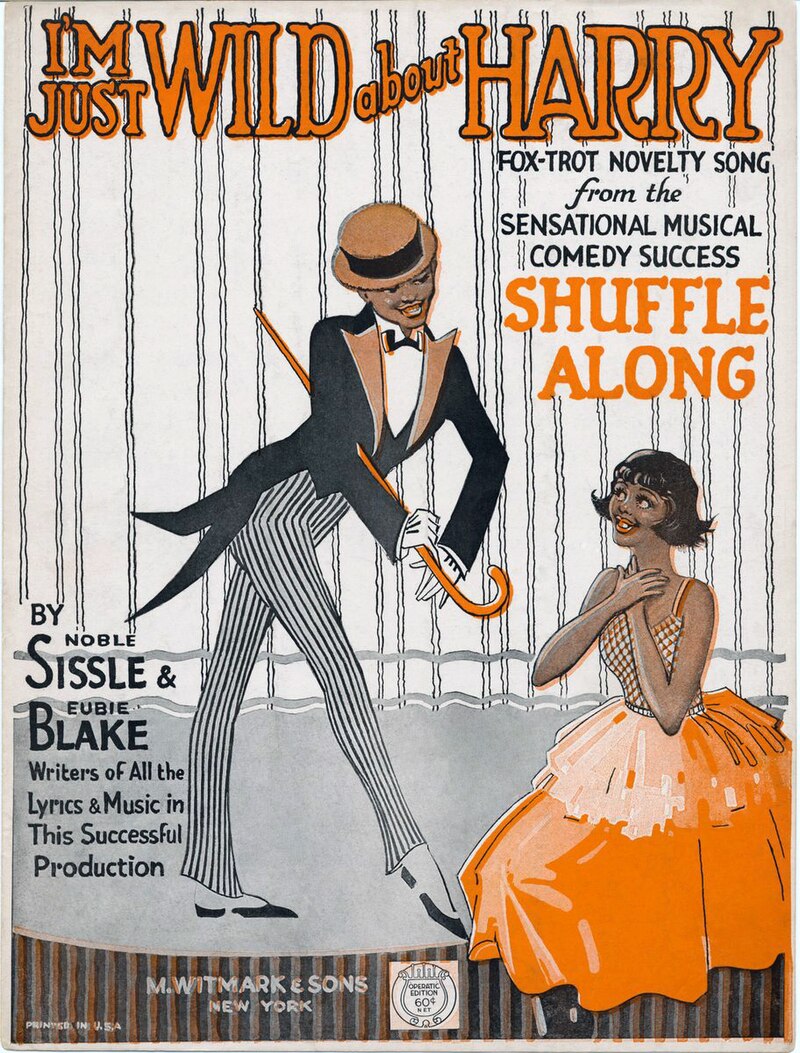
    The playlist on “Sweetness and Light,” the light music show, is constructed on works that were actually staged on the Great White Way, including Eubie Blake & Noble Sissle’s “Shuffle Along” (the 1921 all-Black musical that spawned the breakout hit “I’m Just Wild about Harry”), Leonard Bernstein’s “On the Town” (the ballet music, before it was distilled into the familiar “Three Dance Episodes,” with a 24-year-old Bernstein conducting), George Gershwin’s “Porgy and Bess” (conceived by the composer as an opera, but produced on Broadway several times over the decades before finally being elevated to the pantheon), and Richard Rodgers & Lorenz Hart’s “On Your Toes” (the climactic “Slaughter on Tenth Avenue” sequence, which we’ll enjoy on Rodgers’ birthday).

    We’ll get your toes tapping, for the most part, but also include a grand piano fantasy on themes from “Porgy” by Earl Wild.

    It’s showtime, this Saturday morning at 11:00 EDT/8:00 PDT.

    Then later, on “The Lost Chord,” a program that revives unusual and neglected repertoire, we’ll come at the same source from a different perspective, as we’ll hear concert works by composers of notable Broadway hits.

    Vladimir Dukelsky was born in what is now Belarus, but when he settled in the United States, his friend, George Gershwin suggested a name change. Thereafter, he was known as Vernon Duke. As Duke, he composed such standards as “April in Paris” and “Autumn in New York,” and he had a hit show in “Cabin in the Sky.”

    As Dukelsky, he had works championed by Serge Koussevitzky and choreographed by Léonide Massine and George Balanchine. We’ll hear a Piano Concerto he composed at the age of 19 at the request of Arthur Rubinstein.

    Meredith Willson is best-known for his Broadway smashes “The Music Man” and “The Unsinkable Molly Brown,” but he emerged from the classical music world, as a flutist who played with John Philip Sousa and the New York Philharmonic. We’ll hear Willson’s Symphony No. 2, subtitled “The Missions of California.”

    I hope you’ll join me in giving my regards to Broadway with “Broadway Lights” on “Sweetness and Light” (at 11:00 a.m. EDT/8:00 a.m. PDT), and “Broad Talents from Broadway” on “The Lost Chord” (at 7:00 p.m. EDT/4:00 p.m. PDT), both of them on KWAX, the radio station of the University of Oregon!

    Stream them, wherever you are, at the link:

    https://kwax.uoregon.edu/


    IMAGES: “Shuffle Along” sheet music and (top to bottom) Sissle & Blake, Rodgers & Hart, and Meredith & Rini Willson
  • Broadway Composers Go Classical

    Broadway Composers Go Classical

    Sure, it’s artistically satisfying to perform with the New York Philharmonic and to have one’s works choreographed by Léonide Massine and George Balanchine – but at the end of the day, there’s really nothing like a good popular hit to keep food on the table.

    This Sunday night on “The Lost Chord,” we’ll enjoy concert music by two artists more frequently associated with the musical theater.

    Vernon Duke may be remembered for standards like “April in Paris” and “Autumn in New York,” with his greatest stage success being the Broadway musical “Cabin in the Sky.” However, his early ambition was to become a “serious” composer.

    Born Vladimir Dukelsky in what in now Belarus in 1903, Duke studied composition with Reinhold Gliere. His music was championed by Serge Koussevitzky and admired by Sergei Prokofiev. Indeed, Duke continued to write works for the concert hall (as Dukelsky) right up into the 1950s.

    In 1921, he arrived in New York City, where he was befriended by George Gershwin. It was Gershwin – himself born Jacob Gershowitz – who suggested Dukelsky’s nom de plume. Thereafter, Duke/Dukelsky lived a double-life, Duke writing for popular consumption and Dukelsky composing symphonies.

    Dukelsky’s Piano Concerto was requested of the 19 year-old by none other than Arthur Rubinstein. Allegedly, Rubinstein and Gershwin were delighted with the piece when they heard it in its two-piano form. Unfortunately, so was impresario Serge Diaghilev. When Diaghilev heard Dukelsky play through it in Paris (with Georges Auric on the second piano), he immediately offered the talented young man a commission to write “Zephyr et Flore” for the Ballets Russes. This led to further offers from London’s West End. As a result, Dukelsky never got around to orchestrating the piece. It was left to pianist Scott Dunn to do so, in advance of some Gershwin centennial concerts in 1999.

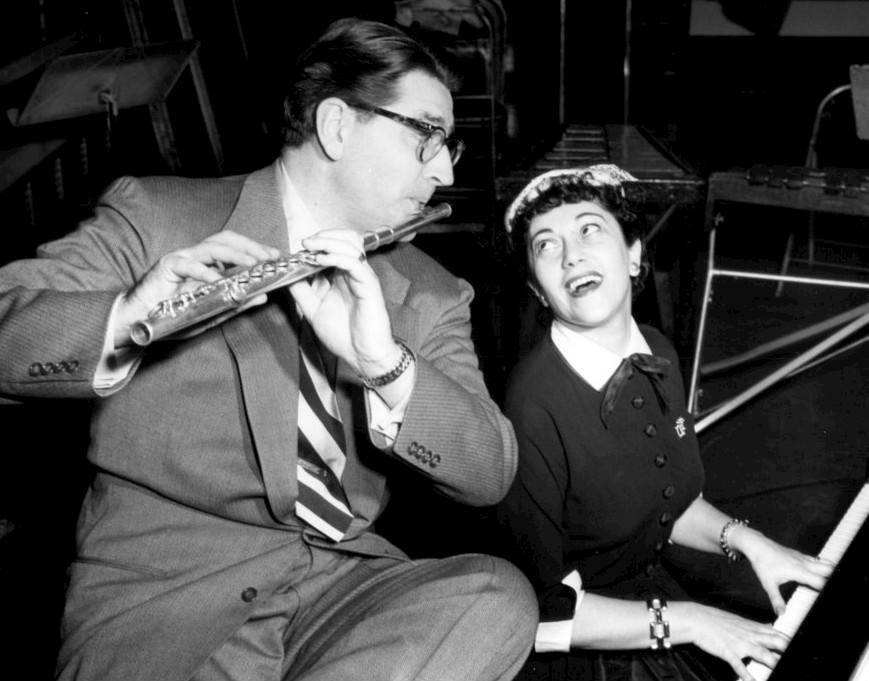
    Meredith Willson is best remembered for “The Music Man” and “The Unsinkable Molly Brown.” However, before his success in musical theater, he had been a flutist in the Sousa Band and with the New York Philharmonic. He worked as an orchestrator on Charlie Chaplin’s “The Great Dictator.” He was also a gifted conductor, author, librettist, and humorist. His autobiography, “And There I Stood with my Piccolo,” became a bestseller.

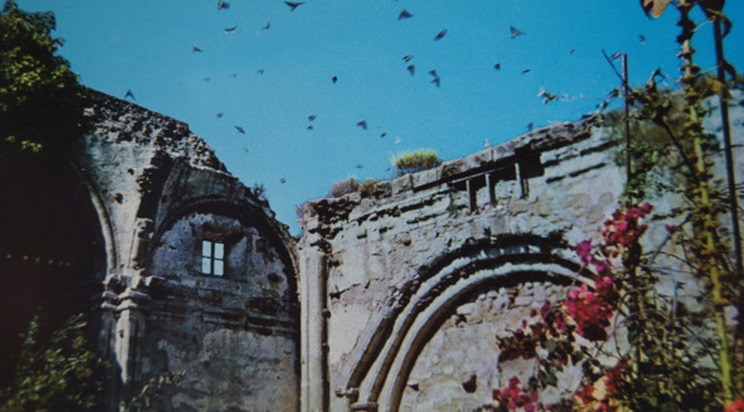
    Willson composed two symphonies, both of them extended love letters to California landmarks. His Symphony No. 1 pays tribute to San Francisco. The Symphony No. 2, the one we’ll hear this evening, is evocative of the missions of Southern California, with individual movements devoted to Junipero Serra, San Juan Bautista, San Juan Capistrano, and El Camino Real.

    I hope you’ll join me for “Broad Talents from Broadway” – musical theater composers hang on to their day jobs – this Sunday night at 10:00 EDT, on WWFM – The Classical Network and wwfm.org.


    Dawn Upshaw sings “Autumn in New York”

    Count Basie performs “April Paris”

    Basie welcomes Sheriff Bart

    “The Music Man,” Overture/Rock Island

    “76 Trombones” – for 76 trombones!


    PHOTO: Are these menacing vampire bats, flittering about the ruins of Castle Dracula? No, they’re just the swallows, come back to Capistrano.

  • Broadway Composers Beyond the Stage

    Broadway Composers Beyond the Stage

    Sure, it’s artistically satisfying to perform with the New York Philharmonic and to have your works choreographed by Léonide Massine and George Balanchine and all, but a popular hit is guaranteed to keep food on the table.

    This Sunday night on “The Lost Chord,” we’ll hear from two composers whose concert music has been overshadowed by their works for the musical theater.

    Vernon Duke lives on through his standards “April in Paris” and “Autumn in New York,” with his greatest stage success the Broadway musical “Cabin in the Sky.”

    However, his early ambition was to become a “serious” composer. Born Vladimir Dukelsky in what is now Belarus in 1903, Duke studied composition with Reinhold Gliere. His music was championed by Serge Koussevitzky and admired by Sergei Prokofiev. Indeed, Duke continued to write works for the concert hall (as Dukelsky) right up through the mid-1950s.

    In 1921, he came to New York. There, he was befriended by George Gershwin. It was Gershwin (born Jacob Gershowitz) who suggested the name change. Thereafter, Duke/Dukelsky lived a double-life, Duke writing for popular consumption and Dukelsky composing symphonies and concertos.

    Dukelsky’s Piano Concerto was requested by none other than Arthur Rubinstein, who recognized the 19 year-old’s promise.

    Allegedly, Rubinstein and Gershwin were delighted with the piece when they heard it in its two-piano form. Unfortunately, so was impresario Serge Diaghilev. When Diaghilev heard Dukelsky play through it in Paris (with Georges Auric on the second piano), he immediately offered the talented young man a commission to compose “Zephyr et Flore” for the Ballets Russes. This led to further offers from London’s West End. As a result, Dukelsky never got around to orchestrating the piece. It was left to pianist Scott Dunn to do so, in time for some Gershwin centennial concerts in 1999.

    Meredith Willson is best-remembered for “The Music Man” and “The Unsinkable Molly Brown.”

    However, prior to his success in musical theater, he had been a flutist in the Sousa band and with the New York Philharmonic. He worked as an orchestrator on Charlie Chaplin’s “The Great Dictator.” He was also a gifted conductor, author, librettist, and humorist. His autobiography, “And There I Stood with my Piccolo,” became a bestseller.

    Willson composed two symphonies, both of them extended love letters to specific California sites. His Symphony No. 1 pays tribute to San Francisco. The Symphony No. 2, the one we’ll be listening to, is evocative of the missions of Southern California. In contrast to Professor Harold Hill, Willson clearly “knew the territory.”

    I hope you’ll join me for “Broad Talents from Broadway,” this Sunday night at 10 ET, with a repeat Wednesday evening at 6; or that you’ll enjoy it later as a webcast at http://www.wwfm.org.

    PHOTO: Meredith and Rini Willson make beautiful music together

Tag Cloud

Aaron Copland (92) Beethoven (95) Composer (114) Film Music (119) Film Score (143) Film Scores (255) Halloween (94) John Williams (185) KWAX (229) Leonard Bernstein (99) Marlboro Music Festival (125) Movie Music (134) Opera (198) Philadelphia Orchestra (86) Picture Perfect (174) Princeton Symphony Orchestra (106) Radio (87) Ralph Vaughan Williams (85) Ross Amico (244) Roy's Tie-Dye Sci-Fi Corner (290) The Classical Network (101) The Lost Chord (268) Vaughan Williams (102) WPRB (396) WWFM (881)

DON’T MISS A BEAT

Receive a weekly digest every Sunday at noon by signing up here


RECENT POSTS