Tag: Michael Tilson Thomas

  • In the Blink of an Eye, Michael Tilson Thomas Is No More

    In the Blink of an Eye, Michael Tilson Thomas Is No More

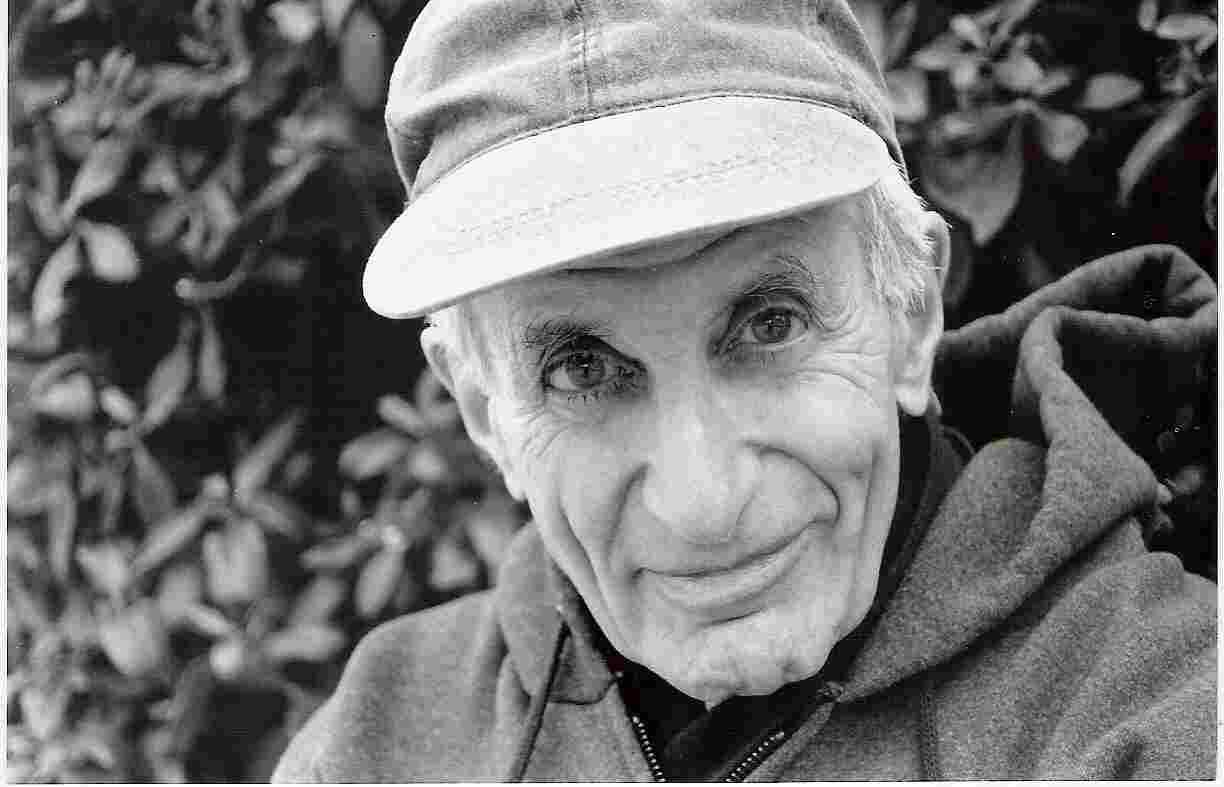
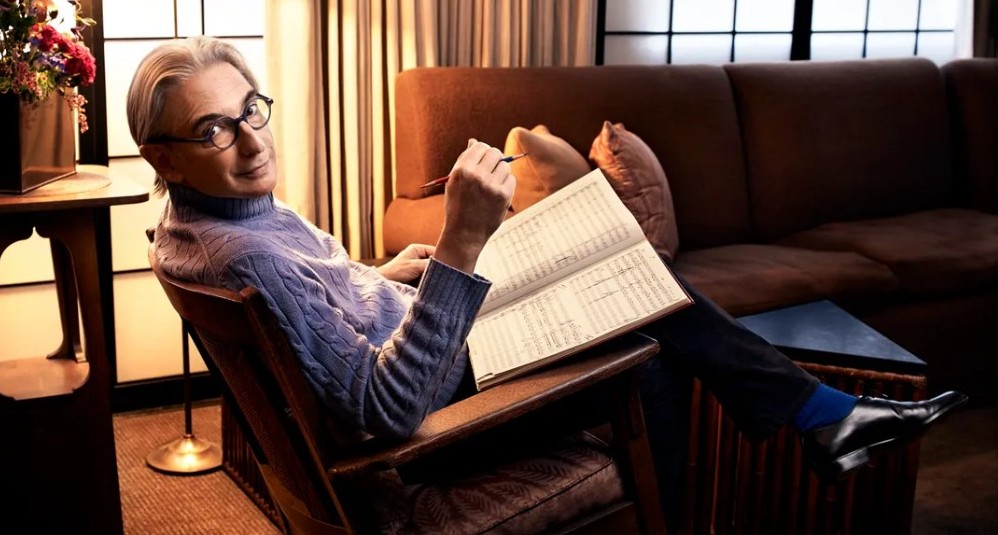
    This is one of those days I always knew would come – at least for the last five years or so – and now I am very sorry it’s here. For the conductor Michael Tilson Thomas has died.

    In my memory, Tilson Thomas will always be the effusive, boyish protégé of Leonard Bernstein. There are many, I’m sure, who during those early years predicted he would inherit Bernstein’s mantle as the most recognized and beloved American conductor. Alas, it did not come to pass. It’s not that he wasn’t recognized and beloved, but there could be only one Leonard Bernstein. Still, MTT had a great career and a rewarding life. You can’t fault excellence for not attaining superstardom.

    At one time or another, he held positions as music director of the Buffalo Philharmonic, chief conductor of the London Symphony Orchestra, founder and artistic director of the New World Symphony (an ensemble made up of gifted young musicians), and music director of the San Francisco Symphony. He also enjoyed a fruitful relationship with the Boston Symphony Orchestra, of which he was once assistant conductor and with which he made some classic recordings.

    Over0 the course of his career, Tilson Thomas amassed a cabinet full of Grammys, a Peabody Award, a National Medal of Arts, and a Kennedy Center Honor. Like Bernstein, he was also a composer. A few of his works reflected his Jewish heritage and honored his grandparents’ experience in the Yiddish theater. (He was the grandson of Boris and Bessie Thomashefsky.)

    There’s plenty in his discography that’s given me great pleasure over the years: recordings of the symphonies of Charles Ives; orchestral works of Aaron Copland and Igor Stravinsky; a colorful selection of “Bachianas Brasileiras” by Heitor Villa-Lobos; a fascinating curio, “The American Flag,” by Antonín Dvořák; an album of the late choral works of Beethoven (including “Calm Sea and Prosperous Voyage”) that I acquired on vinyl from my local record store when I was in high school; of course his Gershwin records, especially the one with “Rhapsody in Blue” in its original version; and a knock-out disc of American orchestral works, including Walter Piston’s Symphony No. 2, Ives’ “Three Places in New England,” and that prickly masterpiece, Carl Ruggles’ “Sun-Treader.”

    MTT recorded the complete works of Ruggles, a cantankerous, problematic composer, who wrote music of uncompromising integrity and dissonance. These were released on a two-LP set on CBS Masterworks. It must have sold about five copies, because the label never bothered to reissue it on compact disc, so that it became a kind of Holy Grail among collectors. It finally reappeared on the independent label Other Minds, 37 years later, in 2017! It would have been nice had they retained the design of the original album, but some of the elements were the same. Significantly, they were able to hang on to the program notes, which were supplemented by photos and an essay by Lou Harrison.

    Tilson Thomas conducted the first concert I ever saw with the Philadelphia Orchestra at the Mann Music Center in the summer of 1984, when he was joined by André Watts, the soloist in Rachmaninoff’s Piano Concerto No. 2, and after intermission led the ensemble in Bartók’s Concerto for Orchestra – with a thunderstorm looming, no less. Why they didn’t clear the lawn, I have no idea. You were just expected to pull your shirt over your head or run for cover in those days.

    The last time I saw him was in Philadelphia in 2008, this time indoors at the Kimmel Center for the Performing Arts, when he was joined by Paul Jacobs for Copland’s Organ Symphony and then, on the concert’s second half, he conducted Mahler’s Symphony No. 5.

    As is so often the case, we tend to take what’s available to us for granted. So it was like a splash of ice water, when five years ago, Tilson Thomas was diagnosed with glioblastoma, an aggressive form of brain cancer. Although he scaled back his activities for treatment and to husband his resources, he continued to perform, and during the period, a sort of sustained victory lap, he was received by audiences everywhere with notable warmth.

    His husband, Joshua Robison, died only two months ago. The two met in junior high school and were together for 50 years.

    Tilson Thomas is one of those figures I will always remember in the summer of his youth. I recollect watching him play Copland’s Piano Variations on a PBS television documentary about the composer, broadcast over 40 years ago now, and his commentary about the piece, which he compared to a skyscraper in sound. I can’t get over how quickly time passes.

    Michael Tilson Thomas was 81 years-old. R.I.P.
  • Beethoven’s 4th Symphony: A WWFM Birthday Bash

    Beethoven’s 4th Symphony: A WWFM Birthday Bash

    BEETHOVEN BIRTHDAY BASH

    WWFM – The Classical Network’s symphony marathon continues!

    NOW PLAYING: Symphony No. 4 in B flat major (English Chamber Orchestra/Michael Tilson Thomas)

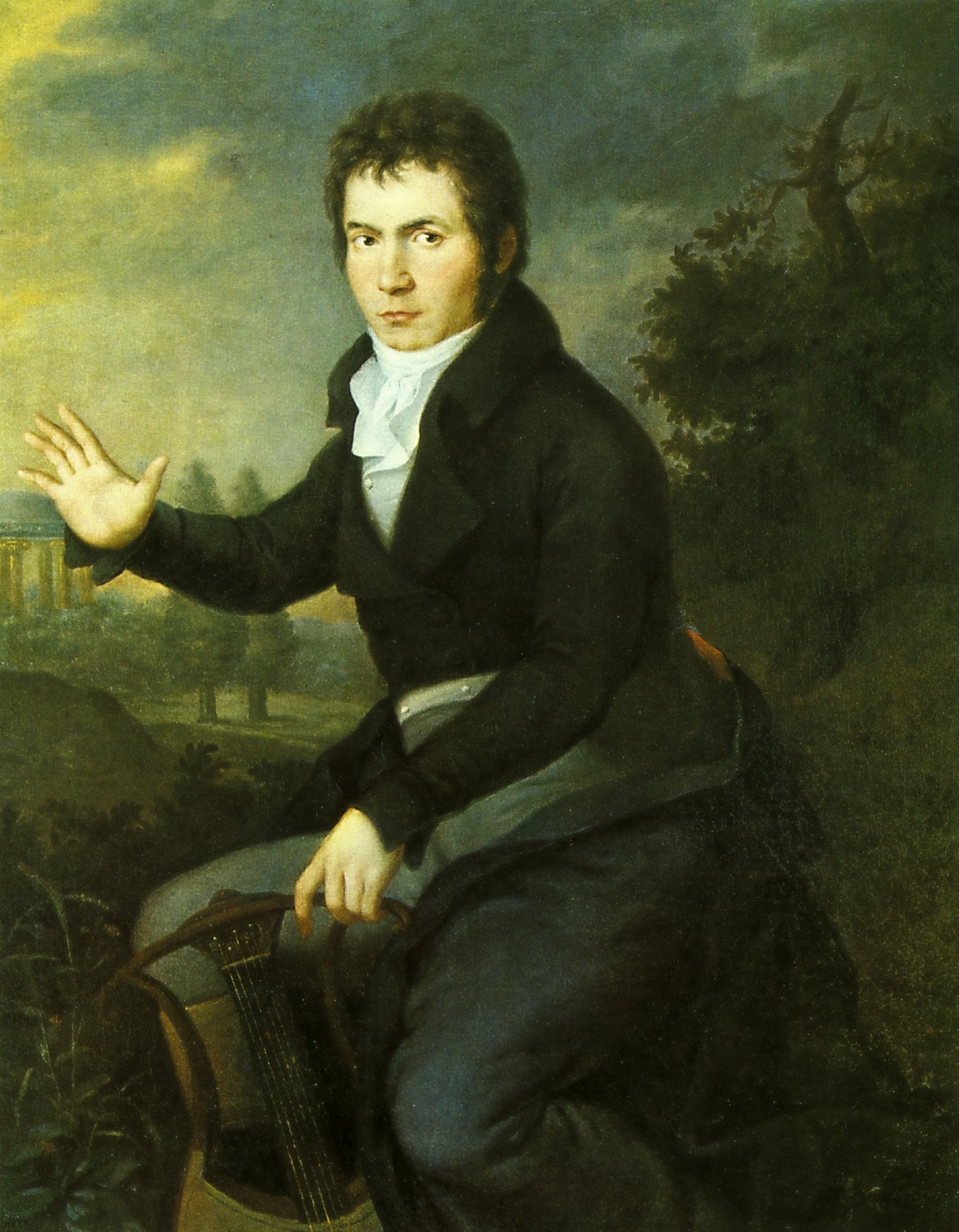
    It was Robert Schumann who memorably described Beethoven’s 4th Symphony as “a Greek maiden between two Norse giants.” While I certainly find that image provocative, I assume he meant it to signify the work’s relative restraint, geniality, and refinement in comparison to the more ambitious, and perhaps even a little uncouth, Symphonies Nos. 3 & 5.

    Let’s hear it for the maiden! Please support it by calling 1-888-232-1212, or by donating online at wwfm.org.

    Thank you for your generous contribution!


    Portrait (1804-05), Joseph Willibrord Mähler

  • Henry Brant Spatial Music Pioneer Remembered

    Henry Brant Spatial Music Pioneer Remembered

    I’m feeling a little spacey today, so I suppose it’s only appropriate to remember Henry Brant.

    Brant, who died in 2008 at the age of 94, was best known for his experiments with spatial music, in which performers are located not only on stage but also at carefully worked-out positions throughout the hall. The bodies of musicians are frequently distinguished through the playing of music of different characters.

    Brant’s “Ice Field” was inspired by an episode from his boyhood when, as a 12 year-old in 1926, he found himself aboard a ship passing cautiously through a field of icebergs in the North Atlantic. Its performance calls for strings, two pianos, two harps and timpani on stage, oboes and bassoons in the organ loft, brass and jazz drummer in the first-tier seats, piccolos and clarinets at one end of the second tier, with pitched percussion at the other end, and additional percussion to the side of the audience on the main floor.

    Brant played the organ at the work’s first performance at Davies Symphony Hall in San Francisco, under Michael Tilson Thomas. The piece was awarded the Pulitzer Prize for Music in 2001.

    By coincidence, Tilson Thomas and organist Cameron Carpenter will be reviving the work at Davies Symphony Hall later this week.

    http://www.sfsymphony.org/About-Us/Press-Room/Press-Releases/MTT-Carpenter-September-18-21.aspx

    Interestingly, Brant also worked as an orchestrator for Hollywood film scores. In particular, his distinctive timbres, frequently bright and shrill, color a number of the classic scores of Alex North. He also worked as an orchestrator on Virgil Thomson’s “The Plow that Broke the Plains” and Aaron Copland’s “The City.”

    Here is Brant discussing his concept of spatial music:

    And a beautiful spatial work – though on a comparatively modest scale – “On the Nature of Things” (1956), after Lucretius, for some reason posted here in two parts:

    Part 1 https://www.youtube.com/watch?v=fyglGX8fPmE
    Part 2 https://www.youtube.com/watch?v=-dueRnnn4Bo

    Happy 101st birthday to the Canadian-born American composer Henry Brant!

  • Mercer County Orchestral Season Highlights

    Mercer County Orchestral Season Highlights

    So many worthwhile orchestral performances scheduled to take place in and around Mercer County this season. Michael Tilson Thomas conducting Mahler’s 7th at McCarter Theatre Center. Enrique Bátiz in a program featuring Manuel Ponce’s Piano Concerto at the State Theatre in New Brunswick. Cellist Zuill Bailey with the Princeton Symphony Orchestra. Excerpts from Samuel Barber’s “Antony and Cleopatra” performed by the New Jersey Symphony Orchestra. A Verdi Requiem with the Princeton University Glee Club and Princeton University Orchestra. Niels Wilhelm Gade’s Symphony No. 7 with Sinfonietta Nova. Also, local performances of Howard Hanson’s “Romantic” Symphony (the TCNJ Orchestra) and George Antheil’s “Capital of the World” (the New Jersey Capital Philharmonic Orchestra).

    Read more about it in my orchestral overview in today’s The Times of Trenton.

    http://www.nj.com/times-entertainment/index.ssf/2014/08/area_orchestras_announce_conce.html

    PHOTO: MTT will conduct GM in Princeton

Tag Cloud

Aaron Copland (93) Beethoven (95) Composer (114) Film Music (126) Film Score (143) Film Scores (255) Halloween (94) John Williams (189) KWAX (229) Leonard Bernstein (101) Marlboro Music Festival (125) Movie Music (141) Mozart (87) Opera (203) Philadelphia Orchestra (89) Picture Perfect (174) Princeton Symphony Orchestra (107) Radio (87) Ross Amico (244) Roy's Tie-Dye Sci-Fi Corner (290) The Classical Network (101) The Lost Chord (268) Vaughan Williams (103) WPRB (396) WWFM (881)

DON’T MISS A BEAT

Receive a weekly digest every Sunday at noon by signing up here


RECENT POSTS