Tag: Michelle Kwan

  • Fikret Amirov Centenary A Celebration

    Fikret Amirov Centenary A Celebration

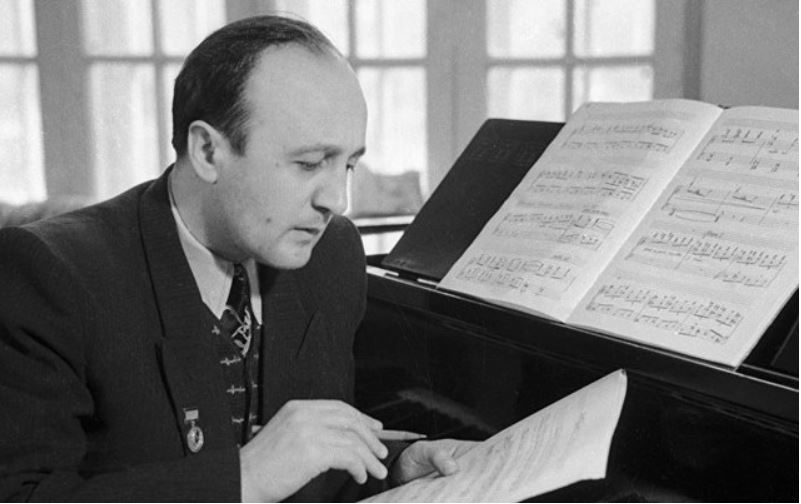
    Today is the 100th anniversary of the birth of Azerbaijani composer Fikret Amirov (1922-1984).

    Amirov was much decorated in Soviet Russia, awarded the Stalin Prize in 1949, honored as People’s Artist of the USSR in 1965, and the recipient of the USSR State Prize in 1980.

    In 1959, he was one of several Soviet composers – including Konstantin Dankevich, Dmitri Kabalevsky, Tikhon Khrennikov, and Dmitri Shostakovich – who traveled to the United States at the invitation of the U.S. State Department, as part of a Soviet-American cultural exchange agreement, which had allowed American composers Roy Harris, Ulysses Kay, Peter Mennin, and Roger Sessions to visit the Soviet Union the previous year.

    And look what I found! A 30-minute broadcast, “Aaron Copland Meets the Soviet Composers,” produced by WGBH Boston in 1959. Nicolas Slonimsky pitches a question to Amirov, and he responds, around 16:40. Shostakovich speaks around 12:00 and 24:00.

    ALL ARTS Vault Selects

    The Soviet composers arrive in Philadelphia on November 6, 1959.

    Amirov is perhaps best known in the West from Leopold Stokowski’s recording of “Kyurdi Ovshari” – issued as “Azerbaijan Mugam”

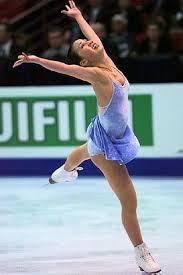
    Though unquestionably his largest audience was thanks to Michelle Kwan, whose “Taj Mahal” routine was skated to Amirov’s “Gulistan Bayati-Shiraz”

    https://youtu.be/KHpA1_3R0BU?t=214

    More recently, Yo-Yo Ma recorded “Kor Arab” (“Song of the Blind Arab”) with the Silk Road Ensemble.

    In honor of Amirov’s centenary, I devoted “The Lost Chord” on Sunday night to two of his works: “Six Pieces for Flute and Piano” and selections from the ballet “Arabian Nights.” Here’s a link to my Facebook teaser.

    https://www.facebook.com/photo?fbid=984611895791207&set=a.883855802533484

    You’ll find the actual program, “Azerbaijani Come Lately,” now posted as a webcast on the WWFM – The Classical Network website at wwfm.org.

    https://www.wwfm.org/show/the-lost-chord-with-ross-amico/2022-11-18/the-lost-chord-november-20-azerbaijani-come-lately

    If you happen to be in New York City tonight, there is a tantalizing program scheduled for Carnegie Hall, with the New York International Virtuosi Orchestra and pianist Nargiz Aliyarova. The concert, “Bridge of Friendship,” is dedicated to Amirov and will include music by Turkish, Azerbaijani, and Jewish composers. Among the selections will be Amirov’s “Azerbaijan Capriccio” and the U.S. premiere of the “Piano Concerto on Arabian Themes.” Alexander Markov will be the soloist in Mendelssohn’s Violin Concerto. You’ll find more information at the link.

    https://www.carnegiehall.org/calendar/2022/11/22/new-york-international-virtuosi-orchestra-nargiz-aliyarova-piano-alexander-mar-0700pm

    If, like me, you won’t be able to make it, there’s some consolation to be found in this video of Aliyarova playing the concerto in Azerbaijan.

    Happy birthday, Fikret Amirov!
  • Fikret Amirov Azerbaijan’s Secret Music

    Fikret Amirov Azerbaijan’s Secret Music

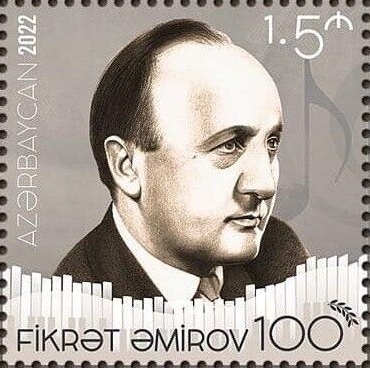
    Despite the admiration of Leopold Stokowski (who recorded “Azerbaijan Mugam”) and Michelle Kwan (who skated to “Gulistan Bayati-Shiraz”), the music of Fikret Amirov is still rarely-encountered in the West. This Sunday night on “The Lost Chord,” for the centenary of Amirov’s birth (on November 22, 1922), get to know Azerbaijan’s best-kept secret.

    Collectors of a certain vintage may recall Stokowski’s recording, with the Houston Symphony Orchestra, of “Azerbaijan Mugam.” Its native title is “Kyurdi Ovshari.” That language barrier may in part explain Amirov’s relative obscurity in the West. Even taking into account the more accessible title, what exactly is a mugam? Why, it’s a highly rhapsodic and improvisatory form, alternating between song and dance episodes, characteristic of Azeri music. But you see what I mean.

    It is that very “exoticism” which makes Amirov difficult to market, yet at the same time, it is what makes him so interesting. In an increasingly multicultural climate, with light being shed now in all corners of the repertoire, perhaps Amirov’s day has finally come.

    Tonight, we’ll sample his “Six Pieces for Flute and Piano” of 1970, consisting of “Song of the Aushug,” “Lullaby,” “Dance,” “In the Azerbaijan Mountains,” “At the Spring,” and “Nocturne.” If Amirov’s music at times reminds one of Khachaturian, one need only remember that Azerbaijan shares a border with Armenia. Without getting too much into politics, relations between the two countries are tense, to say the least. His music is also colored by the influence of other neighboring and nearby countries – Turkey, Russia, and Iran.

    This is something to bear in mind when approaching his full-length ballet, “The Arabian Nights.” The work, given its premiere in 1979, is one of the rare adaptations to come out of a region which gave us the original stories that make up “A Thousand and One Nights.” The world famous adventures of Sinbad, Ali Baba, and Aladdin are enshrined in these tales, and each of them make an appearance in the ballet’s second act.

    This week, we’ll hear selections from Act I, which sets up the framing device, with the unfaithful wife Nurida, the Sultan’s declaration of vengeance against all womankind, and the introduction of Scheherazade, the vizier’s daughter who enthralls the Sultan with her wit and creativity and finally restores his ability to love.

    I hope you’ll join me for “Azerbaijani Come Lately” – late works by Fikret Amirov, for his 100th anniversary – this Sunday night at 10:00 EST, on WWFM – The Classical Network and wwfm.org.


    Stokowski conducts “Azerbaijan Mugam”

    Michelle Kwan’s “Taj Mahal” routine, skated to Amirov’s “Gulistan Bayati-Shiraz”

    https://youtu.be/KHpA1_3R0BU?t=214

  • Michelle Kwan’s Secret Weapon William Alwyn

    Michelle Kwan’s Secret Weapon William Alwyn

    What composer helped spur Michelle Kwan to Olympic excellence? Kwan skated to William Alwyn’s harp concerto, “Lyra Angelica,” during her legendary free skate at the 1998 Winter Olympics.*

    Polyglot, poet, artist and especially musician, Alwyn played flute for a time with the London Symphony Orchestra. He taught composition at the Royal Academy of Music from 1926 to 1955. He was a composer of symphonies, operas, concertos, string quartets and film scores.

    My personal favorite of the symphonies is No. 4. Dig that cascading scherzo of a second movement! Then feel your heart tug at the third.

    His Symphony No. 3 may be the most structurally amazing, with the first movement generated from an 8-note theme, the second from a 4-note fragment, and the last a combination of the two. By golly, that’s all twelve notes of the chromatic scale – twelve-tone music! Then why is it so damned beautiful?

    Of course, there is much to be said for the simple pleasures of his music for “The Crimson Pirate.”

    In all, Alwyn wrote music for dozens of films, including “Odd Man Out,” “The Fallen Idol,” “A Night to Remember,” and “Swiss Family Robinson.” Fun fact: He was also a cousin of Gary Cooper!

    Stay tuned, next Tuesday I’ll be posting about the love of Alwyn’s life, composer Doreen Carwithen, on the centenary of her birth.

    For the present, happy birthday, William Alwyn (1905-1985)!


    *Attentive listeners will note the interpolation of Satie’s “Gymnopédie No. 1” (in Debussy’s orchestration) in the middle of Kwan’s routine.

    But the inspiring music for harp and strings is all Alwyn. You can hear the complete piece at the link below. Inspired by the metaphysical poetry of Giles Fletcher, it was always a highlight of my radio playlist on an Easter morning.

  • Alwyn Michelle Kwan’s Olympic Composer

    Alwyn Michelle Kwan’s Olympic Composer

    What composer helped spur Michelle Kwan to Olympic excellence? Kwan skated to William Alwyn’s harp concerto, “Lyra Angelica,” during her legendary free skate at the 1998 Winter Olympics.

    Polyglot, poet, artist and especially musician, Alwyn played flute for a time with the London Symphony Orchestra. He taught composition at the Royal Academy of Music from 1926 to 1955. He was a composer of symphonies, operas, concertos, string quartets and film scores.

    My personal favorite of the symphonies is No. 4. Dig that cascading scherzo of a second movement! Then feel your heart tug at the third.


    His Symphony No. 3 may be the most structurally amazing, with the first movement generated from an 8-note theme, the second from a 4-note fragment, and the last a combination of the two. By golly, that’s all twelve notes of the chromatic scale – twelve-tone music! Then why is it so damned beautiful?


    Of course, there is much to be said for the simple pleasures of his music for “The Crimson Pirate.”

    Another fun fact: Alwyn was a cousin of Gary Cooper!

    Happy birthday, William Alwyn (1905-1985)!

Tag Cloud

Aaron Copland (92) Beethoven (94) Composer (114) Film Music (117) Film Score (143) Film Scores (255) Halloween (94) John Williams (185) KWAX (228) Leonard Bernstein (99) Marlboro Music Festival (125) Movie Music (132) Opera (197) Philadelphia Orchestra (86) Picture Perfect (174) Princeton Symphony Orchestra (106) Radio (86) Ralph Vaughan Williams (85) Ross Amico (244) Roy's Tie-Dye Sci-Fi Corner (290) The Classical Network (101) The Lost Chord (268) Vaughan Williams (99) WPRB (396) WWFM (881)

DON’T MISS A BEAT

Receive a weekly digest every Sunday at noon by signing up here


RECENT POSTS