Tag: Morven Museum & Garden

  • The Princeton Festival’s “Tosca” Takes Flight

    The Princeton Festival’s “Tosca” Takes Flight

    Once you see “Tosca,” you never forget it. But I never expected to be haunted by it!

    I remember the first time I saw it on PBS back in the 1980s. It was one of those “Great Performances” broadcasts from the Metropolitan Opera, with Hildegard Behrens in the title role and Cornell MacNeil as the villainous Scarpia. Placido Domingo was Cavaradossi. From the perspective of my 19-year-old self, Domingo, especially, seemed a little long in the tooth to be cutting the romantic figure of a dashing young painter turned political prisoner. Funny to think back on it now, as he must have only been in his 40s at the time. And he’s still singing!

    Now, 40 years on, what a difference it makes to experience the work with someone with the pipes AND the youth to really put it across. Last night at The Princeton Festival, tenor Victor Starsky sang Cavaradossi with power and vigor. In fact, all three leads, including soprano Toni Marie Palmertree as Tosca and baritone Luis Ledesma as Scarpia, were extraordinarily well-matched, at every turn heightening the drama and intensifying the passion, in what is really a lean chamber piece writ large by Giacomo Puccini. Frankly, I never recognized its genius before.

    Never had I found myself so engrossed in the work’s interweaving themes, both musical (the interplay of heart-rending leitmotifs clearly paving the way for Hollywood film scores of the 1930s & ’40s) and textual (the libretto a fascinating blend of religion, politics, and sexuality). It really got me thinking about how each of the characters relates to love, death, and God in various combinations. And I thought “Tristan” was perverse in its celebration of love-death! Clearly, Wagner was not Italian.

    It’s the kind of reflection one engages in when one experiences opera as theater, as opposed to listening to it on a recording, where the music and the quality of the singing take precedence. In the opera house, you get the total experience, as you’re also focusing on the action and the words.

    “Tosca” really begins to insinuate itself as it explores various permutations of faith and blasphemy, eroticism and nihilism. Far from the laugh-out-loud experience of that PBS “Tosca” that had me howling in Act III, the opera, when done right, makes you forget how trashy the subject matter really is. It’s no longer the “shabby little shocker” derided by musicologist Joseph Kerman, but rather like Victor Hugo at his most twisted. You just don’t know how to feel about certain things, but you can’t help FEELING. Is there a more desolate aria than Cavaradossi’s “E lucevan le stelle?” Sometimes you’re just screwed. Interesting, though, that the character couches thoughts of impending doom in meditations on all the hot nights he’s going to be missing out on with Tosca. Molto Italiano!

    Tosca’s thoughts, on the other hand, in her own expression of hopelessness, the aria “Vissi d’arte,” turn on contemplations as to why God has deserted her. For Scarpia, virile, dangerous, and subtle, well, he sings – in church no less – “Tosca, you make me forget God!” Because he’ll do anything to have her.

    Ledesma not only has the voice, but the imposing carriage to convince as the morally bankrupt chief of police, who is the recipient of the opera’s most awe-inspiring leitmotif. He is an edifice in himself, the embodiment of power corrupted. We hear echoes of it, even as Tosca enacts a pious ritual with candles and crucifix over his corpse, as if to note, how the mighty have fallen.

    Scarpia is no cartoon villain. He invokes Iago in the first act. Even in death, he dominates. It’s not for nothing that Tosca’s last line is “I’ll see you before God, Scarpia!” The full extent of his calculated evil comes to light only posthumously, and he looms over the fates of the other characters, just as the grim prison of the Castel Sant’Angelo looms over Rome.

    For such a swift opera (Puccini was ruthless in trimming numbers from the libretto, based on a sprawling melodrama conceived by Victorien Sardou as a vehicle for Sarah Bernhardt), the characters are fascinatingly layered. Some contemporaries complained about the resulting sacrifice of lyricism (alleged), but the drama is inexorable. Since there are no set pieces or flashy effects (beyond perhaps that chorus at the end of Act I), it’s essential that all the singers be able to pull their weight, vocally and as actors.

    The opera certainly offers a plum part for a soprano – a diva playing a diva – and Palmertree left nothing on the table. Like Starsky, she brought it when it counted. Tosca’s journey takes her from the comparative innocence of love, religious devotion, and petty jealousy in Act I to desperation and resourcefulness, as she pushes back against Scarpia’s objectification and harassment in Act II, to the point that she takes matters into her own hands. Palmertree made you feel the anguish of Tosca trying to keep her lover’s secret, even as she hears him being tortured in the next room, only to have to rein it in a few moments later to strike the right tone of introspection to navigate her dark night of the soul in “Vissi d’arte.”

    The Princeton Symphony Orchestra was in impressive tune with its conductor, Rossen Milanov, who led the performance as to the manner born. Milanov has ample experience conducting opera and ballet in the U.S. and Europe, but it’s only comparatively recently that we’ve been exposed to that facet of his artistry in Princeton. Nothing I’ve heard at the Princeton Festival since its post-COVID resurrection in 2022 prepared me for what I heard and saw last night. Milanov conjured waves of sound and navigated passionate breakers, but he did so most undemonstratively, as a collaborator, yes, but also as a sensitive accompanist. Conducting opera is like steering a ship, and no matter how turbulent the drama got, Milanov at the helm kept his cool and rode the blue. I don’t know if it’s just that I haven’t been paying close enough attention, but even when conducting the orchestra’s regular subscription concerts at Richardson Auditorium, he really does seem to be more relaxed and just getting better all the time.

    Also, not to be undersold was the production’s stage direction by Eve Summer. Even though I emphasize “Tosca’s” intimacy, the opera would seem to call for grand sets, at least for the outer acts. How do you believably conjure the church of Sant’Andrea della Valle on a stage the size of the one inside the performance pavilion on the grounds of Morven Museum & Garden? And how on earth do you hope to convey the height and imposing grandeur of the Castel Sant’Angelo, and still have room for a firing squad, much less to pull off the opera’s famous ending. Yet Summer and scenic designer Ryan McGettigan made it work. A masterstroke came at the end of the first act, when the chorus (prepared by Vinroy Brown), attired in cowls and miters, processed from the stage up and down the aisles of the tent to surround the audience with spinetingling sonorities.

    Furthermore, I must say, I expected something far less spectacular from Tosca’s final act of defiance. Instead of simply dropping from the parapet, as I anticipated, Palmertree suddenly put on a burst of speed, dashing along the length of the battlement, at the far end flinging herself headlong into oblivion. Kudos for going for broke! I am nearly always slammed by a wave of emotion at the end of an opera, but the music, the visual, and the audience reaction really put it over the top.

    I admit, when I first heard that the opera this summer was going to be “Tosca,” I had my doubts. Previously, the post-COVID, Princeton Symphony Orchestra incarnation of the Princeton Festival had dealt solely in comedy – “The Barber of Seville,” “Albert Herring,” “Cosi fan tutte,” “The Impresario” and “Scalia/Ginsburg” – certainly apt, given the season and the venue. These all had their enjoyments, but I was unprepared for “Tosca,” which despite the stage limitations, was a triumph.

    Anything else this week is bound to seem anticlimactic, but there’s something to be said for just relaxing and enjoying a concert. The Princeton Festival runs through Saturday. For the remainder of this year’s schedule, visit https://www.princetonsymphony.org/festival.

  • Princeton Festival: “Tosca” & More!

    Princeton Festival: “Tosca” & More!

    Life has gone so far over the top recently that even Puccini’s “Tosca” no longer seems farfetched. Once scathingly dismissed by musicologist Joseph Kerman as a “shabby little shocker,” this tale of love, politics, and the world’s most melodramatic diva is now so meta that the characters threaten to leap from the stage. If you’ve never seen it, well, never mind. Now’s your chance! One of the world’s most popular operas will be given three performances at The Princeton Festival, this Friday at 8:00, Sunday at 4:00, and Tuesday at 7:00.

    Soprano Toni Marie Palmertree will sing the title role of the fiery opera singer who has a peculiar idea of what constitutes a kiss, tenor Victor Starsky her lover, the luckless artist Cavaradossi, and baritone Luis Ledesma, the slimy chief of police Scarpia. Puccini’s spinetingling score contains some of his most ardent, shattering music. And that is saying something!

    The Princeton Symphony Orchestra, Princeton Festival Opera Chorus, and student singers of Princeton Middle School will be conducted by music director Rossen Milanov.

    The opera will be presented in the state-of-the-art festival pavilion on the grounds of Morven Museum & Garden at 55 Stockton Street/Rte. 206.

    Prior to the Sunday performance, Westminster Choir College’s Margaret Cusack and stage director Eve Summer will discuss the production in a special presentation at Morven’s Stockton Education Center at 2:15.

    Of course, opera is not the only thing to look forward to this week. Tonight, Kentucky-born, classically-trained violinist Tessa Lark will introduce “Stradgrass” to Princeton. Lark went from playing in her father’s gospel bluegrass band to studies at the New England Conservatory and Juilliard. Her festival program will meld music by Telemann, Bach, and Ysaÿe with Appalachian and bluegrass licks. The concert will take place at Trinity Church Princeton at 33 Mercer Street (across the way from Morven Museum), beginning at 7 p.m.

    Back under the Morven pavilion, and in between this weekend’s performances of “Tosca,” American Repertory Ballet will execute “An Evening of Pas de deux” accompanied by members of the PSO, again conducted by Milanov. On the program will be selections from Tchaikovsky’s “Swan Lake” and Minkus’ “Don Quixote,” along with Ethan Stiefel’s “Delibes Duet.” The dancing will begin this Saturday at 7 p.m.

    Yet to come, next week: “Baroque Brilliance” with The Sebastians, Motown with Masters of Soul, “Viva Vivaldi” with violinist Daniel Rowland and cellist Maja Bogdanović, and “ARRIVAL from Sweden: The Music of ABBA!”

    For more information, visit the Princeton Festival website at https://princetonsymphony.org/festival.


    CLOCKWISE FROM LEFT: Tessa Lark (“Stradgrass,” tonight at 7:00 at Trinity Church), Toni Marie Palmertree (“Tosca,” Friday at 7:00, Sunday at 4:00, and Tuesday at 7:00 at Morven Museum), inside the Festival Pavilion, and American Repertory Ballet (“An Evening of Pas de deux,” Saturday at 7:00 at Morven)

  • Princeton Festival: Opera to ABBA

    Princeton Festival: Opera to ABBA

    Opera. Cabaret. Motown. Baroque. Ballet. Bluegrass… no, STRADGRASS. And ABBA?

    Beginning this weekend, it will be another tuneful June for the Princeton Symphony Orchestra and friends, as The Princeton Festival gets underway at Morven Museum & Garden, June 6 to 21. For the most part, concerts will take place within a state-of-the-art performance pavilion on the Morven grounds, at 55 Stockton St. (Rte. 206), with a few to be held, as noted, across the way at Trinity Church.

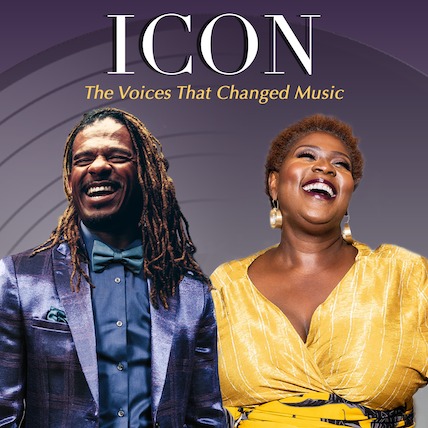
    The festival will open on Friday with “ICON: The Voices that Changed Music.” Capathia Jenkins and Ryan Shaw return to the festival stage to celebrate the artistry of Michael Jackson, Prince, Whitney Houston, Gladys Knight, Elvis Presley, Diana Ross, Stevie Wonder, and others, covering songs that helped shape popular culture and define a nation. (Friday, June 6, at 7 p.m.)

    Operatic superstar Renée Fleming will appear on Saturday, to perform works by Handel, Puccini, Reynaldo Hahn, and others, including selections from American musical theater. Seating is already at capacity, but feel free to add your name to the waiting list. (Saturday, June 7, at 8 p.m.)

    If musical theater is your bag, you’ll also likely be interested in “Sondheim in the City,” presented cabaret-style by Melissa Errico. Errico’s Broadway credits are too many to list. She was nominated for a Tony Award for Outstanding Lead Actress for Michel Legrand’s “Amour” and for a Drama Desk Award for her performance in Sondheim’s “Passion.” She and Sondheim have been very good to one another. Her 2018 album “Sondheim Sublime” was acclaimed by Terry Teachout of The Wall Street Journal as “the best all-Sondheim album ever recorded.” (Sunday, June 8, at 4 p.m.)

    Kentucky-born, classically-trained Tessa Lark has basically forged her own genre: Stradgrass. A veteran of her father’s gospel bluegrass band, Lark went on to study at New England Conservatory and Juilliard. Her program will meld violin music by Telemann, Bach, and Ysaÿe with Appalachian and bluegrass licks. (Thursday, June 12, 7 p.m.) The concert will be held at TRINITY CHURCH, a stone’s throw from Morven at 33 Mercer Street.

    Of course, opera has always been the centerpiece of the festival. This year’s offering will be Puccini’s “Tosca.” Sardou’s original play (a vehicle for Sarah Bernhardt) is the very definition of over-the-top, but the composer really sells it with some of his most ardent, romantic music. Take the plunge from Castel Sant’Angelo. (Friday, June 13, at 7 p.m., Sunday, June 15 at 4 p.m., or Tuesday, June 17, at 7 p.m.)

    To get you in the mood, members of Opera Delaware will join Rochelle Ellis and “Tosca” soprano Tonie Marie Palmertree for a free “opera bootcamp” at Morven’s Stockton Education Center. (Tuesday June 10, 3-8 p.m.) Registration is required.

    A few days later, prior to the second performance, a talk, “Exploring Tosca,” will be given by Margaret Cusack and Eve Summer, also at the Stockton Education Center. (June 15 at 2:15 p.m.)

    Dance will also be represented as American Repertory Ballet presents “An Evening of Pas de deux” with members of the PSO, conducted by music director Rossen Milanov. Included will be selections from Tchaikovsky’s “Swan Lake” and Minkus’ “Don Quixote,” alongside Ethan Stiefel’s “Delibes Duet.” (Saturday, June 14, at 7 p.m.)

    Festival favorites, the ensemble The Sebastians, will return, to perform an alliterative program, “Baroque Brilliance,” which will include works by Handel, Telemann, and an assortment of Italian composers whose names end in “i.” (Wednesday, June 18, at 3 p.m. & 7 p.m.) AT TRINITY CHURCH

    Back to the Morven pavilion, Masters of Soul will appear in a Motown revue, featuring favorites by Gladys Knight & The Pips, Marvin Gaye & Tammi Terrell, Smokey Robinson & The Miracles, The Temptations, The Four Tops, Diana Ross & The Supremes, Martha Reeves and The Vandellas, Barry White, Sam & Dave, James Brown, and others. (Thursday, June 19, at 7 p.m.)

    The concert will cap a Juneteenth celebration that will also include a flag-raising event (1 p.m. at the Municipality of Princeton) and a talk by Rochelle Ellis about Motown’s influence on the Civil Rights Movement (4 p.m. at Morven’s Stockton Education Center).

    The Italian Baroque will loom large when violinist Daniel Rowland and cellist Maja Bogdanović join members of the Princeton Symphony Orchestra for “Viva Vivaldi.” But to spice it up a little, the program will also include Osvaldo Golijov’s “Tenebrae” for string orchestra and Max Richter’s “Vivaldi’s Four Seasons Recomposed.” (Friday, June 20, 7 p.m.)

    The festival will conclude with a harmonic smorgasbord. Mamma mia! It’s “ARRIVAL from Sweden: The Music of ABBA!” What else do you really need to know? (Saturday, June 21, at 7 p.m.)

    Perhaps of added interest, for the first time, same-day $20 “Young at Art” rush tickets will be offered for 18-to-30 year-olds for many (but not all) of the performances. The EXCEPTIONS are June 7 (Renée Fleming), June 14 (Evening of Pas de deux), and June 21 (ARRIVAL from Sweden: The Music of ABBA). Proof of age with a government-issued ID is required.

    For those purchasing tickets in advance, boxed picnic lunches from Jammin’ Crepes may be reserved with 48-hours’ notice. These will be available for pick-up from the Jammin’ Crepes booth on Morven’s back lawn one-hour before showtime.

    In addition, the festival will be offering a Community Day, free and open to the public. (Sunday, June 8, from 9 am.-3:30 p.m.) Yoga in the Garden will return (movement accompanied by live music), from 9-10 a.m. (registration required). That will be followed by a Festival Farmers’ Market (offering local produce and artisanal products to the strains of an historic band organ), from 10 a.m.-1 p.m. The afternoon will be alive with kid-friendly fun and magic (including musical activities, a student art exhibit, a balloon-a-thon, and yes, a magician), from 12-3:30 p.m.

    For more information about concerts, concessions, and more, visit the Princeton Festival website at https://princetonsymphony.org/festival.

    If you’re really rarin’ to go, an artists’ roundtable with members of the cast and crew of “Tosca,” including conductor Rossen Milanov and stage director Eve Summer, will be held at Princeton Public Library tonight at 7:00. The event is free and open to the public.


    OPENING WEEKEND (clockwise from left): Capathia Jenkins and Ryan Shaw; Renée Fleming; the performance pavilion at Morven; and Melissa Errico

  • Cosi fan tutte Last Chance Princeton

    Cosi fan tutte Last Chance Princeton

    Mozart’s “Cosi fan tutte” is a farce with humanity. You have one more chance to see it at The Princeton Festival. The opera concludes its run at the performance pavilion on the grounds of historic Morven Museum & Garden, 55 Stockton St. (Route 206), on Tuesday at 7 p.m.

    Did you know that originally Antonio Salieri took a crack at composing it? In 1994, two fragments in Salieri’s hand were discovered in the Austrian National Library. That was before Lorenzo Da Ponte’s libretto was taken up by “the creature.”

    Of course, Mozart had an “in,” as he had already collaborated with Da Ponte on “The Marriage of Figaro” and “Don Giovanni.” And anyway, with all respect to Signor Salieri, the subject matter seems much more in line with Mozart’s saucy sensibility. While the Viennese of 1790 were worldly folk, “Cosi” would be given the side-eye in the 19th century, when the opera was deemed risqué or even immoral. If it was done at all, it was presented with tasteful alterations. It was only in the 20th century that the work’s reputation was restored.

    Yeah, the characters are knuckleheads – flawed, irrational, and stupid – but they are also capable of great beauty. It’s all right there in the title, often translated, if anyone bothers, as “So Do They All.”

    The festival’s final week will continue to embrace a variety of genres. A Juneteenth celebration will culminate in a concert of Black choral music, sung by the Capital Singers of Trenton and friends, under the direction of Westminster Choir College’s Vinroy D. Brown, at the pavilion on Wednesday at 7 p.m. The program will include Robert Ray’s “Gospel Mass.” Earlier, there will be a flag raising ceremony, food, reflection, and fun. For details, visit the festival website at the link below.

    On Thursday at 7 p.m., The Sebastians will return for a program of Baroque favorites, with a selection of Bach’s Brandenburg Concertos, along with works by Telemann and Vivaldi. That concert will be held across the street at Trinity Church Princeton (33 Mercer St.).

    On Friday at 7 p.m., back at the pavilion, the Juilliard-trained, genre-defying trio Empire Wild will unpack its signature mix of original music, inventive covers, and twists on the classical canon.

    Finally, on Saturday at 7 p.m., Tony Award winning Santino Fontana, star of stage (“Tootsie,” “Cinderella”), film (Disney’s “Frozen”), and television (“Crazy Ex-Girlfriend,” “The Marvelous Ms. Maisel”), will bring the festival to an uplifting conclusion with an evening of pops, cabaret, and Broadway, accompanied by the Princeton Symphony Orchestra, again under the performance pavilion at Morven.

    For tickets and information about parking, concessions, and more, visit the Princeton Festival website, at princetonsymphony.org/festival.


    Video samples:

    Behind the scenes of “Cosi fan tutte”

    The Sebastians perform Bach’s Brandenburg Concerto No. 6

    Empire Wild in 5 minutes

    Santino Fontana

  • Princeton Festival Opening Weekend Guide

    Princeton Festival Opening Weekend Guide

    Couldn’t be nicer weather in the forecast for the opening weekend of The Princeton Festival.

    Tonight at 8:00, radiant soprano Angel Blue will perform arias by Puccini, Verdi, and Gershwin, with music director Rossen Milanov conducting the Princeton Symphony Orchestra in orchestral works by Puccini, Dvořák, Delius, and zarzuela master Ruperto Chapí.

    Tomorrow night at 7:00, Broadway star and “American Idol” finalist LaKisha Jones will be a part of a pavilion-rocking Tina Turner tribute show.

    Sunday at 4:00, Sonia De Los Santos and her band will be the main attraction of a festival Family Day. Gates open at 1:30 for free, kid-friendly activities, including an instrument petting zoo, musical crafts, and a large toe-tap piano.

    73 degrees and clear at 8:00 this evening, for opening night with soprano Angel Blue;

    77 degrees and clear tomorrow evening at 7:00, for the Tina Turner tribute concert;

    78 degrees and partly cloudy on Sunday afternoon at 4:00, for Sonia De Los Santos. 75 degrees at 1:30 for the start of Family Day.

    All three concerts will be held in the performance pavilion on the grounds of historic Morven Museum & Garden at 55 Stockton St. (Route 206).

    The fun will continue through June 22, including music in a wide variety of genres, with three fully-staged performances of Mozart’s comic opera “Cosi fan tutte” (June 14, 16 & 18).

    Also on the way: chamber music by Shostakovich, Beethoven, and Reena Esmail (with the Abeo Quartet, June 13), dance with American Repertory Ballet (choreography by Arthur Mitchell and Meredith Raine; music by Philip Glass, Edvard Grieg, Miranda Scripp, and Jean Sibelius, June 15), Black choral music (with the Capital Singers of Trenton and friends, directed by Westminster Choir College’s Vinroy D. Brown, Jr., June 19), Baroque favorites, including a selection of “Brandenburg Concertos” (with the ensemble The Sebastians, June 20), genre-bending classical crossover (with the trio Empire Wild, June 21), and cabaret (with Tony Award winning artist – for his tour de force performance in Broadway’s “Tootsie” – Santino Fontana, June 22).

    Concerts featuring the Abeo Quartet and The Sebastians will be held across the road at Trinity Church Princeton (technically 33 Mercer St.).

    For more information about parking and concessions and additional events, including pre-performance talks, the Juneteenth celebration, and Yoga in the Garden, visit the festival website at princetonsymphony.org/festival.

Tag Cloud

Aaron Copland (92) Beethoven (95) Composer (114) Film Music (120) Film Score (143) Film Scores (255) Halloween (94) John Williams (185) KWAX (229) Leonard Bernstein (100) Marlboro Music Festival (125) Movie Music (135) Opera (198) Philadelphia Orchestra (88) Picture Perfect (174) Princeton Symphony Orchestra (106) Radio (87) Ralph Vaughan Williams (85) Ross Amico (244) Roy's Tie-Dye Sci-Fi Corner (290) The Classical Network (101) The Lost Chord (268) Vaughan Williams (103) WPRB (396) WWFM (881)

DON’T MISS A BEAT

Receive a weekly digest every Sunday at noon by signing up here


RECENT POSTS