Tag: Movie Soundtrack

  • Elizabeth I in Film Music Picture Perfect

    Elizabeth I in Film Music Picture Perfect

    This week on “Picture Perfect,” get ready to don your ruffed collars and codpieces. It’s an hour of music from films about Elizabeth I.

    “Fire Over England” (1937) is most notable, perhaps, for the first screen pairing of future husband-and-wife Laurence Olivier and Vivian Leigh. The couple play young lovers who face down the threat of Spanish invasion. Flora Robson is the queen (naturally). Robson would reprise her role a few years later in the Errol Flynn vehicle “The Sea Hawk.” Raymond Massey, Robert Newton, and James Mason also appear. Based on the novel by A.E.W. Mason, the film was produced by Alexander Korda, who would achieve even greater success when he spearheaded a classic version of Mason’s novel “The Four Feathers” in 1939. The music is by Richard Addinsell – yes, he of “Warsaw Concerto” fame.

    Following in the footsteps of Leigh and Olivier, Jean Simmons and Stewart Granger were paired both professionally and romantically during the making of “Young Bess” (1953). The film recounts Elizabeth’s early days, from her childhood to the eve of her accession to the throne. Simmons plays the title role and Granger is Thomas Seymour. As an unexpected bonus, Charles Laughton returns to reprise his Oscar-winning portrayal of Henry VIII. Laughton had received the award 20 years earlier, for his characterization in “The Private Life of Henry VIII.” “Young Bess” was also produced by Korda (who, in addition, directed Laughton in the earlier film!). The music is by Miklós Rózsa, composer of choice for so many wonderful period pictures of the 1950s and ‘60s.

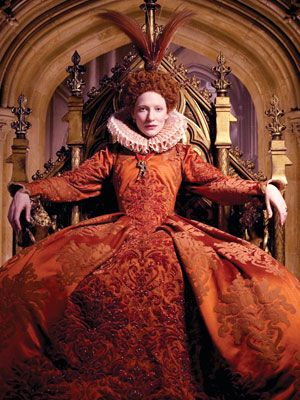
    As an interlude, we’ll enjoy some flavorful dances, heavily indebted to period models, from “Elizabeth” (1998). The composer, David Hirschfelder, is an Australian keyboardist, who has performed mostly with fusion jazz, rock, and pop ensembles. Cate Blanchett, who plays the title role, returned nine years later for a sequel, “Elizabeth: The Golden Age.”

    Finally, Bette Davis will bring it to a grand total of three actresses represented in the hour who portrayed Elizabeth twice. In 1955, Davis starred in “The Virgin Queen;” 16 years earlier, she appeared opposite Errol Flynn in “The Private Lives of Elizabeth and Essex” (1939). For the latter, Erich Wolfgang Korngold provided the characteristically opulent score.

    I hope you’ll join me in basking in the glory of Gloriana. Elizabeth I is our focus, on “Picture Perfect,” music for the movies, now in syndication on KWAX, the radio station of the University of Oregon!


    Clip and save the start times for all three of my recorded shows:

    PICTURE PERFECT, the movie music show – Friday at 8:00 PM EST/5:00 PM PST

    SWEETNESS AND LIGHT, the light music program – ALL NEW! – Saturday at 11:00 AM EST/8:00 AM PST

    THE LOST CHORD, unusual and neglected rep – Saturday at 7:00 PM EST/4:00 PM PST

    Stream them, wherever you are, at the link!

    https://kwax.uoregon.edu/

  • Leonard Rosenman A Centenary Celebration

    Leonard Rosenman A Centenary Celebration

    Today marks 100 years of film composer Leonard Rosenman.

    Rosenman, who studied with Arnold Schoenberg, Roger Sessions, and Luigi Dallapiccola, was known for writing some of the most challenging movie music in history, including the uncompromising score for “Fantastic Voyage” (1966). His music for “The Cobweb” (1955) is credited with being the first predominantly twelve-tone score composed for a motion picture.

    Yet James Dean fans retain a particular affection for him, thanks in large part to his romantic interludes in “East of Eden” and “Rebel without a Cause” (both 1955). It was Dean who essentially discovered him and introduced him to director Elia Kazan.

    Fantasy and science fiction junkies embrace him, not only for his music for “Fantastic Voyage,” but also that for “Beneath the Planet of the Apes” (1970), the Ralph Bakshi animated version of “The Lord of the Rings” (1978), and “Star Trek IV: The Voyage Home” (1986.)

    Rosenman was the recipient of two Academy Awards, which he won back-to-back, for his work adapting music of Handel, Schubert, and others for Stanley Kubrick’s “Barry Lyndon” (1975), and for his score interleaving Woody Guthrie songs, for “Bound for Glory” (1976). He died in 2008 at the age of 83.

    Rosenman may have had some thorns, but by any other name he could also smell as sweet. Happy centenary, Leonard Rosenman!


    “Rebel without a Cause”

    “East of Eden”

    “The Cobweb”

    “Fantastic Voyage”

    “Star Trek IV”

    Rosenman wins Oscar for “Barry Lyndon”

  • Jerry Goldsmith Underrated Film Score Genius

    Jerry Goldsmith Underrated Film Score Genius

    He was a smith who forged gold from the basest of materials – film music’s alchemist extraordinaire. Once John Williams kickstarted his blockbuster hog, Jerry Goldsmith may have been destined for the side car, but he possessed a refined genius all his own.

    Goldsmith was a consummate professional with a rare talent for speed. When Randy Newman was dropped from “Air Force One,” it was Goldsmith who stepped up, writing and recording the music in less than two weeks. He wrote the replacement score for “Chinatown” in ten days.

    Unfortunately, not all the films were “Chinatown.” For every “Planet of the Apes,” “Patton,” and “Papillon,” there was “The Mummy” (with Brendan Fraser), “The Haunting” (remake), and “Looney Tunes: Back in Action.”

    Williams got “Superman.” Goldsmith got “Supergirl.” Williams got “Raiders of the Lost Ark.” Goldsmith got “King Solomon’s Mines” (with Richard Chamberlain). Williams got “E.T. The Extra-Terrestrial.” Goldsmith got “Baby: The Secret of the Lost Legend.”

    But even when the movies were terrible, Goldsmith’s music served as a consolation prize. And nothing can take away the classics. He was one of the last of the greats, and he lived through a great era, so we certainly have enough to cherish. He just had the bad fortune to have had more stamina than the movies themselves, which got weaker and weaker and weaker.

    The composer himself expressed frustration at his music being drowned out by ever more-elaborate sound effects, which is why his scores tended to become more streamlined – and less memorable – in the ‘90s. He would have lost his mind in these days of laptop editing, when movies can be trimmed and shuffled within an inch of their lives, right up until the day of distribution.

    For television, he wrote music for “Dr. Kildare,” “The Twilight Zone,” “Gunsmoke,” “The Man from U.N.C.L.E.,” “The Waltons,” and “Barnaby Jones.” He was the recipient of five Emmy Awards.

    Incredibly, despite EIGHTEEN nominations, he was honored with but a single Oscar, for his influential score to “The Omen” (1976). Goldsmith died in 2004, at the age of 75. If he were to come back today, he would mop the joint with all the Hans Zimmers of this world.

    Happy birthday, Jerry Goldsmith. I sure does miss you.


    The Man from U.N.C.L.E.:

    The Blue Max

    Planet of the Apes:

    Patton:

    Chinatown:

    The Wind and the Lion:

    The Omen:

    The Great Train Robbery

    Star Trek: The Motion Picture:

    If you’ve got a hankering for Goldsmith’s “Capricorn One,” it kicks off last week’s episode of Picture Perfect on WWFM – The Classical Network. Follow the link for the webcast and click listen now.

    https://www.wwfm.org/show/picture-perfect-with-ross-amico/2023-02-03/picture-perfect-february-4-going-to-mars

  • Henry Mancini Film Music Birthday Tribute

    Henry Mancini Film Music Birthday Tribute

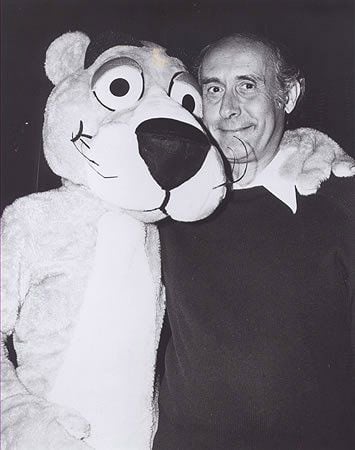
    Happy birthday, Henry Mancini! Like any great film composer, you always knew just how to set the tone.

    Musical hook for grappling hook

    Perambulating with pachyderms

    Sunday night by flashlight

    Early morning elegance

    Thanks, Hank. You helped make it a great age.

  • Elmer Bernstein A Centennial Celebration

    Elmer Bernstein A Centennial Celebration

    His was an enviable career that spanned some 50 years. He composed music for over 150 movies and nearly 80 television projects, many of them still much-beloved, including “The Ten Commandments” (1956), “The Magnificent Seven” (1960), “To Kill a Mockingbird” (1962), “The Great Escape” (1963), and the iconic theme for the National Geographic television specials.

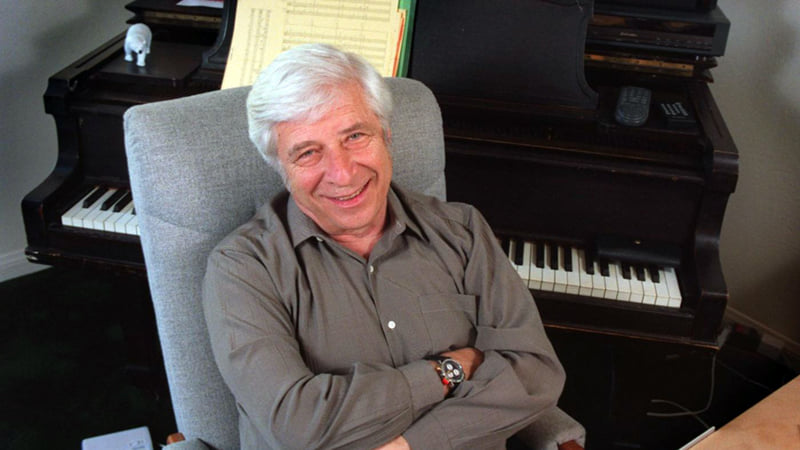
    Elmer Bernstein would have been 100 years-old today.

    Bernstein was composer-of-choice for John Wayne’s later films, including “The Comancheros” (1961), “The Sons of Katie Elder” (1965), “True Grit” (1969), and “The Shootist” (1976).

    In addition, he was one of the first film composers to incorporate jazz elements into his work for dramatic purposes, in movies like “The Man with the Golden Arm” (1955), “Sweet Smell of Success” (1957), and “Walk on the Wild Side” (1962).

    Coming out of the Swinging Sixties, a time when the industry clearly favored a more popular sound over purely orchestral music (that is, until John Williams changed everything), Bernstein kept right on working. Thanks to a generation of younger filmmakers who had grown up on his classics, he never lacked for choice. Suddenly, he found himself much in demand as a comedy composer, providing the underscores for “Animal House” (1978), “The Blues Brothers” (1980), “Airplane!” (1980), “Stripes” (1981), and “Ghostbusters” (1984).

    For Martin Scorsese, he composed music for “The Age of Innocence” (1993), “Bringing Out the Dead” (1999), and “The Gangs of New York” (2002) – although his score for the latter was ultimately rejected due to extensive tampering in post-production. He also adapted Bernard Herrmann’s music for Scorsese’s remake of “Cape Fear” (1991) and wrote the music for the Scorsese-produced “The Grifters” (1990).

    In all, Bernstein was nominated for 14 Academy Awards, but claimed the Oscar only once, fairly early on, for his work on “Thoroughly Modern Millie” (1967), of all things. His final nomination was for his very last score, for “Far from Heaven” (2002). Elmer Bernstein died on August 18, 2004 at the age of 82.

    No relation to Leonard Bernstein (or “Bern-STINE”), Elmer pronounced his name “Bern-STEEN.” The two were sometimes further differentiated as “East Coast Bernstein” and “West Coast Bernstein.”

    In the year 2000, Elmer Bernstein composed a guitar concerto and expressed regret that he hadn’t contributed more to the concert hall. At least it was good one. David Hurwitz of classicstoday.com described it as “incontestably the finest piece ever composed for this combination” (i.e. guitar and orchestra), going so far as to hold it up to Joaquin Rodrigo’s “Concierto de Aranjuez.” I don’t know if I’d take it that far, but it is pretty damn good.

    Movement 1 https://www.youtube.com/watch?v=_mrSyhK6174

    Movement 2 https://www.youtube.com/watch?v=f072Efxnw24

    Movement 3 https://www.youtube.com/watch?v=mBi-BHZPkq4

    Keep an eye out for my webcast for this past weekend’s “Picture Perfect,” devoted to Bernstein. I’m told the audio will be up this afternoon. Once it’s posted, you can click on “listen” at the link.

    https://www.wwfm.org/show/picture-perfect-with-ross-amico/2022-03-31/picture-perfect-apr-2-elmer-bernstein-at-100

    Some of Bernstein’s music for “The Ten Commandments” will also be featured on this weekend’s show, which will be devoted to scores composed for Biblical epics, this Saturday evening at 7:00 EDT, on WWFM – The Classical Network and wwfm.org.

    In the meantime, enjoy “Elmer Bernstein: This Is Your Life,” with appearances by John Williams, John Landis, Eli Wallach, and others, offering congratulations to the composer at the age of 80.

    Happy birthday, Elmer Bernstein. Thank you for your magnificent body of work!

Tag Cloud

Aaron Copland (92) Beethoven (95) Composer (114) Film Music (119) Film Score (143) Film Scores (255) Halloween (94) John Williams (185) KWAX (229) Leonard Bernstein (99) Marlboro Music Festival (125) Movie Music (134) Opera (198) Philadelphia Orchestra (86) Picture Perfect (174) Princeton Symphony Orchestra (106) Radio (87) Ralph Vaughan Williams (85) Ross Amico (244) Roy's Tie-Dye Sci-Fi Corner (290) The Classical Network (101) The Lost Chord (268) Vaughan Williams (102) WPRB (396) WWFM (881)

DON’T MISS A BEAT

Receive a weekly digest every Sunday at noon by signing up here


RECENT POSTS