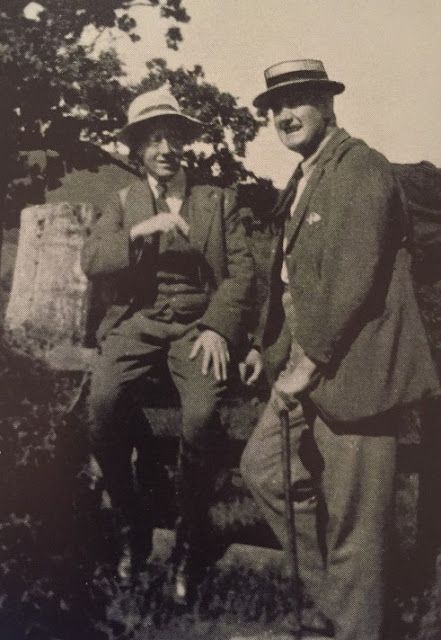
BFFs of British music: Gustav Holst and Ralph Vaughan Williams in September 1921
Tag: Music History
-

Verdi’s Aida Birthday and a Hater’s Refund
Today is the birthday of Giuseppe Verdi – Italian for “Joe Green.”
One of his most famous works, of course, is that grandest of grand operas, “Aida.” Its first staging in Cairo in 1871 included a dozen pachyderms and fifteen camels into the bargain. A dramatic spectacle of star-crossed love in Ancient Egypt, it created a sensation among the opening night audience of dignitaries, politicians, and critics.
Verdi himself did not attend the premiere and disliked the fact that the performance was not open to the general public. He was much happier when it was presented for the Italian people on his native soil.
Of course, anyone who’s ever dealt with the public understands that no success is unalloyed.
One day Verdi received a letter, by way of his publisher, from a dissatisfied customer by the name of Prospero Bertani. Bertani had traveled to Parma to attend a production of “Aida” in 1872.
Bertani confided to the composer, “I admired the scenery… I listened with pleasure to the excellent singers, and took pains to let nothing escape me. After it was over, I asked myself whether I was satisfied. The answer was ‘no’.”
In fact, he disliked “Aida” so much, he felt compelled to sit through it a second time, just to make sure he wasn’t missing something.
The letter continues, “The opera contains absolutely nothing thrilling or electrifying. If it were not for the magnificent scenery, the audience would not sit through it.”
Bertani went on to include the cost of admission, travel expenses, and the price of his meals, and demanded a full refund from the composer.
This amused Verdi. After a moment’s reflection, he instructed his publisher to reimburse Bertani, but not to pay for his meals. Verdi responded, “…To pay for his dinner too? No! He could very well have eaten at home!”
Happy birthday, Mean Joe Green.
No elephants in this “Aida,” but certainly plenty of spectacle
-

Antheil & Grainger Wacky Music Geniuses
When they were handing out the looney, they must have found themselves with an overabundance when it came to July 8.
Today marks the birthday anniversaries of two of music’s wackiest pianist-composers.
George Antheil, self-proclaimed “Bad Boy of Music,” was born in Trenton, NJ on this date in 1900. His “Ballet Mécanique,” scored for synchronized player pianos, airplane propellers, siren and electric bells, inspired one of the great classical music riots at its Paris premiere in 1926.
Antheil would practice the piano with such ferocity that he would have to pause, periodically, to thrust his hands into two fish bowls filled with ice water. Before the start of a recital, he would remove a pistol from a silk holster sewn into his jacket and place it atop the piano, to telegraph the message that he would brook no nonsense.
Later, he became a Hollywood film composer, a war correspondent, the author of a column of advice to the lovelorn, an expert in endocrinology, and co-inventor, with actress Hedy Lamarr, of a frequency-hopping system for the guidance of Allied torpedoes that would become the basis for modern spread-spectrum communications technology. Neither Antheil nor Lamarr would ever see a dime for their invention.
In 1944, he scored a notable success with his Symphony No. 4, after it was taken up by Leopold Stokowski and later Sir Eugene Goossens, who recorded it. Antheil was also the author of a bestselling autobiography, “Bad Boy of Music.” He died of a heart attack at the age of 59. A third recorded cycle of his symphonies is currently underway, on the Chandos label. Not bad for a boy from Trenton.
Wouldn’t you know, Percy Aldridge Grainger was also born on this date, outside Melbourne, Australia, in 1882. Another one of classical music’s great eccentrics, Grainger was obsessed with physical fitness. Rather than drive or take the train between towns and recitals, it was his preference to jog. He was also known to throw a ball over one side of a house, and then race around to the other side to catch it.
Enamored with Nordic culture, he went out of his way to use only Anglo-Saxon words, avoiding in his letters anything of Norman or Latin origin. This extended to his scores, in which he eschewed Italian musical terms in favor of their English equivalents. In 1928, he married Ella Ström, from Sweden, during a concert at the Hollywood Bowl. On the program was his new work, “To a Nordic Princess.”
Lest his cultural quirks be misconstrued in an increasingly black-and-white world, Grainger’s embrace of “blue-eyed English” was as idiosyncratic as everything else in his character. He bristled against the dominance of German music, he served in the U.S. Army against Germany in WWI, he embraced music from a wide diversity of cultures, all the way to Bali, he championed works by African-Canadian-American composer R. Nathaniel Dett, and he adored Duke Ellington and George Gershwin.
Grainger was unusually close to his mother and exhibited sadomasochistic tendencies. He donated whips and blood-stained clothes to the Grainger Museum, which he founded in 1932. His request to have his skeleton displayed – posthumously, of course – was denied.
Later, while living in White Plains, NY, he experimented with electronics and “machine music,” in a sense paralleling an obsession of Antheil, who besides “Ballet Mécanique,” wrote such works as “Airplane Sonata” and “Death of Machines.”
Sadly, only the tiniest portion of Grainger’s output is known by the general public, and he is celebrated as the composer of such folksy trifles as “Country Gardens,” “Molly on the Shore,” and “Shepherd’s Hey.” But Grainger’s treatment of harmony and rhythm could be highly original. He was a brilliant musician, and wholly unconventional in more ways than one.
Grainger died in White Plains in 1961 at the age of 78. His remains, including his skeleton, rest in Adelaide.
Happy birthday, you wacky, wacky boys.
Grainger, “Scotch Strathspey and Reel”
Grainger orchestration of Debussy’s “Pagodes”
His imaginary ballet, “The Warriors”
Grainger plays “Molly on the Shore”
R. Nathaniel Dett’s “Juba”
Antheil, “Ballet Mécanique” – presumably in its revision, because of the use of live pianists – with the annoying Fernand Léger film
Antheil, “Jazz Symphony”
Antheil, Symphony No. 4 “1942”
Antheil, “Specter of the Rose” (from the film score, 1946)
Antheil speaks!
PHOTOS: Antheil packing heat (top), and the multifaceted Grainger
-
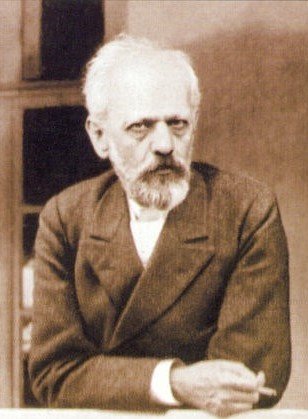
Brahms and Tchaikovsky A Musical Rivalry
On Brahms and Tchaikovsky’s shared birthday anniversary, here’s a gold mine of material relating to the complicated relationship between the two artists, who didn’t much care for one another’s music, but rather enjoyed one another’s company.
-
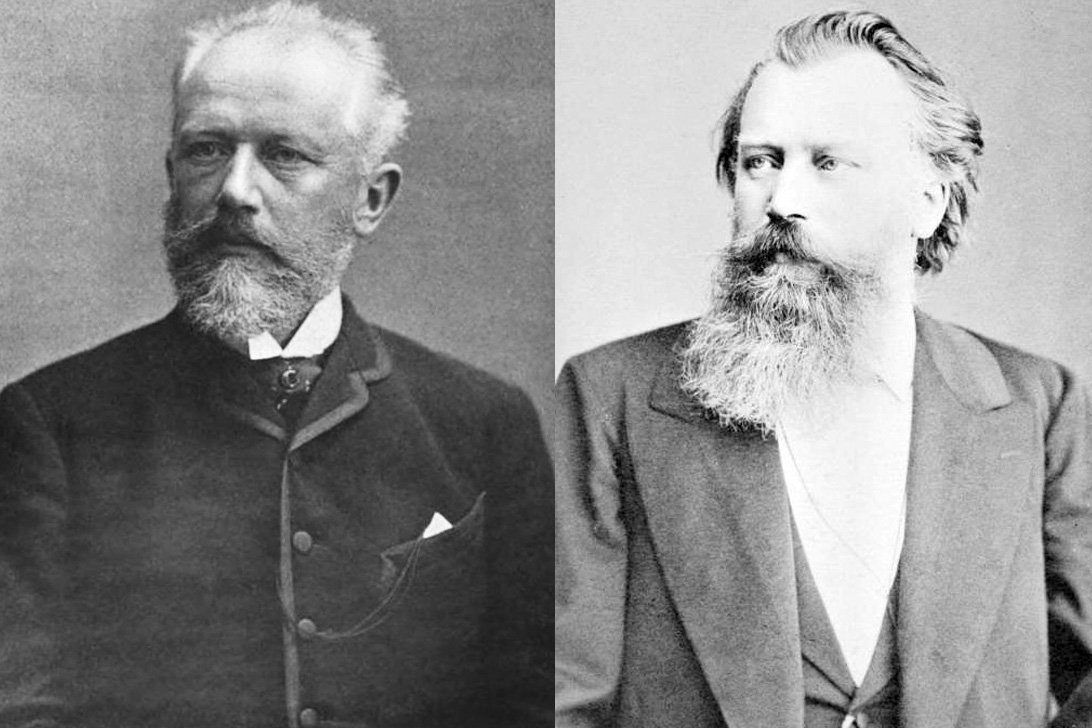
Brahms & Tchaikovsky A Hirsute Bromance
They were like the Felix and Oscar of Romantic music – the high-strung, fastidious Tchaikovsky (1840-1893), and the acerbic, unkempt Brahms (1833-1897). May 7th marks the anniversary of the births of these twin titans of hirsute Romanticism.
I always find it oddly endearing that Brahms and Tchaikovsky were able to look past their personal aversions to one another’s music to actually grow to appreciate their individual qualities as people. There’s a lesson to be learned from that, I think.
Initially, Tchaikovsky might have been right at home posting in a YouTube comments section, confiding to his diary, “I have played over the music of that scoundrel Brahms. What a giftless bastard!”
For his part, Brahms indelicately drifted off to sleep during a rehearsal of Tchaikovsky’s Fifth Symphony – unfortunately, in the presence of the composer.
According to the pianist Zygmunt Stojowski, “Tchaikovsky’s comment to me was that he would have been deeply hurt had he not, himself, frankly hated the Brahms symphonies.”
The two composers met unexpectedly in Leipzig in 1888. They must have been as surprised as anyone to find themselves actually delighting in one another’s company.
“I’ve been on the booze with Brahms,” Tchaikovsky wrote. “He is tremendously nice – not at all proud as I’d expected but remarkably straightforward and entirely without arrogance. He has a very cheerful disposition, and I must say that the hours I spent in his company have left me with nothing but pleasant memories.”
The following year, the two met again in Hamburg. That’s when Brahms slept through the Fifth Symphony. Tchaikovsky bore it lightly and was convivial throughout the meal they shared afterward. Although Brahms was harsh in his assessment of the last movement of the symphony and Tchaikovsky confessed an overall aversion to Brahms’ style, the evening was full of good cheer and ended with Tchaikovsky inviting Brahms to visit him in Russia.
How large a role alcohol may have played in the two men’s warmth for one another we can only guess. It was not just anyone who could be Brahms’ drinking buddy.
Regardless of their mutual affection, the two never could reconcile themselves to one another’s music. When asked what he thought of a piano trio Brahms had been rehearsing (the Trio in C minor), Tchaikovsky was polite but frank: “Don’t be angry with me, my dear friend, but I did not like it.”
Happy birthday, boys.
Brahms, Piano Trio No. 3 in C minor, Op. 101 (disliked by Tchaikovsky)
Tchaikovsky, Symphony No. 5 in E minor (disliked by Brahms)
Tag Cloud
Aaron Copland (93) Beethoven (95) Composer (114) Film Music (145) Film Score (143) Film Scores (255) Halloween (94) John Williams (195) KWAX (229) Leonard Bernstein (104) Marlboro Music Festival (125) Movie Music (160) Mozart (91) Opera (213) Philadelphia Orchestra (89) Picture Perfect (174) Princeton Symphony Orchestra (109) Radio (88) Ross Amico (244) Roy's Tie-Dye Sci-Fi Corner (290) The Classical Network (101) The Lost Chord (269) Vaughan Williams (105) WPRB (397) WWFM (881)