Tag: Music History

  • Mozart Genius Obscenity & His Enduring Music

    Mozart Genius Obscenity & His Enduring Music

    He was one of the few composers to excel in every category: symphony, concerto, chamber, choral, instrumental, opera and song. In less than 35 years, he created over 600 works, starting around the age of five. The masterpiece quotient is high. Even so, he seldom had two thalers to rub together. Such are the priorities of this world.

    Happy birthday, Johannes Chrysostomus Wolfgangus Theophilus Mozart. We know him better as Wolfgang Amadeus.

    Haydn wrote that “posterity will not see such a talent again in 100 years.”

    Of course, he had his earthy side too. Here’s some of that Mozart they don’t teach you at school.

    Lick my *** nicely,
    lick it nice and clean,
    nice and clean, lick my ***.
    That’s a greasy desire,
    nicely buttered,
    like the licking of roast meat, my daily activity.
    Three will lick more than two,
    come on, just try it,
    and lick, lick, lick.
    Everybody lick their *** for themselves.

    Want to plumb deeper? Sound off on your favorite Mozart pieces below.

  • Anton Reicha Beethoven’s Forgotten Friend

    Anton Reicha Beethoven’s Forgotten Friend

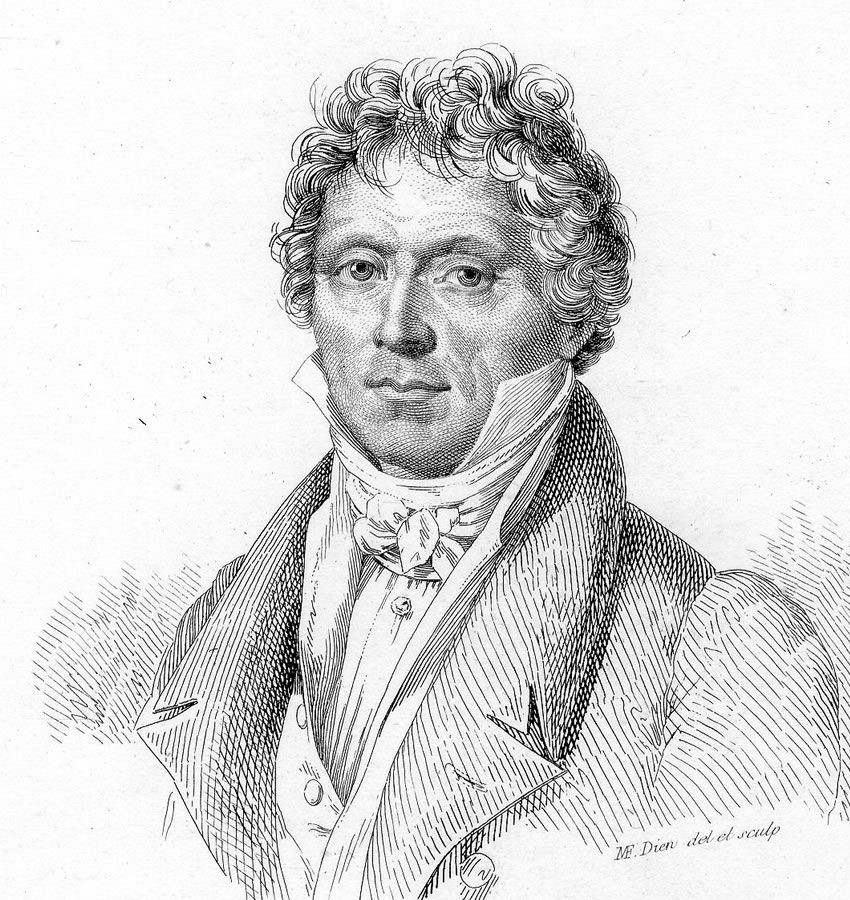
    He was a lifelong friend of Beethoven. They shared the same teachers and exchanged musical ideas. He taught Liszt, Berlioz, Franck, and Gounod. But, unless you happen to be a wind player, how many people really know the music of Anton Reicha? Perhaps a shade more than realize that today is his 250th birthday.

    Though he composed music in all genres – symphonies, concertos, operas, string quartets, choral music, vocal and instrumental works – Reicha is principally remembered, if at all, for his 25 wind quintets. Written in Paris between 1811 and 1820, the quintets came at a time when there was a dearth of good material for this particular configuration, so they were very successful. They also happen to comprise some of Reicha’s most traditional music.

    Earlier, during his years in Vienna – a time when he was closest to Beethoven – he espoused some pretty radical ideas, including polyrthyms, polytonality, and even microtones. These were innovations that would not make serious inroads in the world of classical music for over a hundred years.

    As the composer noted in his memoirs, “The number of works I finished in Vienna is astonishing. Once started, my verve and imagination were indefatigable. Ideas came to me so rapidly it was often difficult to set them down without losing some of them. I always had a great penchant for doing the unusual in composition. When writing in an original vein, my creative faculties and spirit seemed keener than when following the precepts of my predecessors.”

    Reicha was a prolific composer, whose music is full of novel ideas. His forward-looking string quartets influenced Beethoven – with whom, naturally, he shared many musical discussions – and Franz Schubert.

    Yet for some reason, he was often reluctant to publish. This led to the slapdash organization of his output, following his death, and lots of confusion, as pieces were lost, opus numbers were assigned willy-nilly, and some works were even counted more than once.

    So here we are, today, on Reicha’s 250th birthday, and the world is Beethoven-mad. I think his music deserves at least an occasional hearing. But you know how it is. Beethoven sells more tickets.

    It reminds me of the famous anecdote, related by Franz Liszt, in which he puckishly swapped trios by Beethoven and Johann Peter Pixis, presenting them opposite to the order in which they were advertised in the concert program. The audience reaction to the Pixis was stormy and enthusiastic, but when he came to perform the Beethoven, the response was tepid at best. It annoyed many in the hall when Liszt revealed the ruse.

    Reicha’s music is closer to Beethoven’s than is Pixis’. Get people in the chairs, and they will enjoy it.

    In the meantime, I’ll be sharing something by Reicha this afternoon, as I’ll also be observing the birthdays today of composers Richard Wetz and Frank Bridge, conductor Witold Rowicki, pianist Lazar Berman, and soprano Emma Kirkby.

    It will be music by Mozart and Schubert on tonight’s “Music from Marlboro,” at 6. That ought to sell some tickets. I hope you’ll join me from 4 to 7 p.m. EST, on WWFM – The Classical Network and wwfm.org.

  • Presidents Day Classical Music Special

    Presidents Day Classical Music Special

    Hail to the Chiefs!

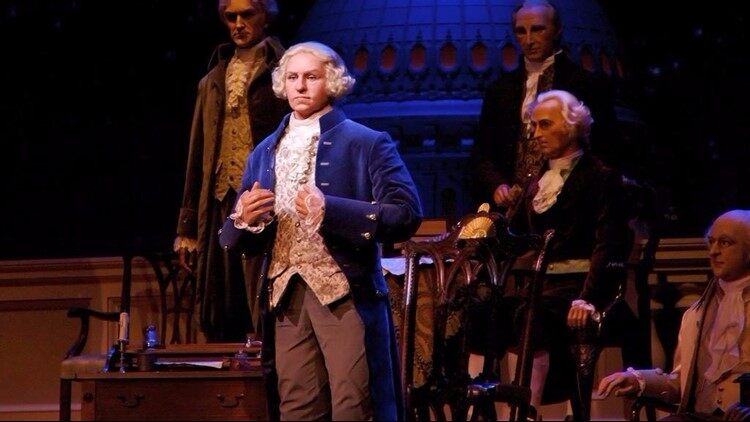
    You’d better sail through those white sales. You’ll want to be near an electronic device at 4:00 today for my annual State of the Union on The Classical Network. I’ll be revving up the musical automatons at the Hall of Presidents for Presidents Day.

    We’ll hear works inspired by Thomas Jefferson, Chester A. Arthur, Theodore Roosevelt, John F. Kennedy, Richard Nixon, and of course George Washington and Abraham Lincoln. Of course, I already played an hour’s worth of music in celebration of Lincoln for his birthday (February 12), but our 16th president inspired more note-spinning than can be crammed into a stovepipe hat.

    If you’re looking to buy a roll of quarters, you may be out of luck, the banks are closed. But Washington will be well represented, in Virgil Thomson’s naïf ballet “Parson Weems and the Cherry Tree” (a Bicentennial commission), George Antheil’s rousing concert overture, “McKonkey’s Ferry (Washington at Trenton),” and John Lampkin’s “George Washington Slept Here.”

    Composer Victoria Bond wrote four portraits of presidential character, for narrator and instrumental soloist. These were released on her album, “Soul of a Nation,” on the Albany Records label. The title track incorporates a violin for Thomas Jefferson, “The Indispensable Man” a clarinet for Franklin Delano Roosevelt, “The Crowded Hours” a trumpet for Theodore Roosevelt, and “Pater Patriae” a flute for George Washington. I’ll select one of these for airplay this afternoon.

    Peter Lieberson’s “Remembering JFK” was composed for the 50th anniversary of the Kennedy inauguration. Its moving narration, compiled from the president’s own words, will be delivered by Richard Dreyfuss. Where have all the statesmen gone?

    And, as an added curiosity, Chester A. Arthur disliked “Hail to the Chief” so intensely that he asked John Philip Sousa to write a replacement anthem. We’ll find time for that, too.

    There may be no mail today, but we’ll sure sift through plenty of junk. I hope you’ll join me in celebrating Presidents Day, from 4 to 7 p.m. EST, on WWFM – The Classical Network and wwfm.org.
  • Mozart’s Death Krampus Was to Blame?

    Mozart’s Death Krampus Was to Blame?

    How is it that I never before drew the connection?

    You know, every once in a while, how someone comes up with a new theory about the identity of Jack the Ripper, or claims to have discovered the secret of Elgar’s “Enigma Variations?” Well, it only just occurred to me, I may have solved the mystery of Wolfgang Amadeus Mozart’s death. And it is far more sinister than any alleged poisoning by Antonio Salieri.

    Mozart gave up the ghost on this date in 1791. A prodigy at the keyboard and on the violin, and a composer from the age of five, alas, in death he was also ahead of the curve.

    Mozart was 35 at the time of his passing, yet there was always something childlike in his personality. At times, he seemed much younger than his years. There’s no question that he could be naughty. He was certainly disobedient to his father, autocrat though he was. He defied the Pope, was extravagant in his spending, was inappropriate in his speech, and could be perhaps a mite too arrogant for his own good.

    The cause of Mozart’s death was recorded as “severe military fever.” Even so, over the years, there have been dozens of theories put forth as to the true nature of his passing. Acute rheumatic fever. Streptococcal infection. Influenza. Mercury poisoning. A rare kidney ailment. Even a bad pork chop. Combined, of course, with overwork.

    Alas, we’ll never know for sure. Mozart was buried in a common grave – not a communal grave, or a pauper’s grave, as has been frequently stated, but one whose wooden marker has long since worn away.

    Here’s the thing. December 5, the date of Mozart’s passing, also happens to be Krampusnacht. As a former native of Salzburg and later Vienna, Mozart should have known better. Because, you see, Austria is the dark, beating heart of the Christmas devil.

    What exactly is Krampus? Why, he’s St. Nicholas’ austere helper. Horned, hairy, and egregiously long-tongued, Krampus emerges from his Alpine domain to assist the patron saint of children on the eve of his feast day. Saint Nick bestows small gifts to all the good girls and boys. The rest are handed over to Krampus.

    For milder offenses, there is the sting of the switch; for the especially ill-behaved, there are chains, a short ride in a wicker basket, and drowning in a stream or immolation by hellfire. When a recalcitrant child hears the dull clatter of approaching cow-bells on December 5, he knows it’s all over. With anxiety a thousand times worse than the anticipation of a bad report card, the wee sinner pulls the sweat-soaked blankets over his head and prays vociferously for a stocking full of coal.

    No doubt, Mozart was a chronic offender. Could he have withstood a sound thrashing in his weakened state?

    Confutatis maledictus, indeed.

  • Oldest Melody Found Armenian Roots

    Oldest Melody Found Armenian Roots

    Early Music lovers take note. This is one of those items I’ve been sitting on, waiting for a slow news day. Well, that day is upon us – so here, without further ado, is the oldest known notated melody, attributed to ancient ancestors of the Armenians.

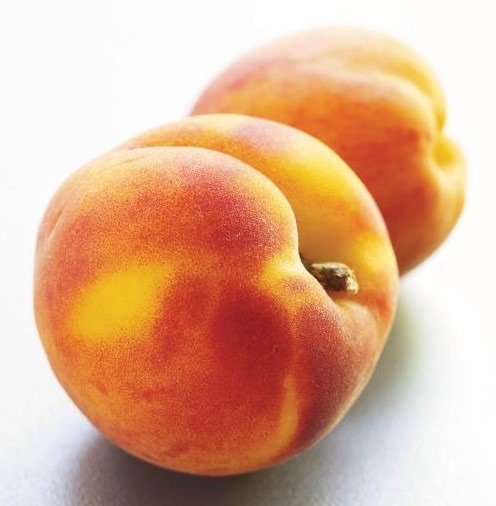
    This 3400 year-old toe-tapper was dedicated to the goddess of orchards. Now pardon me while I enjoy some peaches.

    World’s oldest surviving melody was composed by Armenian ancestors 3400 years ago

Tag Cloud

Aaron Copland (92) Beethoven (95) Composer (114) Film Music (120) Film Score (143) Film Scores (255) Halloween (94) John Williams (185) KWAX (229) Leonard Bernstein (100) Marlboro Music Festival (125) Movie Music (135) Opera (198) Philadelphia Orchestra (88) Picture Perfect (174) Princeton Symphony Orchestra (106) Radio (87) Ralph Vaughan Williams (85) Ross Amico (244) Roy's Tie-Dye Sci-Fi Corner (290) The Classical Network (101) The Lost Chord (268) Vaughan Williams (103) WPRB (396) WWFM (881)

DON’T MISS A BEAT

Receive a weekly digest every Sunday at noon by signing up here


RECENT POSTS