Tag: Neeme Järvi

  • Edvard Grieg: Nordic Masterpieces Rediscovered

    Edvard Grieg: Nordic Masterpieces Rediscovered

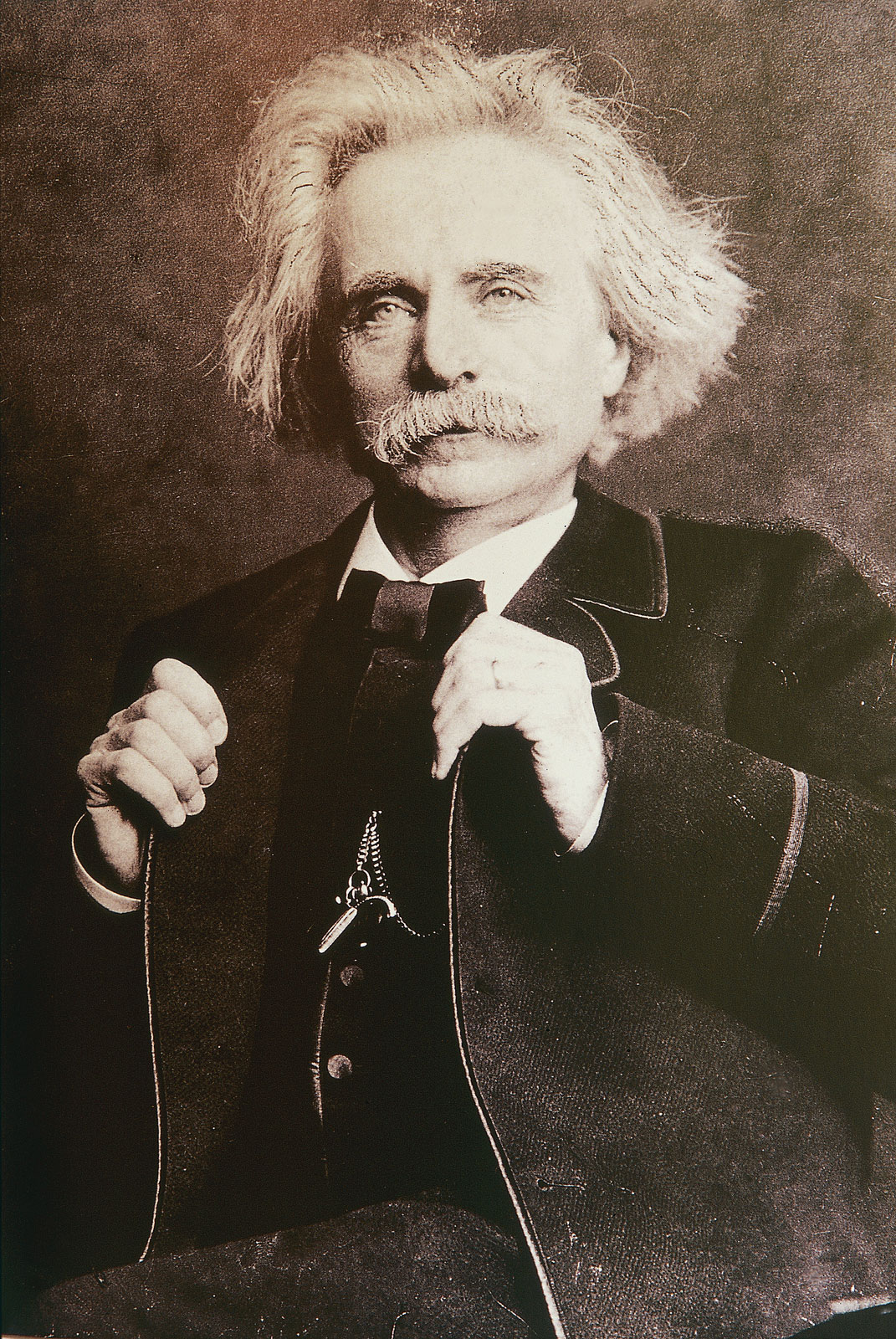
    If Edvard Grieg and Mark Twain got into a knife fight, who would win? Twain, probably. But once Grieg sat down at the piano, there would be no contest. Did this guy ever write a bad note?

    Celebrated as Norway’s greatest composer, Grieg embraced his native folk music, lovingly elevated it, and infused it with an intriguing delicacy, melancholy, and yes, lyricism. Like listening to a Nordic Schubert, you never know when a cloud will break across the fjords. Or perhaps, more to the point, a sunny jaunt across a field of wildflowers will be disrupted by an encounter with a troll.

    The most common criticism leveled against Grieg is that he was essentially a miniaturist. You may as well attack Chopin for being a sloppy orchestrator.

    From his letters, we know that Grieg himself was frustrated by his propensity for shorter works. “Nothing that I do satisfies me,” he wrote, “and though it seems to me that I have ideas, they neither soar nor take form when I proceed to the working out of something big.”

    Claude Debussy was only too happy to kick him when he was down. He famously derided Grieg’s output as so many “pink bonbons filled with snow.” Yet it has been convincingly demonstrated that Debussy owed more than a little to his Norwegian colleague in the writing of his String Quartet in G minor and in some of his own piano miniatures. What is it about Grieg that so galled the Gauls?

    Myself, I could listen to Grieg all day. In fact, I think I will.


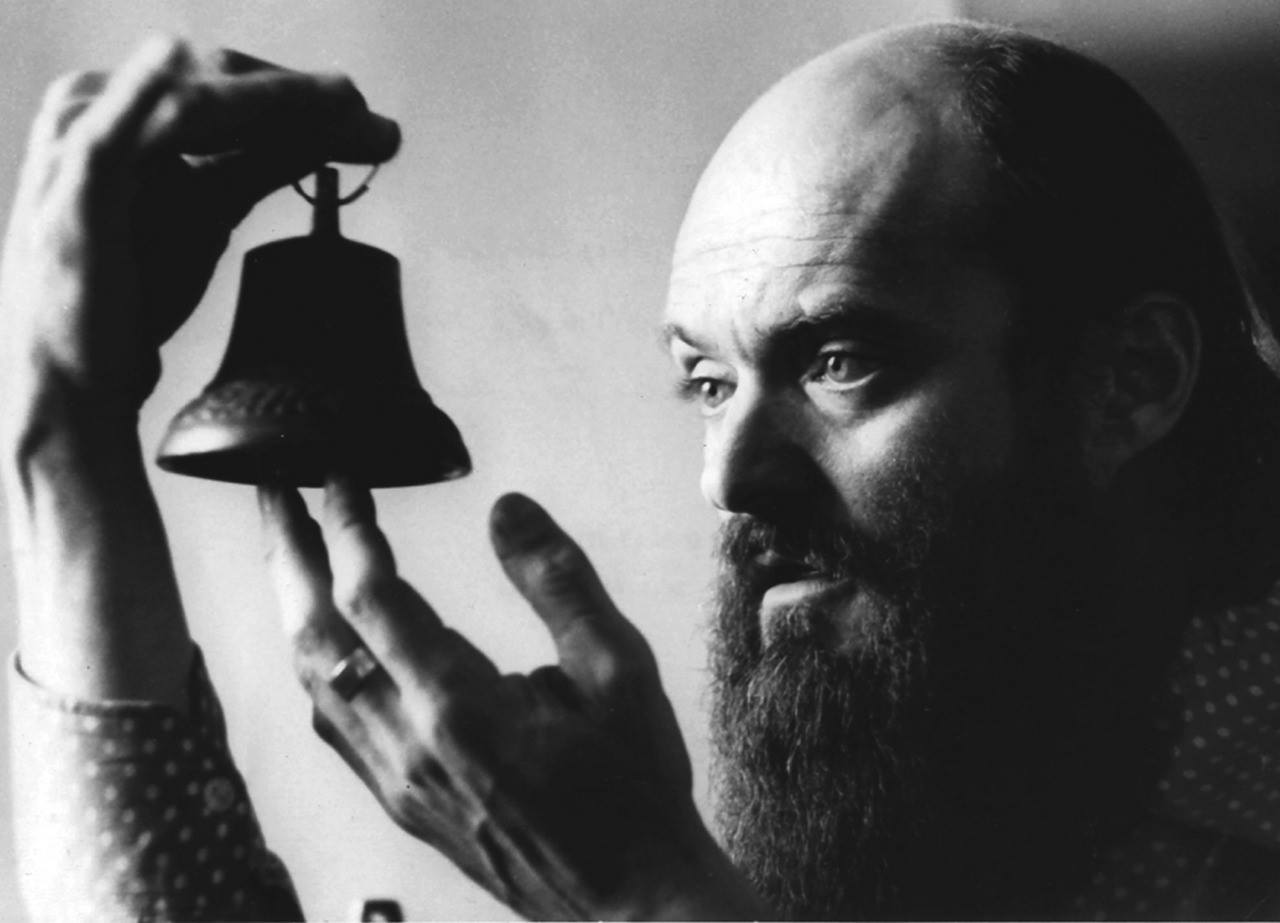
    Neeme Järvi conducts the four “Symphonic Dances.” I used the second of these as signature music for an overnight show, back when I was starting out in community radio.

    Emil Gilels plays a selection of the “Lyric Pieces.” Gilels hedged when asked to make the recording, fearing that no one would buy it. Of course, it went on to become one of the great piano classics.

    https://www.youtube.com/watch?v=yMqnGva32Vs

    The husband-and-wife team of Augustin Dumay and Maria João Pires whip up a fair amount of unsuspected passion in the Violin Sonatas. Here’s the full album.

    Arturo Benedetto Michelangeli shatters the stereotype of Grieg as “regional” composer with this volcanic performance of the Piano Concerto in A minor:


    PHOTO: Grieg is great! Happy birthday, master!
  • Estonian Composers Eller Kapp Sumera

    Estonian Composers Eller Kapp Sumera

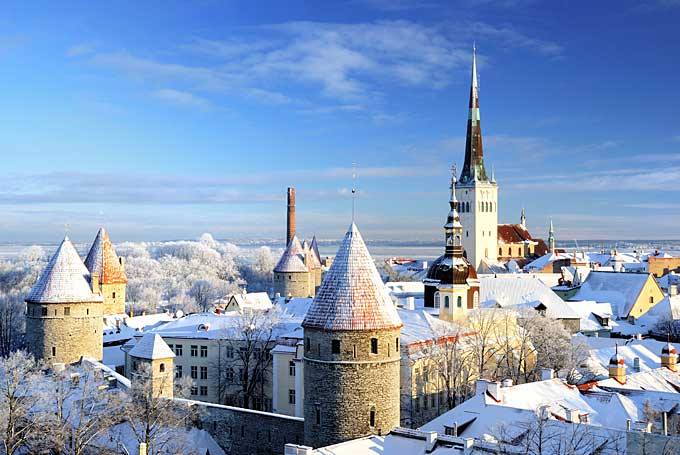
    This Sunday night on “The Lost Chord,” we’ll immerse ourselves in tones from Estonia.

    We’ll have music by the so-called father of Estonian music, Heino Eller. Eller, born in Tartu in 1887, studied violin at the St. Petersburg Conservatory. He also studied law. For 20 years, he was professor of music theory and composition at the Tartu Higher School for Music. In 1940, he became a professor of composition at the Tallinn Conservatory, where he taught until his death, in 1970.

    Eller composed many beautiful tone pictures. We’ll be listening to his violin concerto, in a performance taken from a concert given in celebration of the composer’s 80th birthday.

    Among Eller’s pupils were Eduard Tubin, Arvo Pärt, and Lepo Sumera. Sumera was born in Tallinn in 1950. In his teens, he studied with Veljo Tormis; then, beginning in 1968, with Eller, at what was then the Tallinn State Conservatory. He went on to compose six symphonies, as well as many chamber and choral works.

    In the 1980s, he became interested in electro-acoustic music. He founded the Electronic Music Studio at the Estonian Academy of Music in 1995. He served as its director until 1999. Sumera died of heart failure in the year 2000, at the age of 50.

    We’ll hear his Symphony No. 4, subtitled “Serena borealis,” composed in 1992. Western ears may detect the influence of minimalist techniques, but it’s worthwhile to note that the folk tradition of Estonian runo songs, handed down orally, relies equally on repetition. And the Estonian nationalists were nothing if not in tune with their musical past.

    Finally, we’ll hear from Artur Kapp, who lived from 1878 to 1952. Like Eller, Kapp studied at the St. Petersburg Conservatory, where Rimsky-Korsakov was among his teachers. He himself became a professor at the Tallinn Conservatory, where he taught many notable Estonian composers, his sons, Eugen and Villem, among them. Kapp is considered the head of the Tallinn school of composition, a counterbalance to Eller, who is considered the head of the Tartu school.

    We’ll be listening to the finale from one of Kapp’s most enduring works, the oratorio “Job,” in a recording sent to me by the very generous Neeme Järvi (also born in Tallinn), in response to an enthusiastic letter I had sent him while he was still music director of the New Jersey Symphony Orchestra.

    I’ll share the wealth, on this hour of musical discoveries from Estonia – “Tallinn’s Got Talent” – this Sunday night at 10:00 EST, on WWFM – The Classical Network and at wwfm.org.

  • Arvo Pärt at 80 A Tintinnabular Journey

    Arvo Pärt at 80 A Tintinnabular Journey

    This Sunday night on “The Lost Chord,” we ring in the 80th birthday of Arvo Pärt.

    Pärt was born on September 11, 1935.

    His early works were touched by neo-classicism, but by the 1960s he began to experiment with serial techniques. This put him into conflict with the Soviet authorities who were displeased with an Estonian writing in a cacophonous, cosmopolitan style. His works were banned, which had the effect of driving him into creative silence.

    Finding it impossible to compose, he immersed himself in the study of early church music. He emerged from this period with a new respect for plainsong, Gregorian chant, and polyphony, eschewing complexity, and in its place embracing serenity and beauty. It was a decision that certainly resonated with listeners, and Pärt went on to become one of the most performed of contemporary composers.

    According to conductor Neeme Järvi, “The music of Arvo Pärt contains a message which appeals to the deepest spiritual needs of our time.”

    Järvi is the dedicatee of Pärt’s Symphony No. 3, written in 1971. Though a transitional work, it shows that the composer was already very much on his way to a new simplicity in music.

    In his rejection of radical ideas, Pärt became, in a sense, more radical than the radicals. His soul-searching, study, and artistic silence led to the creation of a steady stream of works for which he is probably best known: “Fratres” in 1976; “Cantus in Memoriam Benjamin Britten,” “Tabula Rasa” and “Summa” in 1977, and “Spiegel Im Spiegel” in 1978.

    What makes Pärt’s works so fascinating is the tension between that apparent simplicity, the often intricate nature of his works’ underlying organization, and rests that speak as eloquently as any of the actual notes. These have the remarkable effect of manipulating one’s perception of time and drawing the listener inward.

    At the core of Pärt’s mature style is a technique he calls “tintinnabuli” (from the Latin “tintinnabulum,” meaning “bell”), where voices – instrumental or otherwise – arpeggiate the tonic triad, in a bell-like manner, while other voices weave diatonic melody through the midst of it.

    Pärt described it thus: “Tintinnabulation is an area I sometimes wander into when I am searching for answers – in my life, my music, my work. In my dark hours, I have the certain feeling that everything outside this one thing has no meaning. The complex and many-faceted only confuses me, and I must search for unity. What is it, this one thing, and how do I find my way to it? Traces of this perfect thing appear in many guises – and everything that is unimportant falls away. Tintinnabulation is like this. . . . The three notes of a triad are like bells.”

    The work that definitively signaled the arrival of Pärt’s mature style – the acorn from which sprang “tintinnabuli” – was a modest piano piece, titled “Für Alina,” from 1976. The piece is dedicated to the 18 year-old daughter of a friend, who had gone to study in London. A brief but introspective work, silence plays an important role, and, yes, the individual notes are reminiscent of bells.

    Of course, the larger part of Pärt’s output involves actual human voices, the texts usually on sacred themes. A good example is “Litany,” from 1994. Set to prayers by St. John Chrysostom, one for each hour of the day or night, the saint’s asceticism seemingly imbues the work.

    I hope you’ll join me for “Wholly Pärt” – Arvo Pärt’s tintinnabular journey – tonight at 10 ET, with a repeat Wednesday evening at 6; or that you’ll listen to it later as a webcast at wwfm.org.

Tag Cloud

Aaron Copland (92) Beethoven (95) Composer (114) Film Music (119) Film Score (143) Film Scores (255) Halloween (94) John Williams (185) KWAX (229) Leonard Bernstein (99) Marlboro Music Festival (125) Movie Music (134) Opera (198) Philadelphia Orchestra (86) Picture Perfect (174) Princeton Symphony Orchestra (106) Radio (87) Ralph Vaughan Williams (85) Ross Amico (244) Roy's Tie-Dye Sci-Fi Corner (290) The Classical Network (101) The Lost Chord (268) Vaughan Williams (102) WPRB (396) WWFM (881)

DON’T MISS A BEAT

Receive a weekly digest every Sunday at noon by signing up here


RECENT POSTS