I’m not afraid to say it: I am a great admirer of the music of Alexander Glazunov! A phenomenal talent, a child prodigy, a noted teacher, and one-time director of the Petrograd (a.k.a. St. Petersburg) Conservatory, he’s frequently underrated as a composer, though he wrote a lot of attractive music.
His Violin Concerto is still heard from time to time. We should hear the symphonies more often. (A few years ago, I was surprised to discover I actually own four cycles!) He’s written some lovely suites and tone poems. Occasionally we’ll hear “The Seasons,” especially in autumn.
This week on “Sweetness and Light,” I’ll devote the hour to another of his delectable ballets, “Raymonda.”
Enjoy this luscious music of Alexander Glazunov in a very fine recording by the Scottish National Orchestra conducted by Neeme Järvi.
Brew the coffee strong, because it’s going to be a sugary breakfast on “Sweetness and Light,” this Saturday morning at 11:00 EDT/8:00 PDT, exclusively on KWAX, the radio station of the University of Oregon!
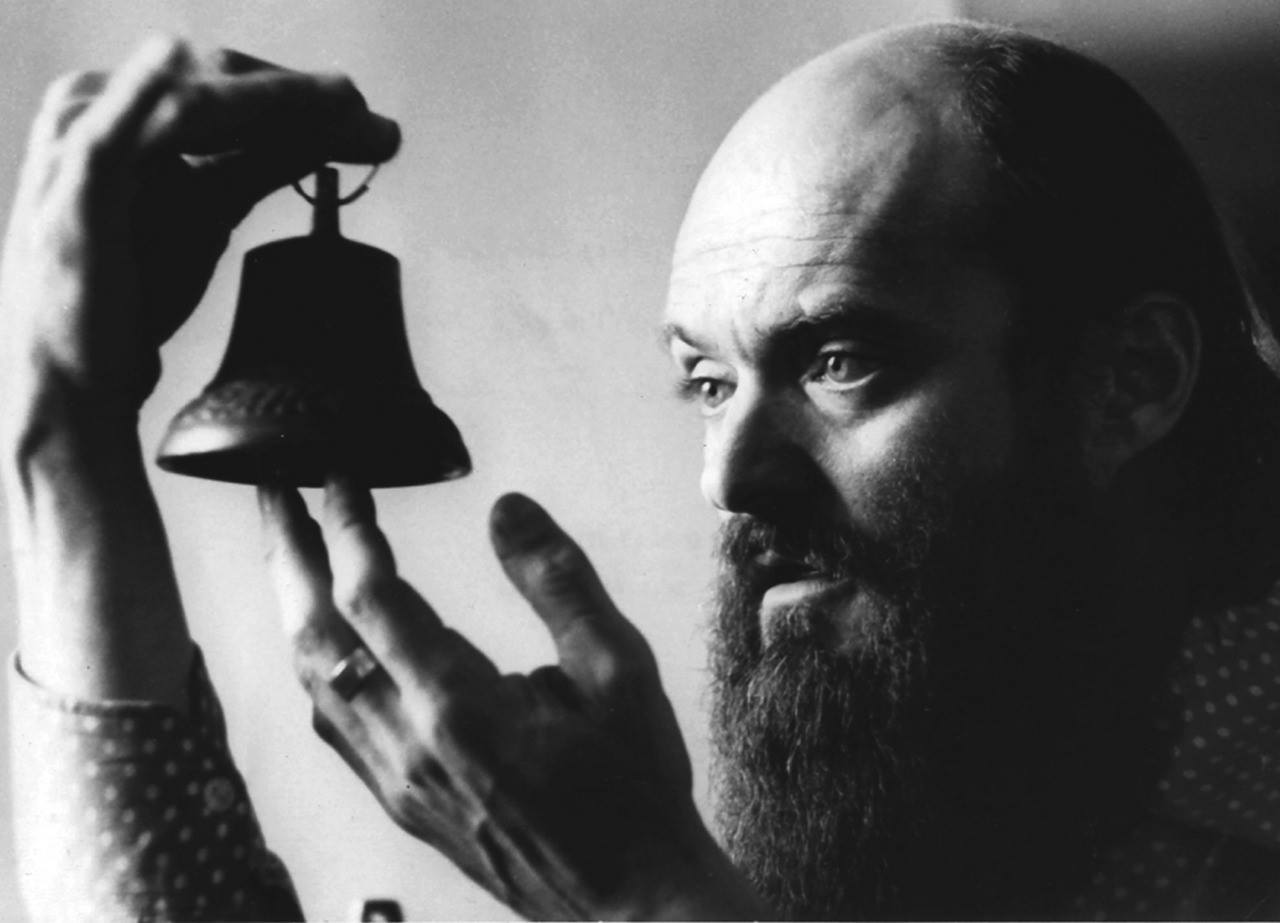
This week on “The Lost Chord,” we ring in the 90th birthday of Arvo Pärt. Pärt was born on September 11, 1935.
His early works were touched by neo-classicism, but by the 1960s he began to experiment with serial techniques. This put him into conflict with the Soviet authorities who were displeased with an Estonian writing in a cacophonous, cosmopolitan style. His works were banned, which had the effect of driving him into creative silence.
Finding it impossible to compose, he immersed himself in the study of early church music. He emerged from this period with a new respect for plainsong, Gregorian chant, and polyphony, eschewing complexity, and in its place embracing serenity and beauty. It was a decision that certainly resonated with listeners, and Pärt has gone on to become one of the most performed of contemporary composers.
According to conductor Neeme Järvi, “The music of Arvo Pärt contains a message which appeals to the deepest spiritual needs of our time.”
Järvi is the dedicatee of Pärt’s Symphony No. 3 (1971). Although a transitional work, it shows that the composer was already very much on his way to a new simplicity in music.
In his rejection of radical ideas, Pärt became, in a sense, more radical than the radicals. His soul-searching, study, and artistic silence bore fruit in the creation of a series of works for which he is probably best known: “Fratres” (1976), “Cantus in Memoriam Benjamin Britten,” “Tabula Rasa,” and “Summa” (1977), and “Spiegel Im Spiegel” (1978).
What makes Pärt’s works so fascinating is the tension between that apparent simplicity, the often intricate nature of his works’ underlying organization, and rests that speak as eloquently as any of the actual notes. These have the remarkable effect of manipulating one’s perception of time and drawing the listener inward.
At the core of Pärt’s mature style is a technique he calls “tintinnabuli” (from the Latin “tintinnabulum,” meaning “bell”), where voices – instrumental or otherwise – arpeggiate the tonic triad, in a bell-like manner, while other voices weave diatonic melody through the midst of it.
Pärt described it thus: “Tintinnabulation is an area I sometimes wander into when I am searching for answers – in my life, my music, my work. In my dark hours, I have the certain feeling that everything outside this one thing has no meaning. The complex and many-faceted only confuses me, and I must search for unity. What is it, this one thing, and how do I find my way to it? Traces of this perfect thing appear in many guises – and everything that is unimportant falls away. Tintinnabulation is like this. . . . The three notes of a triad are like bells.”
The work that definitively signaled the arrival of Pärt’s mature style – the acorn from which sprang “tintinnabuli” – was a modest piano piece, titled “Für Alina” (1976). The piece is dedicated to the 18-year-old daughter of a friend, who had gone to study in London. A brief but introspective work, silence plays an important role, and, yes, the individual notes are reminiscent of bells.
Of course, the larger part of Pärt’s output involves actual human voices, the texts usually on sacred themes. A good example is “Litany” (1994). Set to prayers by St. John Chrysostom, one for each hour of the day or night, the saint’s asceticism seemingly imbues the work.
I hope you’ll join me for “Wholly Pärt” – Arvo Pärt’s tintinnabular journey – on “The Lost Chord,” now in syndication on KWAX, the radio station of the University of Oregon!
Clip and save the start times for all three of my recorded shows:
PICTURE PERFECT, the movie music show – Friday at 8:00 PM EDT/5:00 PM PDT
SWEETNESS AND LIGHT, the light music program – Saturday at 11:00 AM EDT/8:00 AM PDT
THE LOST CHORD, unusual and neglected rep – Saturday at 7:00 PM EDT/4:00 PM PDT
If Edvard Grieg and Mark Twain got into a knife fight, who would win? Twain, probably. But once Grieg sat down at the piano, there would be no contest. Did this guy ever write a bad note?
Celebrated as Norway’s greatest composer, Grieg embraced his native folk music, lovingly elevated it, and infused it with an intriguing delicacy, melancholy, and yes, lyricism. Like listening to a Nordic Schubert, you never know when a cloud will break across the fjords. Or perhaps, more to the point, a sunny jaunt across a field of wildflowers will be disrupted by an encounter with a troll.
The most common criticism leveled against Grieg is that he was essentially a miniaturist. You might as well attack Chopin for being a sloppy orchestrator.
From his letters, we know that Grieg himself was frustrated by his propensity for shorter works. “Nothing that I do satisfies me,” he wrote, “and though it seems to me that I have ideas, they neither soar nor take form when I proceed to the working out of something big.”
Claude Debussy was only too happy to kick him while he was down. He famously derided Grieg’s output as so many “pink bonbons filled with snow.” Yet it has been convincingly demonstrated that Debussy owed more than a little to his Norwegian colleague in the writing of his String Quartet in G minor and in some of his own piano miniatures. What is it about Grieg that so galled the Gauls?
Myself, I could listen to Grieg all day. In fact, I think I will.
Neeme Järvi conducts the four “Symphonic Dances.” I used the second of these as signature music for an overnight show, back when I was starting out in community radio.
Emil Gilels plays a selection of the “Lyric Pieces.” Gilels hedged when asked to make the recording, fearing that no one would buy it. Of course, it went on to become one of the great piano classics.
The husband-and-wife team of Augustin Dumay and Maria João Pires whip up a fair amount of unsuspected passion in the Violin Sonatas. Here’s the full album.
“The First Meeting,” sung by Barbara Bonney
Six Songs, Op. 48
“Solveig’s Song” from “Peer Gynt”
Arturo Benedetto Michelangeli shatters the stereotype of Grieg as “provincial” composer with this volcanic performance of the Piano Concerto in A minor:
How great a debt do we record collectors owe to Neeme Järvi?
Järvi must be one of the most prolific recorded conductors of all time. He certainly stands out in his choice of repertoire, thanks in no small part to enterprising and supportive independent labels like Chandos and BIS (the latter for which he recorded the complete works of Jean Sibelius, more or less).
Of course, Järvi also recorded for Deutsche Grammophon, but by then he was able to use his influence to gently nudge this most mainstream of classical music record labels closer to the fringes of the repertoire.
From Järvi, you could always expect first-rate performances of music relegated to the lower drawers. It was from him that I learned all the Prokofiev symphonies, when all anyone else wanted to record was 1 & 5. It was his performances that convinced me that Glazunov was actually a fairly decent composer. He’s the only conductor to persuade me that Joachim Raff’s Fifth Symphony can be a compelling work. He also managed a thrilling and idiomatic recording of Duke Ellington’s “Harlem.”
Frankly, there are too many composers who have benefited from Järvi’s advocacy to list them all here. Among those who are now much better-know internationally, thanks to him, are Arvo Pärt, Wilhelm Stenhammar, Niels Wilhelm Gade, and Eduard Tubin.
Järvi excels in music of the Romantic era and the 20th century, and appears to be able to assimilate scores fairly quickly. And the more opulent, the better. His set of orchestral music from the operas of Rimsky-Korsakov is another highlight. His Strauss tone poems mesmerize. His recording of Prokofiev’s “Alexander Nevsky” is a knockout.
How about his Beethoven? Who cares? Järvi is one of the rare talents in his field who managed to buck the tradition of having to prove his metal against the core Austro-Germanic repertoire. Frankly, I’m much more interested to hear his Halvorsen.
A native of Tallin, Estonia (he emigrated to the United States in 1980 and has been an American citizen since 1985), Järvi trained under the Soviet system. His teachers included Yevgeny Mravinsky and Nikolai Rabinovich.
He went on to helm such orchestras as the Estonian National Symphony Orchestra (1963-79), the Gothenburg Symphony Orchestra (1982-2004), the Royal Scottish National Orchestra (1984-88), the Detroit Symphony Orchestra (1990-2005), the New Jersey Symphony (2005-2009), the Resident Orchestra of the Hague (2005-12), and the Orchestre de la Suisse Romande (2012-15).
As a performer, he’s a real throwback. Aside from his superb recordings, he also frequently excels in concert. On a good night, when he catches fire, his performances are marked by a romantic spontaneity and passion. The results can be thrilling. No other conductor, at least since the days when Dennis Russell Davies was a presence, would have been able to sway the Philadelphia Orchestra to perform Hans Rott’s Symphony in E – on the second half of the program, no less.
Of course, the orchestra loved him for having stepped up to conduct Tchaikovsky on a joint concert with the New York Philharmonic during an orchestra strike in 1996. The program was prepared in one rehearsal. Jarvi donated his services for the concert and received no fee – an unpopular move with management, but one that made him a hero to musicians.
All his children have entered the family business. His sons, Paavo and Kristjan, are also conductors, and his daughter, Maarika, is a flutist. According to the most recent information, he resides with his wife in New York City.
While personally I never met him, he did respond to my request to sign some CDs of Estonian music to be used as “thank you” gifts during a radio membership drive for “The Lost Chord,” and into the bargain he also sent me a recording of Artur Kapp’s oratorio “Job,” with a very nice letter.
Is it possible everything he’s recorded can be considered “great music?” Of course not. But is it interesting and historically significant? You bet! It would be a very boring world indeed, and a less enlightening one, if all we ever heard was Mozart’s “Jupiter” Symphony.
Järvi is 85 today. Happy birthday, Maestro, and many, many more!
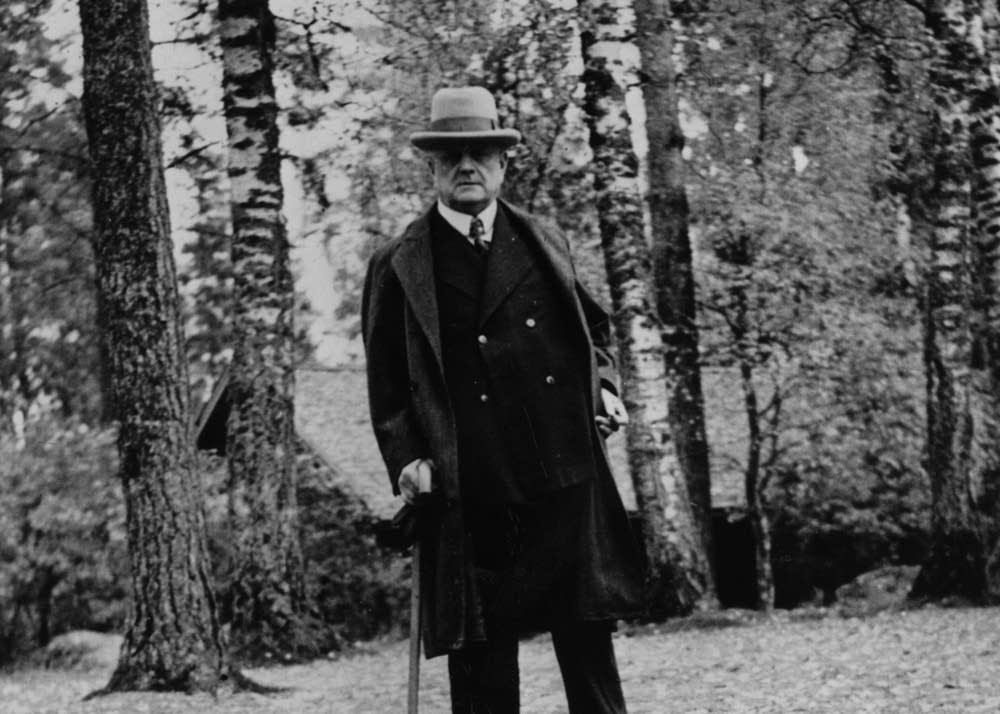
Sibelius hadn’t been in front of an orchestra for over a decade, when the music critic Olin Downes – Sibelius’ great champion at the New York Times – sent out a request for the composer to conduct one of his own works, as a kind of “greeting to the world,” in honor of the New York World Exhibition in 1939. Remarkably, Sibelius obliged, essentially coming out of retirement at the age of 73 to lead the performance on New Year’s Day.
The work, “Andante Festivo,” originally conceived for string quartet, was commissioned to mark the 25th anniversary of a sawmill, of all things, in 1922. Sibelius transcended the, um, run-of-the-mill occasion by crafting a genuinely inspired, soulful composition that is none the worse for its touching simplicity. For the World’s Fair radio transmission, allowing for the technological limitations of the day, he rescored the piece for string orchestra and timpani. In retrospect, the full-throated, free-flowing hymn could be seen almost as a religious statement, with the world teetering on the brink of war.
This is the only recording that exists of Sibelius conducting. The tempo he chooses is slower and more solemn than usual, but hardly surprising, considering the circumstances. For years, another recording, set down on the same day, at an even slower tempo, was thought to be the one conducted by the composer, but the confusion has since been sorted out.
The work would later be played at Sibelius’ funeral. It’s so like Sibelius to find wistfulness in “festivity.”
Here’s a modern recording, at a more customary tempo, with Neeme Järvi conducting the Gothenburg Symphony Orchestra: