Tag: Negro Folk Symphony

  • Princeton Symphony Celebrates Dawson Symphony

    Princeton Symphony Celebrates Dawson Symphony

    Well, Labor Day is behind us now, so I shouldn’t be surprised that the 2023-24 concert season is practically underway. The Princeton Symphony Orchestra is all set to go with its first pair of concerts, this weekend. And judging from the program, it’s going to be a good one.

    In the wake of George Floyd, a lot of pieces by composers of color have been introduced or revived in our concert halls. William Levi Dawson’s “Negro Folk Symphony” is one of the best of these. I’ve played it on the radio many times – I own three recordings of it so far (Neeme Järvi’s being my preference) – but if you had asked me as recently as four years ago, I would have thought I would never have the opportunity to hear it live. Now, with the upcoming Princeton concerts, it will have been three times!

    You won’t hear any complaints from me. Dawson’s symphony is the real deal.

    The work was given its premiere by Leopold Stokowski and the Philadelphia Orchestra in 1934. Dawson revised it after a visit to West Africa in 1952. It is in this form that Stokowski recorded it.

    However, likely due to lack of demand for his orchestral music, Dawson carved out a career largely as a choral music composer. In particular, he became a prominent arranger of spirituals.

    A shame that he didn’t meet with more success in the concert hall. The symphony was well-received, but then nobody picked it up. With a little encouragement, perhaps there would have been a Symphony No. 2.

    Also on the Princeton program will be the Saxophone Concerto of 1949 by French composer Henri Tomasi, with soloist Steven Banks, and “Forward into Light” of 2020 by Princeton composer Sarah Kirkland Snider. Snider’s piece, inspired by the American women’s suffrage movement, incorporates a quotation from “March of the Women,” written in 1910, by English composer and agitator Dame Ethel Smyth.

    The concert will be presented twice at Richard Auditorium in Alexander Hall on the campus of Princeton University, this Saturday at 8 p.m. and Sunday at 4 p.m. The PSO’s music director, Rossen Milanov, will conduct. For tickets and more information about the impending season, visit princetonsymphony.org.
  • Rediscovering Dett’s “Ordering of Moses”

    Rediscovering Dett’s “Ordering of Moses”

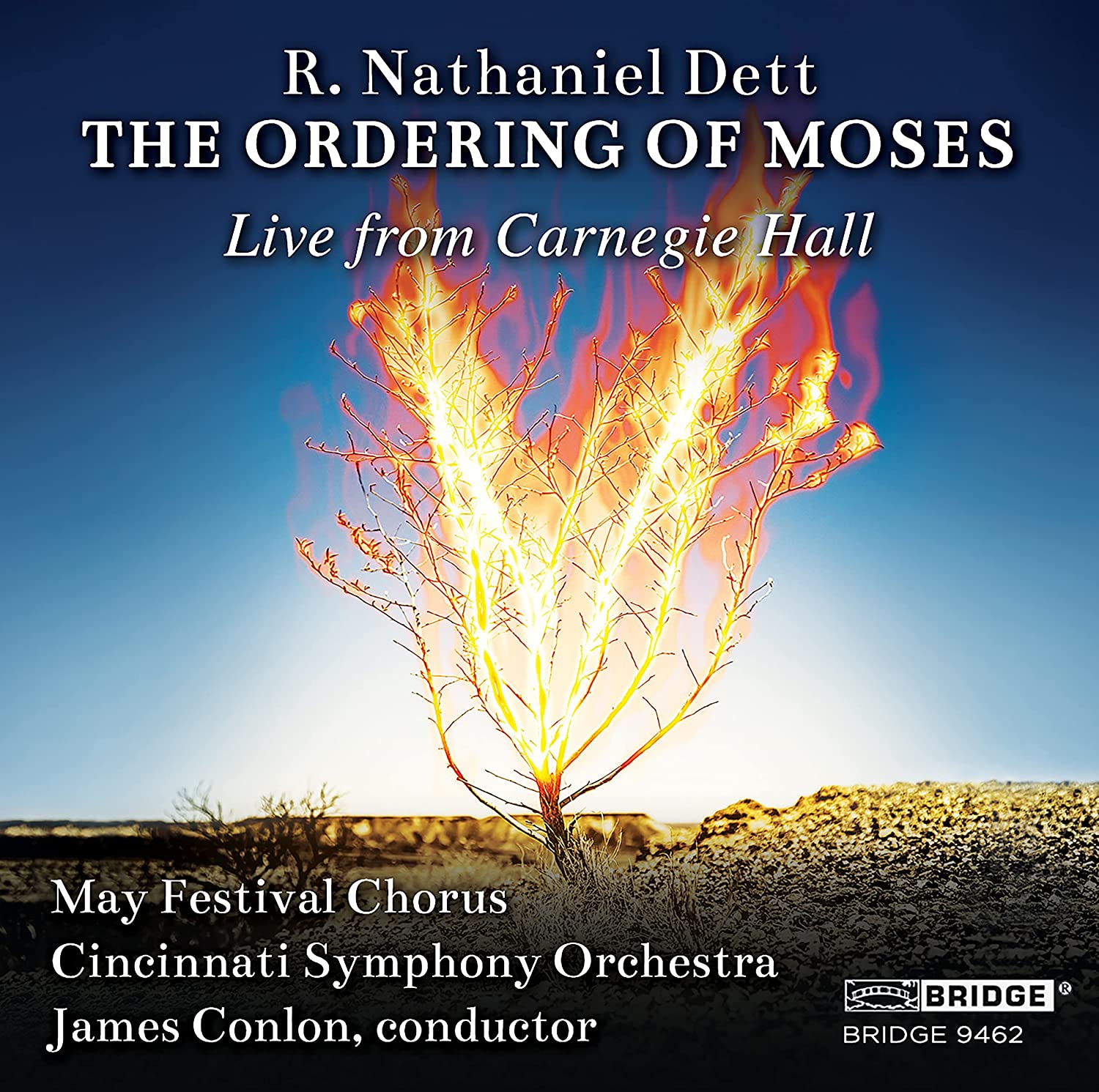
    There have been innumerable musical treatments of Moses and the Exodus story, reaching back to at least the Renaissance. On this first day of Passover, it’s time to give “The Ordering of Moses” its due.

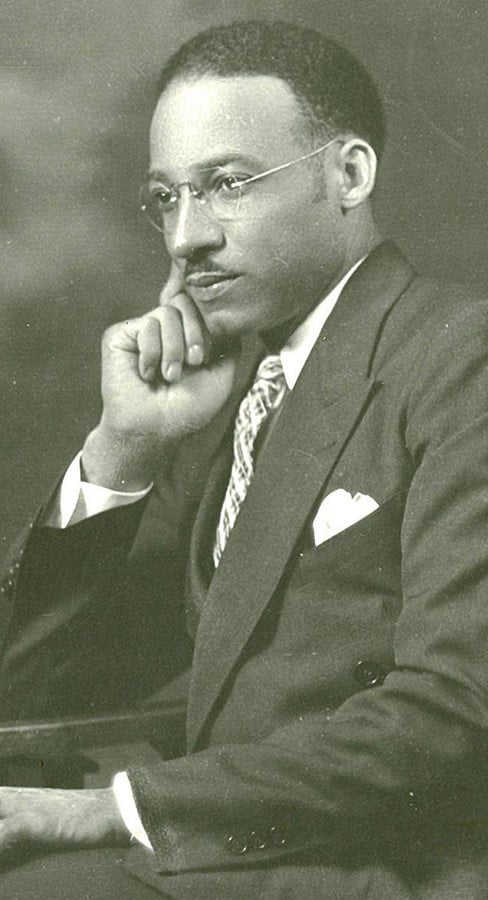
    R. Nathaniel Dett was born in what is now Niagara Falls, Ontario, the grandson of a refugee who fled slavery on the Underground Railroad. He became an important figure in American music of his time, but it’s not until comparatively recently that we’ve had many opportunities to hear much beyond “Juba,” the last movement of one of his piano suites, “In the Bottoms,” championed by Percy Grainger and others.

    Though he is remembered primarily, if at all, for his exquisite keyboard works, Dett also composed a handful of pieces for more ambitious forces, none of them more so than “The Ordering of Moses.” Scored for vocal soloists, chorus, and orchestra, the work was presented as his graduation thesis at the Eastman School of Music in 1932. It received its first public performance by the Cincinnati Symphony Orchestra, at the Cincinnati May Festival, on a concert broadcast over NBC radio, in 1937. Three quarters of the way through, the work was interrupted, allegedly because of a scheduling conflict.

    In 1956, the piece was revived and recorded, also at the Cincinnati May Festival, with Leontyne Price and William Warfield.

    More recently, in 2014, James Conlon conducted it in Cincinnati. A follow-up performance at Carnegie Hall was documented by Bridge Records, Inc., a superb account that finally brought the music some of the notice it deserves. Astonished critics asked the obvious question: how is it possible that such a powerful work could have languished for so long?

    Did NBC indeed run into a scheduling conflict during that first concert broadcast, or did those in charge cave to listener complaints? After all, this was one of the first works of classical music by a Black composer ever to have been given that kind of exposure, broadcast as it was over a national radio network.

    Whatever the truth, now is the time not to deny the past but also to look to the future. In this third decade of the 21st century, can “The Ordering of Moses” finally be appreciated on its own merits?

    This performance, from 1968, was captured in Mobile, AL, conducted by William Levi Dawson.

    Dawson was born in Anniston, AL. He himself proved to be a remarkable composer. With the current, belated wave of music by composers of color on our concert programs, Dawson’s “Negro Folk Symphony,” after decades of neglect, is popping up everywhere. You won’t hear any complaints from me. This symphony is the real deal.

    The work was given its premiere by Leopold Stokowski and the Philadelphia Orchestra in 1934. Dawson revisited the piece after a visit to West Africa in 1952. It is in this form that Stokowski recorded it. I own three recordings of it so far (Neeme Järvi’s being my preference), but I never dreamed I would ever have the opportunity hear it live!

    Likely due to lack of demand for his orchestral music, Dawson carved out a career as a choral music composer. In particular, he became a prominent arranger of spirituals.

    A shame that he didn’t meet with more success in the concert hall. With a little encouragement, perhaps there would have been a Symphony No. 2.

    William Levi Dawson’s superlative “Negro Folk Symphony”

    One of the world’s foremost authorities on Dett happens to live and work in our area. Clipper Erickson, on the faculty of Temple University and Westminster Conservatory, was the first to record Dett’s complete piano works, for Navona Records. Clipper walks the walk, and has done so for decades, often including Dett’s music in his rich and varied recitals.

    Clipper Erickson, piano, plays the “Barcarolle” from the suite “In the Bottoms.”

    “In the Bottoms” concludes with Dett’s most famous music, “Juba.”

    Here’s “The Ordering of Moses,” in more up-to-date sound, in the performance released on Bridge Records. The movements are posted separately, so you’ll have to let them play through, skipping any ads along the way.

    Passover is a time to celebrate freedom. It reminds us of hope and elation at the prospect of a brighter future. It is for the benefit of all to learn from the wrongs of the past and endeavor to do better.

  • Dawson & Shostakovich Symphonies Stream Free

    Dawson & Shostakovich Symphonies Stream Free

    My pick for most awesome stream of the weekend? This double-bill from the Fisher Center at Bard College of knock-out mid-century symphonies by William Levi Dawson and Dmitri Shostakovich.

    Dawson’s “Negro Folk Symphony” was first performed by Leopold Stokowski and the Philadelphia Orchestra in 1934. The composer extensively revised the piece after a trip to West Africa in 1952. Stokowski was the first to record it, but chances to experience it in concert have been few.

    Shostakovich composed his Symphony No. 7, the “Leningrad,” as a display of hope and defiance during the Nazi siege of the city in 1941. The work was given its premiere in Moscow, by the Bolshoi Theatre Orchestra. It was next performed in the West, in London (by Henry Wood) and New York City (by Toscanini), after the score was smuggled out of the Soviet Union on microfilm, by way of Tehran!

    The symphony was finally performed in Leningrad itself on August 9, 1942, with the concert blasted on loudspeakers into the enemy lines after three thousand high-caliber shells had been lobbed into the Germans. Furthermore, Shostakovich employed a grotesque quotation from Hitler’s favorite operetta, “The Merry Widow,” to mock the Nazi “invasion.”

    The “Leningrad Symphony” enjoyed tremendous popularity during the war years, but in the decades since, its musical merits have tended to be overshadowed by its propagandistic origins.

    This weekend’s concerts will be played by The Orchestra Now (TŌN) under the direction of Leon Botstein. The concerts will take place on Saturday evening at 8 pm and Sunday afternoon at 2 pm EDT.

    Tickets are available in-house at the Fisher Center’s Sosnoff Theater. For those of us at home, the concert will stream free. Make your reservation here:

    Shostakovich & Dawson

Tag Cloud

Aaron Copland (92) Beethoven (94) Composer (114) Film Music (117) Film Score (143) Film Scores (255) Halloween (94) John Williams (185) KWAX (228) Leonard Bernstein (99) Marlboro Music Festival (125) Movie Music (132) Opera (197) Philadelphia Orchestra (86) Picture Perfect (174) Princeton Symphony Orchestra (106) Radio (86) Ralph Vaughan Williams (85) Ross Amico (244) Roy's Tie-Dye Sci-Fi Corner (290) The Classical Network (101) The Lost Chord (268) Vaughan Williams (101) WPRB (396) WWFM (881)

DON’T MISS A BEAT

Receive a weekly digest every Sunday at noon by signing up here


RECENT POSTS