Tag: Nikolai Gogol

  • Rimsky-Korsakov’s Wild Ukrainian Christmas

    Rimsky-Korsakov’s Wild Ukrainian Christmas

    Definitely don’t go into it expecting Clement Moore’s jolly old elf!

    Nikolai Rimsky-Korsakov’s “Christmas Eve” was given its first performance at St. Petersburg’s Mariinsky Theater on this date in 1895.

    The opera is based on a story from Nikolai Gogol’s collection, “Evenings on a Farm Near Dikanka” (which I finally got around to reading this year). Part fairy tale and part farce, “Christmas Eve” is steeped in Ukrainian folk traditions.

    In Ukraine, Christmas Eve is a solemn occasion, marked by fasts and sacred services. Meatless dishes are served for Holy Night supper. But there are also carols. And the caroling is no simple singing of Christmas songs! Similar to the mumming traditions of the British Isles, there is also some play involved, with ritualistic dancing and even the participation of a live goat. As in the West, pre-Christian symbols and rituals are embraced in the celebration of Christmas, to lend cheer to the shortest days and hope for a fertile spring.

    With this in mind, is it any surprise that Gogol’s story features such incidentals as the theft of the moon by the Devil, amorous peasants secreting themselves in burlap sacks, and a ride through the air, on the Devil’s back, to collect the Tsarina’s slippers?

    “Christmas Eve” was adapted musically by both Rimsky-Korsakov and Tchaikovsky. The two composers shared a complicated relationship. In public, each was supportive of the other, but in private both were tormented by suspicion and envy. Tchaikovsky felt sufficiently threatened that he demanded secrecy of his publisher over his use of the then newly-minted celesta. This was to supply the fairy-dust magic for his Sugar Plum Fairy in “The Nutcracker,” and he was full of anxiety that Rimsky might learn of the instrument and steal his thunder.

    Equally wary of Tchaikovsky, Rimsky held off on adapting “Christmas Eve” until 1895. Tchaikovsky had set his own version of the story ten years before – a revision of an even earlier Tchaikovsky opera, “Vakula the Smith,” composed in 1871. By the time Rimsky’s version received its premiere, his rival had been safely in the grave for two years.

    Z Rizdvom Khrystovym! Good triumphs over evil, but the devil gets his due!


    Still my preferred recording of Rimsky-Korsakov’s “Christmas Eve,” from 1948, conducted by Nikolai Golovanov.

    An animated version of Gogol’s tale, incorporating some of Rimsky’s music:

    https://www.youtube.com/watch?v=TvtQQlb3-pw

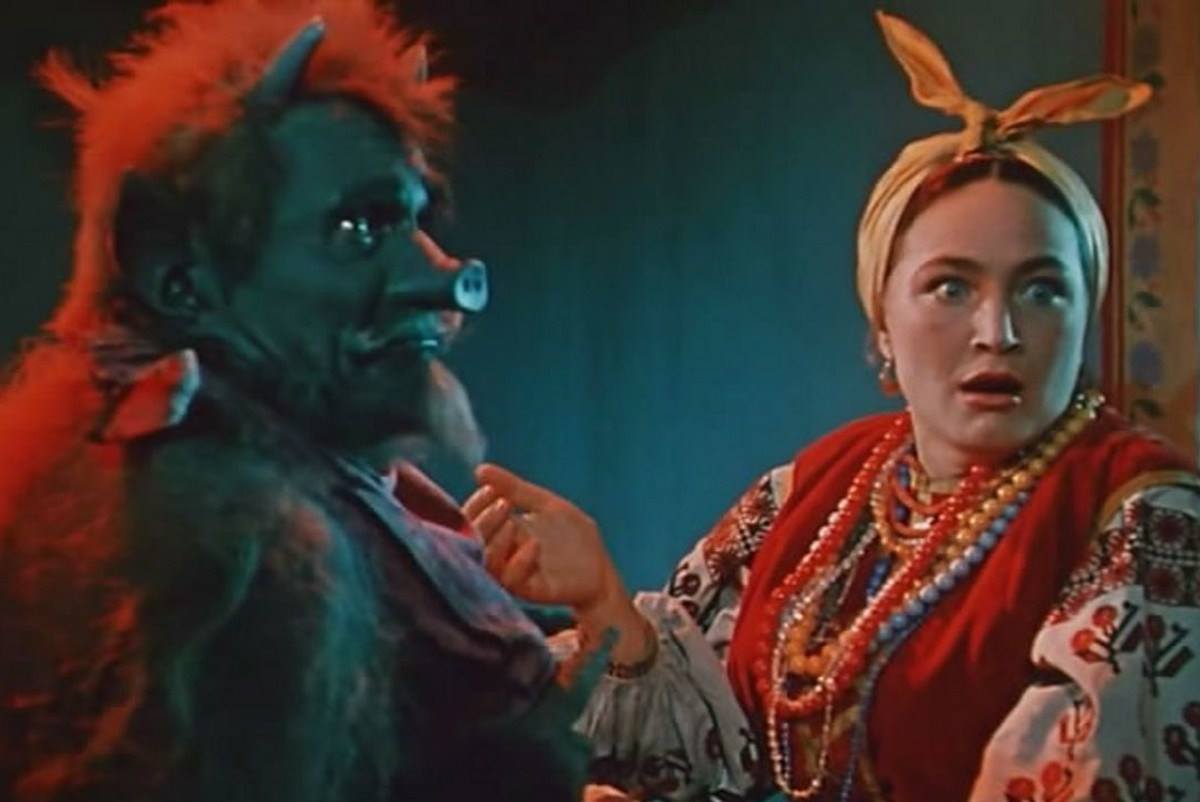
    A fun live-action version from 1961:

    https://www.youtube.com/watch?v=q71uPvuQ2NA

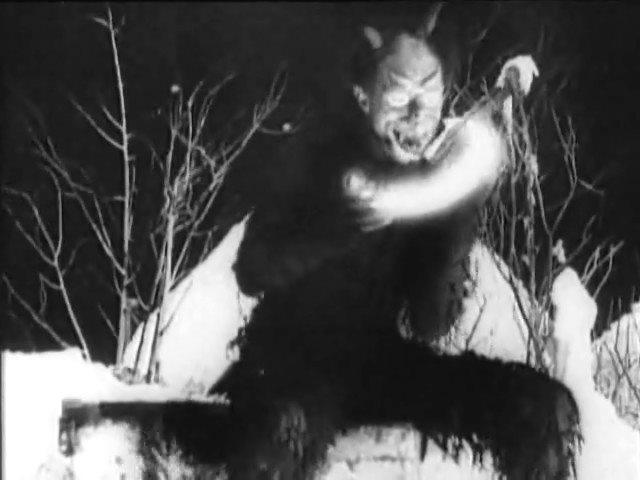
    A 1913 silent version (but you’ll have to provide your own soundtrack):

  • Gogol St. John’s Eve Summer Reading

    Gogol St. John’s Eve Summer Reading

    So Saturday was the first day of summer?

    The calendar I’m using this year doesn’t have any holidays printed on it, which I suppose is only appropriate for life in Coronaworld, where every day runs into another.

    Be that as it may, the seasons are not governed by the calendar, and like a creature of the wild, I know it’s summer when my blood pressure begins to rise with the sun. Surely, this is something the ancients also felt, which is why we have St. John’s Eve.

    It was the Romans who marked the summer solstice as June 24th. This meant the night of the 23rd was yet another excuse for a great big toga party. Pagans throughout the empire lit bonfires against evil spirits, and even dragons, and folk traditions sprang up related to prognostication and fertility.

    Later, the Church coopted the 24th for its observance of the Feast Day of St. John. This worked out very nicely, since St. Luke suggested that the birthday of John the Baptist fell six months before that of Jesus. As with Hallowe’en, a pagan festival was hitched to a holy one (in that case, All Saints Day). Sometimes diverting a stream is easier than outright dam(n)ing it.

    As a classical music lover, for years I have been curious about “Evenings on a Farm Near Dikanka,” as the title is usually translated. Nikolai Gogol’s collection of tales, steeped in Ukrainian folklore, are overstuffed with devils, witches, water nymphs, and roistering Cossacks. The stories formed the basis for operas by Modest Mussorgsky (“Sorochinsky Fair”), Nikolai Rimsky-Korsakov (“May Night” and “Christmas Eve”), and Peter Ilych Tchaikovsky (“Cherevichki”).

    Well, this year I finally got around to reading it, and it wasn’t quite what I expected. Amusingly, the supernatural elements, which are plenty, are offset by frequent satirical observations and earthy farce. There’s a lot of drinking and a lot of hiding from husbands in coal sacks. Even lusty devils receive their comeuppance. All the same, there are one or two shockingly gruesome moments.

    Gogol can be wry. He can certainly be garrulous. But he is also very much a poet, as evidenced by his lyrical observations on the Dnieper and soft Ukrainian summer nights. That said, one of the stories takes place on Christmas Eve. At least two are set on St. John’s Eve.

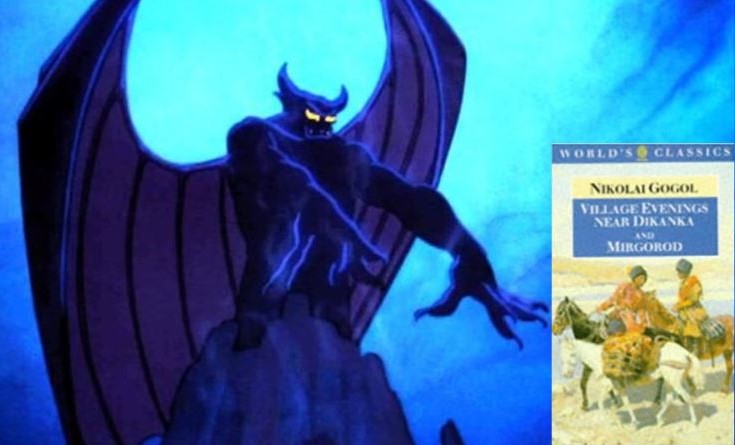
    It wasn’t easy to find an affordable copy of this Oxford paperback (pictured), which has gone out of print. I’ve been fond of these World’s Classics editions since reading Oxford’s “The Count of Monte Cristo,” “The Three Musketeers,” and “Queen Margot,” which were full of helpful notes. (Oxford’s “The Pickwick Papers,” I must say, was much more slovenly notated.) In this instance, there’s not really a lot you need to know that isn’t on the page. I don’t read Russian, it’s true, but the translation “sounds” very well, and it seems idiomatic.

    The Oxford edition also includes the collection “Mirgorod,” which I have yet to tackle. Its most famous tale is “Taras Bulba,” which became the basis for the orchestral rhapsody by Leoš Janáček.

    I should probably also mention that while there is nothing in “Dikanka” that is outright antisemitic, Gogol never misses an opportunity to single out Jews – to be fair, by way of his admittedly rustic characters. And while there is nothing openly derogatory in their treatment, it is evident that they are regarded as outsiders. They are always referred to as “a Jew” or “the Jew.” This is, after all, the world of the Cossacks. But, remarkably, there appears to be no disdain. Certainly, the Poles and the Tatars come in for a lot worse!

    For as entertaining as I found the collection, with its unexpected humor, the experience really underscored how much Mussorgsky, Rimsky, and Tchaikovsky fleshed out Gogol’s narratives with their music. All three composers managed to conjure the author’s poetic flights in a way no libretto possibly could.

    Interestingly, the most famous music connected to the book is “A Night on Bald Mountain,” a comparatively youthful work, written when Mussorgsky was 28 years-old. The composer completed the piece, about a witches’ sabbath on St. John’s Eve, ON St. John’s Eve in 1867. It then went through several versions, as it was inserted into the collaborative opera-ballet “Mlada” and then “Sorochinsky Fair,” inspired by the Gogol story. Sadly, despite his obvious affection for this music, Mussorgsky never heard it performed, in any of its incarnations, during his lifetime.

    Following the composer’s death, however, Rimsky-Korsakov further shaped the material, and arranged the well-known orchestral fantasy, employing as raw material Mussorgsky’s final version, as it appeared in “Sorochinsky Fair.” It is in Rimsky’s revision that it became Mussorgsky’s best-known music – at least until Leopold Stokowski got a hold of it and did his own arrangement for Disney’s “Fantasia.”

    This is a perfect example of just how effective music can be at conjuring a palpable atmosphere of menace, or even terror, as compared to words on a page. There’s not even a Bald Mountain in Gogol’s original, though the supernatural element that looms over the collection as a whole more than justifies Mussorgsky’s artistic license.

    All in all, it’s a book worth getting to know – with the shutters secured and a bucket of horilka at your side. Happy St. John’s Eve!
  • Orthodox Christmas Gogol Tchaikovsky Rimsky-Korsakov

    Orthodox Christmas Gogol Tchaikovsky Rimsky-Korsakov

    Here we go again! Just as we in the West conclude the Twelve Days of Christmas, adherents of the Eastern Orthodox Church today commence their celebrations of Orthodox Christmas. Chalk it up to the old Julian calendar.

    Ukrainian Christmas Eve can be a solemn occasion, marked by fasts and sacred services. Meatless dishes are served for the Holy Night supper. But there are also carols. And the caroling is no simple singing of Christmas songs. Similar to mumming traditions of the British Isles, there is also a little play involved, with ritualistic dancing and the participation of a live goat. As in the West, pre-Christian symbols and rituals are embraced in the celebration of Christmas, to lend cheer to the shortest days and hope for a fertile spring.

    Nikolai Gogol’s “Christmas Eve,” from his collection of stories, “Evenings on a Farm Near Dikanka,” emerges from these folk traditions. Part fairy tale and part farce, Gogol’s story features such incidentals as the theft of the moon, amorous peasants secreting themselves in burlap sacks, and a ride through the air on the Devil’s back to collect the Tsarina’s slippers.

    “Christmas Eve” drew musical responses from both Peter Ilych Tchaikovsky and Nikolai Rimsky-Korsakov. The two composers shared a complicated rivalry. In public, each was supportive of the other, while in private they were nagged by suspicion and envy. Tchaikovsky felt sufficiently threatened to swear his publisher to secrecy about his use of the then newly-minted celesta in “The Nutcracker,” lest Rimsky steal his thunder. Equally intimidated by Tchaikovsky, Rimsky held off on adapting “Christmas Eve” until 1895. Tchaikovsky had set his version ten years before, a revision of an even earlier opera, “Vakula the Smith,” written in 1871. By the time Rimsky’s “Christmas Eve” received its premiere, Tchaikovsky had been safely in the grave for two years.

    We’ll hear selections from both composer’s operas today on The Classical Network, alongside observances of the birthdays of composers William Hurlstone, Ulysses Kay, and Francis Poulenc; conductors David Porcelijn and Gunter Wand; pianist Clara Haskil; violinist and conductor Iona Brown; and choral director Robert DeCormier.

    Z Rizdvom Khrystovym! Good triumphs over evil, but the devil gets his due, from 4 to 7 p.m. EST, on WWFM – The Classical Network and wwfm.org.


    An animated version of Gogol’s tale, incorporating some of Rimsky’s music:

    https://www.wilderutopia.com/performance/literary/nikolai-gogol-witches-and-devils-on-christmas-eve/

    A fun live-action version from 1961:

    https://www.youtube.com/watch?v=9MFoyMwfnlc

    A 1913 silent version (but you’ll have to provide your own soundtrack):

Tag Cloud

Aaron Copland (92) Beethoven (95) Composer (114) Film Music (119) Film Score (143) Film Scores (255) Halloween (94) John Williams (185) KWAX (229) Leonard Bernstein (99) Marlboro Music Festival (125) Movie Music (134) Opera (198) Philadelphia Orchestra (86) Picture Perfect (174) Princeton Symphony Orchestra (106) Radio (87) Ralph Vaughan Williams (85) Ross Amico (244) Roy's Tie-Dye Sci-Fi Corner (290) The Classical Network (101) The Lost Chord (268) Vaughan Williams (102) WPRB (396) WWFM (881)

DON’T MISS A BEAT

Receive a weekly digest every Sunday at noon by signing up here


RECENT POSTS