Tag: Noontime Concert

  • Autumn Music on The Classical Network

    Autumn Music on The Classical Network

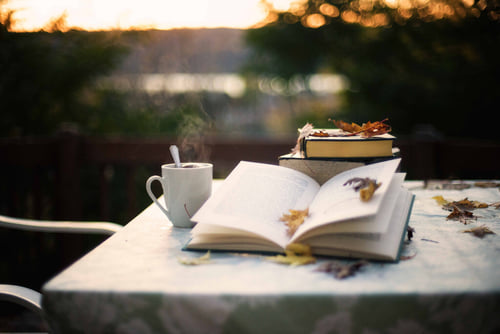
    Now that we’ve changed the clocks, we’re officially in deep autumn – whether the temperatures happen to agree or not.

    Join me this afternoon on The Classical Network, as we finally get around to giving the season its due. We’ll hear the Symphony No. 10, “Zur Herbstzeit” (“To Autumn Time),” by Joachim Raff; “Poema autunnale” for violin and orchestra by Ottorini Respighi;” “The Seasons” by Alexander Glazunov;” “Fall of the Leaf” by Gerald Finzi; the “Sinfonia di Caccia” by Leopold Mozart; “November Woods” by Sir Arnold Bax; “Autumn Crocus” by Billy Mayerl; the Symphony No. 4, “Fall of the Leaf,” by Rued Langgaard; and “Autumn Gardens” by Einojuhani Rautavaara.

    Today’s Noontime Concert will be a comparatively brief one. John Mark Rozendaal and Adam Young will perform works for two violas da gamba by Tobias Hume and Johannes Schenck. The program, “Poeticall Musicke,” was presented as part of the Midtown Concerts series at the chapel of St. Bartholomew’s Church, 325 Park Avenue in New York City. Free concerts are held at St. Bart’s every Thursday at 1:15 p.m. For more information and a complete schedule, visit the website of Gotham Early Music Scene, gemsny.org.

    Find a dry place and enjoy a nice hot cup of something. It’s autumn. Be good to yourself. Tune in today, from 12 to 4 p.m. EST, to WWFM – The Classical Network and wwfm.org.

  • The Thirteen Choir Noontime Concert

    The Thirteen Choir Noontime Concert

    When is 13 not bad luck? When it’s The Thirteen, of course!

    Join me for today’s Noontime Concert on The Classical Network for performances by this superlative chamber choir, directed by Matthew Robertson. On the program will be two French masterworks: Maurice Duruflé’s Requiem and Francis Poulenc’s “Figure humaine.”

    Written in 1943, during the Nazi occupation of France, Poulenc’s cantata for double-mixed choir sets texts by the surrealist poet Paul Éluard. The work is an extended hymn to Liberty, victorious over tyranny.

    Duruflé’s Requiem began as a commission from the collaborationist Vichy regime, which had requested from the composer a symphonic poem. He decided to write a Requiem instead, an expression of solace in a time of strife. In the event, this Mass for the Dead outlasted the regime that had requested it.

    The Thirteen’s next performances will take place this weekend, in Washington, DC, and Bathesda, MD. The program, “Bach Reflections,” will include Handel’s “Dixit Dominus,” Bach’s “Lobet den Herrn,” and Agostino Steffani’s “Stabat Mater.” You can find out more at thethirteenchoir.org.

    Then stick around. There’s plenty of good fortune to be found, in the form of great music, this afternoon from 12 to 4 p.m. EDT, on WWFM – The Classical Network and wwfm.org.

  • PRISM Quartet Premieres New Music on The Classical Network

    PRISM Quartet Premieres New Music on The Classical Network

    Works by four living composers will be refracted through PRISM on today’s Noontime Concert on The Classical Network.

    PRISM Quartet, the Philadelphia-based saxophone ensemble, will be heard on a concert given on April 3 at First Presbyterian Church of Ypsilanti as part of its Southeast Michigan residency. The musicians will be joined by two of the nation’s leading jazz artists, saxophonist Diego Rivera and trombonist Michael Dease, both of whom serve on the faculty of Michigan State University. Rivera and Dease will combine with PRISM to perform works commissioned by way of the ensemble’s Heritage/Evolution project. Heritage/Evolution spotlights the talents of some of the day’s most inventive jazz artists.

    The program will include commissioned pieces “Name Day,” by Tim Ries, and selections from “15 Places at the Same Time,” by Steve Lehman, alongside “heteronym” by rising star Emily Koh, composer + bassist.

    We’ll also hear a selection by David Serkin Ludwig, “Josquin Microludes,” from PRISM’s 2016 album, “The Curtis Project,” made up of saxophone music written by composers from the Curtis Institute of Music.

    Ludwig, who studied at Curtis with Jennifer Higdon and Richard Danielpour and at Juilliard with John Corigliano has himself been part of Curtis’ composition faculty since 2010. He also holds degrees from Oberlin, the Manhattan School, and the University of Pennsylvania. Ludwig is artistic director of Curtis’ 20/21 Contemporary Music Ensemble.

    Spurring questions of nature versus nurture, this musician has quite the distinguished pedigree. His uncle is Peter Serkin. His grandfather was Rudolf Serkin, and his great-grandfather was Adolf Busch. Rudolf Serkin, in addition to being one of the great pianists, was director of the Curtis Institute from 1968 to 1976. With flutist Marcel Moyse, he and Busch established the Marlboro School of Music and Festival: Official Page, the famed chamber music retreat located in Marlboro, VT, in 1951.

    Ludwig will visit the WWFM studios for a chat with David Osenberg this afternoon at 4 p.m. EDT. His monodrama, “The Anchoress,” will receive its world premiere on October 17 at 7:30 p.m. at the The Kimmel Center for the Performing Arts, under the auspices of the Philadelphia Chamber Music Society. PRISM will combine with soprano Hyunah Yu and Piffaro, The Renaissance Band. The program will also include Ludwig’s “Our Long War,” “Josquin Microludes,” “Three Anchoress Songs,” performed by flutist Mimi Stillman and saxophonist Matthew Levy, and some arrangements of music by Renaissance master Guillaume de Machaut.

    I hope you’ll join me, beginning at noon today, for new music performed by PRISM and friends, and that you’ll stick around for works by Camille Saint-Saëns and Einohjuhani Rautavaara on their birthdays. You won’t even have to sign a card. As always, the party favors will be in the form of music, from 12 to 4 p.m. EDT, on WWFM – The Classical Network and wwfm.org.

  • Folia Madness on The Classical Network

    Folia Madness on The Classical Network

    On today’s Noontime Concert on The Classical Network, we go mad for the folia.

    Of course “folia” means madness, or folly. This anonymous dance of Iberian origin has been a classical music earworm since at least the 15th century.

    The folia started out as a fertility dance in three-four time. It was fast-paced and even tumultuous, with cross-dressing men borne on the shoulders of dancers, said to be driven mad by the stirring rhythm. Over time, the dance insinuated its way into the royal courts of Europe, and the tempo became more stately.

    Allegedly Jean-Baptiste Lully was the first to legitimize the “later folia,” in a work published in 1672 (though there were earlier examples published by Gaspar Sanz and Francesco Corbetta). The folia became codified as a kind of passacaglia, with a fixed melody supported by a standard chord progression.

    Since then, more than 150 composers have been infected by the Folia Bug, over a span of more than three centuries. Baroque composers, in particular, were crazy for it, with Corelli’s trio sonata arguably being the most famous. In the 20th century, Rachmaninoff and Ponce were all too ready to “go there.”

    Today’s program, presented by the Belladonna Baroque Quartet, will include folias from Spain, Italy and France, alongside pieces built upon other ground bass dances and those that incorporate dance rhythms into their structures.

    The program was presented on November 2, 2017 at St. Bartholomew’s Church, 50th Street and Park Avenue, in Midtown Manhattan, where free lunchtime concerts are held every Thursday at 1:15 p.m. The 2017-2018 schedule has run its course, but concerts will resume in the fall.

    Today’s broadcast is made possible in part by Gotham Early Music Scene, or GEMS. GEMS is a non-profit corporation that supports and promotes artists and organizations in New York City devoted to early music – music of the Middle Ages, Renaissance, Baroque, and early Classical periods. For more information and updates to GEMS’ events calendar, look online at gemsny.org.

    Then stick around for more madness, as we present Carl Orff’s settings of poetry by the debauched monks of Benediktbeuren Abbey, “Carmina Burana.” It’s one of our featured highlights, on this, Orff’s birthday.

    Tune in for Belladonna Baroque’s “Follies Festival” at 12 p.m. EDT. I’ll be dancing and drinking until 4, on WWFM – The Classical Network and wwfm.org.

  • Early Music Festival at Grounds For Sculpture

    Early Music Festival at Grounds For Sculpture

    The mad doctor with the co-hosts for today’s Noontime Concert – Patricia Hlafter and Judith Klotz of the Guild for Early Music.

    The annual Early Music Festival by the Guild for Early Music will be held at Grounds For Sculpture in Hamilton, NJ, this Sunday from 12:30 to 5:30 p.m. The festival is free with admission to the park. Enjoy lots of great music, performed on period instruments. Then take a break to stroll the sculpture gardens. Just watch out for those peacocks!

    John Burkhalter and Janet Palumbo of the Guild will be my guests for Friday’s noon concert. Tune in right now to enjoy George Dyson’s choral music masterpiece, “The Canterbury Pilgrims,” after Geoffrey Chaucer’s “The Canterbury Tales,” on WWFM – The Classical Network and wwfm.org.

Tag Cloud

Aaron Copland (92) Beethoven (94) Composer (114) Film Music (117) Film Score (143) Film Scores (255) Halloween (94) John Williams (185) KWAX (228) Leonard Bernstein (99) Marlboro Music Festival (125) Movie Music (132) Opera (197) Philadelphia Orchestra (86) Picture Perfect (174) Princeton Symphony Orchestra (106) Radio (86) Ralph Vaughan Williams (85) Ross Amico (244) Roy's Tie-Dye Sci-Fi Corner (290) The Classical Network (101) The Lost Chord (268) Vaughan Williams (99) WPRB (396) WWFM (881)

DON’T MISS A BEAT

Receive a weekly digest every Sunday at noon by signing up here


RECENT POSTS