
Nikolai Rimsky-Korsakov was the composer of no fewer than 15 operas. But how many of them are known in the West?
This week on “The Lost Chord,” we’ll have a chance to sample one of them, as we welcome spring with selections from “The Snow Maiden.”
Based on an allegorical fairy tale of humans, quasi-mythological creatures, and the eternal forces of nature, it’s the story of a star-crossed love that brings about the end of a 15-year winter. The orchestral suite – which climaxes with the “Dance of the Tumblers” – is fairly popular, but the opera itself is seldom done, at least outside of Russia.
The recording we’ll sample, on the Capriccio label, features the Bulgarian Radio Symphony conducted by Stoyan Angelov. It may not hold a candle to the best Rimsky opera recordings by conductors like Nikolai Golovanov, but it’s enough to give a taste of what American opera lovers are missing.
I hope you’ll join me for “The Thaw of the Wild,” on “The Lost Chord,” now in syndication on KWAX Classical Oregon!
——–
Clip and save the start times for all three of my recorded shows:
PICTURE PERFECT, the movie music show – Friday at 8:00 PM EDT/5:00 PM PDT
SWEETNESS AND LIGHT, the light music program – Saturday at 11:00 AM EDT/8:00 AM PDT
THE LOST CHORD, unusual and neglected rep – Saturday at 7:00 PM EDT/4:00 PM PDT
Stream them, wherever you are, at the link!
https://kwax.uoregon.edu
Tag: Opera
-
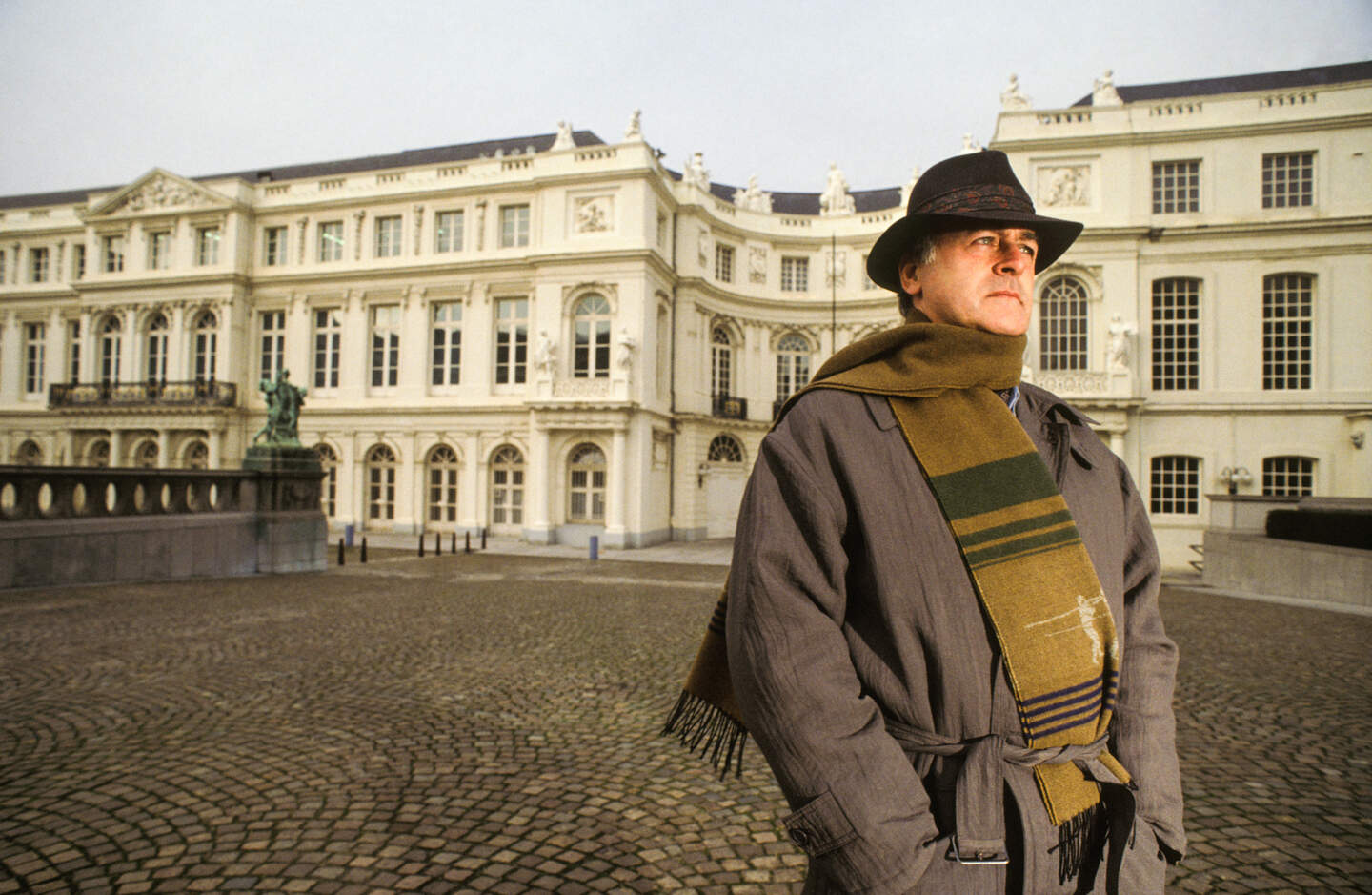
Le Maître de Musique, José van Dam
I’ve been sick for a couple of weeks (nothing serious, just a lingering cold), so it’s been difficult for me to focus. Also, I had a deadline yesterday for a newspaper article. But now at last I am free and clear to remember José van Dam the way he deserves. The great Belgian bass-baritone died on February 17 at the age of 85.
Van Dam was more than just a voice and left many memorable, versatile characterizations – Escamillo, Méphistophélès, The Flying Dutchman, Don Quichotte. He also sang Leporello, Don Giovanni’s servant, which must have been a stretch for him, as he always impressed me as having something of an aristocratic bearing. (Perhaps more fittingly, he also played the Don.) He certainly bore himself with confidence and dignity.
It only seems fitting, then, that in 1998 he was made a baron by Belgium’s King Albert II – which is why you will now sometimes see him listed in references as Joseph, Baron Van Damme.
I concede my impressions of the artist may have been colored somewhat by his performance in the film “Le Maître de musique,” or “The Music Teacher” (1988). In it, he plays an opera singer who retires abruptly at the height of his fame and retreats to a remote manor house, only to emerge from his life of brooding introspection to subject some extraordinarily gifted pupils-in-the-raw to some rigorous, tough-love training.
“The Music Teacher” was nominated for Best Foreign Language Film at the 61st Academy Awards, but really, it’s just classical music junk food – nice costumes, beautiful settings, alluring cinematography, attractive young people, and lots of opera arias. And of course, Van Dam. During the climactic sing-off, the contestants wear concealing Amadeus-style masks and cloaks. ‘Tis a silly movie. Naturally I enjoyed it very much.
I can’t believe my parents took me to see it (I was in college at the time), as it really was not their bag. My stepfather, in particular, has always been a shot-and-a-beer kind of guy, more at home watching football than listening to lieder. (My mom was really more my speed.) But my parents were always very indulgent, and I used to drag them to concerts whenever they visited me in Philadelphia. We saw “The Music Teacher” at the Paris Theater in New York, right around the corner from the Plaza Hotel.
I’d always been interested to revisit the film, which was not easy to find, especially in the days before streaming. Finally, a couple of years ago, I stumbled across an import DVD at Princeton Record Exchange. While I still wouldn’t rank it as Best Foreign Language Film material, it was fun to see it again. Here’s a clip of Van Dam singing Schubert’s “An die Musik.”
What do you know? Here it is complete – in French with Korean subtitles!
Or if you prefer, Spanish
The trailer
From the lower class, he also sang Figaro and Wozzeck, and at 60, St. Francis, in the premiere of Messiaen’s “St. François d’Assise.” A versatile artist, then, a gifted singer and an actor who was able to convincingly inhabit quite a significant range of roles.
R.I.P. José van Dam -

Alban Berg’s Lulu of an Opera
If one were to bake a birthday cake for Alban Berg, one would be forgiven for rendering a handgun in icing and hollowing out the layers to make room for prostitutes and madmen.
When Berg came to write his sordid, darkly humorous, ultimately bloodcurdling masterpiece “Lulu,” he based it on the plays of Frank Wedekind. However, significantly, the influence of film also permeates the work.
I don’t know that it’s ever been proved, but the composer had to have seen Louise Brooks’ sensational performance in G.W. Pabst’s “Pandora’s Box” (1929). The scandalous silent film classic, based on the same material, was an international triumph, and to this day, stage Lulus frequently emulate Brooks’ iconic style.
Also, at the very center of the opera is a filmed interlude. The composer was obsessed with symmetry and palindromes. They pervade the opera, so much so that in the cinematic centerpiece, a silent film that dramatizes the events surrounding Lulu’s incarceration and escape, the music reads the same backwards and forwards.
In a piece that’s so aggressively contemporary in its decadence and cynicism, it’s unsurprising that Berg would embrace modern technology. One wonders what he would have made of the digital age.
Love, eroticism, and death were nothing new to opera, but there is something about “Lulu” that’s especially disturbing and transgressive. It’s subversive, sleazy, squalid, and calculated to shock. It’s not for nothing that Lulu, the protagonist, is introduced by a lion tamer!
But Lulu is just being Lulu. The title of the first of Wedekind’s plays is “Erdgeist” – “Earth Spirit.” Lulu is plucked from the streets, and her raw sexuality has devastating effects on both the men and women in her life. Moral confusion abounds. Sure, she makes some monstrous choices. But we’re left to wonder, as with Jessica Rabbit, is she bad, or did society just draw her that way?
Lulu in her amorality is the product of in an inauthentic world. After three acts of unfettered destruction, she dies at the hands of Jack the Ripper. Serialism’s greatest heroine falls prey to history’s most notorious serial killer.
Berg composed his opera between 1929 and 1935. The ‘30s were a fraught time in Europe. It goes without saying, the Nazis did not like “Lulu.” Berg himself may not have been Jewish, but his teacher, Arnold Schoenberg, high priest of dodecaphony, was. Berg’s twelve-tone idiom alone would have been enough to get his opera banned. And his reputation had already been made with the equally disturbing “Wozzeck,” given its first performance in Berlin in 1925. He was added to the Nazi catalogue of “entartete” composers in 1933.
The composer did not live to see the Führer’s furor over “Lulu.” He died of blood poisoning, the result of an insect sting, on Christmas Eve 1935. He was 50 years-old.
At the time of his death, the opera was not yet quite complete. He was well along on the piece when two things occurred:
First, he learned from Wilhelm Furtwängler that the climate in Berlin was unfavorable to a performance there. So he broke off on orchestrating the opera to develop some of the music into a “Lulu Suite,” which he hoped to have played in concert. Erich Kleiber, who had introduced “Wozzeck” in 1925, programmed the suite at the Berlin State Opera. After the performance, he was forced to resign and basically run out of the country.
Berg paused a second time to compose his Violin Concerto for Louis Krasner. This he dedicated to the memory of 18 year-old Manon Gropius, one of Berg’s muses, whom he and his wife had come to view as their own daughter. Manon’s birth parents were Alma Mahler, Gustav’s widow, and Walter Gropius. The concerto would go on to become Berg’s best-loved work.
At some point, the composer wrote to Anton Webern to let him know that “Lulu” was essentially complete. He anticipated he would need only two or three weeks to overhaul it before he started in on its orchestration.
After his death, it was found he had managed to complete most of it. The parts he did not were left in short score, with detailed indications as to his plans for filling out the orchestration. Nevertheless, Schoenberg, Webern, and Zemlinsky, all friends of Berg, declined to take up its completion. Berg’s widow was left with the impression that the task must have been impractical, if not impossible. It was only after her own death in 1976 that Friedrich Cerha moved ahead with plans to finish it.
“Lulu” received its premiere, incomplete, in Switzerland, in 1937. Cerha’s edition was first staged soon after its publication in 1979. This was rapturously received, and it is now the preferred version.
Berg was always considered the Romantic among serialists. One critic dubbed him “the Puccini of twelve-tone music.” “Lulu” is freely-composed, but makes use of the twelve-tone technique promulgated by Schoenberg. Fascinatingly, each character in the opera gets his or her own tone row, so that each of the rows serves the purpose of a leitmotif – a fragmentary slip of music, bearing extramusical associations – as in the works of Richard Wagner. But if there is an opera further from Wagner’s Valhalla than “Lulu,” I don’t know it!
Interestingly, there was nothing at all sordid about Berg the man. There was no violence or scandal in his life. He was intellectual and well-spoken, and he didn’t consort with criminals and prostitutes. He just knew a good succès de scandale when he saw one.
“Lulu” has long since taken its place in the standard repertoire, alongside Berg’s “Wozzeck.” I can’t say it’s the most pleasant night at the theater, but it is an absorbing one, and it still retains its modern edge.
Happy birthday, Alban Berg!
———
Berg’s “Lulu Suite”
The Violin Concerto
Louise Brooks as Lulu
“Lulu”… by Lou Reed and Metallica? -
The Return of “Kavalier & Clay” – to the Met and at the Movies
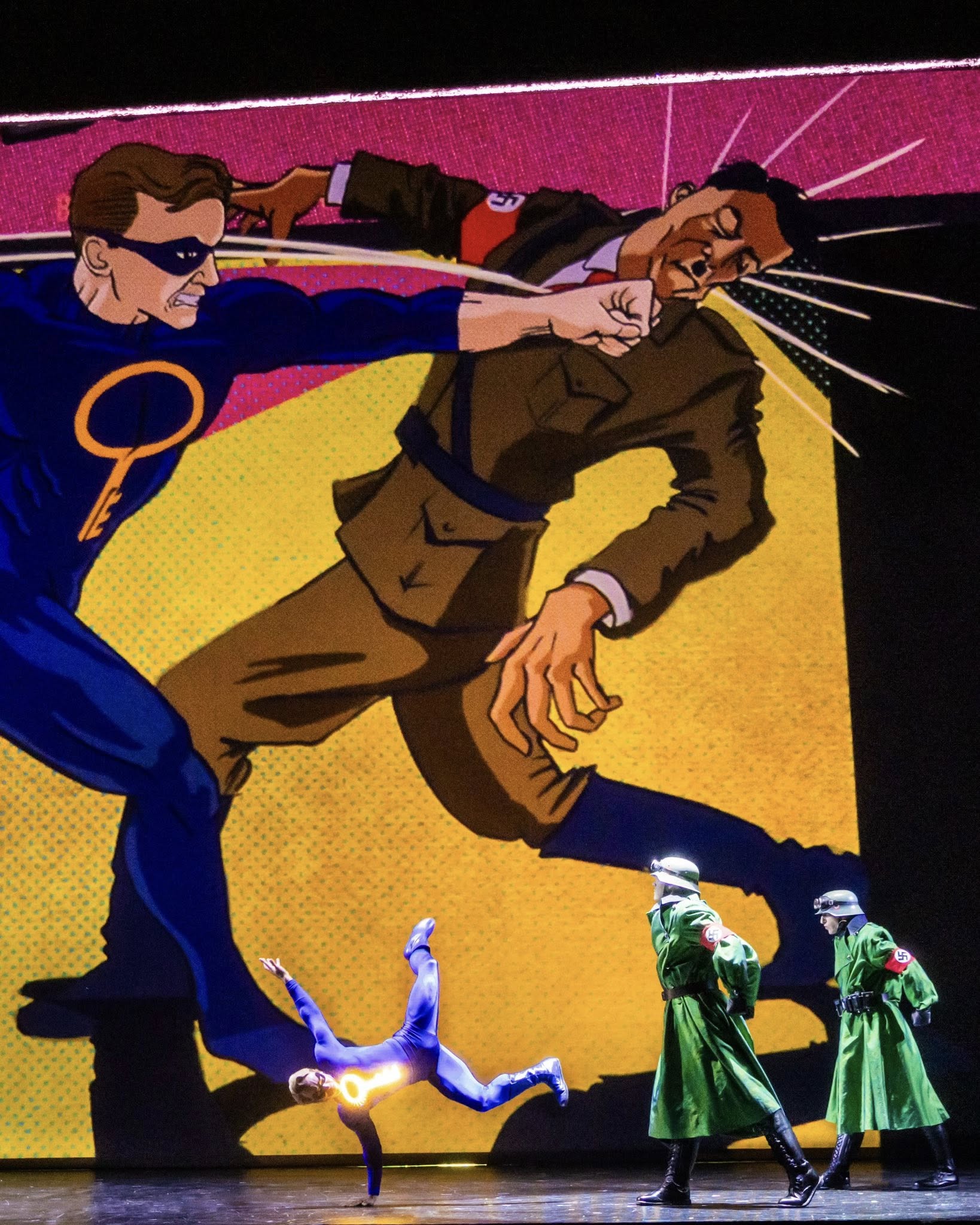
“The Amazing Adventures of Kavalier & Clay” is the first opera I’ve seen that plays more like a movie. A triumph of production design, in some respects it realizes the Wagnerian ideal of Gesamkuntswerk, the synthesis of disparate elements into a “total work of art,” here employing technology of a sort Wagner couldn’t possibly have imagined. That’s not to say Mason Bates’ music is anywhere near the same exalted level, which probably, in this case, is not such a bad thing. As a piece of pop art, “Kavalier & Clay” works. Mostly.
The inspiring story of two Jewish cousins – one a Brooklyn native, the other a refugee from Nazi-occupied Czechoslovakia – who channel their hopes, heartbreaks, and thirst for justice into the creation one of the comic’s bestselling superheroes – is back at New York’s Metropolitan Opera with all its whiz-bang dazzle. I caught it earlier in the season, in the fall, but The Met had a special on tickets around the holidays, so I’m going to see it again with a friend next month. The production will run through February 21.
Can’t make it to New York? You’ll have a chance to experience it at select movie theaters this Saturday, January 24, and next Wednesday, January 28, as part of “The Met: Live in HD” series, presented through Fathom Entertainment. (Look for the link below.)
As a fan of Michael Chabon’s Pulitzer Prize winning novel, I knew going in that concessions would have to be made. Even at its most surfacy, Chabon’s book (which I read for a second time to prep for the opera) is simply too grand – even with the Met’s stagecraft being as wondrously vertiginous as it is – and too epic to be conveyed even on the boards of the world’s largest opera palace. It also happens to be beautifully and characterfully written. There is only so much of that (the story is told from a third person omniscient perspective) that is going to survive translation to the theater.
In the end, this panegyric to the power of comic books and the role of popular culture in the American Dream at an especially dynamic time in this nation’s history – while simultaneously exploring comics as an outlet through which the artists grapple with their personal demons and grasp for redemption – can never hope to serve as more than “Classics Illustrated.” So definitely read the book.
But the opera recreates a great escape from the bottom of the Moldau, a superhero, called The Escapist, punching out Nazis in the best Jack Kirby tradition, Salvador Dali in a diving suit, a thunderstorm over the observation deck of the Empire State Building, and a final act, with the stage in its full, mechanized glory, that departs significantly from the action of the book, but contains a touch of poetry and grace courtesy of another one of the cousin’s heroic creations. I do miss the business with the Golem, the World’s Fair, the entire Antarctica segment, the cameo by Orson Welles, and the recurring allusions to Polish composer Karol Szymanowski. Only Chabon could have written it. (Gene Scheer is the opera’s librettist.)
Opera as a genre rises and falls on its writing for voice, at its most powerful, arousing overwhelming emotions. At its most magnificent, there really is nothing else like it. From a purely musical standpoint, “Kavalier & Clay” never achieves that level of irrational grandeur, but as I indicated at the start, this may be the rare instance in which that’s okay. It would have been nice had it cracked the extraordinary, but the music does actually serve as but one component, and an equal one, in the three-hour entertainment. It’s almost like underscore, breezy in the New York street scenes and rhythmically driving in flights from the Nazis. There’s a spiritual kinship to film music. The emotional moments are lower-voltage than I would have liked – pretty, but hardly indelible – and the hard-driving action scenes and scenery changes sound like John Williams with a bit of a John Adams gloss.
Manhattan street and office scenes sport “jazz” inflections of a Gershwinesque variety, there’s a bawdy dance party that bristles with Bernstein, and at times in the European scenes, you could make out the inclusion of a mandolin – not necessarily the first instrument I associate with either Czechoslovakia or Jewry, but it is an instrument with a long folk tradition that reaches across the continent. I concede, this particular observation could simply reveal a blind spot in my own education.
Bates’ much-vaunted electronic additions (he experiments with electronica and even DJs on the side) really don’t add up to very much. That element of the score barely registers in the opera’s first act. In the second, it could just as easily not have been there. It’s just another element of seasoning.
The work’s real energy comes in its frequent, dizzying set changes and eyepopping set pieces, propelled by technical/technological wizardry. A great escape at the opera’s start prepares the audience for the synthesis of opera, movie, and even comic book, to come. There are entire montages that conjure the layout and dynamism of a comic’s page.
It’s insane to even consider that “The Amazing Adventures of Kavalier & Clay” could be made into an opera, and I’m not sure that it actually succeeds as one. But I am unshakeable in my conviction that it is a hell of a good show.
See it at the Met, February 17-21
https://www.metopera.org/season/2025-26-season/the-amazing-adventures-of-kavalier–clay/
Or at the movies, January 24 & 28
https://www.fathomentertainment.com/releases/the-metropolitan-opera-the-amazing-adventures-of-kavalier-clay/ -
Handel in the Garden with Opera Essentia
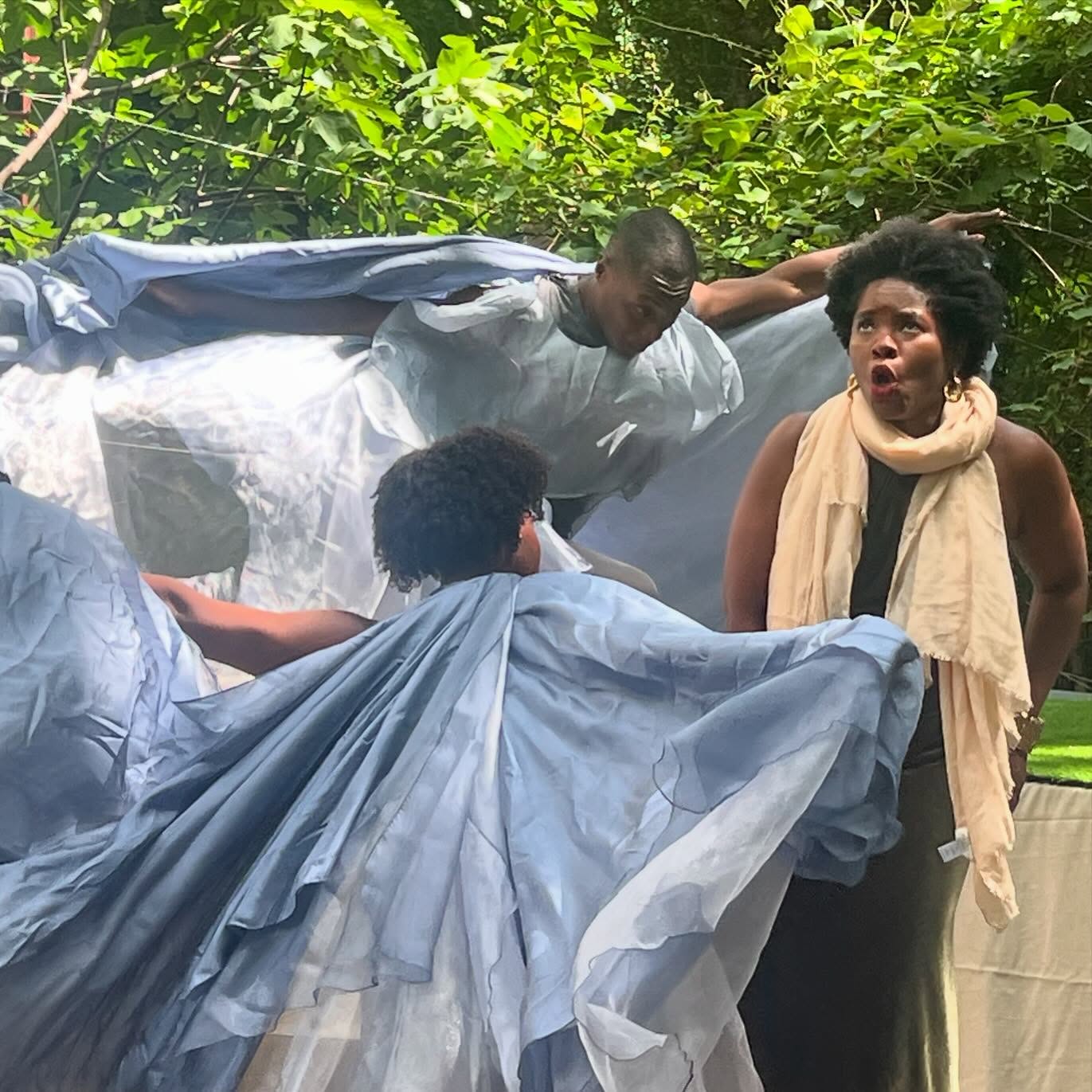
H. Paul Moon wrapped up 2025 by quietly slipping a gift under the tree in the form of a posted film of an Opera Essentia performance of George Frideric Handel’s “Radamisto.” Countertenor Jeffrey Mandelbaum’s distillation of the composer’s 1720 opera seria in three acts manages to get it down to one hour as “The Queen’s Heart.”
I love this sort of quixotic endeavor, presenting tasteful abridgements of rare Handel operas in New York City neighborhoods for free. The productions are no-budget, bare-bones, and beautiful. Watching the wind rustle the leaves during this performance is magical.
Mandelbaum has appeared widely, in both concert hall and opera house, including at the Metropolitan Opera, alongside such singers as Joyce DiDonato and Placido Domingo.
H. Paul Moon’s feature-length documentary “Samuel Barber: Absolute Beauty” aired nationwide on PBS in 2017.
Opera Essentia performs in New York’s gardens, parks, and other neighborhood gathering spaces. “The Queen’s Heart” was filmed at Green Oasis Community Garden on May 24, 2025.
Enjoy it here:
To view other operas in the series, visit:
For more information about Opera Essentia, visit:
Tag Cloud
Aaron Copland (92) Beethoven (94) Composer (114) Film Music (116) Film Score (143) Film Scores (255) Halloween (94) John Williams (185) KWAX (228) Leonard Bernstein (99) Marlboro Music Festival (125) Movie Music (131) Opera (197) Philadelphia Orchestra (86) Picture Perfect (174) Princeton Symphony Orchestra (106) Radio (86) Ralph Vaughan Williams (85) Ross Amico (244) Roy's Tie-Dye Sci-Fi Corner (290) The Classical Network (101) The Lost Chord (268) Vaughan Williams (99) WPRB (396) WWFM (881)