Tag: Outland

  • Outland A Space Western Film Discussion

    Outland A Space Western Film Discussion

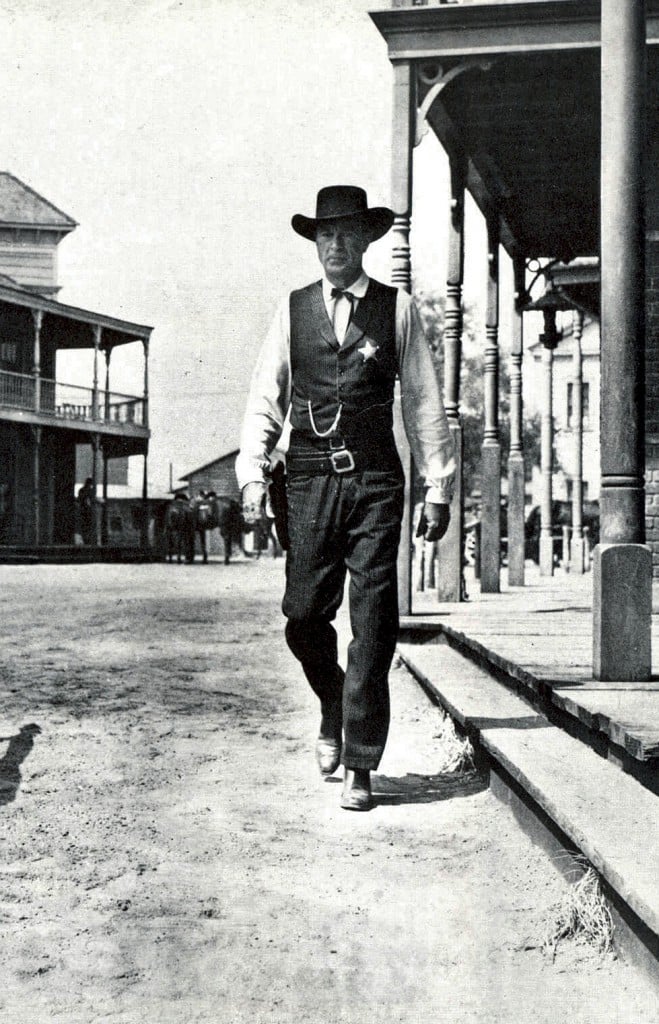
    The badge. The shotguns. The swinging saloon doors. The righteous marshal, bound by duty and honor to stand alone against the anticipated arrival of armed assassins – the tension heightened by countdown clocks everywhere. Why, it’s “High Noon” in space!

    Roy and I discuss “Outland” (1981), Peter Hyams’ western transplant to one of Jupiter’s moons, with plenty of characteristic digressions – some of them predictable (as when Roy pauses to give entire synopses of classic-though-tangentially-related television shows) and some not so much so (almost anything out of my mouth). Digressions upon digressions. You know you’re in trouble when the first 20 minutes of the show is taken up by us palavering about westerns, spaghetti westerns, and the unscrupulous Italian film industry.

    The countdown clock may sputter to two hours, but don’t forsake us, oh my darlings. You can watch it if you care to, here:

    I’ll leave Roy to stand alone on Sunday night against the arrival of three special guests: Warren Friedrich (organizer) Robert Wood (author) and David Hirsch (author/columnist: Starlog Magazine). They’ll be talking “Space: 1999,” so I’ll be on the first coach out of there. More specifically, the topic will be Calgary: 1999, a celebration of the sci-fi cult television series starring Martin Landau, Barbara Bain, and Nick Tate. The convention will be held in Calgary, Alberta, Canada, April 28-May 1.

    Enjoy the exchange, opposite the Oscars, and share your questions and comments when they livestream on Facebook, YouTube, etc., on the next Roy’s Tie-Dye Sci-Fi Corner, at a special time, this Sunday evening at 7:00 EDT!

    https://www.facebook.com/roystiedyescificorner

    And don’t forget to change your clocks!

    More about Calgary: 1999 here:

    https://www.facebook.com/Space199950years

  • Outland Space Western with Sean Connery

    Outland Space Western with Sean Connery

    By the late 1970s, John Wayne was dead and the enduring genre of the American movie western was left a high-plains drifter.

    Sure, there were revisionist westerns and elegiac westerns and, from beyond our borders, spaghetti westerns and even acid westerns. But by and large, the great tradition of sundrenched morality tales, with white hats beating black hats to lay the cornerstones of justice and civilization, had run their course.

    Still, never underestimate the resonance of a good myth.

    In the wake of “Star Wars,” with its space cowboys, cantinas, and laser sidearms, shoot-‘em-ups and showdowns were increasingly cast on distant worlds, though all-too-frequently without the uncomplicated, “classic western” moral gravitas.

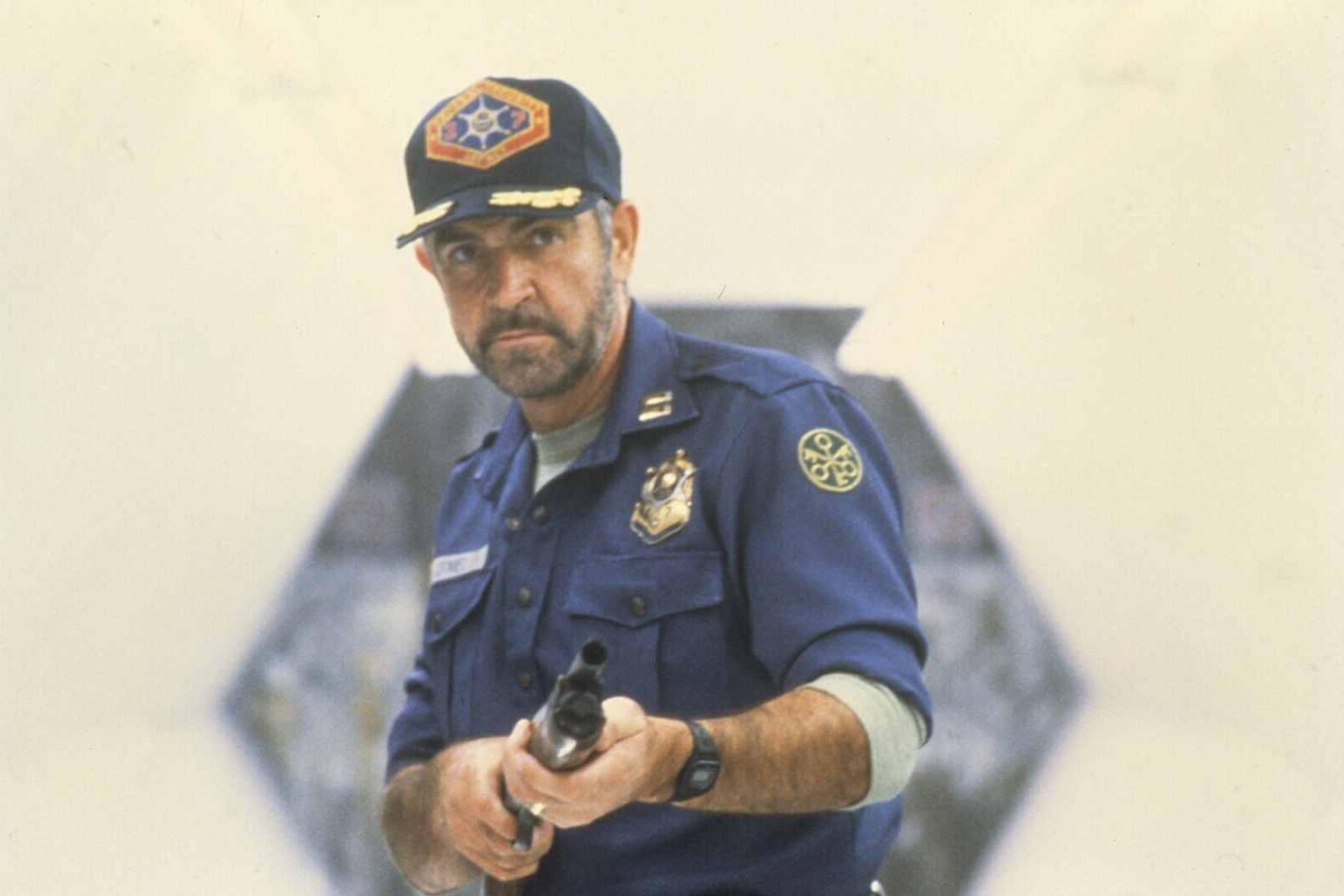
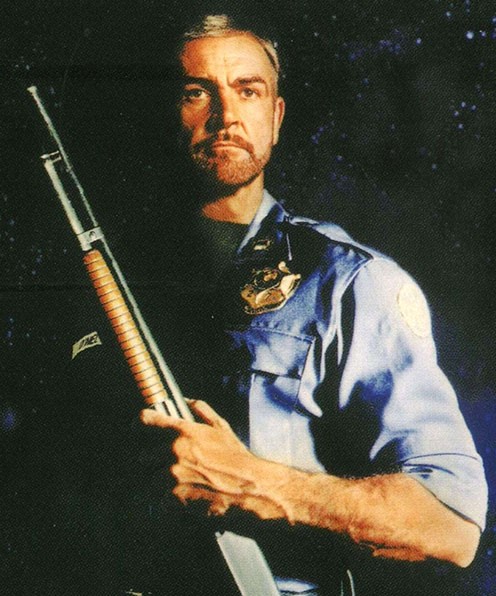
    A notable exception is “Outland” (1981), a gritty update of “High Noon,” transplanted to a mining colony on one of the moons of Jupiter. Sean Connery plays the upright marshal who, like Gary Cooper’s Will Kane, is left to stand alone against hired gunmen.

    Space truly is the final frontier, as Roy and I discuss “Outland” on the next Roy’s Tie-Dye Sci-Fi Corner. We’ll be looking for armchair deputies in the comments section, when we livestream on Facebook, YouTube, etc., this Friday evening at 7:30 EST!

    https://www.facebook.com/roystiedyescificorner

  • Aliens Outland Roy’s Tie-Dye Sci-Fi

    Aliens Outland Roy’s Tie-Dye Sci-Fi

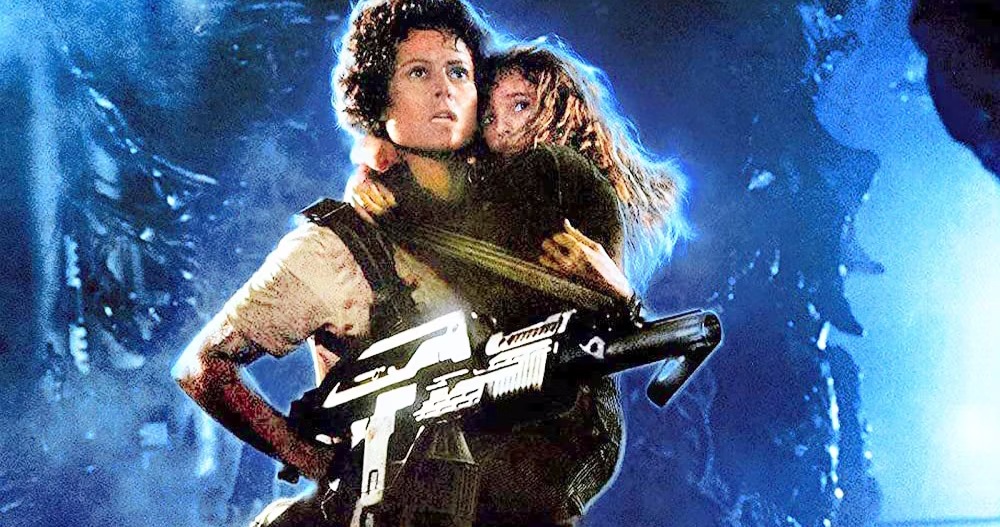
    I’m happy to report, Roy and I survived our encounter with “Aliens” (1986), James Cameron’s testosterone-soaked sequel to Ridley Scott’s haunted-house-in-space original. It’s interesting that the women – one of them a child – are all tougher than the men, even the Space Marines. But the “Alien” franchise has always been full of fascinating inversions. At the core of the mythos are anxiety and revulsion at the biological process of birth. Or maybe the films are just metaphors for a really nasty cold. Either way, the men aren’t equipped to handle it. We may love our explosions and our military hardware, but give us an impacted toenail and we start shopping for gravesites. Roy and I do our best to put on a brave face, but I’ve got my handkerchief with me, just in case.

    Next week, we’ll hang on to our grim determination when mining “Outland” (1981), which to me always seems to occupy the same universe as “Alien.” “Blade Runner” too, for that matter. There’s certainly plenty of corporate greed and corruption to revile as workers are put in peril on a mining colony located on one of the moons of Jupiter. Sean Connery plays the righteous marshal who won’t look the other way.

    It was not lost on critics and some audience members at the time that the film owes a fair amount to “High Noon.” It’s yet another example of how, after “Star Wars,” all the good westerns moved to space. We’ll be looking to deputize you in the comments section on the next Roy’s Tie-Dye Sci-Fi Corner. I’ll be riding shotgun when we livestream on Facebook, YouTube, etc., next Friday evening at 7:30 EST!

    https://www.facebook.com/roystiedyescificorner

  • Western Heroes Music From Shane to Outland

    Western Heroes Music From Shane to Outland

    The western must be the most adaptable of cinematic genres – which seems funny, in a way, since the figures at its core are so resolute. This week on “Picture Perfect,” we reflect on the evolution of the western hero with music from four contrasting films.

    “Shane” (1953) depicts a classic western archetype, the reluctant gunfighter, a drifter with a past, who pauses on his way to nowhere to defend a family of homesteaders against injustice at the hands of a greedy cattle baron. Mysterious, laconic, but with an unshakeable moral compass, Shane can be counted on always to do the right thing, resorting to violence only when he’s out of options. Alan Ladd’s mythic turn is supported by one of Victor Young’s best-loved scores.

    Dimitri Tiomkin was once asked how a composer of Ukrainian origin could write such convincing western music. He responded, in accented English, “A steppe is a steppe is a steppe.”

    Tiomkin would become the composer of choice for the American western throughout the 1950s, due to his distinctive handling of “High Noon” (1952). The success of its title song, “The Ballad of High Noon” (“Do Not Forsake Me, Oh My Darlin’”), with its melody integrated into the orchestral score, provided a western blueprint for well over a decade. Tiomkin was honored with two Academy Awards, for Best Song and Best Scoring of a Dramatic Motion Picture.

    In “High Noon,” we are presented with a very different hero from that of the “Shane” archetype, a hero allowed to show uncertainty. Gary Cooper’s Marshal Will Kane seeks help for the final showdown, but winds up having to stand alone. As Mark Twain observed, “Courage is not the absence of fear. It’s acting in spite of that fear.”

    Clint Eastwood’s The Man With No Name, the anti-hero of Sergio Leone’s “Dollars Trilogy” of spaghetti westerns, is very much a product of the 1960s – cynical and self-serving, with his own moral code, lots of grays clouding up the black and white. The character was introduced in 1964’s “A Fistful of Dollars” (1964), a western remake of Akira Kurosawa’s “Yojimbo,” with a wandering gun-for-hire standing in for Kurosawa’s ronin, or masterless samurai.

    The Man With No Name strikes a mercenary pose, his allegiance shifting with the most profitable wind. However, he is revealed to have his own sense of justice, unorthodox as it may be.

    Ennio Morricone brought a fresh sound to this new kind of hero and earned international attention, which would intensify a few years later with his iconic score for “The Good, the Bad and the Ugly.”

    By the late ‘70s, the western as a genre appeared to be in its death-throes. But never underestimate the durability of a good myth. Even as galloping horses and dusty plains grew increasingly scarce on movie screens, the tropes and iconography of the western endured, transferred to the final frontier of space.

    Following the success of “Star Wars,” in 1977, with its cantinas and space cowboys, shoot-’em-ups and showdowns were, increasingly, set in distant galaxies, though, regrettably, often without much of the former “western” moral gravitas.

    “Outland” (1981) is a gritty update of “High Noon,” transferred to a mining colony on one of the moons of Jupiter. This time Sean Connery plays the marshal, like Gary Cooper’s Will Kane, determined to do the right thing, even as he is left to stand alone against hired gunmen. The score is by Jerry Goldsmith, who, earlier in his career, had written music for a fair number of true westerns, on both big screen and small.

    I hope you’ll join me for four faces of the western hero, on “Picture Perfect,” music for the movies, this Saturday evening at 6:00 EDT, on WWFM – The Classical Network and at wwfm.org.
Tag Cloud

Aaron Copland (92) Beethoven (94) Composer (114) Film Music (117) Film Score (143) Film Scores (255) Halloween (94) John Williams (185) KWAX (228) Leonard Bernstein (99) Marlboro Music Festival (125) Movie Music (132) Opera (197) Philadelphia Orchestra (86) Picture Perfect (174) Princeton Symphony Orchestra (106) Radio (86) Ralph Vaughan Williams (85) Ross Amico (244) Roy's Tie-Dye Sci-Fi Corner (290) The Classical Network (101) The Lost Chord (268) Vaughan Williams (101) WPRB (396) WWFM (881)

DON’T MISS A BEAT

Receive a weekly digest every Sunday at noon by signing up here


RECENT POSTS