Tag: Palestrina

  • Maundy Thursday Music: Meaning & Somber Reflections

    Maundy Thursday Music: Meaning & Somber Reflections

    I’ll bet a lot of people wind up googling “maundy” today. I know I do. Maundy Thursday commemorates Jesus’ washing of the feet of his disciples, the Last Supper, and the betrayal and arrest of Christ in the garden of Gethsemane.

    Here’s what I’ve been able to find out: “maundy” is most likely derived from the Latin word “mandatum,” as in “Mandatum novum do vobis ut diligatis invicem sicut dilexi vos” (“A new commandment I give you, That ye love one another; as I have loved you”). Or it could be from the Middle English and Old French words “maund” and “mendier,” respectively, after the Latin “mendicare,” meaning to beg.

    Okay, so the origins are vague. Let’s just say it ties in to the concepts of humility and service, as exemplified by Jesus’ ritual foot-washing. In any case, “maundy” has been in use since at least 1530, so we’re just going to roll with it.

    Here’s an exceedingly somber work for Maundy Thursday by the Belgian composer Guillaume Lekeu. Lekeu died of typhoid the day after his 24th birthday. In his short life, he managed to produce about 50 works. Admittedly, some are incomplete. If one were to judge solely from his music, he was a melancholy soul indeed.

    This is “Molto Adagio,” composed by a 16-year-old Lekeu, inspired by the words of Christ in the garden of Gethsemane, “My soul is exceeding sorrowful, even unto death.”

    From 1999 to 2014, the Brentano Quartet served as ensemble-in-residence at Princeton University. Among its other achievements, the ensemble played on the soundtrack of the 2012 film “A Late Quartet,” starring Christopher Walken, Philip Seymour Hoffman, Catherine Keener, and Wallace Shawn. The group’s cellist, Nina Lee, also appeared onscreen, as a fictionalized version of herself.

    Victor de Sabata is remembered primarily as a conductor, especially of opera, having led the classic recording of “Tosca” with Maria Callas. He got his start playing violin in an orchestra under Toscanini. Toscanini encouraged the young man to become a conductor, which was kind of like letting the genie out of the bottle. Their relationship status passed from mentor-disciple to friendship to bitter rivalry. For decades, De Sabata was principal conductor at La Scala. For a time, he was its artistic director. One observer described his appearance while conducting as a cross between Julius Caesar and Satan.

    An interesting tension, then, between the sacred and the diabolical. De Sabata was also the composer of this beautiful and contemplative meditation for orchestra, titled “Gethsemani” [sic]. In this recording, on the Hyperion label, the conductor is De Sabata’s son-in-law, Aldo Ceccato.

    Finally, from a gorgeous album of Palestrina’s music for Maundy Thursday on the Chandos label, here’s a playlist of performances by Musica Contexta.

    All sensitively done, I think. There’s little maudlin in this Maundy music.


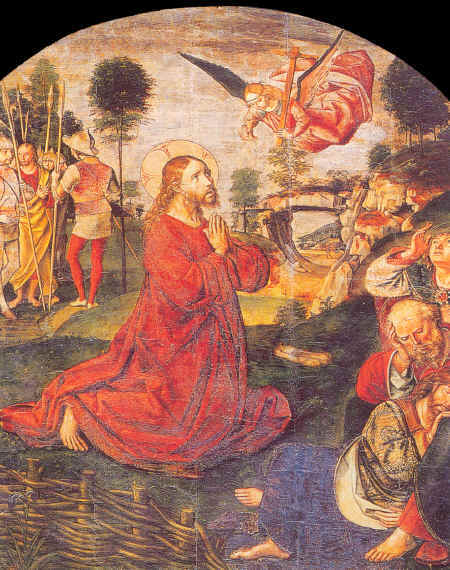
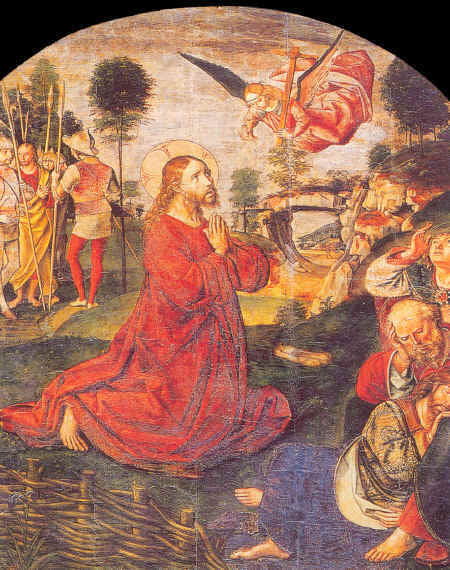
    “Jesus in the Garden of Gethsemane,” c. 1500, by Pedro Berruguete (1450–1504)
  • Palestrina The Legend Behind the Music

    Palestrina The Legend Behind the Music

    Okay, so we don’t know exactly when Renaissance master Giovanni Pierluigi da Palestrina was born. I guess nobody wrote anything down back then unless you were really important (i.e. if you were of royal blood), and who would have predicted his achievements?

    A Catholic superstar of the Counter-Reformation, Palestrina is often credited with having persuaded the Council of Trent not to ban polyphonic music. (See, or hear, Hans Pfitzner’s opera “Palestrina” of 1915.) Yes, this was something the Church really debated back in the 16th century. Can’t have that lascivious, impure polyphonic music stirring up the passions.

    Recent scholarship has revealed that Palestrina’s defiance may have been somewhat exaggerated. Nevertheless, this legend of speaking truth to power grew, beginning with a hagiography written in 1607 (13 years after Palestrina’s death), in which composer Agostino Agazzari described him as “the hero of church polyphony.” Hey, any pitchman will tell you, sometimes all it takes to close a sale is one punchy phrase.

    In all, Palestrina composed 104 masses, over 300 motets, 68 offertories, 72 hymns, 35 Magnificat settings, 11 Litanies, four or five sets of Lamentations, and over 140 secular madrigals. He spent most of his career in Rome, serving as maestro di cappella at various churches, including a brief stint at the Sistine Chapel. He got the boot when the Pope decreed that all papal musicians had to be celibate clerics. (Palestrina was married, with four children.) Still, his music continued to be performed there.

    The only reason we’re even in the ballpark concerning Palestrina’s birthday is that a younger colleague specified in his eulogy that, at the time of his death, on February 2, 1594, Palestrina was 68 years-old. That narrows the field to somewhere between February 3, 1525, and February 2, 1526.

    Be that as it may, early music aficionados will be going bananas for Palestrina over the next 12 months, in honor of his 500th anniversary. As was observed in “The Man Who Shot Liberty Valance,” when the legend becomes fact, print the legend!


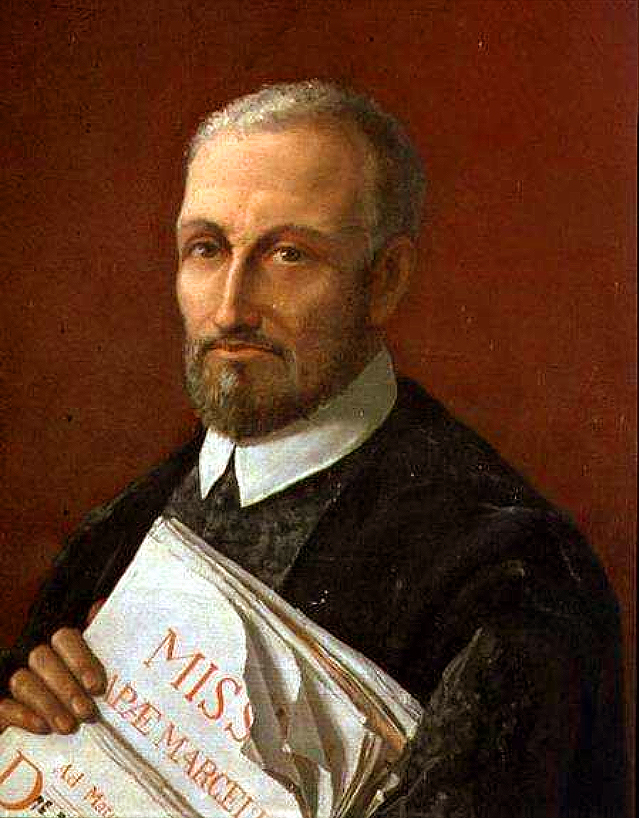
    Actually, the primary concern the Church had about polyphony was that the sacred texts couldn’t be understood (which might strike some as curious, since the texts were in Latin anyway – but your fault for not having a clerical education!). Palestrina’s simple, sensitive handling of the texts in the “Missa Papae Marcelli” (“Pope Marcellus Mass”), from around 1562, is said to have convinced Cardinal Carlo Borromeo that polyphony could be intelligible and that music such as Palestrina’s was too beautiful to ban from the Church.

    Play that funky polyphonic music, white boy.

  • Maundy Thursday Music: Lekeu, Sabata, Palestrina

    Maundy Thursday Music: Lekeu, Sabata, Palestrina

    Is it Monday, or is it Thursday? Why, it’s Maundy Thursday!

    Of course, Maundy has nothing to do with Monday. The word is most likely derived from the Latin “mandatum,” as in “Mandatum novum do vobis ut diligatis invicem sicut dilexi vos” (“A new commandment I give you, That ye love one another; as I have loved you”). Or it could come from the Middle English and Old French words “maund” and “mendier,” respectively, after the Latin “mendicare,” meaning to beg.

    In any case, we are now entering the holiest days of the Christian calendar. Maundy Thursday commemorates Jesus’ washing of the feet of his disciples, the Last Supper, and the betrayal and arrest of Christ in the garden of Gethsemane.

    Here’s an exceedingly somber work for Maundy Thursday by the Belgian composer Guillaume Lekeu (1870-1894). Lekeu died of typhoid the day after his 24th birthday. In his short life, he managed to produce about 50 works. Admittedly, some are incomplete. If one were to judge solely from his music, he was a melancholy soul indeed.

    This is “Molto Adagio,” composed by a 16 year-old Lekeu, inspired by the words of Christ in the garden of Gethsemane, “My soul is exceeding sorrowful, even unto death.”

    From 1999 to 2014, the Brentano Quartet served as ensemble-in-residence at Princeton University. Among its other achievements, the ensemble played on the soundtrack of the 2012 film “A Late Quartet,” starring Christopher Walken, Philip Seymour Hoffman, Catherine Keener, and Wallace Shawn. The group’s cellist, Nina Lee, also appeared onscreen, as a fictionalized version of herself.

    A couple of days ago, I posted about conductor Victor de Sabata, for his birthday. De Sabata too wrote a lovely piece for Maundy Thursday, called “Gethsemani.” I highly recommend it in its orchestral guise, available on a CD of De Sabata’s symphonic poems on the Hyperion label. However, since either Hyperion or the algorithm is so hyper-vigilant, Hyperion recordings seem to get yanked off YouTube very quickly.

    So here’s the work in a version for piano. Still beautiful, still contemplative, but without the orchestral sheen.

    Finally, from a gorgeous album of Palestrina’s music for Maundy Thursday on the Chandos label, here’s a playlist of performances by Musica Contexta.

    All sensitively done, I think. There’s little maudlin in this Maundy.


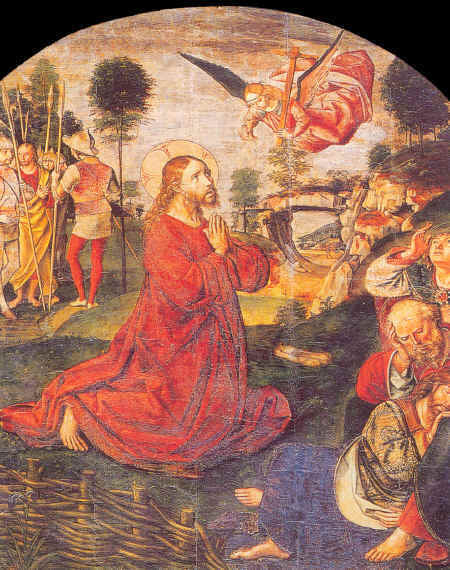
    “Jesus in the Garden of Gethsemane,” c. 1500, by Pedro Berruguete (1450–1504)
  • Palestrina Maundy Thursday Music

    Palestrina Maundy Thursday Music

    Palestrina for Maundy Thursday

  • Mendelssohn and More on WWFM

    Mendelssohn and More on WWFM

    I wonder how much genius dust got spilled into the celestial mixer that classical music was blessed with three of its greatest geniuses in one week: Wolfgang Amadeus Mozart (born Jan. 27, 1756), Franz Schubert (Jan. 31, 1797), and now Felix Mendelssohn (Feb. 3, 1809). Was it purely by chance, or the workings of design?

    Be it what it may, I will celebrate Mendelssohn in the brief time allotted to me on WWFM this afternoon, from 4 to 6 p.m. Mendelssohn, of course, was one of music’s great prodigies. His earliest masterpieces, the Octet for Strings in E-flat Major and the Overture to “A Midsummer Night’s Dream,” were written at the ages of 16 and 17, respectively. In fact, there are those who say it was all downhill from there.

    We’ll hear, among our featured works, Mendelssohn’s early Concerto for Violin and Strings – not to be confused with the later Violin Concerto in E minor (one of the most popular concertos in the repertoire, completed at the age of 35, thank you very much). The soloist will be Gidon Kremer, who will appear with his chamber orchestra, Kremerata Baltica, at McCarter Theatre Center in Princeton tonight at 8.

    I’ll also pay tribute to Renaissance master Giovanni Pierluigi da Palestrina on the anniversary of his birth (in 1525). Palestrina, Catholic superstar of the Counter-Reformation, is often credited with having persuaded the Council of Trent not to ban polyphonic music. Recent scholarship has revealed that the story may have been somewhat romanticized, but, as with “The Man Who Shot Liberty Valance,” when the legend becomes fact, print the legend.

    Finally, I’ll lend a touch of whimsy in the form of a concerto for jew’s harp, by Johann Georg Albrechtsberger (born on this date in 1736). A jew’s harp has nothing at all to do with Jews or Judaism. Rather, the term is probably a corruption of “jaw harp.” The folk instrument actually had its origin in Asia. The Chinese were playing it at least as far back as the 4th century B.C. (Snoopy picked it up in 1969.) Albrechtsberger, believe it or not, was one of Beethoven’s teachers.

    At 6:00, I’ll be your host for “Picture Perfect,” music for the movies. I’ll post more about that as the time draws nigh. For now, I hope you’ll join me for Mendelssohn, Palestrina, Albrechtsberger and more, beginning at 4 p.m. EST, on WWFM – The Classical Network and at wwfm.org.

Tag Cloud

Aaron Copland (92) Beethoven (95) Composer (114) Film Music (120) Film Score (143) Film Scores (255) Halloween (94) John Williams (185) KWAX (229) Leonard Bernstein (100) Marlboro Music Festival (125) Movie Music (135) Opera (198) Philadelphia Orchestra (88) Picture Perfect (174) Princeton Symphony Orchestra (106) Radio (87) Ralph Vaughan Williams (85) Ross Amico (244) Roy's Tie-Dye Sci-Fi Corner (290) The Classical Network (101) The Lost Chord (268) Vaughan Williams (103) WPRB (396) WWFM (881)

DON’T MISS A BEAT

Receive a weekly digest every Sunday at noon by signing up here


RECENT POSTS