Tag: Paris Conservatory

  • Massenet & Fauré Anniversary Celebrating Two French Masters

    Massenet & Fauré Anniversary Celebrating Two French Masters

    Today is the anniversary of the births of two outstanding French composers: Jules Massenet (1842-1912) and Gabriel Fauré (1845-1924).

    Massenet’s fluency and emotionally direct style made him the most successful French opera composer of his generation. Fauré was the more progressive of the two. He wrote meticulously-crafted music of great nuance, with a harmonic sense that seemed to yearn for the 20th century. As an administrator, he blew the dust off the Paris Conservatory and ushered in an era of unprecedented reform.

    Here are two absorbing interpretations of music by these very different French masters.

    Joan Sutherland sings a selection from Massenet’s medieval romance “Esclarmonde”:

    Germaine Thyssens-Valentin, a Fauré pupil, plays his Nocturne No. 6 in D-flat:

    Joyeux anniversaire, mes amis!


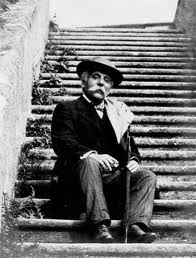
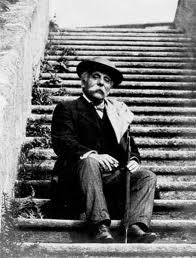
    PHOTOS: Fauré (left) and Massenet en plein air

  • Massenet & Fauré Birthdays Celebrate French Music

    Massenet & Fauré Birthdays Celebrate French Music

    Today is the anniversary of the births of two outstanding French composers: Jules Massenet (1842-1912) and Gabriel Fauré (1845-1924).

    Massenet’s fluency and emotionally direct style made him the most successful French opera composer of his generation. Fauré was the more progressive of the two. He wrote meticulously-crafted music of great nuance, with a harmonic sense that seemed to yearn for the 20th century. As an administrator, he blew the dust off the Paris Conservatory and ushered in an era of unprecedented reform.

    Here are two absorbing interpretations of music by these very different French masters.

    Joan Sutherland sings a selection from Massenet’s medieval romance “Esclarmonde”:

    Germaine Thyssens-Valentin, a Fauré pupil, plays his Nocturne No. 6 in D-flat:

    Joyeux anniversaire, mes amis!


    PHOTOS: Fauré (left) and Massenet en plein air

  • Louise Farrenc NPR Theme Rediscovered

    Louise Farrenc NPR Theme Rediscovered

    I leave many windows open on my computer. Dozens. Whenever I read anything of interest, I am more likely just to leave it up and open another screen than to bookmark, since bookmarking virtually guarantees I will never again return to whatever it is I’ve saved.

    Be that as it may, I was just cleaning out some of those open screens, when I came across this article on Louise Farrenc, which I probably read around the time the Philadelphia Orchestra performed her Second Symphony. I’ve always been fond of Farrenc’s music, but I was unfamiliar with her Piano Quintet No. 2. The writer makes the astute observation that one of the themes eerily anticipates that for NPR’s “All Things Considered.”

    https://www.iowapublicradio.org/post/1840-she-wrote-all-things-considered-theme-louise-farrenc-how-female-genius-can-flourish#stream/0

    Here’s a link to the entire piece. The “All Things Considered” theme appears for the first time at the 47-second mark.

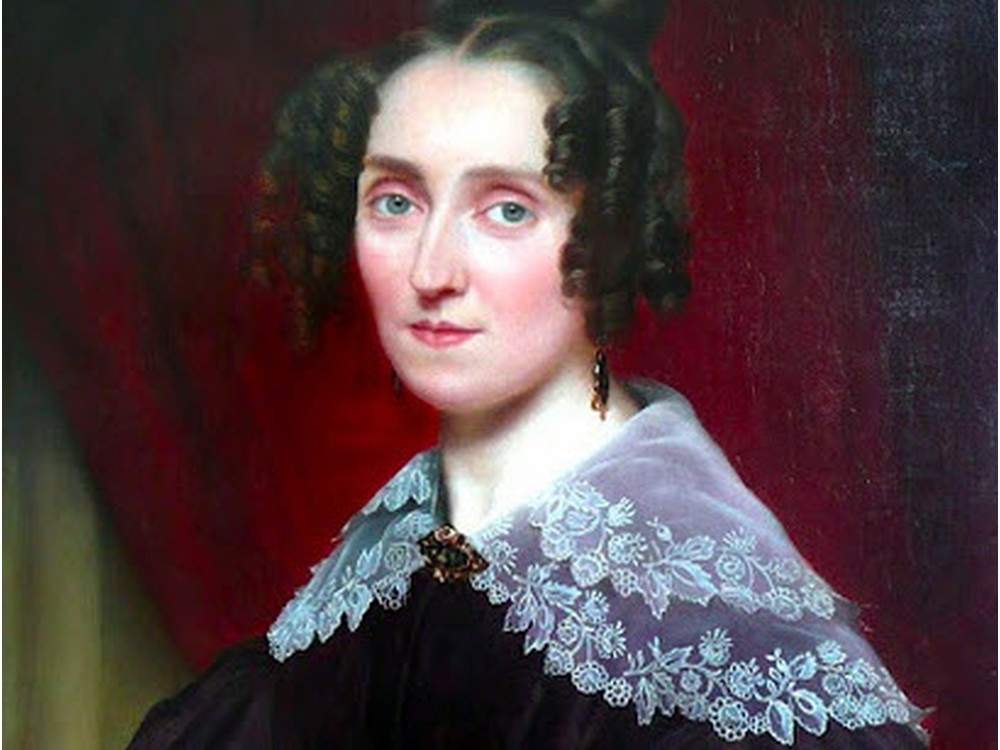
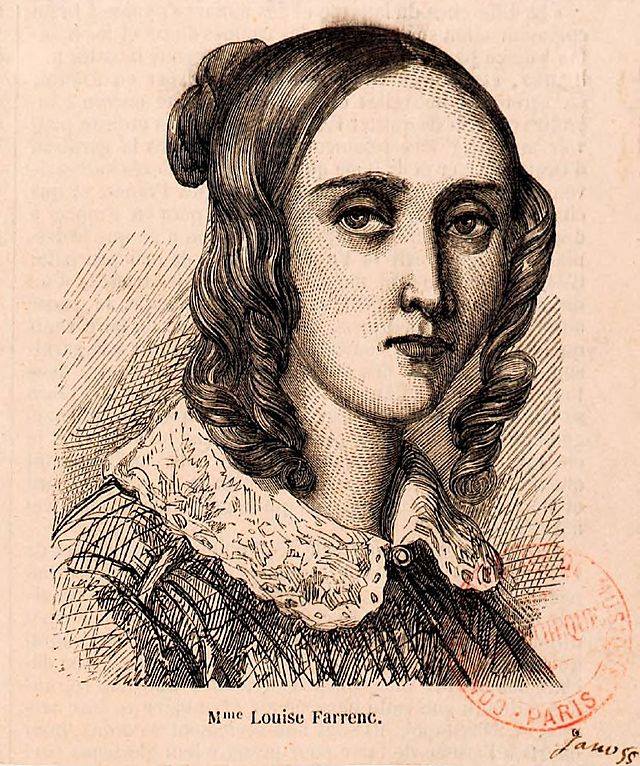
    Farrenc, a virtuoso pianist, was the only female professor at the Paris Conservatory in the whole of the 19th century. Of course, she was only allowed to teach women – and just piano, not composition.

    She and her husband, the flutist Aristide Farrenc, founded Éditions Farrenc, for almost 40 years one of the leading music publishers in France. Together, they edited the successful series, “Le trésor des pianistes,” which included works originally written for harpsichord by Bach, Couperin, Handel, Rameau, Scarlatti, and others, and sonatas for pianoforte by C.P.E. Bach, Beethoven, Chopin, Clementi, Dussek, Haydn, Hummel, and Weber.

    Following Aristide’s death in 1865, Louise continued to oversee the series until its 20th and final volume in 1872. Later, three additional volumes were added of music which had previously been published in the early 19th century.

    She was a remarkable figure. Do yourself a favor and familiarize yourself with her Symphony No. 3, recorded at least three times under studio conditions. This is but an excerpt conducted by Johannes Goritzki, whose commercial recording on CPO is very good.

  • Louise Farrenc Symphonies Rediscovered

    Louise Farrenc Symphonies Rediscovered

    I can’t get through Women’s History Month without listening to the symphonies of Louise Farrenc. In truth, they are good enough to hold up at any time of the year. Lyrical, fluid and well-argued, they are all worthwhile endeavors in the Mendelssohn/Schumann mold. In fact, Schumann was among Farrenc’s admirers. Berlioz was another.

    Her life, which spanned the years 1804 to 1875, was remarkable for, among other reasons, her being the only woman on the teaching faculty of the Paris Conservatory during the whole of the 19th century. Beginning in 1842, she served as professor of piano there for 30 years. Of course, she was only allowed to teach women. By the end of the first decade, her stature was such that she was able to demand – and receive – equal pay.

    Her own teachers included Ignaz Moscheles (who taught Mendelssohn) and Johann Nepomuk Hummel (who studied with Mozart). Beginning at 15, she took composition lessons privately with Anton Reicha, who also taught at the conservatory.

    At about age 17, she married a flute student, ten years her senior, with whom she toured as a pianist. She paused in her career as a performer to start a successful publishing house, Éditions Farrenc, which flourished for nearly 40 years. She also gave birth to a daughter, who also matured into a professional pianist.

    Farrenc’s fame as a performer survived her by several decades. She left 49 published works, mostly piano and chamber music. Her Nonet in E-flat, Op. 38, was a particular success.

    Ironically, it wasn’t the fact that she was a woman that led to her symphonies’ neglect, at least not exclusively. Apparently, anyone in France who wrote symphonies had pretty much the same problem getting any traction, since the orchestras were all tied to the theatre. If one wanted to get his or her symphony heard, he or she had to hire the musicians and organize the performances him or herself.

    Camille Saint-Saëns was so frustrated by the circumstance that he was finally moved to found his own permanent organization for the promotion of orchestral music, the Societé Nationale de Musique, though it really didn’t take flight until the 20th century. Then, as now, audiences didn’t exactly flock to new music by unrecognized composers.

    I hope you’ll join me tomorrow night for an example of Farrenc’s artisty. We’ll also hear a symphonic poem, “Andromède,” by Augusta Holmès (1847-1903), a French composer of Irish descent, who became a pupil of César Franck. Saint-Saëns proposed marriage to her multiple times, without success. Franck’s Piano Quintet is said to enshrine the teacher’s ardent longing for his student. Saint-Saëns, who participated in the work’s premiere, was not amused.

    That’s “Cherchez la Femme,” this Sunday evening at 10 ET, with a repeat Wednesday evening at 6; or you can enjoy it later as a webcast at http://www.wwfm.org.
Tag Cloud

Aaron Copland (92) Beethoven (95) Composer (114) Film Music (119) Film Score (143) Film Scores (255) Halloween (94) John Williams (185) KWAX (229) Leonard Bernstein (99) Marlboro Music Festival (125) Movie Music (134) Opera (198) Philadelphia Orchestra (86) Picture Perfect (174) Princeton Symphony Orchestra (106) Radio (87) Ralph Vaughan Williams (85) Ross Amico (244) Roy's Tie-Dye Sci-Fi Corner (290) The Classical Network (101) The Lost Chord (268) Vaughan Williams (102) WPRB (396) WWFM (881)

DON’T MISS A BEAT

Receive a weekly digest every Sunday at noon by signing up here


RECENT POSTS