Tag: Paul Dukas

  • Sorcerer’s Apprentice Halloween Day 1

    Sorcerer’s Apprentice Halloween Day 1

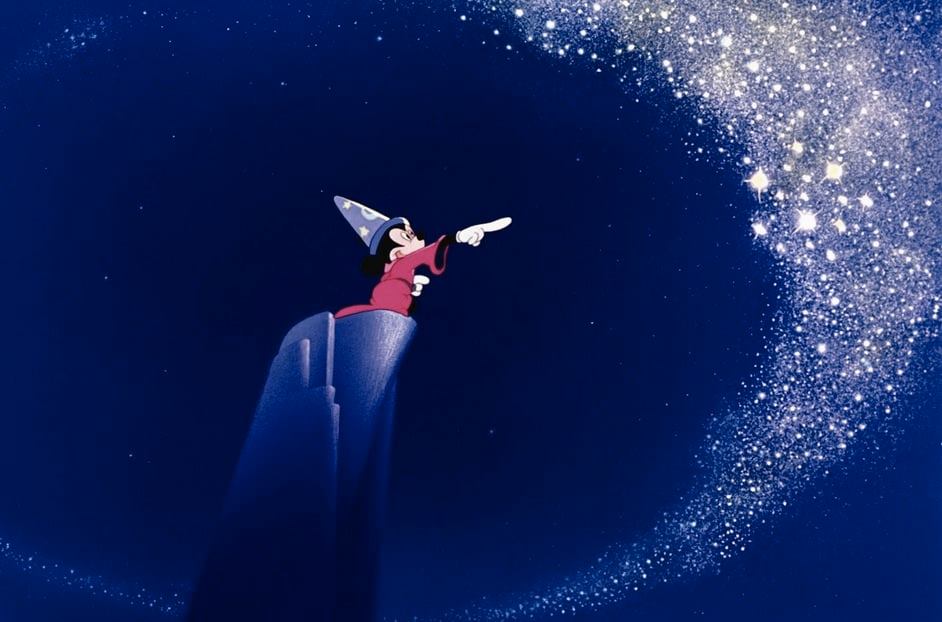
    31 DAYS OF HALLOWEEN (DAY 1)

    For Paul Dukas’ birthday, “The Sorcerer’s Apprentice”

    https://video.disney.com/watch/sorcerer-s-apprentice-fantasia-4ea9ebc01a74ea59a5867853

  • Richard Harris Sings MacArthur Park Today

    Richard Harris Sings MacArthur Park Today

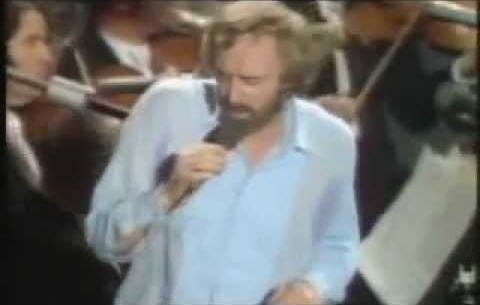
    Today is the anniversary of the births of Paul Dukas and Vladimir Horowitz. But forget those hacks! Enjoy the vocal stylings of birthday boy Richard Harris, who sings “MacArthur Park.”

    Then join me this afternoon from 4 to 7 p.m. EDT, for Dukas and Horowitz, on WWFM – The Classical Network and wwfm.org.


    The genius of “MacArthur Park:”

    SCTV’s Dave Thomas on “Mel’s Rock Pile:”

    https://www.youtube.com/watch?v=I8JlQNIvIfI

  • Peri Opera’s Birth & Dukas’ Persian Fairy

    Peri Opera’s Birth & Dukas’ Persian Fairy

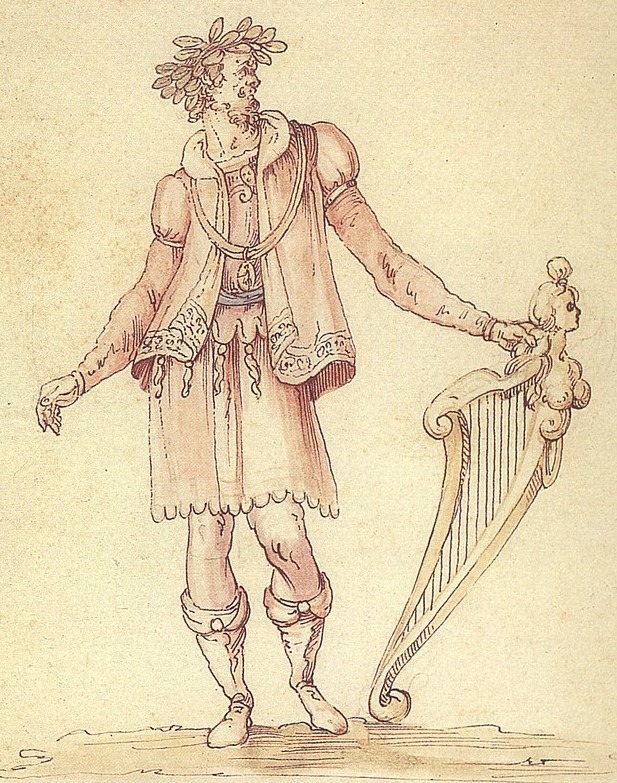
    I wish that I could have a cool nickname like “Il Zazzerino.” Sadly, Jacopo Peri got there first. Oh yeah, he also happened to invent opera.

    Peri’s “Dafne” (c. 1597) has the distinction of being the first work written in the genre. The earliest surviving opera, “Euridice” (1600), was also composed by Peri.

    So who was this Peri fellow, and what drove him to envision the marriage of music and theater on such an ambitious scale? As with most of the finer things in the development of Western Civilization, we can blame it all on the Greeks.

    Though in the employ of the Medici court, Peri engaged in philosophical discourse with Florence’s other great musical patron, Jacopo Corsi. Peri and Corsi, as have human beings of every generation since the expulsion from Eden, lamented the decay of art and civilization and pined for the good old days – which in their case were the days of Ancient Greece. Together, they attempted to resurrect Greek theater, as they understood it. Of course, their solution is like nothing the Greeks would have recognized, but what they conceived would influence other composers for centuries.

    Few of Peri’s own works are still performed today, except perhaps as historical curiosities. Even in his own time, his experiments in the form began to feel a little creaky next to those of the younger operatic firebrand Claudio Monteverdi. Today, Monteverdi’s “L’Orfeo” (1607) is in the standard repertoire and is the earliest opera to be regularly performed.

    French composer Paul Dukas had nothing of early Italian opera in mind when he came to write his 1912 ballet – or “dance poem,” as he described it – “La Péri.” A Peri is a kind of Persian fairy, the guardian of the Flower of Immortality. According to legend, Iksender, or Alexander the Great, attempts to retrieve the prize. The ballet is yet another pilgrimage by a Western composer to the temple of Orientalism. Dukas’ music is by turns mysterious, sinuous, and ecstatic.

    This would be the last published work by the composer of “The Sorcerer’s Apprentice.” Dukas, a notoriously self-critical artist, destroyed most of his own output. Eventually, he gave up composition altogether. Perhaps sharing Iksender’s sense of unworthiness, Dukas receded into the shadows, channeling his energy into the teaching of others, including Carlos Chávez, Maurice Duruflé, Olivier Messiaen, Manuel Ponce, and Joaquin Rodrigo.

    I hope you’ll join me for a pair of Peri, among my featured music today, between 4 and 7 p.m. EDT, on WWFM – The Classical Network and wwfm.org.


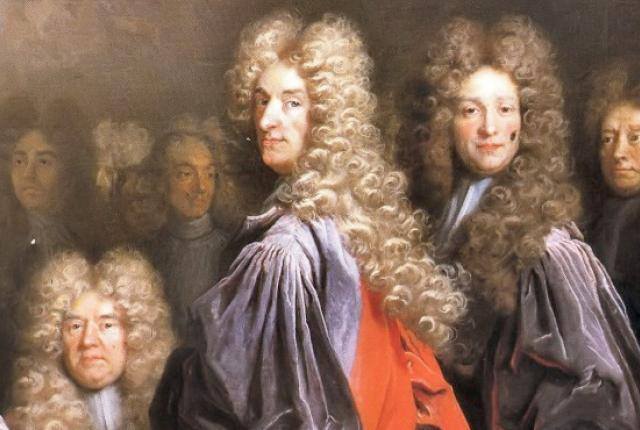
    PAIRING PERI: Il Zazzerino (left) and the guardian of the Flower of Immortality

  • Neo-Baroque Music on WPRB Today

    Neo-Baroque Music on WPRB Today

    If, for you, mention of the Baroque conjures images of recorders and harpsichords and beauty marks and shoes with big buckles on them, you’ve got another thing coming. Sure, if you tune in to WPRB this morning, you’ll get your share of concerti grossi, partitas, toccatas, chaconnes and fugues. However, none of them will have been composed before the turn of the 20th century. A few of them will even be from our own time.

    It’s a full morning of music of the “Neo-Baroque,” as we revel in the exuberance and melancholy of autumn, which for me is the most Baroque of the seasons. (Don’t ask me to explain. Maybe I’m just eating too many apples.)

    Along the way, we’ll manage to honor Paul Dukas, whose 150th birthday anniversary passed largely unrecognized on October 1, beyond perhaps a few more airings of “The Sorcerer’s Apprentice.” We’ll be listening to Dukas’ “Variations, Interlude and Finale on a Theme by Rameau.”

    As is often the case, I’m not really sure what else I’ll be playing, but it’s all in the box and ready to go. Among the pieces I would love to include – and sincerely hope I can get to – will be Hendrik Andriessen’s “Variations on a Theme by Couperin,” Paul Creston’s “Partita for Flute, Violin and Strings,” Ilja Hurnik’s “Sonata da camera,” Paul Lansky’s “Semi-Suite,” Julián Orbón’s “Concerto Grosso for String Quartet and Orchestra,” Roberto Sierra’s “Fantasia Corelliana,” Germaine Tailleferre’s “Concerto Grosso for 2 Pianos, Singers, Saxophones and Orchestra,” and, well, whatever else I’ve got on these 60 CDs I’ve toted in.

    In the 9:00 hour, we’ll be joined by special guests violinist Kinga Augustyn and conductor Mariusz Smolij. They’ll tell us a little bit about their upcoming appearance with the Riverside Symphonia, of which Smolij is music director. The program will include three violin crowd-pleasers, framed by two joyful serenades of Mozart and Dvořák. The concert will take place tomorrow night at 8, at St. Martin of Tours Church, in New Hope, Pa.

    I hope you’ll join me for music of the Neo-Baroque this morning, from 6 to 11 ET, on WPRB 103.3 FM or online at wprb.com. It will be played against a basso continuo of sleep-deprivation and befuddlement, on Classic Ross Amico.

    PHOTO: “Heavens, Tobias, what IS he playing?”

  • Paul Dukas Beyond the Sorcerer’s Apprentice

    Paul Dukas Beyond the Sorcerer’s Apprentice

    When we think of Paul Dukas, we generally think of one thing: “The Sorcerer’s Apprentice.” And when we think of “The Sorcerer’s Apprentice,” we think of Mickey Mouse.

    Dukas was an intensely self-critical artist, who wound up destroying most of his own works. Eventually he gave up composition altogether.

    Instead, like Shakespeare’s Prospero, he broke his staff and drowned his book to become a respected teacher of music, taking up posts at the Paris Conservatory and the École Normale de Musique. Among his students were Carlos Chávez, Maurice Duruflé, Olivier Messiaen, Manuel Ponce and Joaquin Rodrigo.

    Would that this creator of such vivid, brilliantly orchestrated works had left us more. But since all anyone knows is “The Sorcerer’s Apprentice,” I suppose it hardly matters.

    Happy birthday, Paul Dukas (1865-1935).

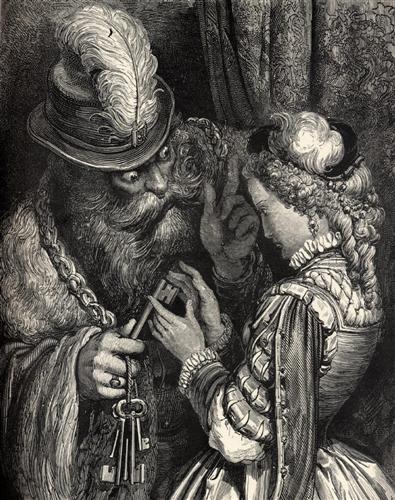
    Here’s a suite from his rarely-heard opera, “Ariane et Barbe-Bleue,” after the Bluebeard story, as told by Maurice Maeterlinck. The arrangement is by none other than Arturo Toscanini.

    Also, look what I found! Silent film master Georges Méliès’ adaptation of Bluebeard:

    https://www.youtube.com/watch?v=9aj41N5ET5Y

    PHOTO: The key to a dysfunctional marriage
Tag Cloud

Aaron Copland (92) Beethoven (95) Composer (114) Film Music (120) Film Score (143) Film Scores (255) Halloween (94) John Williams (185) KWAX (229) Leonard Bernstein (100) Marlboro Music Festival (125) Movie Music (135) Opera (198) Philadelphia Orchestra (88) Picture Perfect (174) Princeton Symphony Orchestra (106) Radio (87) Ralph Vaughan Williams (85) Ross Amico (244) Roy's Tie-Dye Sci-Fi Corner (290) The Classical Network (101) The Lost Chord (268) Vaughan Williams (103) WPRB (396) WWFM (881)

DON’T MISS A BEAT

Receive a weekly digest every Sunday at noon by signing up here


RECENT POSTS