Tag: Peter Maxwell Davies

  • Alexander Goehr, Manchester Rebel, Dies at 92

    Alexander Goehr, Manchester Rebel, Dies at 92

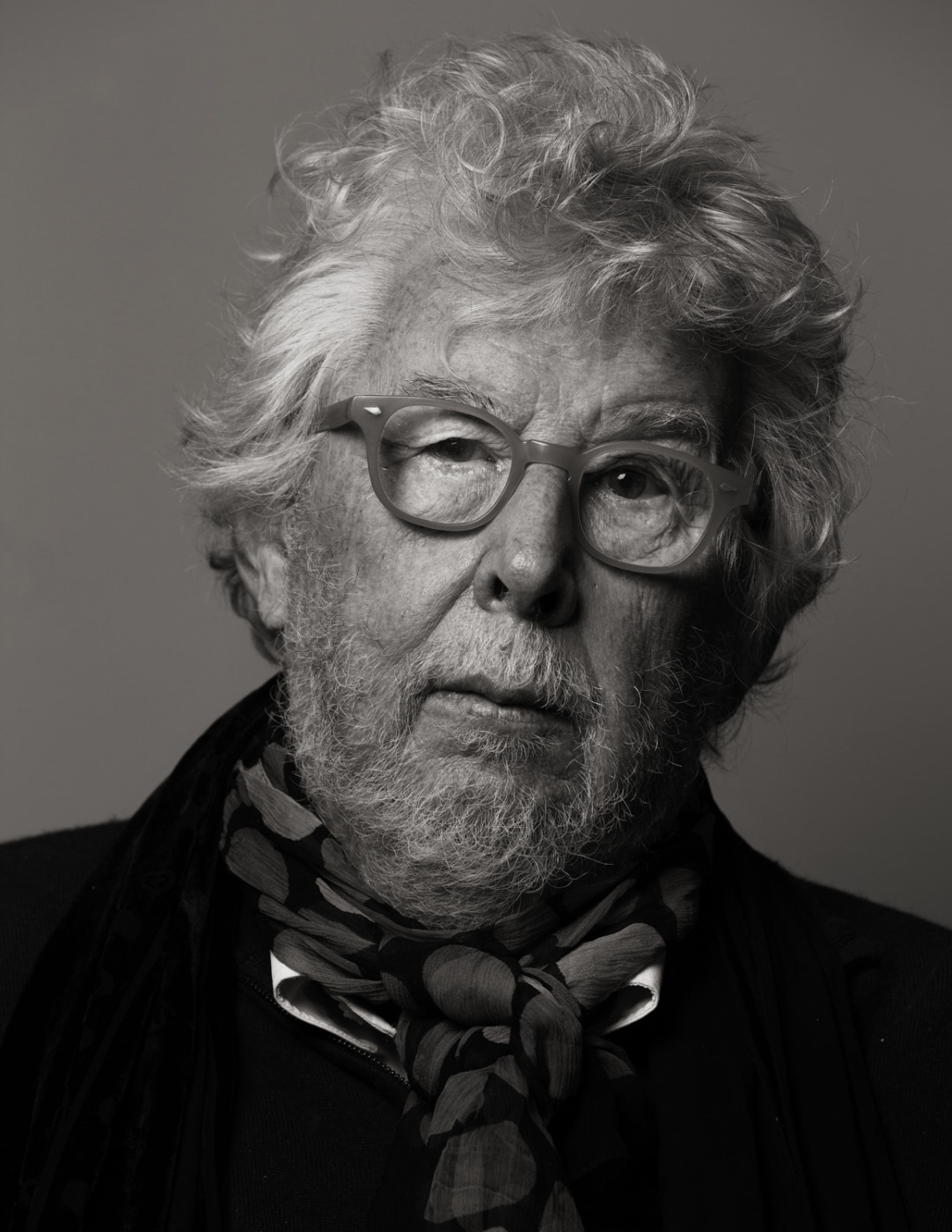
    Composer Alexander Goehr, the penultimate representative of the so-called Manchester School – that group of rebel angels that emerged from the Royal Manchester (now Northern) College of Music in the 1950s – has died at a venerable age.

    The son of composer and conductor Walter Goehr, a Schoenberg pupil, Alexander was born in Berlin in 1932. The influence of Olivier Messiaen (his father conducted the U.K. premiere of Messiaen’s “Turangalila Symphony;” Alexander later studied with the composer) colored his own personal approach to the twelve-tone method.

    Interestingly, Goehr’s first important, though likely least influential, teacher was Allan Gray (birth name Józef Żmigrod), also a Schoenberg disciple, who made his hay as a film composer. Schoenberg had already been rolling his eyes at Gray’s involvement in cabaret and theater. One can only assume what he made of this later development. (Of course, Schoenberg himself considered scoring “The Good Earth” in Hollywood, but priced himself out.) Gray would soon find employment providing music for Powell-Pressburger films like “The Life and Death of Colonel Blimp.” He also wrote the score for “The African Queen.”

    Despite, or perhaps because of, his own experiences, Goehr’s father did not encourage his son’s pursuit of a musical career. He would have preferred him to study classics at Oxford.

    At Manchester, Alexander fell in with angry young men Harrison Birtwistle, Peter Maxwell Davies, Elgar Howarth, and John Ogdon. They may have presented a tough face, but after-hours, they would geek out talking about things like medieval modes. Together, they founded New Music Manchester. The works they championed were hardly easy listening.

    Ogdon soon gained fame as a pianist, Howarth, now the group’s sole surviving member, kept bread on the table as a trumpeter and conductor, Maxwell Davies cannily developed a sideline of light music classics and was later appointed Master of the Queen’s Music, and Birtwistle, for all his notoriety, was regarded as one of the most important British composers of his generation.

    While in Paris to study with Messiaen, Goehr became friends with Pierre Boulez, who served as a mentor in the late ‘50s. Eventually they parted ways, after Goehr became disenchanted with the strictures of serialism and craved greater artistic freedom, in regard to spontaneity and personal choice. Messiaen also sparked his interest in non-Western music, including Indian raga.

    Questions of his personal evolution aside, in “Englands green & pleasant Land,” Goehr, in common with his classmates Maxwell Davies and especially Birtwistle, would continue to be regarded by casual concertgoers as an overgrown enfant terrible. At an age when many seriously begin to contemplate retirement, Goehr retained his influence and reputation as a prominent figure of the avant-garde. Yet in his later work, he seemed to step up his engagement with earlier historical styles and, as a result, wound up composing some of his most immediately appealing music.

    I don’t claim to be a Goehr expert, nor should this post be taken as a comprehensive overview of his life or career. I suppose I know about as much about him as any fanatical classical music record collector might, but even a scroll through his Wikipedia page reveals that, for whatever effort I may have made here, I still have merely skimmed the surface.

    Among other things I neglected to mention, he also held a number of prestigious academic posts, culminating in a professorship at Cambridge University from 1976 to 1999.

    Goehr’s death at 92 was reported yesterday. I would have gotten this up sooner, but I spent this morning at the DMV!


    Piano Concerto (1972), composed for Daniel Barenboim; played here by Peter Serkin

    String Quartet No. 4 “In Memoriam John Ogdon” (1990)

    “Metamorphosis/Dance,” inspired by Homer’s “The Odyssey”

    “Fugue on the Notes of Psalm IV” (1976)

    Interview with Alexander Goehr


    PHOTOS:

    Top, left to right: Alexander Goehr, Harrison Birtwistle, Audrey Crawford, formerly Goehr (front), John Ogdon (rear), Elgar Howarth, Peter Maxwell Davies, and John Dow in 1955;

    Bottom: Goehr interviewed in 2014
  • The Crown’s Missing Musician Scandal

    The Crown’s Missing Musician Scandal

    In my post of November 21, 2019, having just watched the first episode of the third season of the Netflix series “The Crown” – the one with a subplot involving Sir Anthony Blunt, Surveyor of the Queen’s Pictures – I wondered, as the timeline crept into the ‘70s and ‘80s, if writer-creator Peter Morgan might include a reference to Malcolm Williamson.

    Williamson, also from the world of the arts, brought further scandal to the Royal Family as a notoriously unreliable Master of the Queen’s Music.

    Since the 17th century, musicians have been appointed Master with the expectation that they would supply music for important milestones in the lives of the Royal Family and for ceremonial occasions. Past Masters of the Queen’s (or King’s) Music have included John Eccles (who served four monarchs), William Boyce, John Stanley, Sir Edward Elgar, Sir Arnold Bax, and Sir Arthur Bliss.

    When Williamson, Australian by birth, was named Bliss’ successor in 1975, already there was grumbling among his peers. Sir William Walton suggested the appointment was politically motivated, a means of “cementing the cracks in the Commonwealth.” Williamson had his share of personal demons, to be sure. He was prone to anxiety and depression, and he was certainly no stranger to the bottle. In his later years, he suffered a series of strokes.

    Unfortunately, he was also horrible with deadlines. He failed to complete a symphony in time for the Queen’s Golden Jubilee in 1977, and his ambitious “Mass for Christ the King,” also intended for the occasion, was delivered late. Significantly, he became the first Master in over a century not to receive a knighthood.

    Following his death in 2003, the parameters of the post were revised. No longer is the appointment to be one for life, but rather for a fixed, ten-year term. The current master is Judith Weir. Weir was appointed in 2015. She is the first woman to hold the position (and yes, she is still referred to as “Master”).

    Alas, having concluded Season 4, I am sorry to say, I detected no reference to Williamson in “The Crown.” Even an exasperated aside, delivered to the Queen, about another unfulfilled commission would have been welcome. But understandably the season was more concerned with the drama surrounding Diana Spencer and an uncanny performance by Gillian Anderson as Margaret Thatcher.

    There was, however, a nice “Easter egg” for classical music aficionados in Episode 8, the episode in which press secretary Michael Shea is given a prominent role. Shea was also a writer of books, and the episode opens with him seated at his typewriter, tapping out the conclusion to his latest literary effort. Nearby, on a turntable, spins Peter Maxwell Davies’ “Farewell to Stromness.”

    Maxwell Davies would serve as Master of the Queen’s Music from 2004 to 2014. He was the first to serve under the new guidelines. An amusing choice since, if anything, Max was an even more colorful figure than Williamson – if perhaps better about meeting deadlines.

    Throw “The Crown” in a blender with “Mozart in the Jungle,” cast Malcolm McDowell as Max, and THAT would be the show I’m looking for.

    Here’s hoping for a cameo in a future episode.


    “Farewell to Stromness”

    An arrangement of the piece was played at the wedding of Charles and Camilla in 2005.

    Max’s String Quartet No. 8, with its allusions to Dowland, dedicated to the Queen on the occasion of her 80th birthday:

    “Kings and Shepherds,” a carol for the Queen:

    Of course, Max gained notoriety in the 1960s for works like “Eight Songs for a Mad King,” inspired by George III.

    Decades later, in 2010, when the police showed up at his door after a protected swan struck a power line over his property in the Orkney Islands, Max invited them in – and offered them swan terrine.

    Only mad Max would set Purcell to a foxtrot. Love the suggestions of the Victrola running down, having to be cranked up, and then the stylus swishing around at the end.


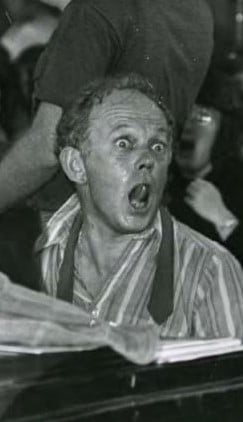
    PHOTOS: Wild Williamson (left) and Mad Max in 1973

  • Birtwistle at 85 An Appreciation?

    Birtwistle at 85 An Appreciation?

    Has Sir Harrison Birtwistle ever cracked a smile? One that isn’t at the expense of his audience, I mean?

    Today is Sir Harry’s 85th birthday. Despite sharing his fascination with Gawain, Punch, the Minotaur, Anubis, Orpheus, King Kong, and any number of other subjects that form the bases for his operas and concert works, I find he’s a composer whose music I have only ever moderately warmed up to.

    I vastly prefer the output of his contemporary and fellow former enfant terrible of the so-called Manchester School, Sir Peter Maxwell Davies. Late in life, Max may have been appointed Master of the Queen’s Music – you can’t get more establishment than that – but he never lost his impish glint. To some extent, it is that sense of mischief that makes even his earlier, more scandalous works somehow approachable.

    I don’t really need music to be “easy” or even tonal. There are times when I can put on a Birtwistle record and totally go with it. But I don’t know that anything he has written engenders much affection in me. This is not an objective assessment, of course, and perhaps you will react differently.

    Birtwistle has a local connection, by the way. He attended Princeton University on a Harkness Fellowship, beginning in 1965. There, he completed his opera “Punch and Judy,” which begins with Punch tossing his baby into the fire. This commences a murder spree that includes the stabbing of Judy, his wife. All this is presented in human form, making it much more disturbing than when enacted by puppets.

    Perhaps you will find something to latch on to in one of these pieces recommended by The Guardian.

    https://www.theguardian.com/music/tomserviceblog/2014/jul/15/harrison-birtwistle-80th-birthday-five-introductory-pieces

    If I had to recommend one with which to start, it would be “Earth Dances” from 1986. I confess, listening to it now, it is not as impenetrable as I remember it being. In fact, it actually kind of makes sense.

    There is something primordial in Birtwistle’s work, but it is not someplace I choose to live. At least the music has integrity, which I can’t always claim for some contemporary works of an easier-going disposition.

    See what you think. Here is Birtwistle’s “Earth Dances.”

    His music may not be the most conducive for wrapping up a work day, getting one through the afternoon commute, or enhancing the enjoyment of a cocktail hour, but we’ll see how I feel. One of his could be among the featured selections on my air shift today from 4 to 7 p.m. EDT, on WWFM – The Classical Network and wwfm.org.

    If so, hang in there – it’s also the birthday of British Light Music master, Ronald Binge!

  • Celebrating Purcell on The Classical Network

    Celebrating Purcell on The Classical Network

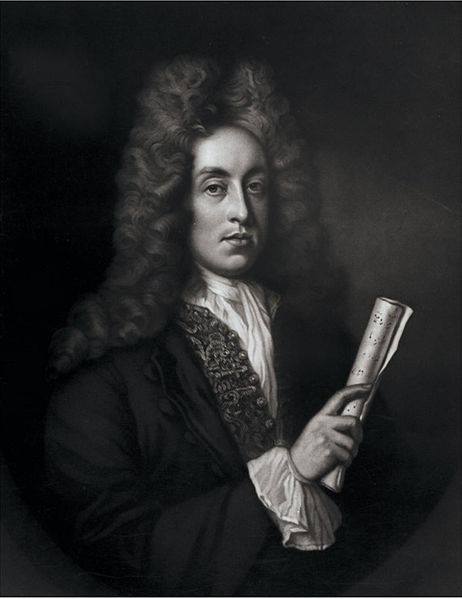
    On this, the birthday of one of England’s great composers, expect to receive a parcel of Purcell from The Classical Network.

    Henry Purcell (1659-1695) was the outstanding composer of Restoration England, some would say of all English history. No native composer came anywhere near his stature until the end of the 19th century and the emergence of figures like Sir Edward Elgar.

    Purcell achieved much in his 36 years. He was at the forefront of the flowering of English music after the Restoration of the monarchy. He served at Westminster Abbey under three kings. Among his other duties, he was an organist. He died at the height of his career, in 1695. Tradition has it that he caught a chill when his wife locked him out in the cold, after one too many late nights lingering at the tavern with his theatrical associates. He now rests in Westminster, near his former instrument.

    Purcell stands apart as the most original thinker among English composers of his era. His music is often playful and sometimes quirky. Sir Peter Maxwell Davies takes that quirkiness and runs with it. His “Fantasia upon a Ground and Two Pavans” incorporates a foxtrot and imitates the effect of a gramophone running down and having to be cranked up again, only to have the stylus get stuck in a groove.

    Michael Nyman’s music for the Peter Greenaway film “The Draughtsman’s Contract” takes Purcell’s “The Fairy Queen” and whips it up into a musical egg cream complete with 1950s-style rock and roll saxophones. Purcell is listed in the film’s credits as “musical consultant.”

    Poul Ruders’ “Concerto in Pieces (Purcell Variations)” was composed in 1995 for the tercentenary of Purcell’s death and the 50th anniversary of Benjamin Britten’s “Variations and Fugue on a Theme of Purcell” – better known as “The Young Person’s Guide to the Orchestra.” I can’t imagine we’ll be able to get through the entire afternoon without hearing Britten’s most frequently performed work. In fact, I’ll be bringing a recording narrated by none other than Sean Connery.

    We’ll also hear a violin concerto by Swedish composer Tor Aulin, born on this date in 1866, and a string quartet by Sholom Secunda.

    Secunda’s quartet is a very happy discovery of music by a composer known mostly for his work in the Yiddish theater. The piece incorporates traditional Jewish melodies that appear to have been selected somewhat arbitrarily. However, some of them do pertain to the High Holy Days. (Shana tova!) If you have a soft spot for the quartets of Dvořák or Borodin, I think you will really enjoy this.

    It will be an afternoon peppered with Purcell, further spiced by a few tributes and tributaries, today from 4 to 7 p.m. EDT, on WWFM – The Classical Network and wwfm.org.

  • Maxwell Davies at Princeton Returns

    Maxwell Davies at Princeton Returns

    Sir Peter Maxwell Davies returns to Princeton University! Maxwell Davies attended Princeton on a Harkness Fellowship, which he secured with the help of Aaron Copland and Benjamin Britten in 1962. This morning, from deep beneath Bloomberg Hall, we honor the angry young man of Manchester, who went on to become Master of the Queen’s Music, on what would have been his 82nd birthday.

    The composer lived in the Orkney Islands, off the northern coast of Scotland, for his last 45 years. We’ll have all music on Scottish themes and of Scottish inspiration, whether that inspiration be the Celtic folk traditions of Maxwell Davies’ adopted land or the austere seascapes churning outside his cottage.

    At Princeton, Max studied with Roger Sessions, Milton Babbitt and Earl Kim. His own music could be madcap and iconoclastic, drawing from a dizzying array of sources, ranging from Renaissance polyphony to foxtrots.

    No one during those early years, least of all Max, would have expected him to embrace the time-honored form of the symphony. In the event, he wrote ten of them. They are austere affairs that require careful attention, imbued with the composer’s coastal impressions and frequently compared to the great masterworks of Jean Sibelius. Maxwell Davies is regarded as the foremost British symphonist of his generation. Be that as it may, the symphonies are not exactly an easy listen.

    We’ll be sampling from Max’s Scottish works, whether they be charming or severe, alongside pieces by others who hailed from Scotland, were of Scottish descent, or just plain loved to visit.

    You take the high road and I’ll take the low road, from 6 to 11 EDT, on WPRB 103.3 FM and at wprb.com. Our love for Max is like a red, red rose, on Classic Ross Amico.

Tag Cloud

Aaron Copland (92) Beethoven (95) Composer (114) Film Music (120) Film Score (143) Film Scores (255) Halloween (94) John Williams (185) KWAX (229) Leonard Bernstein (100) Marlboro Music Festival (125) Movie Music (135) Opera (198) Philadelphia Orchestra (88) Picture Perfect (174) Princeton Symphony Orchestra (106) Radio (87) Ralph Vaughan Williams (85) Ross Amico (244) Roy's Tie-Dye Sci-Fi Corner (290) The Classical Network (101) The Lost Chord (268) Vaughan Williams (103) WPRB (396) WWFM (881)

DON’T MISS A BEAT

Receive a weekly digest every Sunday at noon by signing up here


RECENT POSTS