Tag: Peter Sculthorpe

  • Australian Composers on Lost Chord Radio

    Australian Composers on Lost Chord Radio

    It’s summer in Oz. This week on “The Lost Chord,” escape to the Land Down Under, for an hour of music from Australia.

    Alfred Hill was born in Melbourne in 1870, but spent much of his early life in New Zealand. He studied abroad at the Leipzig Conservatory and played second violin in the Gewandhaus Orchestra, under then-kapellmeister Carl Reinecke. He also performed in concerts conducted by Brahms, Tchaikovsky, Grieg, and Max Bruch.

    Over the course of his career, Hill founded, and/or pushed for, important institutions in both Australia and New Zealand, including one devoted to Maori studies. He composed more than 500 works, among them 12 symphonies, 8 operas, numerous concerti, a mass, 17 string quartets, two cantatas on Maori subjects, and 72 piano pieces. We’ll hear one of his brief-though-atmospheric tone pictures, “The Moon’s Golden Horn.”

    Then we’ll turn to Peter Sculthorpe, who was born in Tasmania in 1929. Sculthorpe studied at the Melbourne Conservatorium. Following a period of post-graduate struggles, he won a scholarship to study with Egon Wellesz at Oxford University. Unfortunately, he had to abandon his doctoral studies when his father fell gravely ill. In 1963, Sculthorpe became a lecturer at the University of Sydney, where he remained, more or less, until his death in 2014.

    He was one of Australia’s most-honored composers. Much of his music is concerned with Australia and its South Seas environs. The inspiration for many of his works over the decades was his admiration for, and affinity with, Australia’s indigenous cultures. Major philosophical concerns included conservation and the preservation of the environment.

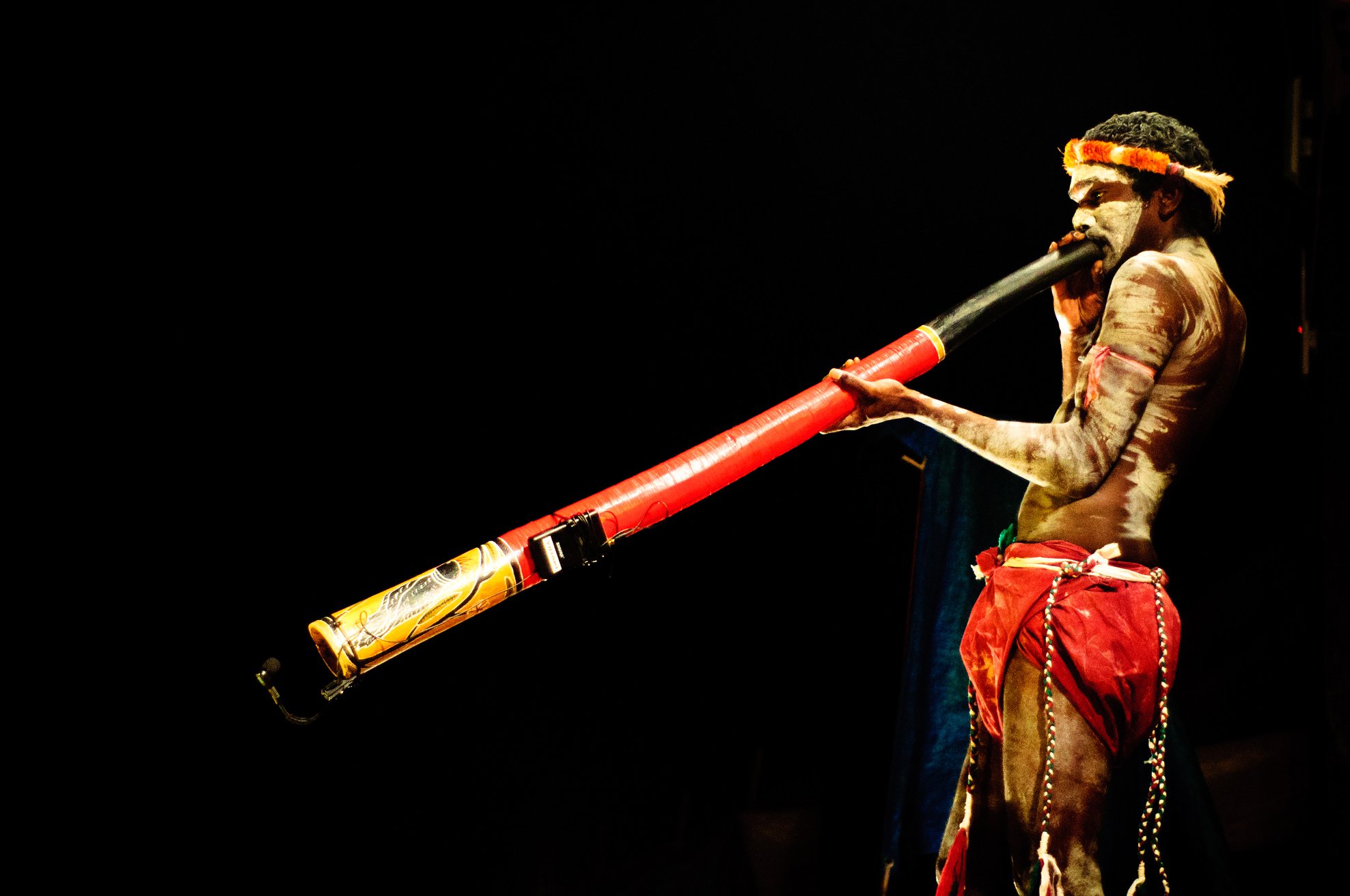
    We’ll listen to “Earth Cry,” an evocative piece from 1986. Scored for didgeridoo and orchestra, the work is a plea for balance, suggestive of the Aborigine mindset of living in accordance with natural law and the needs of the land.

    Colin Brumby was born in Melbourne in 1933. Like Sculthorpe, he attended the Melbourne Conservatorium, before studying abroad – in his case, in Spain and London – then joined the staff of the music faculty at the University of Queensland. For a few years, he directed the Queensland Opera Company. He received his doctorate from the University of Melbourne, and then returned to Europe for further studies in Rome. In 1981, he received an Advance Australia Award for his services to music. He composed orchestral pieces, music for the stage, choral, chamber and instrumental works, until his death in 2018.

    If you love the concertos of Sergei Rachmaninoff, you owe it to yourself to hear Brumby’s Piano Concerto No. 1, from 1984. The work is written in the grand romantic style for a former classmate of some 30 years earlier, the pianist Wendy Pomroy. The piece certainly is a throwback to an earlier age and an unremitting delight.

    Slip another shrimp on the barbie, crack open a Foster’s, and join me for “Left Out Back,” neglected music from Australia, on “The Lost Chord,” now in syndication on KWAX, the radio station of the University of Oregon!


    Clip and save the start times for all three of my recorded shows:

    PICTURE PERFECT, the movie music show – Friday at 8:00 PM EST/5:00 PM PST

    SWEETNESS AND LIGHT, the light music program – ALL NEW! – Saturday at 11:00 AM EST/8:00 AM PST

    THE LOST CHORD, unusual and neglected rep – Saturday at 7:00 PM EST/4:00 PM PST

    Stream them, wherever you are, at the link!

    https://kwax.uoregon.edu/

  • Australian Classical Music This Sunday

    Australian Classical Music This Sunday

    This Sunday night on “The Lost Chord,” it’s summer in Oz. Escape to the Land Down Under, for an hour of music from Australia.

    Alfred Hill was born in Melbourne in 1870, but spent much of his early life in New Zealand. He studied abroad at the Leipzig Conservatory and played second violin in the Gewandhaus Orchestra, under then-kapellmeister Carl Reinecke. He also performed in concerts conducted by Brahms, Tchaikovsky, Grieg, and Max Bruch.

    Over the course of his career, Hill founded, and/or pushed for, important institutions in both Australia and New Zealand, including one devoted to Maori studies. He composed more than 500 works, among them 12 symphonies, 8 operas, numerous concerti, a mass, 17 string quartets, two cantatas on Maori subjects, and 72 piano pieces. We’ll hear one of his brief-though-atmospheric tone pictures, “The Moon’s Golden Horn.”

    Then we’ll turn to Peter Sculthorpe, who was born in Tasmania in 1929. Sculthorpe studied at the Melbourne Conservatorium. Following a period of post-graduate struggles, he won a scholarship to study with Egon Wellesz at Oxford University. Unfortunately, he had to abandon his doctoral studies when his father fell gravely ill. In 1963, Sculthorpe became a lecturer at the University of Sydney, where he remained, more or less, until his death in 2014.

    He was one of Australia’s most-honored composers. Much of his music is concerned with Australia and its South Seas environs. The inspiration for many of his works over the decades was his admiration for, and affinity with, Australia’s indigenous cultures. Major philosophical concerns included conservation and the preservation of the environment.

    We’ll listen to “Earth Cry,” an evocative piece from 1986. Scored for didgeridoo and orchestra, the work is a plea for balance, suggestive of the Aborigine mindset of living in accordance with natural law and the needs of the land.

    Colin Brumby was born in Melbourne in 1933. Like Sculthorpe, he attended the Melbourne Conservatorium, before studying abroad – in his case, in Spain and London – then joined the staff of the music faculty at the University of Queensland. For a few years, he directed the Queensland Opera Company. He received his doctorate from the University of Melbourne, and then returned to Europe for further studies in Rome. In 1981, he received an Advance Australia Award for his services to music. He composed orchestral pieces, music for the stage, choral, chamber and instrumental works, until his death in 2018.

    If you love the concertos of Sergei Rachmaninoff, you owe it to yourself to hear Brumby’s Piano Concerto No. 1, from 1984. The work is written in the grand romantic style for a former classmate of some 30 years earlier, the pianist Wendy Pomroy. The piece certainly is a throwback to an earlier age and an unremitting delight.

    Slip another shrimp on the barbie, crack open a Foster’s, and join me for “Left Out Back,” neglected music from Australia, this Sunday night at 10:00 EST, on WWFM – The Classical Network and wwfm.org.

  • Aboriginal Music From Australia

    Aboriginal Music From Australia

    This Sunday night on “The Lost Chord,” on Australia Day, it’s an hour of music celebrating the beleaguered continent’s indigenous peoples.

    Peter Sculthorpe (1929-2014) devoted much of his compositional output to environmental concerns, such as climate change and preservation of wildlands, and demonstrated an overt sympathy for Aboriginal culture. His String Quartet No. 12 of 1994 includes a part for didgeridoo.

    50 years earlier, John Antill (1904-1986) recollected a sacred ceremony he attended, when he came to write his 1944 ballet, “Corroboree.” Among its unusual instrumental effects is the appearance at the work’s climax of a bullroarer.

    Embrace endangered traditions of a vanishing land. We head Down Under and outback, on “Didya Hear the One About the Didgeridoo?,” this Sunday night at 10:00 EST, on WWFM – The Classical Network and wwfm.org.


    To get you in the mood, here’s ten hours of didgeridoo music:

    And a demonstration of the bullroarer:
    https://www.youtube.com/watch?v=2ODGE2f7gLQ

  • Australian Classical Music WPRB

    Australian Classical Music WPRB

    With the recent death of composer Colin Brumby on January 3 at the age of 84, it occurred to me that I have never given Australia the WPRB treatment. Therefore, get ready to suffer some serious jet lag, as we embark for the antipodes and five hours of music from the Land Down Under.

    We’ll hear from composers who found world renown in London, and others who chose to remain at home to find inspiration in their native traditions and geography. Among our featured composers will be John Antill, John Carmichael, Ross Edwards, Peggy Glanville-Hicks, Sir Eugene Goossens, Matthew Hindson, Peter Sculthorpe, and Brumby himself.

    I hope you’ll join me this Thursday morning for a full playlist of didgeridoos and don’ts, from 6 to 11 EST on WPRB 103.3 FM and wprb.com. If the crocodiles don’t get you, the dingoes will, on Classic Ross Amico.

  • Australian Composers Brumby Sculthorpe Hill

    Australian Composers Brumby Sculthorpe Hill

    G’day! This Sunday night on “The Lost Chord,” in honor of composer Colin Brumby, who died on January 3rd at the age of 84, we’ll travel once again to the Land Down Under for an hour of music from Australia.

    Brumby was born in Melbourne in 1933. Like his internationally more recognized colleague, Peter Sculthorpe, he attended the Melbourne Conservatorium. He studied abroad in Spain and London, before joining the staff of the music faculty at the University of Queensland. There, he directed the Queensland Opera Company for a few years. He received his doctorate from the University of Melbourne, and then returned to the Continent for further studies in Rome. In 1981, Brumby received an Advance Australia Award for his services to music. He has written orchestral pieces, music for the stage, choral, chamber and instrumental works.

    If you love the concertos of Sergei Rachmaninoff, you owe it to yourself to hear Brumby’s Piano Concerto No. 1, from 1984. The work is written in the grand romantic style for a former classmate of some 30 years earlier, the pianist Wendy Pomroy. The piece certainly is a throwback to an earlier age and an unremitting delight.

    Naturally, we’ll also hear some of Sculthorpe’s music. Sculthorpe, born in Tasmania in 1929, also attended the Melbourne Conservatorium. Following a period of post-graduate struggles, he won a scholarship to study with Egon Wellesz at Oxford University. Unfortunately, he had to abandon the pursuit of his doctorate when his father became gravely ill. In 1963, Sculthorpe became a lecturer at the University of Sydney, where he remained, more or less, until his death in 2014.

    He attained the status of one of Australia’s most-honored composers. Much of his music is concerned with Australia and its South Seas environs. The focus of many of his pieces over the decades reveals an admiration for, and affinity with, Australia’s indigenous cultures. Major philosophical concerns include conservation and the preservation of the environment.

    We’ll listen to “Earth Cry,” an evocative piece from 1986. Scored for didgeridoo and orchestra, the work is a plea for balance, suggestive of the Aborigine mindset of living in accordance with natural law and the needs of the land.

    The hour will open with music by Alfred Hill. Hill was born in Melbourne in 1870, but spent much of his early life in New Zealand. He studied abroad, at the Leipzig Conservatory, and played second violin in the Gewandhaus Orchestra, under then-Kapellmeister Carl Reinecke. He also performed in concerts conducted by Brahms, Tchaikovsky, Grieg and Max Bruch.

    Throughout the course of his career, Hill founded and/or pushed for important institutions in both Australia and New Zealand, including one devoted to Maori studies. He composed more than 500 works, among them 12 symphonies, 8 operas, numerous concerti, a mass, 17 string quartets, two cantatas on Maori subjects, and 72 piano pieces. We’ll hear one of his brief though atmospheric tone pictures, titled “The Moon’s Golden Horn.”

    Slip another shrimp on the barbie, crack open a Foster’s, and join me for “Left Out Back,” neglected music from Australia, this Sunday night at 10:00 EST, on WWFM – The Classical Network and wwfm.org.

Tag Cloud

Aaron Copland (92) Beethoven (95) Composer (114) Film Music (120) Film Score (143) Film Scores (255) Halloween (94) John Williams (185) KWAX (229) Leonard Bernstein (100) Marlboro Music Festival (125) Movie Music (135) Opera (198) Philadelphia Orchestra (88) Picture Perfect (174) Princeton Symphony Orchestra (106) Radio (87) Ralph Vaughan Williams (85) Ross Amico (244) Roy's Tie-Dye Sci-Fi Corner (290) The Classical Network (101) The Lost Chord (268) Vaughan Williams (103) WPRB (396) WWFM (881)

DON’T MISS A BEAT

Receive a weekly digest every Sunday at noon by signing up here


RECENT POSTS