Tag: Peter Sculthorpe

  • Australian Classical Music Heard on “The Lost Chord”

    Australian Classical Music Heard on “The Lost Chord”

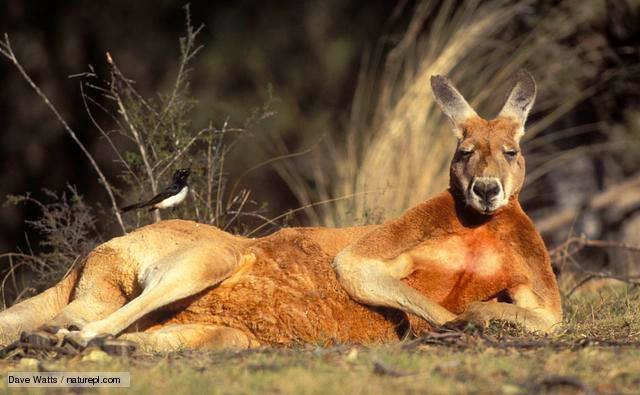
    G’day! This Sunday night on “The Lost Chord,” we’re headed Down Under, with an hour of music from Australia.

    Alfred Hill was born in Melbourne in 1870, but spent much of his early life in New Zealand. He studied abroad, at the Leipzig Conservatory, and played second violin in the Gewandhaus Orchestra, under then-kapellmeister Carl Reinecke. He also performed in concerts conducted by Brahms, Tchaikovsky, Grieg and Max Bruch.

    Throughout the course of his career, Hill founded, and/or pushed for, important institutions in both Australia and New Zealand, including one devoted to Maori studies. He composed more than 500 works, among them 12 symphonies, 8 operas, numerous concerti, a mass, 17 string quartets, two cantatas on Maori subjects, and 72 piano pieces. We’ll hear one of his brief, though atmospheric, tone pictures, titled “The Moon’s Golden Horn.”

    Then we’ll turn to Peter Sculthorpe, who was born in Tasmania in 1929. Sculthorpe studied at the Melbourne Conservatorium. Following a period of post-graduate struggles, he won a scholarship to study with Egon Wellesz at Oxford University. Unfortunately, he had to abandon the pursuit of his doctorate when his father became gravely ill. In 1963, Sculthorpe became a lecturer at the University of Sydney, where he remained, more or less, until his death in 2014.

    He became one of Australia’s most-honored composers. Much of his music is concerned with Australia and its South Seas environs. The focus of many of his pieces over the decades reveals an admiration for, and affinity with, Australia’s indigenous cultures. Major philosophical concerns include conservation and the preservation of the environment.

    We’ll listen to “Earth Cry,” an evocative piece from 1986. Scored for didgeridoo and orchestra, the work is a plea for balance, suggestive of the Aborigine mindset of living in accordance with natural law and the needs of the land.

    Colin Brumby was born in Melbourne in 1933. Like Sculthorpe, he attended the Melbourne Conservatorium. He studied abroad in Spain and London, before joining the staff of the music faculty at the University of Queensland. He directed the Queensland Opera Company for a few years. He received his doctorate from the University of Melbourne, and then returned to the continent for further studies in Rome. In 1981, he received an Advance Australia Award for his services to music. He has written orchestral pieces, music for the stage, choral, chamber and instrumental works.

    If you love the concertos of Sergei Rachmaninoff, you owe it to yourself to hear Brumby’s Piano Concerto No. 1, from 1984. The work is written in the grand romantic style for a former classmate of some 30 years earlier, the pianist Wendy Pomroy. The piece certainly is a throwback to an earlier age and an unremitting delight.

    Slip another shrimp on the barbie, open up a cold Foster’s, and join me for “Left Out Back,” neglected music from Australia, this Sunday night at 10:00 EDT, on WWFM – The Classical Network and wwfm.org.
  • Australian Music & Indigenous Instruments

    Australian Music & Indigenous Instruments

    G’day, mate!

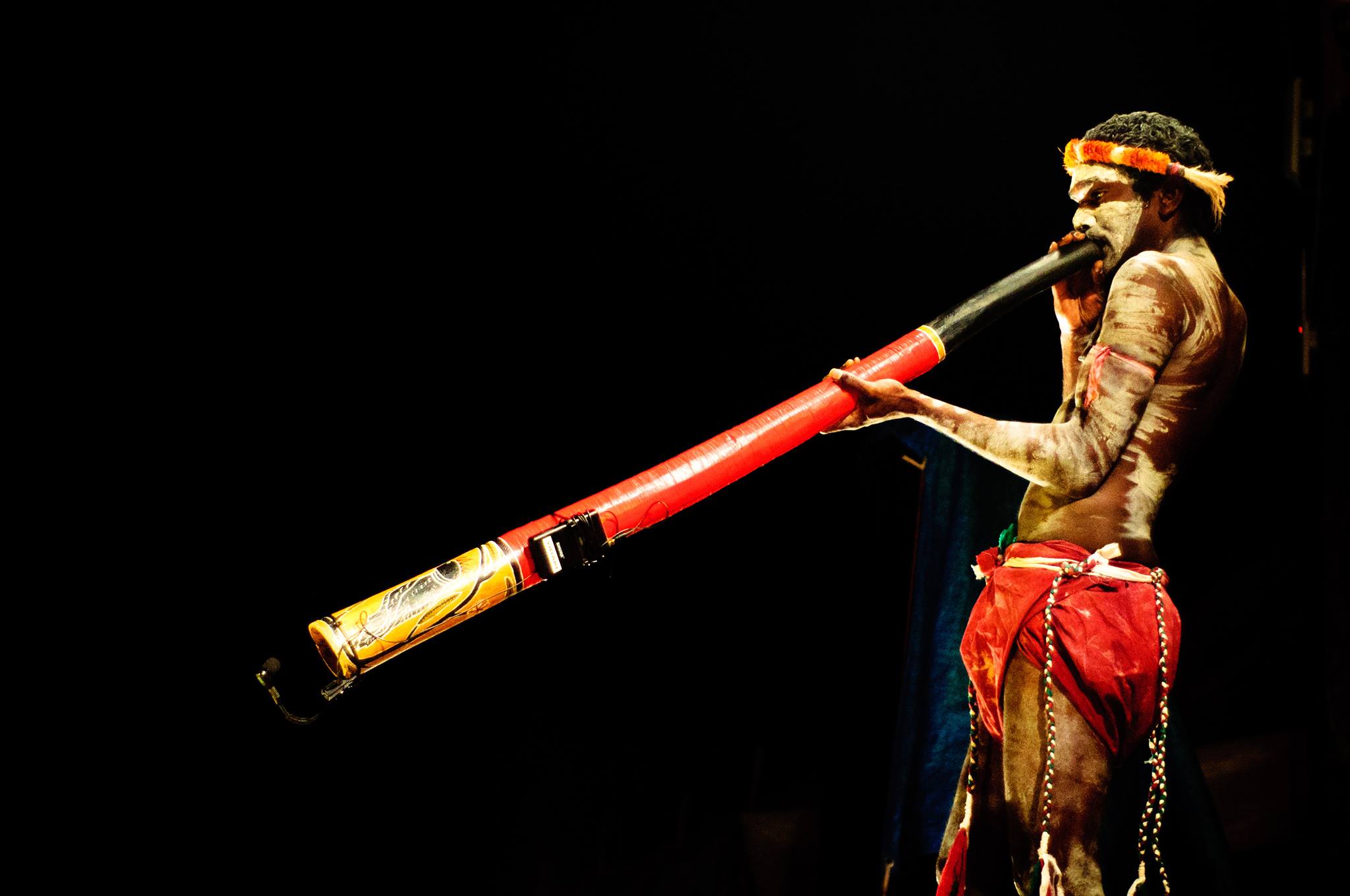
    This Sunday night on “The Lost Chord,” the focus is on Australian music that incorporates authentic instruments of the indigenous peoples.

    It’s possible that no composer has embraced the didgeridoo to quite the extent of Peter Sculthorpe, who lived from 1929 to 2104. Sculthorpe, in his maturity Australia’s most prominent composer, was occupied with environmental concerns, such as preservation of wildlands and climate change, and possessed an overt sympathy with aboriginal culture.

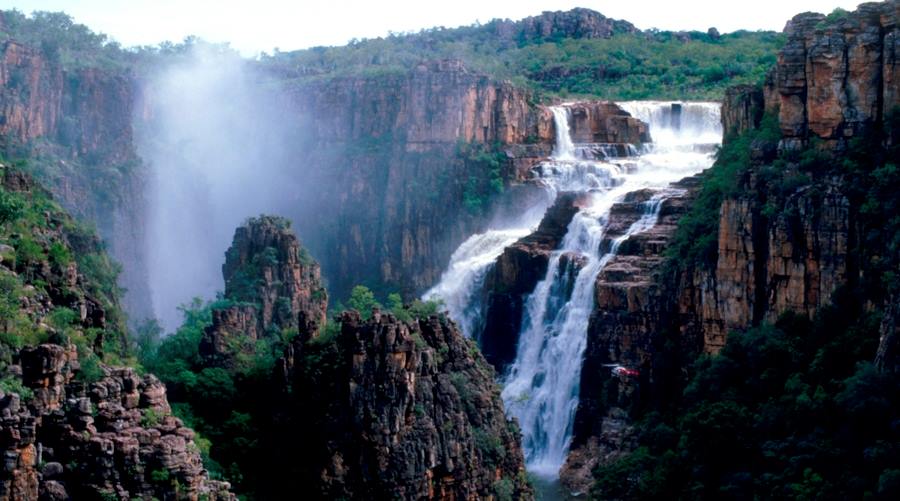
    He composed 18 string quartets. Four of them have a part for didgeridoo. His String Quartet No. 12, completed in 1994, is inspired by Ubirr, a large rocky outcrop in Kakadu National Park in northern Australia, which houses some of the best and most varied aboriginal rock paintings in the country.

    John Antill’s ballet, “Corroboree,” from 1944, was one of the first attempts to incorporate authentic aboriginal elements into modern classical music. Corroboree is the anglicized word for an aboriginal ceremony involving singing and dancing, in order to communicate “dreaming stories” about journeys and actions of ancestral beings which will continue to have consequences in the future.

    Antill attended one of these sacred ceremonies in Botany Bay in 1913, the same year as the debut of Stravinsky’s “The Rite of Spring.” Antill later denied any previous knowledge of Stravinsky’s ballet, even at the point he came to write the work 30 years later.

    In addition to the use of the didgeridoo, the orchestration also includes a part for bullroarer, a kind of blade on a long cord that when swung in a large circle makes a roaring vibrato sound.

    “Corroboree” received its first complete recording on the Naxos label in 2008. That’s the version we’ll hear, though in terms of unbridled primitivism, it’s difficult to match the suite, as recorded by Sir Eugene Goossens and the London Symphony Orchestra, back in 1958. If you like what you hear, definitely seek that one out.

    I hope you’ll join me for this musical walkabout through the Australian outback. “Didya Hear the One About the Didgeridoo?” Tonight at 10 ET, with a repeat Wednesday evening at 6; or listen to it later as a webcast at wwfm.org.

    To get you in the mood, here’s ten hours of didgeridoo music:

    And a demonstration of the bullroarer:

    https://www.youtube.com/watch?v=2ODGE2f7gLQ

  • Sculthorpe at 85 A Musical Celebration

    Sculthorpe at 85 A Musical Celebration

    Today marks the 85th birthday of Australia’s foremost living composer, Peter Sculthorpe, a link to whose “Earth Cry” I posted on April 22. I mentioned at that time (it being Earth Day) Sculthorpe’s concern for the environment, which informs much of his music.

    Prolific filmmaker Tony Palmer is attempting to raise funds to make a documentary about the composer. He’s been making films for 40 years, with subjects ranging from the Beatles to Frank Zappa to Richard Wagner to Benjamin Britten to Richard Burton to John Osborne and Athol Fugard. His melancholy portrait of Ralph Vaughan Williams, “O Thou Transcendent,” is excellent. The Sculthorpe project seems like a worthy endeavor. If you’re interested in contributing, here’s more information:

    http://www.documentaryaustralia.com.au/films/details/1765/earth-cry-a-profile-of-peter-sculthorpe

    In the meantime, here’s Sculthorpe’s “Kakadu.” According to the composer:

    “The work takes its name from the Kakadu National Park in northern Australia. This enormous wilderness area stretches from coastal tidal plains to rugged mountain plateaux, and in it may be found the living culture of its Aboriginal inhabitants, dating back for fifty thousand years. Sadly, today there are only a few remaining speakers of kakadu or gagadju. The work, then, is concerned with my feelings about this place, its landscape, its change of seasons, its dry season and its wet, its cycle of life and death. In three parts, the outer sections are dance-like and energetic, sharing similar musical ideas. The central section is somewhat introspective, and is dominated by a cor anglais solo. … Apart from this solo, the melodic material in Kakadu, as in much of my recent music, was suggested by the contours and rhythms of Aboriginal chant.”

    Happy birthday, Peter Sculthorpe.

  • Earth Day Sculthorpe’s “Earth Cry”

    Earth Day Sculthorpe’s “Earth Cry”

    April 22 is Earth Day. Few composers have embraced environmental concerns quite as extensively as the Australian Peter Sculthorpe, many of whose works draw inspiration from the Australian outback, the bushland, Aboriginal elements, and the natural heritage of Oceania. Much of his music is tied up with the preservation of the environment and, more recently, concern over climate change.

    Sculthorpe’s “Earth Cry” is a very good example. Here’s a fine performance, posted on YouTube, though it seems to lack the didgeridoo so prominent on the more recent Naxos recording.

    Sculthorpe will turn 85 on April 29.

Tag Cloud

Aaron Copland (92) Beethoven (95) Composer (114) Film Music (120) Film Score (143) Film Scores (255) Halloween (94) John Williams (185) KWAX (229) Leonard Bernstein (100) Marlboro Music Festival (125) Movie Music (135) Opera (198) Philadelphia Orchestra (88) Picture Perfect (174) Princeton Symphony Orchestra (106) Radio (87) Ralph Vaughan Williams (85) Ross Amico (244) Roy's Tie-Dye Sci-Fi Corner (290) The Classical Network (101) The Lost Chord (268) Vaughan Williams (103) WPRB (396) WWFM (881)

DON’T MISS A BEAT

Receive a weekly digest every Sunday at noon by signing up here


RECENT POSTS