Tag: Philip Glass

  • Juniper Tree Opera Review Wolf Trap on YouTube

    Juniper Tree Opera Review Wolf Trap on YouTube

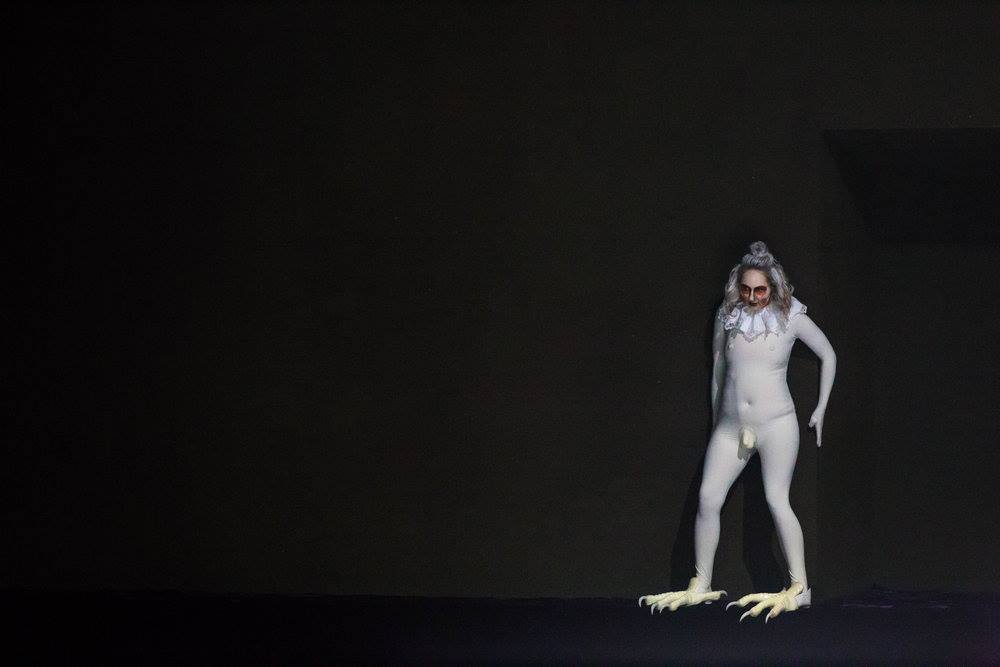
    Last year’s Wolf Trap production of Philip Glass & Robert Moran’s collaborative opera, “The Juniper Tree,” hit YouTube this week. While I found most of the singing and most of the costumes effective (the velour birds aside), I felt the direction skimped too much on the inherent black humor. The emphasis in this Brothers Grimm tale was definitely on the grim. Also, some of the most important details, such as the out-of-nowhere decapitation and, later, the moment of justice-by-millstone, were obscured in favor of something(s) admittedly even more disturbing in their lack of specificity. Not nearly as disturbing, however, as the anatomically correct spirit of the dead son. Are spirits anatomically correct? I’m elated that they bothered to program the opera at all, and the production was indeed first rate – I just don’t think it really was the opera. See what you think.

    Then check out this excerpt from a recording of the world premiere production, which definitely has more zing.

    It’s available for purchase here:
  • Chamber Music Concerts in Princeton & Solebury

    Chamber Music Concerts in Princeton & Solebury

    Good things come in small packages on upcoming concerts of two area chamber music ensembles. Richardson Chamber Players will present “England’s Green and Pleasant Land” at Princeton University’s Richardson Auditorium on Sunday, and Concordia Chamber Players will present “All Things Strings” at Trinity Episcopal Church, Solebury, PA, on Feb. 26. Both concerts will begin at 3 p.m.

    The Princeton University Concerts program will highlight folk-inflected works by Ralph Vaughan Williams (“Merciless Beauty,” on texts of Geoffrey Chaucer), Gerald Finzi (“Five Bagatelles” for clarinet and piano), John McCabe, and Benjamin Britten, with a classic example of the renowned English facility for writing for string orchestra, Edward Elgar’s “Serenade for Strings in E minor.”

    Concordia will present string music on a more intimate scale, with quartets by Philip Glass and Claude Debussy alongside a quintet by Antonin Dvořák.

    Glass, who turned 80 on Jan. 31, wrote his String Quartet No. 2 in 1983. It grew out of incidental music he composed for a production of Samuel Beckett’s “Company.” Debussy’s String Quartet in G minor, from 1893, is universally regarded as one of the greatest of French string quartets; it is certainly one of the most popular.

    Dvořák wrote his String Quintet No. 3 in E-flat major, also from 1893, during the same trip that yielded his more famous “American” String Quartet. The composer had been lured to the United States from Bohemia to take up the directorship of the National Conservatory of Music in New York. He summered at a Czech community in Spillville, IA. The environment obviously agreed with him, as both works share an ingratiatingly sunny disposition. The music brims with Bohemian inflections and American inspiration.

    You can read more about it in my article in today’s Trenton Times.

    http://www.nj.com/times-entertainment/index.ssf/2017/02/classical_music_richardson_cha.html


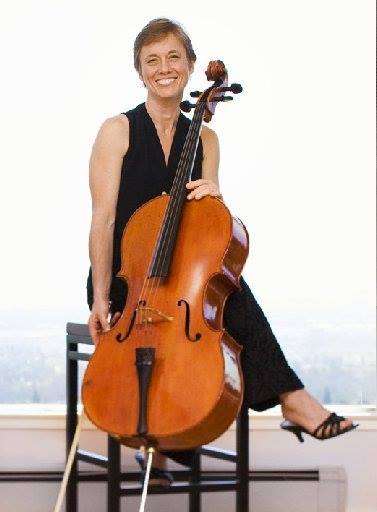
    PHOTOS (clockwise from left): Concordia artistic director Michelle Djokic, Glass, Debussy and Dvořák

  • Classical Music Broadcast Schubert Glass Gliere WWFM

    Classical Music Broadcast Schubert Glass Gliere WWFM

    This Tuesday morning at 10:00, Alice Weiss will host “The Classical Network in Concert,” featuring winners of the 2016 Astral Artists National Auditions, in a program that was recorded at the Perelman Theater at the Kimmel Center for the Performing Arts in Philadelphia.

    That means there will be no noontime concert today, leaving me with a blank canvas on which to paint for the next four hours. During that time, we will not only mark the 220th anniversary of the birth of Franz Schubert, we will also celebrate the 80th birthday of Philip Glass. Glass will be represented by his Violin Concerto, with Gidon Kremer the soloist. Kremer will appear with his chamber orchestra, Kremerata Baltica, at McCarter Theatre Center in Princeton on Friday.

    Because there is always so much room to play with on Tuesday afternoons, I usually try to accommodate a larger work, on a scale not generally encountered on radio in the middle of the day. This afternoon will be no exception, as we take a 72-minute break from Schubert to enjoy Reinhold Gliere’s Symphony No. 3, subtitled “Ilya Muromets,” in a stunning performance by the Buffalo Philharmonic Orchestra, conducted by JoAnn Falletta. Gliere’s programmatic symphony evokes the heroic exploits of the legendary bogatyr, who employs his superhuman strength against a series of formidable opponents.

    The Buffalo performance has been described by David Hurwitz of classicstoday.com as “the finest version yet recorded,” and by Peter J. Rabinowitz of Fanfare Magazine as “beyond excellent.”

    There will be plenty of blood and thunder to counterbalance the delicacy of Schubert and the minimalism of Glass, from 12 to 4:00 p.m. EST, on WWFM – The Classical Network and at wwfm.org.

  • Mahler’s Grim Birthday Alpine Break on WPRB

    Mahler’s Grim Birthday Alpine Break on WPRB

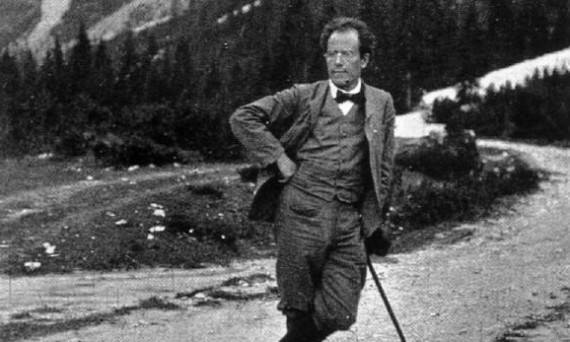
    It’s supposed to be 90 degrees in the Philadelphia-Princeton area for forever at this point, so it’s best to imagine Gustav Mahler taking a break from his work and hiking about his summer home in the Alps.

    Right now on WPRB, we’re listening to an early work of Mahler to celebrate his birthday – the cantata “Das klagende Lied,” inspired by the Grimms’ fairy tale, “The Singing Bone.” But for Mahler, apparently, the original Grimm tale wasn’t quite grim enough. So he made a few changes to ensure things end miserably for everyone!

    Two brothers seek the hand of a queen. The younger brother finds the red flower that will win her favor. When the elder brother finds out, he kills the younger, steals the flower, and claims the queen as his bride. A wandering minstrel finds one of the younger brother’s bones and makes a flute from it. When the flute is played, it tells the story of the murder. The minstrel plays the flute at the wedding before the horrified guests, and the castle falls to ground, KILLING EVERYONE.

    This is all actually quite tame when compared to the events of “The Juniper Tree,” which include child abuse, a beheading, cannibalism and death by millstone. I’m hoping to get to a one-act opera based on the tale, by Philip Glass and Robert Moran, before the shift is out.

    All in all, we’ll be having a Grimm morning, until 11 EDT, on WPRB 103.3 FM and at wprb.com.

    NOTE: I just heard from three of you in the last few minutes who wrote to let me know that the streaming is down. The tech folk have been notified, so hopefully we’ll be back up soon. Thanks for letting me know!

  • Bowie’s Low Symphony a Philip Glass Tribute

    Bowie’s Low Symphony a Philip Glass Tribute

    David Bowie died yesterday at the age of 69. Here is Philip Glass’ Symphony No. 1, from 1992, known as the “Low” Symphony, inspired by the album “Low,” by Bowie and Brian Eno.

    I. Subterraneans:

    II. Some Are:

    III. Warszawa:

    Glass later wrote a “Heroes” Symphony (the Symphony No. 4), in 1996, also based on a Bowie album.

    https://www.youtube.com/watch?v=3TZsW99Vw_U&list=PLTUlTwlsdlFTGaOSuJfZGw82ySkas60me

    Bowie and Glass discuss “Low”:

    https://www.youtube.com/watch?v=p_SxYgtUVu4


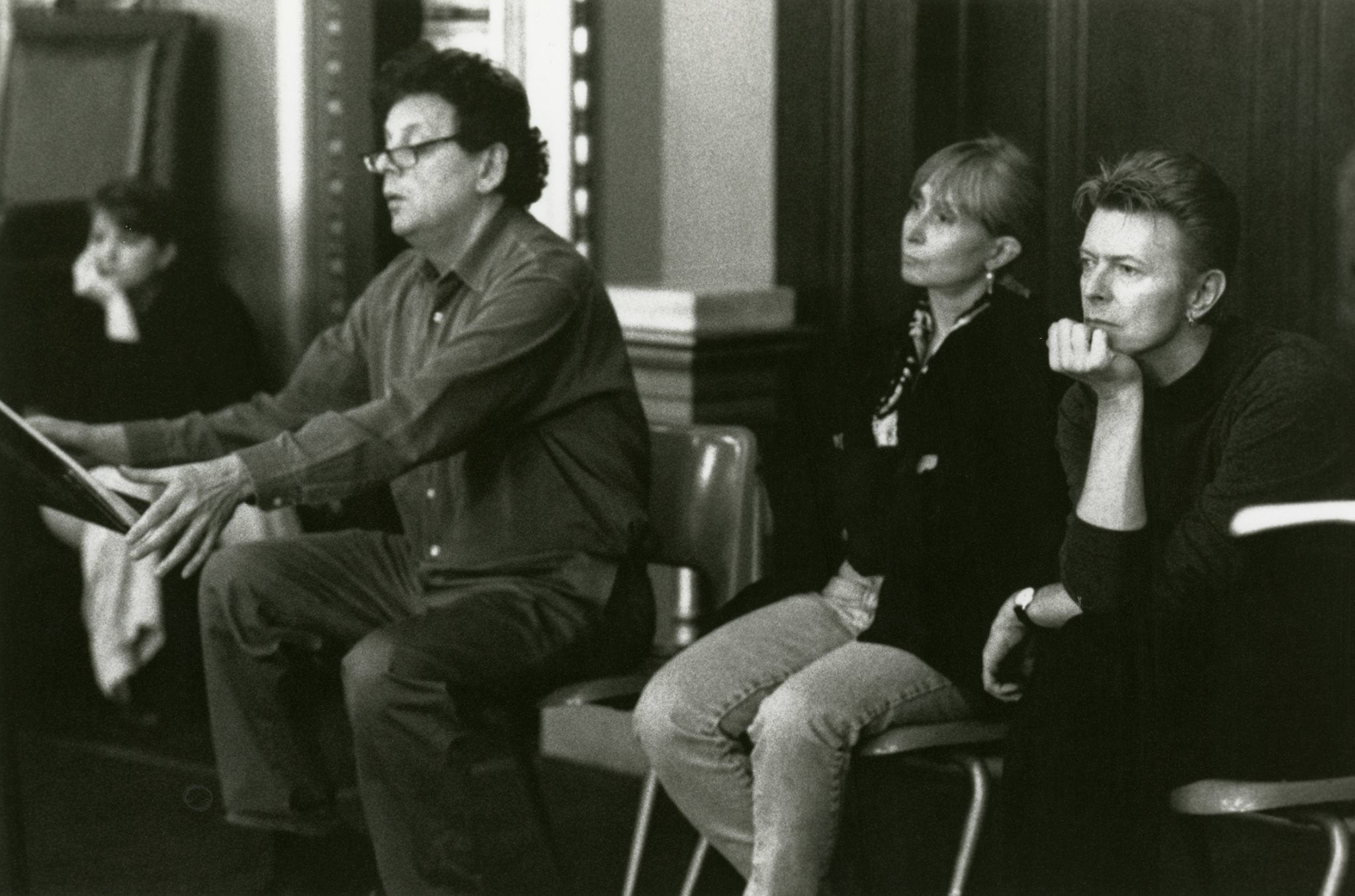
    PHOTO: With Twyla Tharp, rehearsing “Heroes”

Tag Cloud

Aaron Copland (92) Beethoven (95) Composer (114) Film Music (119) Film Score (143) Film Scores (255) Halloween (94) John Williams (185) KWAX (229) Leonard Bernstein (99) Marlboro Music Festival (125) Movie Music (134) Opera (198) Philadelphia Orchestra (87) Picture Perfect (174) Princeton Symphony Orchestra (106) Radio (87) Ralph Vaughan Williams (85) Ross Amico (244) Roy's Tie-Dye Sci-Fi Corner (290) The Classical Network (101) The Lost Chord (268) Vaughan Williams (102) WPRB (396) WWFM (881)

DON’T MISS A BEAT

Receive a weekly digest every Sunday at noon by signing up here


RECENT POSTS