Tag: Piano Quintet

  • Elgar & Vaughan Williams Quintets Marlboro

    Elgar & Vaughan Williams Quintets Marlboro

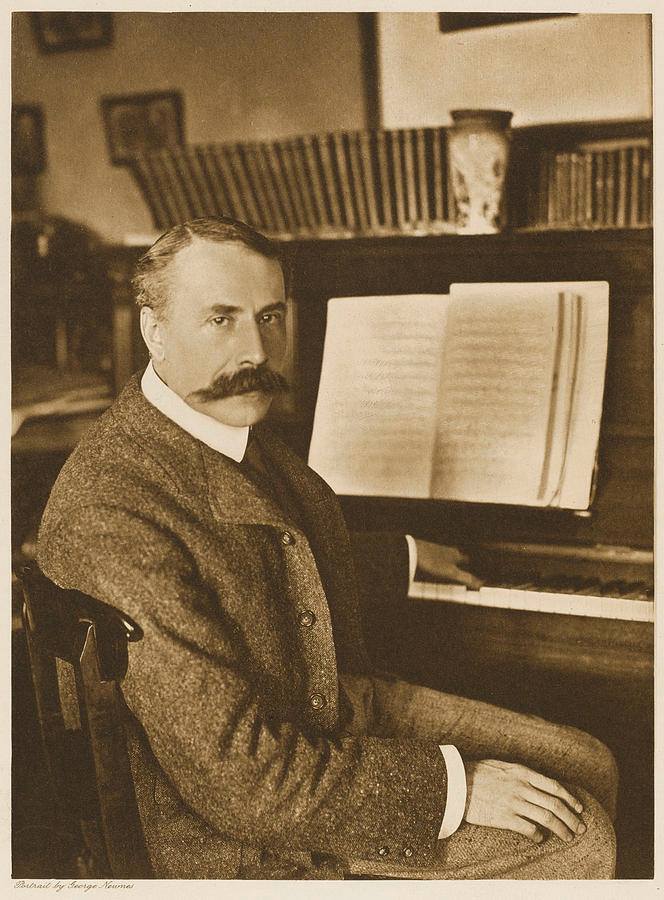
    English music is more than simply ham, lamb, and strawberry jam. On the next “Music from Marlboro,” we’ll highlight one of the most deeply personal utterances of perhaps Albion’s most respected composer.

    In the spring of 1918, Sir Edward Elgar underwent an operation in London to have an infected tonsil removed. At the time, this was considered a dangerous operation for a 61 year-old man. When the composer regained consciousness, the first thing he did was ask for a piece of paper, and he jotted down the opening theme of what was to become his last major work, the Cello Concerto in E minor.

    The Elgars retired to Brinkwells, a thatched cottage that was their summer home near Fittleworth, in Sussex, so that they could have time to relax and recover from their ailments. Even in this idyllic setting, with its trees and farmland, the guns could be heard at night rumbling across the Channel. The First World War had a profound effect on Elgar, as it did on everyone, but most especially those of the older generation, who had regarded the Boer War as a yardstick against which the cost and loss of armed conflict had been measured.

    Nevertheless, by August, Elgar was composing again. In quick succession came the Violin Sonata in E minor, the Piano Quintet in A minor, and the String Quartet in E minor. All three works were given their first performances one hundred years ago, in May of 1919, at which point Elgar launched into the Cello Concerto, which was to be his final masterpiece.

    Elgar labored with great intensity, rising at 4 or 5:00 every morning. His music from this period is spare and almost confessional in nature, colored by nostalgia, introspection, and a kind of sad beauty.

    But when it came time to play through the quintet, the composer was surrounded by some of his closest confidantes, and he couldn’t have been happier. These included W.H. Reed, with whom he had worked on the Violin Concerto; Albert Sammons, who would make the concerto’s first complete recording, and Felix Salmond, who would assist him on the Cello Concerto.

    We’ll hear a performance of Elgar’s Piano Quintet from the 2002 Marlboro Music Festival, featuring pianist Jeremy Denk, violinists Erin Keefe and Bradley Creswick, violist Teng Li, and cellist Joel Noyes.

    That will be prefaced by another quintet, from 1912, by Ralph Vaughan Williams. Vaughan Williams’ “Phantasy Quintet” was one of a number of works commissioned from England’s great composers by Walter Wilson Cobbett, a businessman and amateur musician whose dual passions were chamber music and music of the Elizabethan era. (“Phantasy” was Cobbett’s preferred spelling.)

    Vaughan Williams’ quintet is full of Tudor inflections and stamped by the composer’s tell-tale love of folk music. RVW doubles his violas, and the instrument is heard to great effect throughout the piece. We’ll enjoy it in a 1975 performance from Marlboro, featuring violinists James Buswell and Sachiko Nakajima, violists Philipp Naegele and Caroline Levine, and cellist Anne Martindale.

    I hope you’ll join me for the quintessence of English quintets – and one fantastic phantasy – on the next “Music from Marlboro,” this Wednesday evening at 6:00 EDT, on WWFM – The Classical Network and wwfm.org.

    Marlboro School of Music and Festival: Official Page

  • Brahms’ Intense Piano Quintet at Marlboro Music

    Brahms’ Intense Piano Quintet at Marlboro Music

    Don’t expect anything too drowsy on this week’s “Music from Marlboro,” when the focus will be on Johannes Brahms’ unusually intense Piano Quintet in F minor.

    This is not music of wistful reflection. The quintet is often tempestuous and even tragic, fueled by all the passion and earnestness of an excitable young man. Brahms began his quintet in 1862. He was 29 years-old.

    That’s not to say the composer ever teeters over into sentiment or excess of a kind common to his fin-de-siècle successors. Even in his 20s, Brahms was too much himself ever to allow that to happen.

    Instead he takes the prototype of the piano quintet – established by his friend and mentor, Robert Schumann – and fashions it into something unsettled and at times downright sublime. We are in the presence of something great, but also perhaps a little terrifying.

    This masterpiece of Brahms’ early maturity began life as a string quintet, written under the spell of Schubert’s famous Quintet in C. Brahms showed the work in this form to Clara Schumann and his friend, the violinist Joseph Joachim. Both were full of praise, at least at first, but gradually their compliments became outpaced by their suggestions. Joachim, in particular, admired the work’s power, but confessed he found little in it to charm.

    Undaunted, Brahms took the piece and arranged it for two pianos in 1863-64, consigning the original version, for strings alone, to flames of woe. This two-piano reworking was more politely than enthusiastically received, and Clara, thinking it sounded more like a transcription now than an original composition, begged him to recast it once more.

    The third time proved to be a charm. The resulting quintet, which achieved its final state in the summer of 1864, was met with resounding acclaim. At last, the piece had arrived at a perfect marriage of expression and form.

    While Brahms retains the classical poise for which is so well known, he stiffens the sinews and conjures the blood, so to speak. In fact, there are times when he ratchets up the tension so effectively it seems the music might just fly off the rails.

    We’ll hear an exciting performance from the 2007 Marlboro Music Festival, featuring pianist Richard Goode, violinists Augustin Hadelich and Benjamin Beilman, violist Samuel Rhodes, and cellist Amir Eldan.

    Proceed at your own risk. Safety gear will not be provided, on this week’s “Music from Marlboro,” this Wednesday evening at 6:00 EDT, on WWFM – The Classical Network and wwfm.org.

    Marlboro School of Music and Festival: Official Page

  • First Piano Quintet Schumann or Before?

    First Piano Quintet Schumann or Before?

    Quick! Who wrote the first piano quintet?

    The combo of keyboard and four string instruments began to exert its pull on composers as far back as the 18th century, with artists like Luigi Boccherini experimenting with works for piano and string quartet. More commonly, the piano was joined by violin, viola, cello, and double bass. Think Schubert’s “Trout” Quintet. Mozart and Beethoven both wrote quintets for piano and winds (oboe, clarinet, horn, and bassoon).

    But it wasn’t until 1842 that the genre firmly took root with Robert Schumann’s chamber music masterpiece, the Piano Quintet in E-flat major, Op. 44. It was Schumann who brought together the modern piano, with its increased power and dynamic range, with the established string quartet (two violins, viola, and cello) that had become the most common and confessional of chamber music combinations. The result allowed for the unprecedented exploration of a much broadened musical vocabulary that spanned confessional intimacy and public declaration. The innovation was immediately recognized and embraced as the quintessential Romantic chamber music form.

    Hear Schumann’s pioneering Piano Quintet on today’s Noontime Concert on The Classical Network, as we present a performance by the Manhattan Chamber Players. The program, titled “Breaking New Ground,” will also include Mozart’s String Quintet in C major, K. 515, from 1787. Again, Boccherini wrote a lot of string quintets, but his preference had been to augment the classical quartet through the addition of a second cello. It was Mozart who established the more common practice of doubling the violas. K. 515 became the inspiration for one of Schubert’s greatest works, the String Quintet in C major of 1828. This concert took place at Manhattan’s Baruch Performing Arts Center on April 26, 2017.

    Then stick around – at 2:00, we’ll hear a complete performance of Bedřich Smetana’s sprawling collection of nationalistic tableaux, “Má Vlast” (“My Country”). There’s more to this cycle of six symphonic poems than the well-worn “Vltava” (a.k.a. “The Moldau”). Each movement evokes some aspect of Czech history, legend, and countryside.

    I hope you’ll join me for Mozart, Schumann, Smetana, and more, this Tuesday from 12 to 4 p.m. EST, on WWFM – The Classical Network and wwfm.org.

Tag Cloud

Aaron Copland (92) Beethoven (94) Composer (114) Film Music (117) Film Score (143) Film Scores (255) Halloween (94) John Williams (185) KWAX (228) Leonard Bernstein (99) Marlboro Music Festival (125) Movie Music (132) Opera (197) Philadelphia Orchestra (86) Picture Perfect (174) Princeton Symphony Orchestra (106) Radio (86) Ralph Vaughan Williams (85) Ross Amico (244) Roy's Tie-Dye Sci-Fi Corner (290) The Classical Network (101) The Lost Chord (268) Vaughan Williams (101) WPRB (396) WWFM (881)

DON’T MISS A BEAT

Receive a weekly digest every Sunday at noon by signing up here


RECENT POSTS