Tag: Picture Perfect

  • Elizabeth I in Film Music Picture Perfect

    Elizabeth I in Film Music Picture Perfect

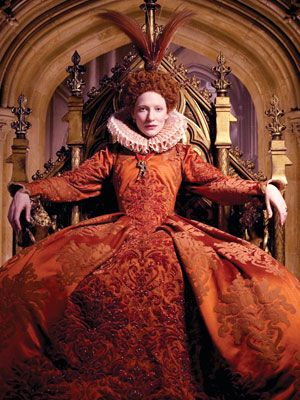
    This week on “Picture Perfect,” get ready to don your ruffed collars and codpieces. It’s an hour of music from films about Elizabeth I.

    “Fire Over England” (1937) is most notable, perhaps, for the first screen pairing of future husband-and-wife Laurence Olivier and Vivian Leigh. The couple play young lovers who face down the threat of Spanish invasion. Flora Robson is the queen (naturally). Robson would reprise her role a few years later in the Errol Flynn vehicle “The Sea Hawk.” Raymond Massey, Robert Newton, and James Mason also appear. Based on the novel by A.E.W. Mason, the film was produced by Alexander Korda, who would achieve even greater success when he spearheaded a classic version of Mason’s novel “The Four Feathers” in 1939. The music is by Richard Addinsell – yes, he of “Warsaw Concerto” fame.

    Following in the footsteps of Leigh and Olivier, Jean Simmons and Stewart Granger were paired both professionally and romantically during the making of “Young Bess” (1953). The film recounts Elizabeth’s early days, from her childhood to the eve of her accession to the throne. Simmons plays the title role and Granger is Thomas Seymour. As an unexpected bonus, Charles Laughton returns to reprise his Oscar-winning portrayal of Henry VIII. Laughton had received the award 20 years earlier, for his characterization in “The Private Life of Henry VIII.” “Young Bess” was also produced by Korda (who, in addition, directed Laughton in the earlier film!). The music is by Miklós Rózsa, composer of choice for so many wonderful period pictures of the 1950s and ‘60s.

    As an interlude, we’ll enjoy some flavorful dances, heavily indebted to period models, from “Elizabeth” (1998). The composer, David Hirschfelder, is an Australian keyboardist, who has performed mostly with fusion jazz, rock, and pop ensembles. Cate Blanchett, who plays the title role, returned nine years later for a sequel, “Elizabeth: The Golden Age.”

    Finally, Bette Davis will bring it to a grand total of three actresses represented in the hour who portrayed Elizabeth twice. In 1955, Davis starred in “The Virgin Queen;” 16 years earlier, she appeared opposite Errol Flynn in “The Private Lives of Elizabeth and Essex” (1939). For the latter, Erich Wolfgang Korngold provided the characteristically opulent score.

    I hope you’ll join me in basking in the glory of Gloriana. Elizabeth I is our focus, on “Picture Perfect,” music for the movies, now in syndication on KWAX, the radio station of the University of Oregon!


    Clip and save the start times for all three of my recorded shows:

    PICTURE PERFECT, the movie music show – Friday at 8:00 PM EST/5:00 PM PST

    SWEETNESS AND LIGHT, the light music program – ALL NEW! – Saturday at 11:00 AM EST/8:00 AM PST

    THE LOST CHORD, unusual and neglected rep – Saturday at 7:00 PM EST/4:00 PM PST

    Stream them, wherever you are, at the link!
    https://kwax.uoregon.edu/

  • Dystopian Movie Soundtracks on the Radio

    Dystopian Movie Soundtracks on the Radio

    If you think the world is in rough shape now, fasten your seatbelt; it’s going to be a bumpy 1,461 days.

    This week on “Picture Perfect,” gaze into the crystal ball for an hour of dystopian visions – glimpses of a bleak future rendered hopeful, in large part, through music.

    “Fahrenheit 451” (1966), based on the Ray Bradbury novel, presents a society in which books are outlawed by the state and burned as a means to control the masses. The title refers to the temperature at which paper will ignite. Oskar Werner and Julie Christie star in this Francois Truffaut-directed film. Composer Bernard Herrmann finds the heart at fire’s center.

    A robot is left behind to clean up a long-abandoned Planet Earth, in “WALL-E” (2008), one of Pixar’s finely-crafted entertainments. This one has a serious subtext, about rampant consumerism and its impact on an earth made uninhabitable by the sheer volume of garbage.

    But there’s also a love story, as WALL-E pursues another robot into outer space, with fate-changing consequences. The inventive score is by Thomas Newman.

    As dystopias go, Steven Spielberg’s “A.I.: Artificial Intelligence” (2001) is a little more unpleasant than most. “A.I.” grew out of an incomplete project of Stanley Kubrick. Based on Brian Aldiss’s short story, “Super-Toys Last All Summer Long,” the film stars Haley Joel Osment as a child-like android programmed to love, only to be rejected by his adopted family. Abrasive blood sport, unpleasant visions of a debauched city, and human extinction ensue. A great time is had by all!

    Also, the film doesn’t know when to end. Oh, how I hate this movie.

    That said, John Williams gives it his usual best. The voice of soprano Barbara Bonney graces the admittedly gorgeous soundtrack.

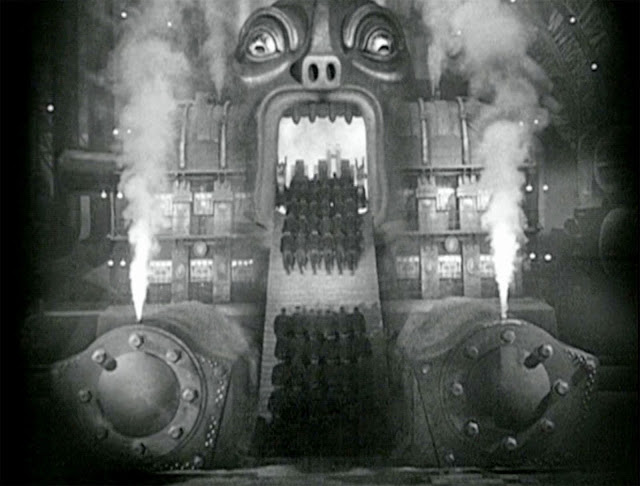
    One of the landmarks of silent cinema, Fritz Lang’s “Metropolis” (1927) is an eerily prescient vision of a world divided between the “haves” and “have-nots.” Once seen, the subterranean hell of the workers “hive” is not soon to be forgotten. So much of the film continues to resonate, even as its iconography is shamelessly recycled.

    Gottfried Huppertz’s original score already adheres to the Straussian model of Golden Age film scores, with leitmotifs representing the characters and ideas. It’s a concept that became associated with Max Steiner and Erich Wolfgang Korngold, and which has had an enormous influence on film composers down through the decades, all the way to John Williams and beyond.

    Learn more about the challenges of writing such a complex score – which was performed live, with orchestra, at showings of the movie, even as the film was still being edited right up until its premiere – when listening to tonight’s show.

    In the meantime, hang on to your humanity! Join me for these cautionary tales about totalitarian government, corporate control, and technology gone awry, on “Picture Perfect,” music for the movies, now in syndication on KWAX, the radio station of the University of Oregon!


    Clip and save the start times for all three of my recorded shows:

    PICTURE PERFECT, the movie music show – Friday at 8:00 PM EST/5:00 PM PST

    SWEETNESS AND LIGHT, the light music program – ALL NEW! – Saturday at 11:00 AM EST/8:00 AM PST

    THE LOST CHORD, unusual and neglected rep – Saturday at 7:00 PM EST/4:00 PM PST

    Stream them, wherever you are, at the link!
    https://kwax.uoregon.edu/

  • Miss Marple Before Lansbury Movie Music

    Miss Marple Before Lansbury Movie Music

    Before Angela Lansbury, there was Margaret Rutherford.

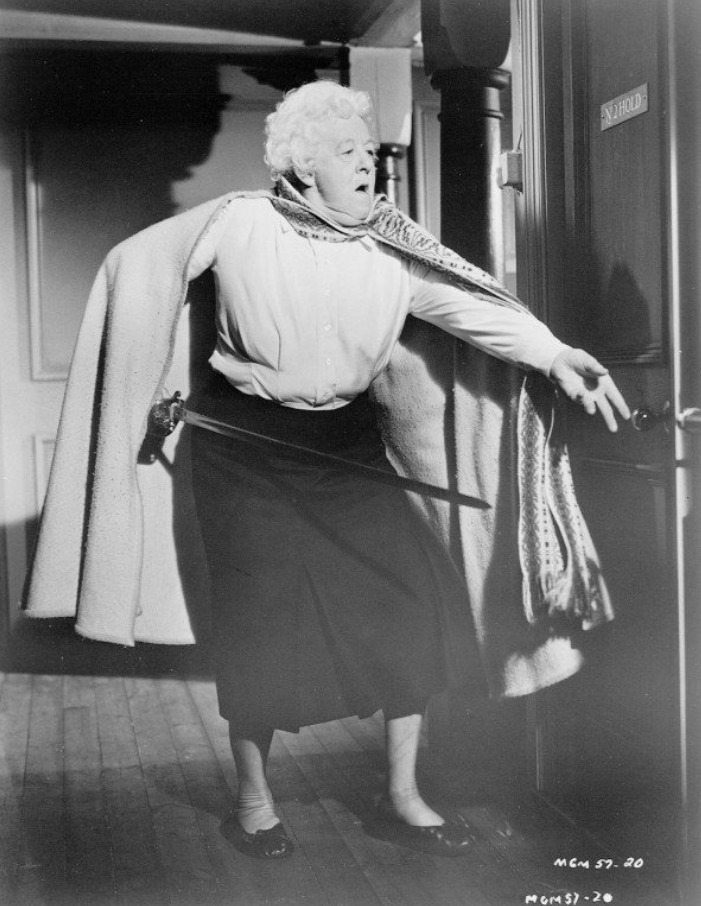
    Rutherford played Miss Marple in a series of Agatha Christie adaptations scored by Ron Goodwin. Goodwin’s music for “Murder, She Said” (1961) will be among the selections on this week’s “Picture Perfect,” an hour of wry mysteries and thrillers featuring the sound of the harpsichord.

    In the first of the Marple films, Rutherford’s amateur sleuth goes undercover as a domestic servant. Goodwin’s Miss Marple theme became a popular hit, which you may still recognize.

    Bette Davis enjoyed something of a comeback following her turn in “Whatever Happened to Baby Jane?,” opposite Joan Crawford. The film singlehandedly defined a subgenre which has been variously described as “psycho-biddy,” “hag horror,” “hagsploitation,” and “grande dame guignol.” Camp and black comedy are essential elements. “Dead Ringer” (1964) was yet another “bad twin” film, with Davis’ delicious performance underscored by André Previn.

    Sir Laurence Olivier and Michael Caine play a deadly game of cat and mouse, as a mystery writer plans to exact revenge on his wife’s lover, in a big screen adaptation of Anthony Shaffer’s play, “Sleuth” (1972). John Addison, who had previously harpsichorded his way to an Academy Award with his score for “Tom Jones,” wrote the impish music.

    Finally, Barbara Harris plays a fake psychic and Bruce Dern her cab-driving, private investigator boyfriend, who become embroiled with serial kidnappers, in Alfred Hitchcock’s final film, “Family Plot” (1976). The composer was none other than John Williams, poised between his breakout success, “Jaws,” and “Star Wars,” which was to make him a household name. (Both “Jaws” and “Star Wars” were Academy Award winners for Best Original Score.)

    Hitchcock was full of suggestions as to the music and how it should be conducted. The composer recollects that on one occasion, when trying to convey the tone he was looking for, Hitch remarked, “Mr. Williams, murder can be fun.”

    We’ll keep our tongues firmly in cheek as the corpses pile up. It’s an hour of arch harpsichords this week, on “Picture Perfect,” music for the movies, now in syndication on KWAX, the radio station of the University of Oregon!


    Clip and save the start times for all three of my recorded shows:

    PICTURE PERFECT, the movie music show – Friday at 8:00 PM EST/5:00 PM PST

    SWEETNESS AND LIGHT, the light music program – ALL NEW! – Saturday at 11:00 AM EST/8:00 AM PST

    THE LOST CHORD, unusual and neglected rep – Saturday at 7:00 PM EST/4:00 PM PST

    Stream them, wherever you are, at the link!
    https://kwax.uoregon.edu/

  • Christmas Movie Music Stocking Stuffers on KWAX

    Christmas Movie Music Stocking Stuffers on KWAX

    This week on “Picture Perfect,” it’s a yuletide treat: I hope you’ll join me for an hour of musical stocking stuffers.

    We’ll begin with selections from “Miracle on 34th Street,” from 1947. Maureen O’Hara, Natalie Wood, and Edmund Gwenn star. Gwenn won an Academy Award for his portrayal of Kris Kringle. Cyril J. Mockridge’s alternately bustling and sentimental score employs “Jingle Bells” as its Santa motif.

    Then, drawing from the countless adaptations of Charles Dickens’ “A Christmas Carol,” we’ll turn to a 1938 version, featuring Reginald Owen as Scrooge. Franz Waxman’s music draws on traditional carols and, when Scrooge undergoes his Christmas morning transformation, a sly riff on Georges Bizet’s “Jeux d’enfants.”

    For those who enjoy a little carnage with their Christmas, we’ll also hear selections from “Home Alone.” The 1990 film, in which diminutive Macaulay Culkin subjects would-be burglars Joe Pesci and Daniel Stern to a battery of cartoon violence, features a candy-coated score by John Williams.

    There are those who consider “Ben-Hur” to be among the greatest film scores of all-time. From Miklós Rózsa’s work on the 1959 Oscar champ, we’ll hear music from the film’s opening Nativity sequence.

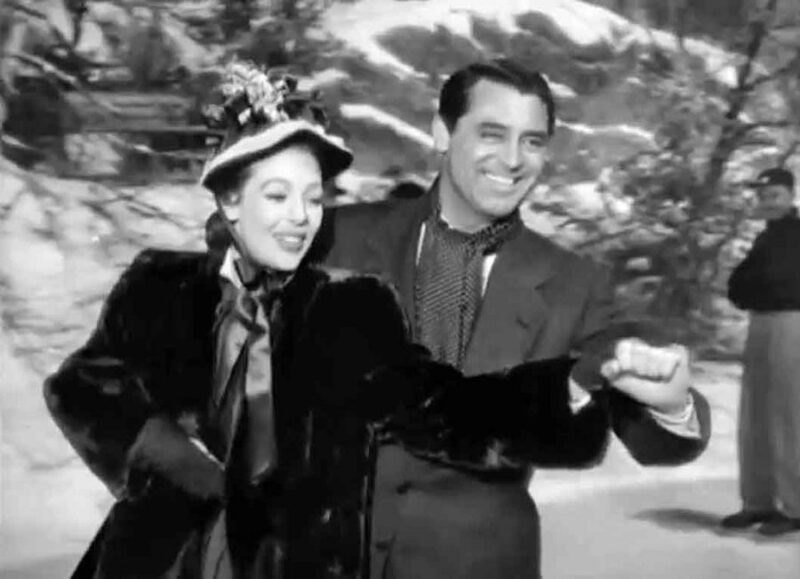
    Then, Cary Grant plays an angel who answers the prayers of David Niven, attempting to raise funds for a new cathedral, in “The Bishop’s Wife.” Along the way, Grant also happens to fall for Lauretta Young. Monty Woolley, Elsa Lanchester, and James Gleason add to the whimsy. This charming 1947 romantic fantasy sports a memorable score by Hugo Friedhofer.

    Finally, any sentiment in “The Holly and the Ivy,” from 1952, is hard-earned. Ralph Richardson plays the clueless patriarch of a troubled family, a village parson more concerned with his parishioners than those living under his own roof. When the family reunites for Christmas, longstanding frictions continue to wear, but they are gradually resolved. Malcolm Arnold’s score gives little hint of the film’s inherent drama. However, he does provide some boisterous arrangements of some familiar carols.

    Pour yourself a cup of cocoa and settle in for a cinematic Christmas. Yule be glad you did, on “Picture Perfect,” music for the movies, now in syndication on KWAX, the radio station of the University of Oregon!


    Clip and save the start times for all three of my recorded shows:

    PICTURE PERFECT, the movie music show – Friday at 8:00 PM EST/5:00 PM PST

    SWEETNESS AND LIGHT, the light music program – ALL NEW! – Saturday at 11:00 AM EST/8:00 AM PST

    THE LOST CHORD, unusual and neglected rep – Saturday at 7:00 PM EST/4:00 PM PST

    Stream them, wherever you are, at the link!
    https://kwax.uoregon.edu/

  • American Dreams Movie Music and Thanksgiving

    American Dreams Movie Music and Thanksgiving

    I swear I don’t even know my country anymore, but I’m doing my best to hang on to the dream.

    This week on “Picture Perfect,” it’s the gift to be simple. We count our blessings and aspire to do better, with music from movies reflective of what’s best in human nature and most admirable in the American character.

    Aaron Copland’s work on “The Cummington Story” (1945), a semi-documentary produced by the Office of War Information, underscores the gradual acceptance of European war refugees into a cautious but fundamentally decent New England community. The music is pure Americana, with some of the material later finding its way into Copland’s Clarinet Concerto and “Down a Country Lane.”

    “Field of Dreams” (1989) is one of those rare films that has the ability to reduce manly men – even those without father issues – to a pool of tears. Phil Alden Robinson’s superior adaptation of W.P. Kinsella’s novel, “Shoeless Joe,” is a male wish-fulfillment fantasy, in which a man finds redemption, and a new understanding of his father, in the enchanted cornfields of America’s heartland. And it’s all brought about courtesy of America’s pastime, baseball. The evocative score, much indebted to Copland, is by James Horner.

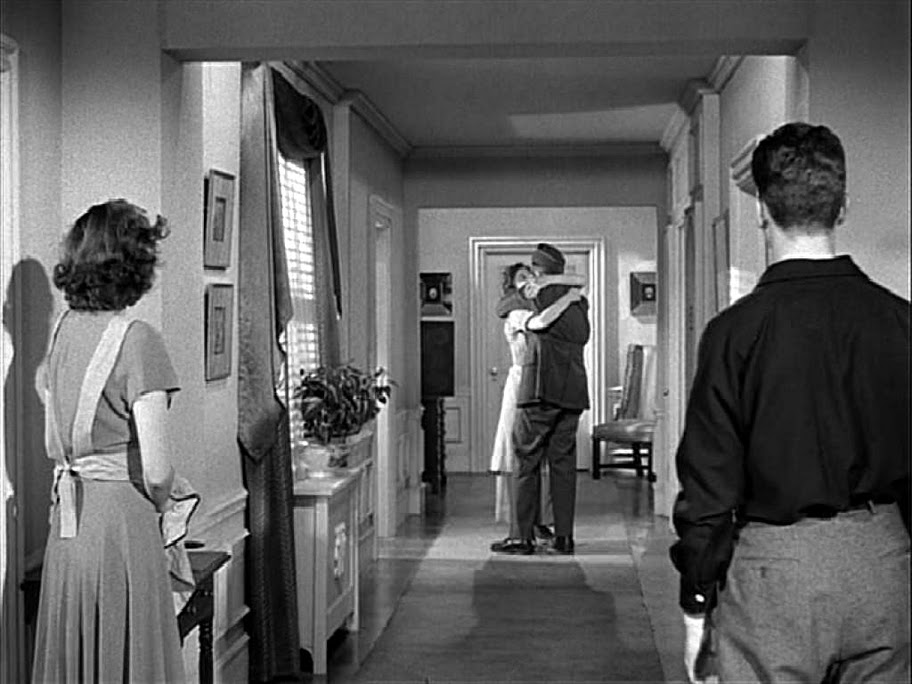
    “The Best Years of Our Lives” (1946) is one of the great American classics. This touching film tells the tale of the three WWII veterans struggling to readjust to civilian life. It isn’t easy, but with the support of family and friends, there’s plenty of hope for the future. Hugo Friedhofer wrote the Academy Award-winning score, earning the film one of its seven Oscars. The orchestrations were by Copland protégé (and composer of “The Big Country”) Jerome Moross.

    Finally, Daniel Day-Lewis elevates Steven Spielberg’s “Lincoln” (2012) to greatness with one of the uncanniest performances ever captured on film. Day-Lewis’ gentle but shrewd Man of Destiny would go to any lengths to hold the country together. John Williams taps into America’s proud musical heritage, clearly influenced by Copland and Ives to create a score of stirring nobility.

    There’s more to Thanksgiving than turkey and football, and we can still dream the dream. I hope you’ll join me as we give thanks for family, community, and country on “Picture Perfect,” music for the movies, now in syndication on KWAX, the radio station of the University of Oregon!


    Clip and save the start times for all three of my recorded shows:

    PICTURE PERFECT, the movie music show – Friday at 8:00 PM EST/5:00 PM PST

    SWEETNESS AND LIGHT, the light music program – ALL NEW! – Saturday at 11:00 AM EST/8:00 AM PST

    THE LOST CHORD, unusual and neglected rep – Saturday at 7:00 PM EST/4:00 PM PST

    Stream them, wherever you are, at the link!

    https://kwax.uoregon.edu/

Tag Cloud

Aaron Copland (92) Beethoven (95) Composer (114) Film Music (123) Film Score (143) Film Scores (255) Halloween (94) John Williams (187) KWAX (229) Leonard Bernstein (101) Marlboro Music Festival (125) Movie Music (138) Opera (202) Philadelphia Orchestra (89) Picture Perfect (174) Princeton Symphony Orchestra (106) Radio (87) Ralph Vaughan Williams (85) Ross Amico (244) Roy's Tie-Dye Sci-Fi Corner (290) The Classical Network (101) The Lost Chord (268) Vaughan Williams (103) WPRB (396) WWFM (881)

DON’T MISS A BEAT

Receive a weekly digest every Sunday at noon by signing up here


RECENT POSTS