Tag: Picture Perfect

  • Christmas in July Wintry Movie Music on KWAX

    Christmas in July Wintry Movie Music on KWAX

    It’s the 25th. Christmas in July! This week on “Picture Perfect,” there won’t be a manger or a Santa Claus in sight, but I’m sure we’ll all be grateful for a blast of frigid air and some chilly scenes from world cinema.

    We’ll begin with music from “The Snow Storm” (1964), an adaptation of Pushkin’s “The Tales of the Late Ivan Petrovich Belkan.” The score’s Waltz and Romance enjoyed particular popularity, earning its composer, Georgy Sviridov, two of his greatest hits.

    Then Arthur Honegger will take us to higher altitudes with his music for “The Demon of the Himalayas” (1935), complete with the eerie electronic timbre of the ondes Martenot.

    Ralph Vaughan Williams will guide us to the South Pole with selections from his score for “Scott of the Antarctic” (1948). The music perfectly reflects the sublime, austere beauty of an unforgiving landscape. The score became the basis for the composer’s seventh symphony, “Sinfonia Antartica” (note the Italian spelling; hence the single “c”).

    Finally, the “Battle on the Ice” from “Alexander Nevsky” (1938) provides a textbook marriage of music and film. Director Sergei Eisenstein granted the composer, Sergei Prokofiev, the unusual luxury of having the images cut to suit his music, as opposed to the usual practice, which is the other way around. The result is not only one of the great films, but also one of the great film scores.

    Feeling hot under the collar? Chill out with wintry scenes from world cinema this week, on “Picture Perfect,” music from the movies, now in syndication on KWAX, the radio station of the University of Oregon!


    Clip and save the start times for all three of my recorded shows:

    PICTURE PERFECT, the movie music show – Friday at 8:00 PM EDT/5:00 PM PDT

    SWEETNESS AND LIGHT, the light music program – Saturday at 11:00 AM EDT/8:00 AM PDT

    THE LOST CHORD, unusual and neglected rep – Saturday at 7:00 PM EDT/4:00 PM PDT

    Stream them, wherever you are, at the link!

    https://kwax.uoregon.edu/

  • Sabatini’s Swashbucklers on Picture Perfect

    Sabatini’s Swashbucklers on Picture Perfect

    This year marks the 150th anniversary of the birth of Rafael Sabatini (on April 29, 1875) and the 75th anniversary of his death (on February 13, 1950).

    Though Sabatini’s popularity may have faded somewhat over the decades, in his day the Italian-English writer might have been regarded as the heir apparent to Alexandre Dumas. His bestselling novels are full of romance and derring-do. However, unlike Dumas, I’m not sure if any of his books have really endured in the consciousness of the wider public.

    His memory is kept alive principally through film adaptations of his works. And why not? His incident-filled pages seem tailor-made for the silver screen. Film adaptations of “Scaramouche,” “The Sea Hawk” and “Captain Blood” were all made during the silent era. As recently as 2006, a long-lost John Gilbert classic, adapted from Sabatini’s “Bardelys the Magnificent,” was rediscovered in France. Several of these, of course, were remade, more or less, to even greater success during the era of talking pictures.

    This week on “Picture Perfect,” we’ll hear Erich Wolfgang Korngold’s music for the Errol Flynn classics “Captain Blood” (1935) and “The Sea Hawk” (1940). The former provided Flynn with his breakout role; the latter actually has nothing at all to do with Sabatini’s original plot, despite the writer’s prominent onscreen credit.

    We’ll also enjoy Alfred Newman’s rollicking main title music for the pirate opus “The Black Swan” (1942), which starred Tyrone Power, and one of Victor Young’s most rousing and melodically inventive scores, for “Scaramouche” (1952), which featured Stewart Granger in probably the best swashbuckler of the 1950s.

    Polish up those seven-league boots and don your gaudiest plumage. We’ll set sail with scores from movies inspired by the novels of Rafael Sabatini on “Picture Perfect,” now in syndication on KWAX, the radio station of the University of Oregon!


    Clip and save the start times for all three of my recorded shows:

    PICTURE PERFECT, the movie music show – Friday at 8:00 PM EDT/5:00 PM PDT

    SWEETNESS AND LIGHT, the light music program – Saturday at 11:00 AM EDT/8:00 AM PDT

    THE LOST CHORD, unusual and neglected rep – Saturday at 7:00 PM EDT/4:00 PM PDT

    Stream them, wherever you are, at the link!

    https://kwax.uoregon.edu/

  • Americana Film Scores for the Fourth of July

    Americana Film Scores for the Fourth of July

    This week on “Picture Perfect,” it’s my birthday AND the Fourth of July, so I’ve selected four Americana film scores to enjoy with sparklers and cake.

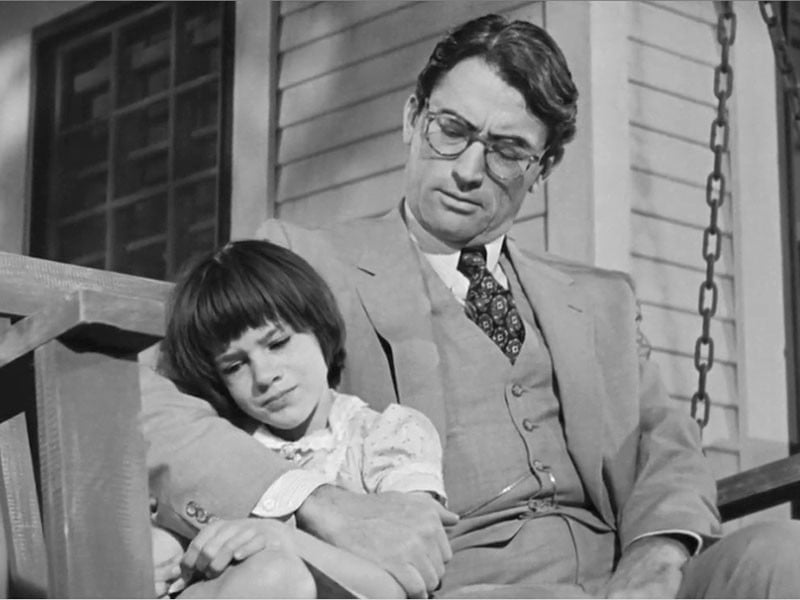
    Okay, so “To Kill a Mockingbird” (1962) is not the most celebratory film, but I don’t care – it’s a beautiful movie, based on a beautiful book (by Pulitzer Prize winner Harper Lee), with beautiful music by Elmer Bernstein, full of nostalgia and yearning, and a playful sense of fun when the kids are rolling in tires. It’s steeped in Americana, so I’m going with it. Gregory Peck is unforgettable as the forthright attorney and model father, Atticus Finch. FUN FACT: John Williams played the piano part in the original recording heard in the film.

    A rather more questionable role model is at the heart of “The Film-Flam Man” (1967), with George C. Scott as “Master of Back-Stabbing, Cork-Screwing and Dirty-Dealing” confidence man Mordecai C. Jones. Irvin Kershner directed, and Jerry Goldsmith’s music (harmonica, banjo, honky-tonk piano, etc.) lends to the film’s freewheeling spirit with a folksy, bluegrass-imbued score.

    Jerome Moross is largely recognized for his classic score for “The Big Country.” However, that sense of quintessential Americana colors much of his output, including, most sensitively, his music for “Rachel, Rachel” (1968). Joanne Woodward plays the isolated schoolteacher of the title (the character lives above a funeral parlor with her mother), who belatedly experiences passion and asserts her independence. The director was none other than Woodward’s husband, Paul Newman.

    Finally, we’ll turn to one of John Williams breakthrough scores, for “The Reivers” (1969), based on the semi-autobiographical novel of William Faulkner. The music, if possible, is even folksier and more frenetic than Goldsmith’s “The Flim-Flam Man” – though, typical of Williams, there is also an expansive sentiment and indefinable yearning to the more lyrical episodes.

    It’s said that the composer’s work on “The Reivers” is what moved Steven Spielberg to hire him for “The Sugarland Express.” The Spielberg association brought Williams to “Jaws,” and the first of his truly iconic film scores. Williams collaborated with the director of THIS film, Mark Rydell, on a number of occasions, as well – on “The Cowboys,” “Cinderella Liberty,” and “The River.”

    I hope you’ll join me for a Fourth of July tug of war between rowdiness and sensitivity, with Americana film scores on “Picture Perfect,” music for the movies, now in syndication on KWAX, the radio station of the University of Oregon!


    Clip and save the start times for all three of my recorded shows:

    PICTURE PERFECT, the movie music show – Friday at 8:00 PM EDT/5:00 PM PDT

    SWEETNESS AND LIGHT, the light music program – Saturday at 11:00 AM EDT/8:00 AM PDT

    THE LOST CHORD, unusual and neglected rep – Saturday at 7:00 PM EDT/4:00 PM PDT

    Stream them, wherever you are, at the link!

    https://kwax.uoregon.edu/
  • Jaws at 50 Dive into Aquatic Movie Music

    Jaws at 50 Dive into Aquatic Movie Music

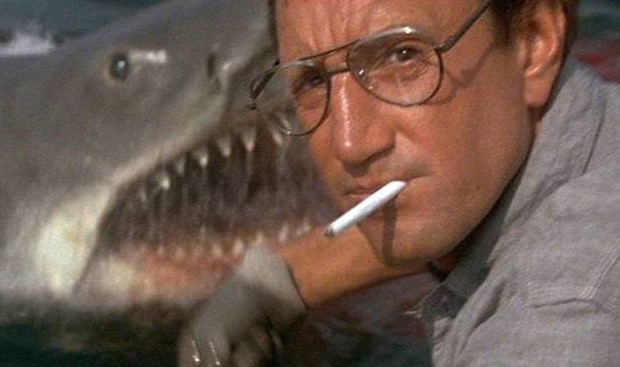
    Just when you thought it was safe to go back in the water, this week on “Picture Perfect,” we mark the 50th anniversary of “Jaws.”

    “Jaws” opened on June 20, 1975. The film’s balance of terror, wit and adventure, with a perfectly-calibrated trio of central characters and a young Steven Spielberg eager to please, propelled it to unprecedented box office glory, the first film to glide past the $100 million mark. Needless to say, the studios sat up and took notice. “Jaws” is widely credited as having laid the foundation for what became recognized as the summer blockbuster season. When it was surpassed by “Star Wars” two years later, there was no looking back. With so much chum in the water, the shareholders went into a frenzy and everyone wanted a bite.

    Given the film’s ultimate influence on the industry, with superheroes and computer animation long dominating the year’s major releases in a quest for ever-higher profits, it seems only proper now to honor “Jaws” with an hour of aquatic traumas.

    “Beneath the 12-Mile Reef” (1953) stars Robert Wagner, Terry Moore, and Peter Graves in a Romeo and Juliet story about two families of competing fishermen along the Gulf coast of Florida, one working class and of Greek origin, and the other a family of privileged WASPs. Gilbert Roland is the Greek patriarch who runs afoul of an improbably large octopus. Bernard Herrmann wrote the music, which employs no fewer than nine harps (one for each arm, and a spare).

    A young Henry Mancini was one of three composers to work on “Creature from the Black Lagoon” (1954). Mancini, soon to be world famous for “Moon River,” “Baby Elephant Walk,” and “The Pink Panther,” was teamed with veteran film composer Hans J. Salter and Herman Stein. None of the three were credited on screen – typical of what was then considered just another low-budget B-movie.

    What can I say about John Williams’ masterful music for “Jaws” (1975)? It’s right up there with “Psycho” and “The Good, the Bad and the Ugly,” in terms of most recognized and most frequently parodied. Everyone remembers the primal shark theme, but what is sometimes overlooked is that “Jaws” is also one of the great adventure scores, the music effortlessly navigating the choppy waters of suspense, horror, and seafaring swashbuckler. The composer was recognized with a richly-deserved Academy Award (his second of five).

    The conflict in “The Swimmer” (1968) is not a giant octopus, nor a great white shark, nor a prehistoric gill man, but rather the progressive psychological breakdown of an upper middle class Connecticut man who believes he’s living the American Dream.

    Adapted from a short story by John Cheever, “The Swimmer” stars Burt Lancaster as the man, who acts on a quixotic impulse to travel all the way home, across county, by way of a network of suburban swimming pools. The adventure starts out well enough, with Lancaster and everyone he encounters full of optimism and fun; but the further he moves along his allegorical journey, the more the enterprise, the climate, and the people begin to grow cold.

    “The Swimmer” is a decidedly downbeat tale which could make the viewer as reluctant to dip a toe into a chlorinated in-ground swimming pool as the shark-infested waters of Peter Benchley’s Amity Beach. The score is by Marvin Hamlisch, of all people, and it suits the film brilliantly.

    Better stick to the bath. Dreams of aquatic refreshment are all wet this week, on “Picture Perfect,” music for the movies, now in syndication on KWAX, the radio station of the University of Oregon!


    Clip and save the start times for all three of my recorded shows:

    PICTURE PERFECT, the movie music show – Friday at 8:00 PM EDT/5:00 PM PDT

    SWEETNESS AND LIGHT, the light music program – Saturday at 11:00 AM EDT/8:00 AM PDT

    THE LOST CHORD, unusual and neglected rep – Saturday at 7:00 PM EDT/4:00 PM PDT

    Stream them, wherever you are, at the link!

    https://kwax.uoregon.edu/
  • WWII Movie Music for Memorial Day

    WWII Movie Music for Memorial Day

    While you’re sitting in traffic heading into your three-day weekend, take a moment to consider that you’ve got it easy compared to what Allied soldiers went through in Europe, the Pacific, and North Africa to keep the world free from tyranny.

    This week on “Picture Perfect,” we’ll have music from two films of the World War II era that exemplify Hollywood’s morale-boosting approach. “Sahara” (1943) pits Humphrey Bogart as a tank commander who defends a watering hole against a superior force of parched Nazis. “Objective: Burma!” (1945) drops Errol Flynn behind enemy lines to take out a Japanese radar station.

    Neither film shuns the reality that war is hell (with some particularly suggestive gruesomeness in the latter), yet the filmmakers rose above the kind of nihilistic edge that underscores so many movies made today. When all was said and done, war movies in the 1940s sold America on hope and sacrifice and the promise of final victory.

    The conflict cast a long shadow, and in the 1950s and ‘60s Hollywood continued to churn out WWII films at an impressive rate, selling tickets to the generation that had “been there.” “The Guns of Navarone” (1961) features Gregory Peck (exempt from service during the actual war because Martha Graham injured his back), David Niven (Lieutenant Colonel in the British Commandos at Normandy) and Anthony Quinn (born in Mexico and not naturalized until 1947) as a special unit of Allied military specialists on a mission to blow up some big Nazi guns trained over the Aegean Sea.

    Efforts to get “Patton” (1970) off the ground had been in motion since 1953! The filmmakers wanted access to Patton’s diaries, but displayed horrible timing in approaching the late general’s family the day after the death of his widow. Not surprisingly, the family was completely turned off and withheld its cooperation. In the end Franklin J. Schaffner directed from a script by Francis Ford Coppola and Edmund H. North. Patton’s colleague, Omar Bradley, served as an advisor on the film. (He’s played on screen by Karl Malden.)

    “Patton” likely would have been a knockout on any level (Rod Steiger turned down the lead, much to his later regret), but it is really George C. Scott that pushes it over the top. And how much more over the top can it get than that opening monologue, assembled from Patton’s speech to the Third Army, delivered in front of an enormous American flag? Only a larger-than-life actor such as Scott could have done it justice and not been dwarfed by both the subject and the iconography. Scott won a much-deserved Academy Award for his performance – which he famously refused to accept.

    I hope you can join me for equally outsized music by Miklós Rózsa (“Sahara”), Franz Waxman (“Objective: Burma!”), Dimitri Tiomkin (“The Guns of Navarone”) and Jerry Goldsmith (“Patton”), as we look forward to Memorial Day with classic films set during World War II, on Picture Perfect, music for the movies, now in syndication on KWAX, the radio station of the University of Oregon!


    Clip and save the start times for all three of my recorded shows:

    PICTURE PERFECT, the movie music show – Friday at 8:00 PM EDT/5:00 PM PDT

    SWEETNESS AND LIGHT, the light music program – Saturday at 11:00 AM EDT/8:00 AM PDT

    THE LOST CHORD, unusual and neglected rep – Saturday at 7:00 PM EDT/4:00 PM PDT

    Stream them, wherever you are, at the link!

    https://kwax.uoregon.edu/

Tag Cloud

Aaron Copland (92) Beethoven (95) Composer (114) Film Music (123) Film Score (143) Film Scores (255) Halloween (94) John Williams (187) KWAX (229) Leonard Bernstein (101) Marlboro Music Festival (125) Movie Music (138) Opera (202) Philadelphia Orchestra (89) Picture Perfect (174) Princeton Symphony Orchestra (106) Radio (87) Ralph Vaughan Williams (85) Ross Amico (244) Roy's Tie-Dye Sci-Fi Corner (290) The Classical Network (101) The Lost Chord (268) Vaughan Williams (103) WPRB (396) WWFM (881)

DON’T MISS A BEAT

Receive a weekly digest every Sunday at noon by signing up here


RECENT POSTS