This time of year, with Christmas still weeks away, I’m never quite sure if I’m programming too much holiday music, or not quite enough. I walk away from an air shift feeling vaguely uneasy, as if I’ve served up a platter that is neither fish nor fowl.
Of course, if I were putting together a playlist entirely for myself, it would be all-mistletoe all the time. But I’m confident that, as the Big Day draws nigh, I will cross the tipping point and everything will start to feel a bit more natural and perhaps more satisfying. In the classical music world, the demarcation seems to be Beethoven’s birthday (December 16).
When it comes to Christmas, I think classical music stations tend to work against themselves. By the third week of December, listeners have already been subjected to countless arrangements of the same ten or 15 carols. Naturally, a kind of fatigue begins to creep in. 1000 years of Christmas music, and the scale tips in favor of “Hark! The Herald Angels Sing.”
If stations were more creative in their programming for Christmas, balancing the secular with the sacred, and broadening the coverage to incorporate music from all eras, from the Middle Ages to the present – allowing for abundant interludes in the form of winter portraits or evocations of the seasons – it could make for a truly stimulating month, and perhaps the backlash wouldn’t be so extreme. There’s so much music that we never get to hear.
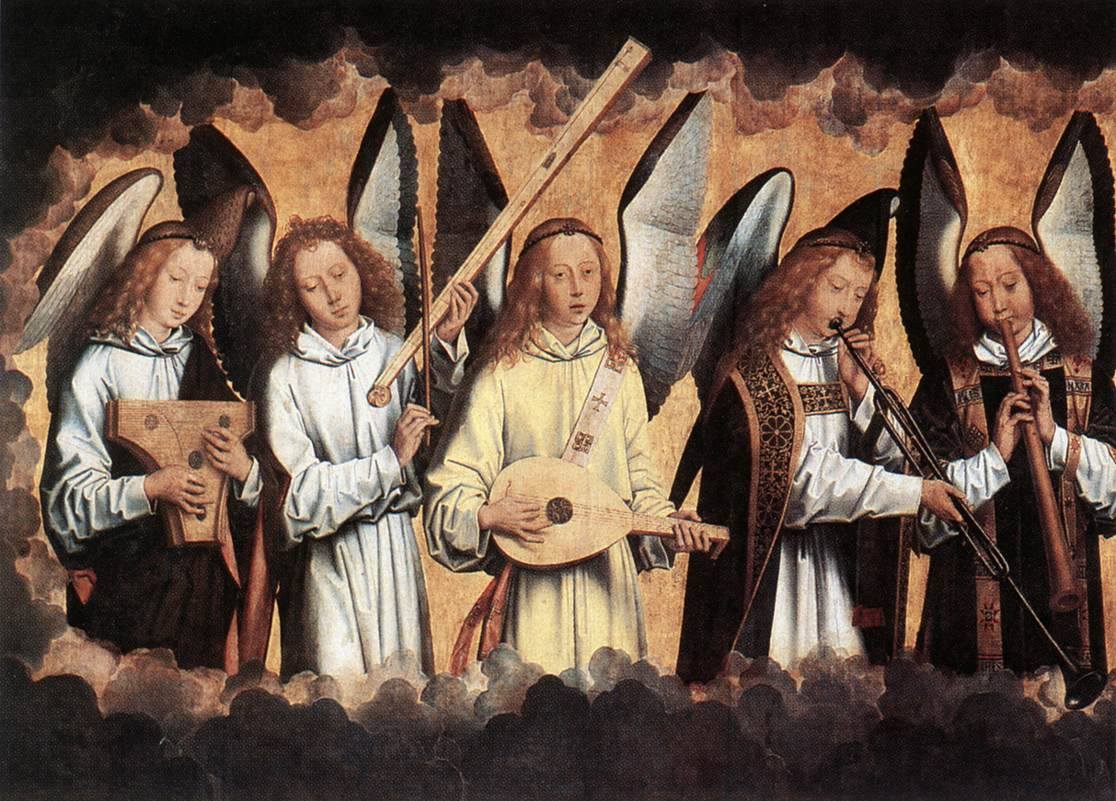
Consider all this as preamble to today’s Noontime Concert on The Classical Network. Piffaro, The Renaissance Band will be joined by Les Canards Chantants and actors Mark Jaster and Sabrina Mandell for a program of 15th century Christmas music, titled “A French Noël.” David Osenberg will be your host and Piffaro artistic directors Joan Kimball and Robert Wiemken will provide commentary.
I’ll be around at 1:40. At 2:00, we’ll cross the channel for Rutland Boughton’s “Bethlehem,” a choral drama adapted from the 14th century Coventry Nativity Play. Composed in 1915 and written very much in the English pastoral idiom, the work incorporates familiar carols, such as “O come all ye faithful” and “The Holly and the Ivy.”
Taking a page from Richard Wagner, Boughton composed a cycle of five operas on Arthurian themes and started a Glastonbury Festival, in the style of Bayreuth. Alas, neither the operas nor the festival, as it was originally conceived, have endured.
In Boughton’s “Bethlehem,” the shepherds bear gifts of a penny whistle, a hat, and a pair of warm mittens. The Three Wise Men hobnob with Herod, Zarathustra, and yes, Merlin. If you gravitate toward the music of Ralph Vaughan Williams, you’re bound to fall under the work’s disarming spell.
It’s never too early to be Early. Join us for a Piffaro Noël, and then on to Coventry, from 12 to 4 p.m. EST, on WWFM – The Classical Network and wwfm.org.